









eCommerce Development Company That Builds Revenue Infrastructure

Shopify was probably the right call when you started. It usually is. Somewhere between your first thousand orders and your first ERP integration, though, the platform stops helping and starts charging you for workarounds. Akoode is an e-commerce development company for businesses at exactly that point. We build custom platforms, B2B portals, marketplaces and headless storefrshopfronts,onts, and our eCommerce development services treat your store as revenue infrastructure, not a theme with plugins bolted on. 

4.9

Google Rating

97%

Client Retention

180+

Clients served

15+

Industries Served

When the Platform Becomes the Bottleneck, Revenue Follows

Most growing stores do not have a marketing problem. They have a platform problem wearing a marketing problem's clothes: slow pages, broken syncs, and features the shopfront simply refuses to support.

Akoode is not a Shopify agency. We do not sell themes, and we will not sell you one.

What we build is the layer underneath: catalogues, pricing engines, checkout logic and integrations shaped around how your business actually takes money.

The pattern repeats so often we could set a watch by it. A business launches on a hosted platform, grows quickly, then spends year three fighting the tool.

B2B pricing needs a workaround. ERP sync needs three plugins, two of which hate each other. Checkout slows down every time a campaign lands.

At some point, patching costs more than building properly would have.

And the ground has moved. Buyers in 2026 expect pages that load in under two seconds, stock counts that are actually true, and product suggestions that make sense, because everyone else already gives them that. Search engines rank against the same signals.

A platform that cannot keep up is not standing still. It is losing you orders on a Tuesday afternoon while nobody watches.

Our eCommerce Development Services

Every engagement here is scoped against a commercial number: conversion, cost to serve, or a channel that does not exist yet. These are the eCommerce development services clients hire us for most.

01

Custom eCommerce Development

Shopfronts and commerce engines written from scratch in Next.js and Node. You decide how the catalogue is structured, how checkout behaves, and how fast the thing runs, because you own all of it. No rented platform, no monthly ceiling on what you can build.

Talk to our team
02

B2B eCommerce Development

Wholesale does not work like retail, and pretending otherwise is why most B2B portals fail. We build quote-based ordering, account-level price books, credit limits, approval chains and bulk reordering, so your dealers stop calling and start ordering at 11pm on their own.

Talk to our team
03

eCommerce App Development

Mobile commerce apps in React Native and Flutter, running on the same backend as your web store. One inventory, one customer record, everywhere. Built for repeat purchase behaviour, with push re-engagement and checkout fast enough that nobody abandons it out of boredom.

Talk to our team
04

eCommerce Marketplace Development

Multi-vendor platforms with seller onboarding, commission engines, split payments and dispute handling. The buyer-facing catalogue is honestly the easy half. The operational tooling that keeps two hundred sellers behaving is the part we obsess over.

Talk to our team

Commerce Engineering Beyond the Storefront

A storefront is the baseline. The work below is where custom platforms pull away from template stores, and increasingly it is the reason clients ring us in the first place.

01

AI-Driven Personalisation

Recommendation engines and behavioural segmentation trained on your own order data, running server-side so conversion improves without page speed paying for it. Your data, your models, your margin.

02

Search and Merchandising Engines

Typo-tolerant, intent-aware product search on Elasticsearch or Typesense, tuned with your stock and margin priorities. People who use site search convert at several times the rate of people who browse. That makes search quality a revenue lever, not a nice-to-have.

03

Custom Pricing and Promotions Engines

Contract pricing, volume breaks, regional price books, stackable promotion rules, one engine. Essential in B2B. Nearly impossible to do cleanly with a plugin stack, which is why so few try.

04

Performance Engineering

Core Web Vitals as a written product requirement: LCP targets, edge caching, image pipelines, load-tested checkout. Speed gets scoped, built and measured like any other feature.

05

Subscription and Recurring Commerce

Subscription billing, pause-and-skip, dunning, churn analytics, built into checkout rather than strapped on afterwards. Replenishment and membership models live or die on this layer.

06

Commerce Data and Analytics Pipelines

Clean event tracking, warehouse syncs, margin-level reporting your finance team will actually sign off on. A funnel you cannot measure honestly is a funnel you cannot fix.

Where Ecommerce Development Stands in 2026 Nothing below is a forecast.

These are conditions already deciding budgets and replatforming approvals this year, and they explain a fair amount of our current pipeline.
eCommerce Dev

How is AI personalisation used in eCommerce in 2026?

Personalisation stopped being a marketing add-on somewhere around 2024, and nobody sent a memo. Product ranking, email content and on-site offers now adapt per session, using purchase history and live behaviour, and stores still serving static category pages convert visibly worse. The awkward part is architectural: real personalisation needs first-party data pipelines, and template platforms rarely expose those cleanly.

What is agentic commerce and does it affect online stores?

AI shopping assistants now compare products and complete purchases on a buyer's behalf, working through structured data and APIs rather than rendered pages. Stores with clean product schema and machine-readable pricing get picked by these agents. Stores without them simply do not exist to that slice of demand. Structured data has quietly become a revenue concern rather than an SEO chore, which took a lot of people by surprise. for

Why are businesses moving to headless commerce?

Headless stopped being an enterprise-only conversation a while back. Mid-market brands now run one commerce backend feeding web, mobile apps, B2B portals and marketplace feeds, because four disconnected systems cost more to keep alive than one decoupled build. The trade-off is real: you own the engineering. Which is precisely why headless projects land with development companies instead of agencies. 

What do B2B buyers expect from eCommerce in 2026?

B2B buyers order at work the way they shop at home. Self-serve, visible pricing where the contract allows it, and no forced sales call for a routine reorder. Wholesalers with proper portals are taking volume off competitors still running on email threads and PDF catalogues, and the gap widens a little more each quarter. Waiting has a cost now. 

How important is site speed for eCommerce conversion now?

Speed is priced into everything. Google's page experience signals and human patience converged on roughly the same threshold, and each extra second of load time takes a measurable bite out of conversion. Repeatably. In 2026 we see performance budgets written into e-commerce contracts next to uptime SLAs, which would have seemed fussy five years ago and now just seems sensible. 

eCommerce Platforms We Specialise In

Choosing the right platform decides how far a store scales before it needs rebuilding, and no single platform is right for every business model. As an e-commerce development company working across all the major options, we build platform-specific solutions matched to your catalogue size, budget and growth plan.

01

Shopify Development

Shopify suits fast-moving D2C brands and international sellers who want speed to market without sacrificing scale. We build custom Shopify and Shopify Plus stores, from theme development to app integration, tuned for conversion rather than just launch speed.

Explore Shopify Developmen
02

WooCommerce Website Development

WooCommerce works best for content-led brands and WordPress publishers who want deep customisation without enterprise licensing costs. Our WooCommerce builds pair strong SEO foundations with performance tuning most agencies skip.

Explore WooCommerce Development
03

Magento Development

Magento earns its complexity for large catalogues, multi-store operations and B2B pricing rules that simpler platforms cannot handle. We build and migrate Magento 2 stores engineered for enterprise scale, not just enterprise price tags.

Explore Magento Development
04

OpenCart Development

OpenCart gives small and mid-sized businesses a lightweight, cost-effective route into e-commerce without unnecessary overhead. We build OpenCart stores that stay fast and manageable as the catalogue grows, not just at launch.

Explore OpenCart Development

eCommerce Development Across 15 Industries

Commerce logic changes completely between sectors, and platforms built without that context fail quietly. Here is how our eCommerce work shows up across the 15 industries we serve.

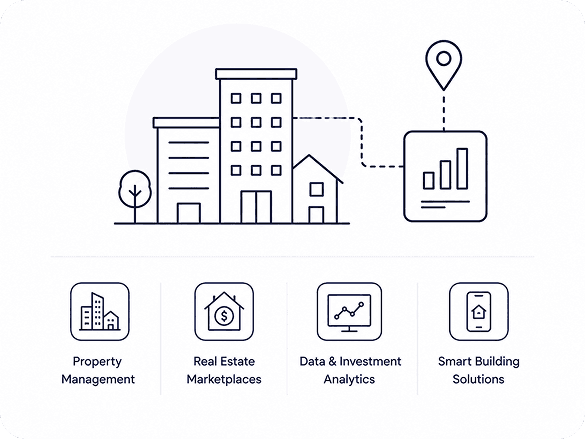
A property portal is an e-commerce platform with enormous ticket sizes and maybe two transactions per customer per decade. That changes everything about the build. We develop listing marketplaces with booking-deposit payments, escrow-linked flows, and AI matching that ranks inventory against actual buyer behaviour instead of listing age. Developers use these platforms to sell units directly and reduce broker dependence. Virtual tours and automated document collection shave weeks off the enquiry-to-booking cycle.
Real Estate
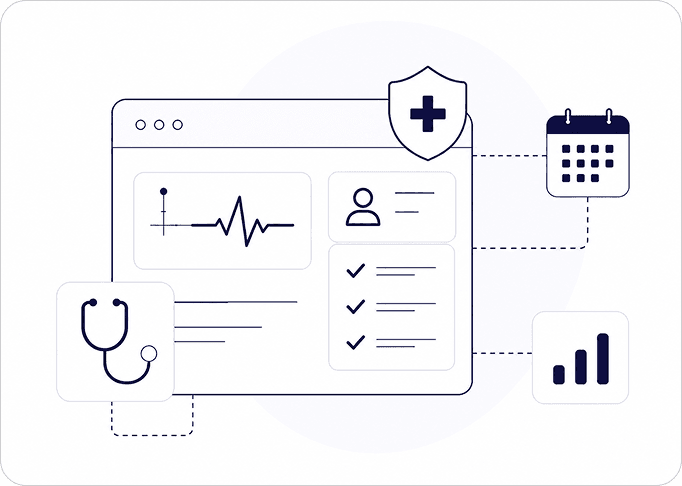
Compliance shapes every line of code here. Pharmacy delivery, medical equipment sales and subscription care plans all need prescription-validated checkout, cold-chain logistics hooks, and patient accounts with consent handled properly. We build demand forecasting that keeps regulated stock available without overordering products that expire. Data protection rules differ by market, and the build has to respect each one the client sells into.
Healthcare
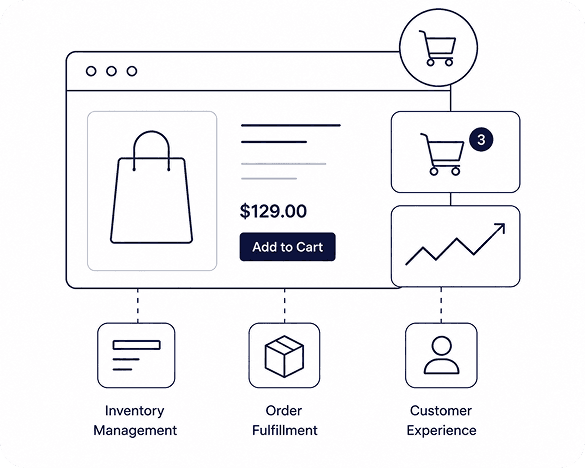
Pure-play retailers usually arrive when the hosted platform has become the constraint on growth, not before. Typical work: replatforming to a custom or headless build, recommendation and search engines trained on their own data, unified inventory across warehouses, stores and marketplaces. Loyalty and personalised offers run on first-party data the retailer owns outright. We measure ourselves on conversion, average order value and repeat purchase rate, because the client certainly will.
Retail & E-Commerce
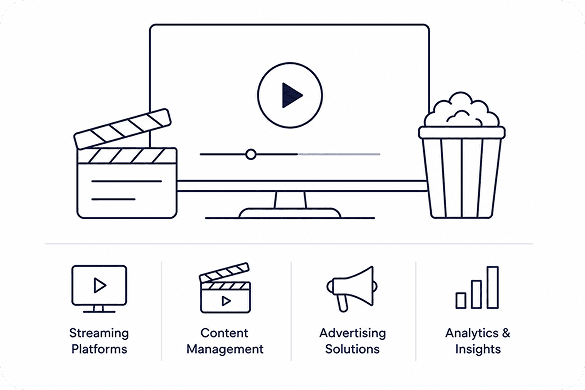
Subscriptions, pay-per-view, merch, ticketing. Media businesses tend to monetise four ways at once, so we build entitlement systems that tie a purchase to content access, merch stores linked to fan accounts, and bundles that shift with viewing behaviour. Churn prediction flags subscribers likely to lapse before they do, so retention offers fire automatically. Payment orchestration handles global audiences across currencies and local methods without anyone thinking about it.
Media & Entertainment
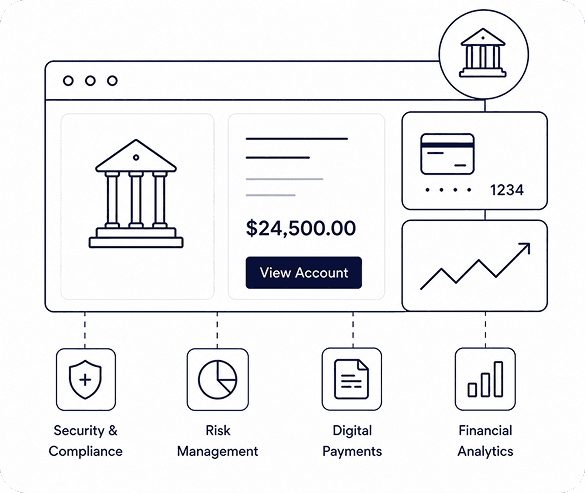
Banks and insurers now sell through storefronts too: card upgrades, insurance add-ons, investment products, embedded finance for partners. The catch is that every product needs an eligibility engine and every transaction needs an audit trail. We build KYC into the purchase flow itself, and AI scoring returns decisions inside checkout rather than three days later by email. Regulators read these flows carefully. So do we.
Finance & Banking
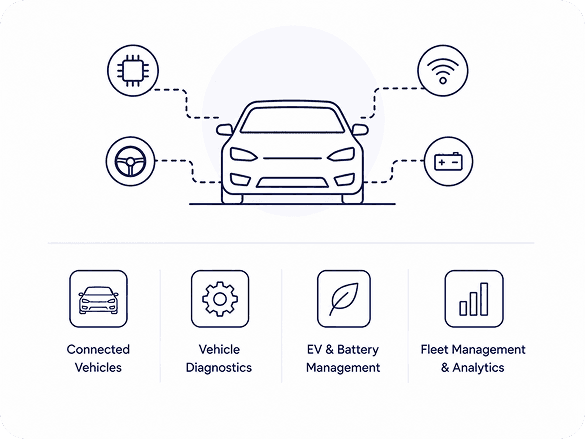
Fitment data makes or breaks automotive commerce. Buyers search parts by make, model and year against OEM data, and getting that right cuts return rates dramatically, which is where most parts stores lose their margin. We build dealer portals for trade pricing and bulk orders, plus demand planning that keeps fast-moving parts stocked by region. For vehicle sales, booking deposits and finance pre-approval sit directly inside the listing.
Automotive
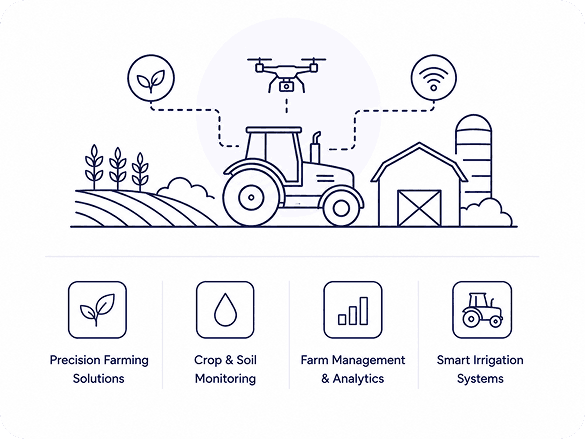
Agri-commerce runs on credit, seasons and trust, three things generic platforms handle badly. We build B2B marketplaces for seeds, fertilisers and machinery with credit-based ordering and pricing rules that follow the sowing calendar. Price intelligence gives suppliers visibility on regional rates. Freight here means trucks, not parcels, so logistics integrations reflect that. Vernacular interfaces matter enormously in this sector and we build for them as standard.
Agriculture
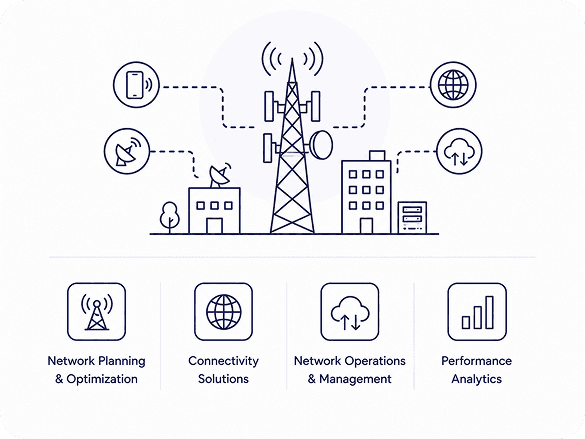
A telecom cart fails in the gap between payment and activation. That is the messy middle we engineer for: storefronts where SIM activation, number selection and a device EMI purchase complete in one checkout, with order orchestration talking to provisioning systems in real time. Plan recommendation matched to usage patterns lifts upgrade conversion in a way generic upsell widgets never manage.
Telecommunication
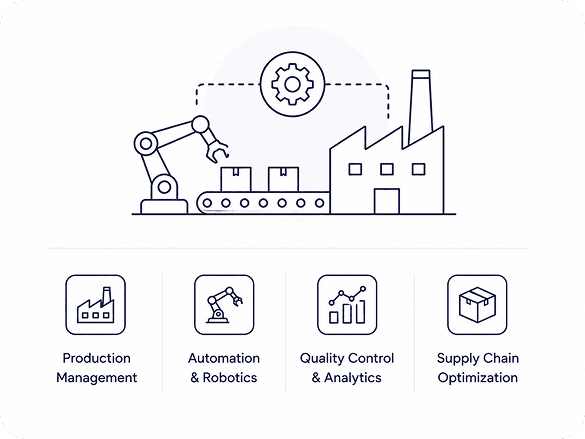
Manufacturers going direct have one fear, and it is upsetting their distributors. Fair enough. We build B2B eCommerce that respects channel structure: dealer-specific price books, minimum order quantities, configure-to-order builders, ERP-synced availability. Instant AI-generated quotes turn configured products that used to take a week of sales back-and-forth into same-day pricing. The channel scales without the sales team doubling.
Manufacturing
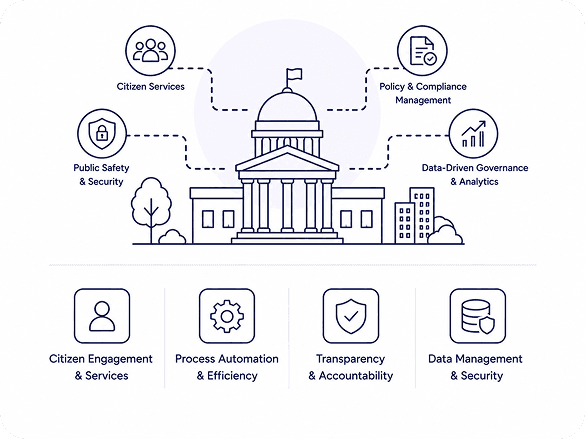
Citizens pay fees, buy permits and use procurement portals, and none of it is allowed to break. We build accessible, audit-compliant payment flows with strong identity verification and complete transaction records, because in this sector the audit trail is the product. AI-assisted form checking catches application errors before payment, which cuts the rejection-and-refund loop that clogs most government portals. Uptime and accessibility standards are hard requirements here, not aspirations.
Public Sector & Government
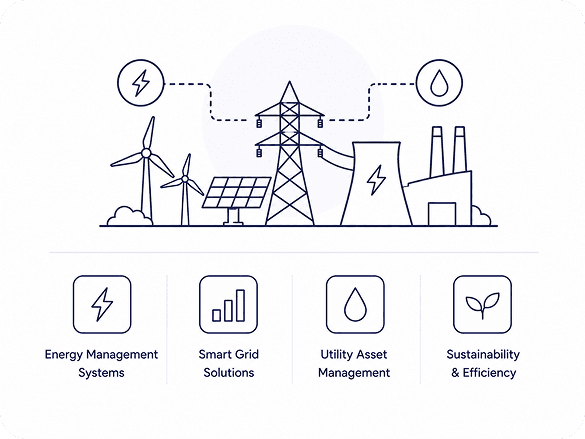
Utilities sell connections, equipment, top-ups and service plans through digital channels, usually on top of billing systems older than the engineers maintaining them. We know, because we integrate with those systems and engineer around their moods. Prepaid recharge flows, solar equipment stores with subsidy-linked pricing, B2B portals for industrial contracts. Consumption forecasting drives plan recommendations that reduce bill shock, and reconciliation keeps finance and the legacy biller agreeing with each other.
Energy & Utilities
Perishable inventory breaks standard eCommerce assumptions. An unsold room tonight is worth nothing tomorrow, so pricing has to move and availability has to be true to the second. We build booking engines with real-time availability, dynamic pricing rules and multi-supplier aggregation across hotels, experiences and transport. Upsells appear at the moments buyers actually say yes, not scattered across the funnel. Abandoned booking recovery alone tends to pay for the build.
Travel & Hospitality
Course sales, subscription learning, cohort enrolments, institutional licensing. Each one bills differently, which is the real complexity in education commerce. We build checkout tied to enrolment systems, EMI and scholarship pricing logic, and B2B portals where schools and companies buy seats in bulk. Recommendation surfaces the next course off learner progress, turning completions into repeat revenue rather than goodbyes. Regional payments and taxation handled per market.
Education & E-Learning
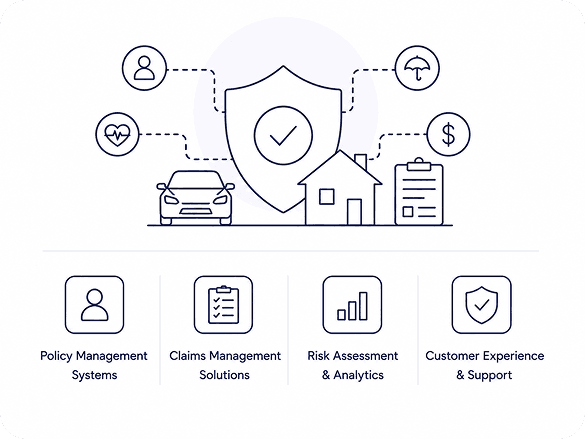
Nobody browses insurance. It gets sold, through guided flows, which makes the eCommerce unusually dependent on journey design. We build quote-and-buy where underwriting rules run inside checkout and produce a bindable price in seconds, not a callback promise. Risk scoring and document extraction strip the manual steps out of issuance. Renewals run as automated, personalised offers. Disclosure and consent are built to survive regulator scrutiny, because eventually they will face it.
Insurance
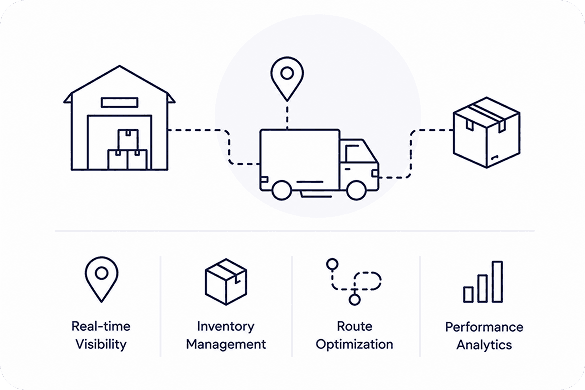
Rate-and-book is eCommerce, even if the industry rarely calls it that. We build instant quoting engines fed by carrier APIs, contract-rate portals for enterprise shippers, and marketplaces matching shippers with spare capacity. Rate prediction and route optimisation improve pricing accuracy and protect margin on both sides. On the fulfilment end, we plug stores of every kind into WMS and last-mile systems, which is often how logistics clients find us in the first place.
Logistics & Supply Chain

Healthcare

Compliance shapes every line of code here. Pharmacy delivery, medical equipment sales and subscription care plans all need prescription-validated checkout, cold-chain logistics hooks, and patient accounts with consent handled properly. We build demand forecasting that keeps regulated stock available without overordering products that expire. Data protection rules differ by market, and the build has to respect each one the client sells into.

Retail & E-Commerce

Pure-play retailers usually arrive when the hosted platform has become the constraint on growth, not before. Typical work: replatforming to a custom or headless build, recommendation and search engines trained on their own data, unified inventory across warehouses, stores and marketplaces. Loyalty and personalised offers run on first-party data the retailer owns outright. We measure ourselves on conversion, average order value and repeat purchase rate, because the client certainly will.

Media & Entertainment

Subscriptions, pay-per-view, merch, ticketing. Media businesses tend to monetise four ways at once, so we build entitlement systems that tie a purchase to content access, merch stores linked to fan accounts, and bundles that shift with viewing behaviour. Churn prediction flags subscribers likely to lapse before they do, so retention offers fire automatically. Payment orchestration handles global audiences across currencies and local methods without anyone thinking about it.

Finance & Banking

Banks and insurers now sell through storefronts too: card upgrades, insurance add-ons, investment products, embedded finance for partners. The catch is that every product needs an eligibility engine and every transaction needs an audit trail. We build KYC into the purchase flow itself, and AI scoring returns decisions inside checkout rather than three days later by email. Regulators read these flows carefully. So do we.

Automotive

Fitment data makes or breaks automotive commerce. Buyers search parts by make, model and year against OEM data, and getting that right cuts return rates dramatically, which is where most parts stores lose their margin. We build dealer portals for trade pricing and bulk orders, plus demand planning that keeps fast-moving parts stocked by region. For vehicle sales, booking deposits and finance pre-approval sit directly inside the listing.

Agriculture

Agri-commerce runs on credit, seasons and trust, three things generic platforms handle badly. We build B2B marketplaces for seeds, fertilisers and machinery with credit-based ordering and pricing rules that follow the sowing calendar. Price intelligence gives suppliers visibility on regional rates. Freight here means trucks, not parcels, so logistics integrations reflect that. Vernacular interfaces matter enormously in this sector and we build for them as standard.

Telecommunication

A telecom cart fails in the gap between payment and activation. That is the messy middle we engineer for: storefronts where SIM activation, number selection and a device EMI purchase complete in one checkout, with order orchestration talking to provisioning systems in real time. Plan recommendation matched to usage patterns lifts upgrade conversion in a way generic upsell widgets never manage.

Manufacturing

Manufacturers going direct have one fear, and it is upsetting their distributors. Fair enough. We build B2B eCommerce that respects channel structure: dealer-specific price books, minimum order quantities, configure-to-order builders, ERP-synced availability. Instant AI-generated quotes turn configured products that used to take a week of sales back-and-forth into same-day pricing. The channel scales without the sales team doubling.

Public Sector & Government

Citizens pay fees, buy permits and use procurement portals, and none of it is allowed to break. We build accessible, audit-compliant payment flows with strong identity verification and complete transaction records, because in this sector the audit trail is the product. AI-assisted form checking catches application errors before payment, which cuts the rejection-and-refund loop that clogs most government portals. Uptime and accessibility standards are hard requirements here, not aspirations.

Energy & Utilities

Utilities sell connections, equipment, top-ups and service plans through digital channels, usually on top of billing systems older than the engineers maintaining them. We know, because we integrate with those systems and engineer around their moods. Prepaid recharge flows, solar equipment stores with subsidy-linked pricing, B2B portals for industrial contracts. Consumption forecasting drives plan recommendations that reduce bill shock, and reconciliation keeps finance and the legacy biller agreeing with each other.

Travel & Hospitality

Perishable inventory breaks standard eCommerce assumptions. An unsold room tonight is worth nothing tomorrow, so pricing has to move and availability has to be true to the second. We build booking engines with real-time availability, dynamic pricing rules and multi-supplier aggregation across hotels, experiences and transport. Upsells appear at the moments buyers actually say yes, not scattered across the funnel. Abandoned booking recovery alone tends to pay for the build.

Education & E-Learning

Course sales, subscription learning, cohort enrolments, institutional licensing. Each one bills differently, which is the real complexity in education commerce. We build checkout tied to enrolment systems, EMI and scholarship pricing logic, and B2B portals where schools and companies buy seats in bulk. Recommendation surfaces the next course off learner progress, turning completions into repeat revenue rather than goodbyes. Regional payments and taxation handled per market.

Insurance

Nobody browses insurance. It gets sold, through guided flows, which makes the eCommerce unusually dependent on journey design. We build quote-and-buy where underwriting rules run inside checkout and produce a bindable price in seconds, not a callback promise. Risk scoring and document extraction strip the manual steps out of issuance. Renewals run as automated, personalised offers. Disclosure and consent are built to survive regulator scrutiny, because eventually they will face it.

Logistics & Supply Chain

Rate-and-book is eCommerce, even if the industry rarely calls it that. We build instant quoting engines fed by carrier APIs, contract-rate portals for enterprise shippers, and marketplaces matching shippers with spare capacity. Rate prediction and route optimisation improve pricing accuracy and protect margin on both sides. On the fulfilment end, we plug stores of every kind into WMS and last-mile systems, which is often how logistics clients find us in the first place.

eCommerce Technology Stack

Technology choices in mobile development have long-term consequences. A framework chosen for short-term development speed can become a liability when the platform releases a major update, when the team scales, or when the product needs capabilities the framework was not designed for. We select the stack based on your product requirements, your timeline, and where this application needs to be in three years, not just at launch.

Elasticsearch logoElasticsearch
Google Cloud logoGoogle Cloud
Magento logoMagento
OpenCart logoOpenCart
WooCommerce logoWooCommerce
Shopify logoShopify

Stage 01: eCommerce Discovery

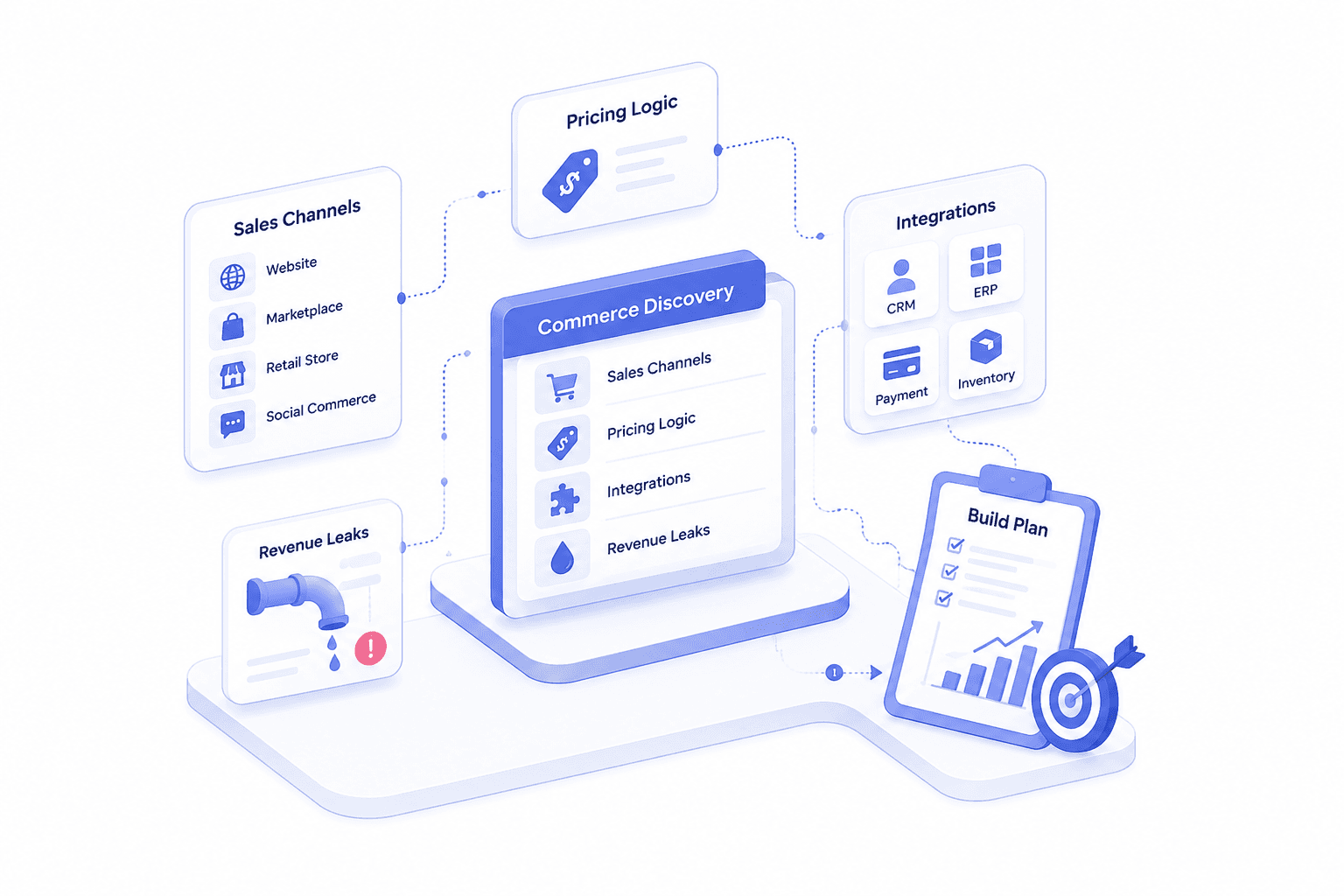
Most eCommerce projects go wrong before a single screen gets designed, because nobody wrote down what the platform actually needs to do. We start by mapping how you sell today: every channel, every pricing rule, every integration currently duct-taped into the stack, and the specific points where revenue is leaking out unnoticed. This runs closer to an audit than a questionnaire, led by engineers who have seen the same failure patterns repeat across dozens of eCommerce builds. What comes out the other side is a build plan tied to commercial targets you can hold us to, not a features list copied from a competitor's site.

Outcome: Skip discovery and the platform gets built around assumptions instead of your actual order flow.

Stage 02: Architecture and Data Design

Long before anyone opens a design tool, we decide how the catalogue is structured, how the order lifecycle behaves, and what contract each integration needs to honour. These choices sound abstract right up until you are the business trying to bolt on a B2B pricing tier eighteen months in, onto an architecture that never planned for one. Every decision gets documented, so your own team, or a future vendor if it ever comes to that, understands exactly why the platform is built the way it is. Good architecture stays invisible when it works and turns expensive fast when it does not.

Outcome: The wrong data model here costs more to fix later than the entire original build.

Stage 03: Experience Design

Buyer journeys get designed against conversion evidence rather than opinion, starting at category browsing and running through checkout and post-purchase. Every screen is specified using your real catalogue data instead of placeholder content, because a layout that looks clean with three sample products often buckles under two thousand real ones. Design and engineering sit together through this stage, so nothing gets signed off on a moodboard that later turns out to be unbuildable within your performance budget. The target is a store that converts from day one, not one that simply looks finished in a client review.

Outcome: A beautiful screen that ignores your actual catalogue size rarely survives contact with real inventory.

Stage 04: Build in Sprints

Work happens in two-week sprints, and every review ends with software you can click, never a slide deck promising progress. You get direct access to the engineers writing your code, so a question gets answered in the room instead of relayed through an account manager three days later. Watching the store take shape sprint by sprint means surprises get caught early, while they are still cheap to fix, rather than at a launch date nobody can move anymore. It is also where scope conversations happen honestly and in the open, rather than showing up as a surprise line on an invoice.

Outcome: You will see working pages every fortnight, not one big reveal months down the line

Stage 05: Integration and Load Testing

Payments, ERP, logistics and tax flows get tested against the failure cases: timeouts, partial responses, and duplicate webhooks, not just the tidy happy path every demo shows. Checkout gets load-tested at multiples of your expected peak traffic before anyone on our side calls the build finished, because the worst possible time to discover a bottleneck is your biggest sale of the year. We have watched enough launches wobble under real traffic to refuse treating this stage as optional paperwork. Most of the genuinely hard engineering happens quietly here, well before anyone outside the team ever notices it.

Outcome: Untested integrations tend to fail exactly when order volume is highest and patience is lowest.

Stage 06: Launch and Optimisation

Cutover runs with full SEO preservation, monitored rollback points and zero order-history loss, because a launch that quietly erases years of customer data is not a launch anyone should accept. The work does not stop once the platform goes live. We keep iterating against real conversion data through a defined optimisation backlog, rather than waiting for problems to surface as complaints from your support inbox. eCommerce platforms earn their return over years, not on launch day, and treating go-live as the finish line is how otherwise solid builds quietly decay.

Outcome: The strongest platforms keep improving for years after launch, not just on the day they ship.

Our eCommerce Development Process

A structured process is not a formality. It is what separates predictable delivery from projects that drift. We follow a six-stage process designed to give you clarity at every step, consistent visibility into progress, and a product that reflects your business goals rather than assumptions made in week one.

Commerce Discovery
DISCOVERY

eCommerce Discovery

Most eCommerce projects go wrong before a single screen gets designed, because nobody wrote down what the platform actually needs to do. We start by mapping how you sell today: every channel, every pricing rule, every integration currently duct-taped into the stack, and the specific points where revenue is leaking out unnoticed. This runs closer to an audit than a questionnaire, led by engineers who have seen the same failure patterns repeat across dozens of eCommerce builds. What comes out the other side is a build plan tied to commercial targets you can hold us to, not a features list copied from a competitor's site.

Skip discovery and the platform gets built around assumptions instead of your actual order flow.

Flexible Engagement Models for eCommerce Development

Every build carries a different risk profile, so there are three ways to work with us. Pick whichever fits how clear your scope is right now and how long the product needs to keep evolving after launch.

Fixed Cost

Best For: Scope That Is Already Nailed Down, And A Price You Want Nailed Down With It

  • Price, timeline and scope agreed before a line of code gets written, and they stay agreed
  • Milestones with acceptance criteria you personally sign off, one by one
  • The low-risk route for MVPs and launches with a hard deadline attached
  • If mid-project surprises are what worry you, this model exists to prevent them
MOST POPULAR

Dedicated Team

Best For: Products That Will Keep Evolving Long After Version One Ships

  • Engineers, designers, QA and a PM who work as part of your team, not around it
  • You set sprint priorities. We build them. That simple
  • Grow or shrink the team as the roadmap demands, without renegotiating everything
  • Plugs into whatever tools and workflows your team already runs
  • You talk to the people writing your code. Never through an account manager

Staff Augmentation

Best For: A Skill Gap Today, Or Velocity You Need By Next Sprint

  • Specialists who slot into your existing team and standups from day one
  • Senior skills without the cost, or the three-month wait, of a full-time hire
  • Add people when timelines tighten, release them when things calm down
  • Onboarded and shipping within days. Not months. Days

Work That Speaks for Itself

A few builds where changing the platform changed the number that mattered.

Building a Multi-Brand Beauty Storefront on Shopify

Key Outcomes

7

Core Categories

60+

Subcategories

Challenge

None of this shows up all at once. A retailer adds brands to stay competitive, which forces more categories, which forces deeper subcategories, and somewhere along the way the store stops being browsable even though each individual product page still looks fine.

What We Built

This wasn't about adding features to an existing store. Stunner Selfcare needed a catalog structure sized for the brand range it already had, with merchandising and retention mechanics built in from the start rather than bolted on later.

AI-Powered Advertisement Catalogue Generator

Key Outcomes

6

Production-Ready Templates

9

Visual Style Tones

Challenge

The creative production bottleneck in ecommerce and B2B marketing is not a talent problem. It is a process problem. Every product needs multiple ad formats. Every format needs channel-appropriate copy. Every piece of copy needs to stay on-brand across a growing catalogue. When that work is done manually, it does not scale, it does not stay consistent, and it cannot be reviewed efficiently when the output looks different every time a different person touched it.

What We Built

The brief required a modular AI pipeline that could take a product image, understand what it was selling and to whom, generate structured marketing copy across multiple formats, and render downloadable catalogue assets that looked the same every time. Deterministic output was non-negotiable. The system needed to produce layouts a marketing team could review, approve, and send without visual surprises or format inconsistencies between runs.

Website Redesign and Digital Transformation

Key Outcomes

6+

Product Categories Structured

75+

Years of History

Challenge

Industrial distributors rarely have dedicated digital teams. Websites accumulate content over years with no structural plan, and the gap between the company's actual capability and what the site communicates grows wider with every product line added. For technical buyers in the chemical, pharmaceutical, and process industries, a disorganised website does not just create a poor experience; it signals that the company may not be the reliable, detail-oriented partner they need for long-term equipment relationships.

What We Built

Mullen Equipment needed more than a visual refresh. The brief required a full structural rebuild of how content was organised, presented, and managed, with the finished platform serving as a working sales tool for technical buyers across the chemical, pharmaceutical, and process industries. Every objective connected directly to how a procurement engineer or plant manager would actually use the site.

Why Choose Akoode Technologies as Your eCommerce Development Company

Plenty of agencies can install a theme. Choosing an eCommerce development partner is really a decision about who owns your revenue infrastructure for the next five years, so choose on engineering, not on the pitch deck.

AI-First Development

AI goes into the commerce stack on day one, not as an afterthought in phase three. Recommendations, demand forecasting, search ranking and fraud signals get built on your own data, and you own the models outright. This is infrastructure that moves conversion and margin. It is not a chatbot glued to a template. 

End-to-End Platform Engineering

One team covers frontend, backend, mobile, integrations and infrastructure, so nothing falls into the gap between vendors. Your catalogue, checkout, ERP sync and analytics get designed as one system instead of stitched from plugins. When something breaks at 2am during a sale, there is one accountable team. Us.

Revenue-Focused Architecture

Each architectural decision faces the same question: does it raise conversion, order value or retention, or cut cost to serve? If it does none of those, it does not ship. Performance and conversion targets go into the project plan in writing, and delivery gets measured against them. Technology serves the P&L here, never the reverse. 

Domain-Deep Expertise

Insurance commerce, manufacturing commerce and travel commerce run on entirely different logic, and we have shipped across 15+ industries so we know the difference in our bones. It shows in small things: fitment data in automotive, credit terms in B2B, perishable stock in travel. Discovery gets spent refining your build, not educating your vendor. 

Migration Without Revenue Loss

Replatforming is where stores lose rankings, order history and customer trust, so we run it as a discipline of its own. URL mapping, redirect strategy, structured data, parallel-run testing: standard on every migration, backed by deep technical SEO practice. Traffic continuity is an acceptance criterion in the contract, not a hope.

Direct Engineering Access

You talk to the engineers writing your code, from kickoff through post-launch. No account manager relay, no offshore black box, no three-day wait for a question to reach someone who can answer it. Decisions happen in the room. Our 97% retention rate is mostly this, honestly.

Awards & Recognitions

Recognised by leading platforms, startup ecosystems, and global technology communities.

Top US-Based IT Services Firm 2026
Clutch
Outlook
Ai Automation
Business Standard
YourStory
Good Firms
Top Machine Learning Companies - Goodfirms
Top eCommerce Development Company
Entrepreneur
ZBusiness
Times of India
Hindustan Times
Top US-Based IT Services Firm 2026
Clutch
Outlook
Ai Automation
Business Standard
YourStory
Good Firms
Top Machine Learning Companies - Goodfirms
Top eCommerce Development Company
Entrepreneur
ZBusiness
Times of India
Hindustan Times

Insights on eCommerce Development

View all

Signs Your Business Has Outgrown Shopify. The specific technical and commercial symptoms that mean a hosted platform now costs more than a custom build would.

 E-commerce Software Development: What to Build, How to Build It, and Where to Start
dateApr 08, 2026

E-commerce Software Development: What to Build, How to Build It, and Where to Start

A complete guide to e-commerce software development covering types, must-have features, development steps, tech stacks, and how to build an...

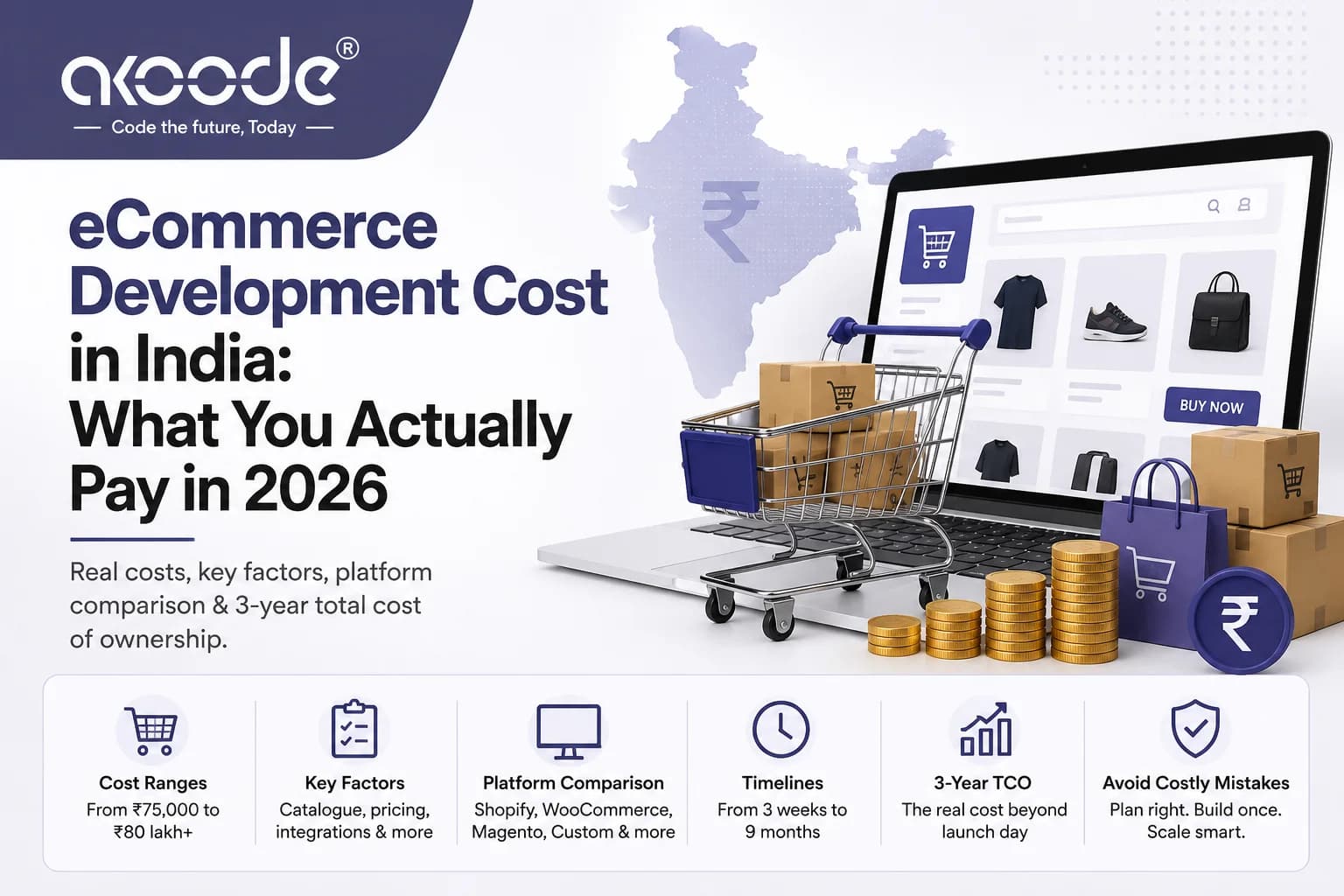
eCommerce Development Cost in India: 2026 Pricing Guide
dateJul 29, 2026

eCommerce Development Cost in India: 2026 Pricing Guide

What eCommerce development actually costs in India in 2026 — real price bands by store type, the 3-year total cost...

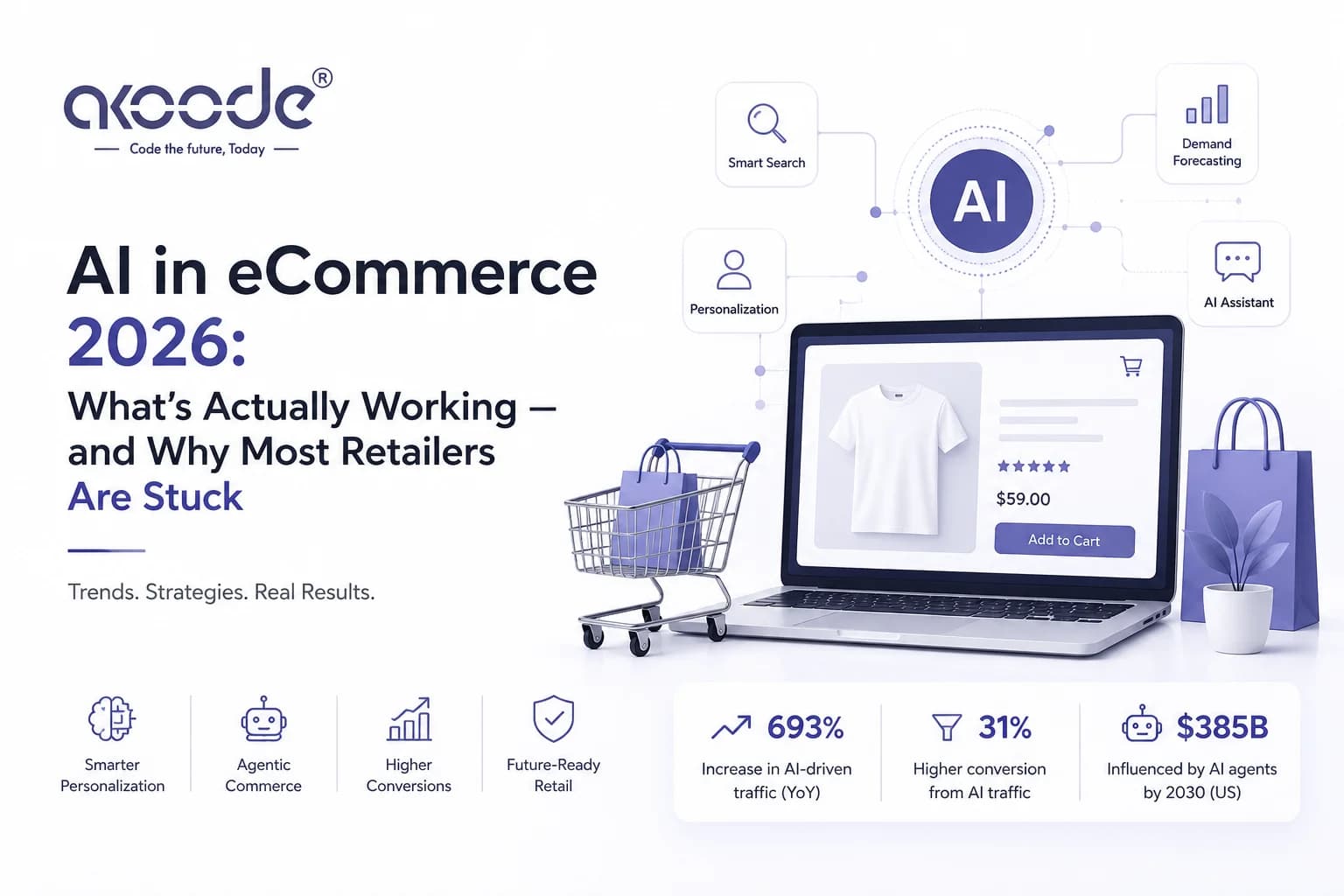
AI in eCommerce 2026: What's Actually Working — and Why Most Retailers Are Stuck
dateJul 27, 2026

AI in eCommerce 2026: What's Actually Working — and Why Most Retailers Are Stuck

AI in eCommerce 2026 — real adoption data, agentic commerce, what actually works, what it costs, and how to move...

Everything teams ask us first

Straight answers on timelines, team shape, security, and how we plug into your existing delivery process.

Depends entirely on catalogue complexity, integrations and custom logic, which is why anyone quoting you a number before discovery is guessing. A scoped B2B portal and a multi-vendor marketplace sit in completely different brackets. We give a fixed, itemised quote after a discovery call, so you compare real scope rather than a vague day rate.

A focused custom storefront usually takes 10 to 16 weeks from discovery to launch. Bigger builds involving ERP integration, B2B pricing engines or marketplace functionality tend to run four to six months. Timelines get set sprint by sprint at kickoff, and you see working software every fortnight instead of waiting on a big reveal.

Stay on Shopify if your catalogue is standard and your pricing is simple, genuinely. Custom makes sense once platform fees scale with revenue, checkout logic needs workarounds, or plugins start conflicting with each other. If you are asking the question seriously, a one-week audit of your current constraints usually settles it.

Yes, and it is one of our most common engagements. Every migration includes full URL mapping, a 301 redirect strategy, structured data preservation, and pre-launch crawls compared against the live site. Traffic continuity sits in the acceptance criteria, and we watch Search Console daily through the cutover window.

B2B e-commerce development is a core specialism for us, not a side offering. We build dealer portals with account-specific price books, credit limits, approval workflows, quote-to-order flows and bulk reordering, synced with ERPs like SAP, Zoho and Tally. The point is moving wholesale volume off phone and email into self-serve.

Yes. We build ecomme-commerce in React Native and Flutter on the same backend as your web store, so inventory, pricing and customer accounts stay in sync everywhere. Apps get designed around repeat purchase behaviour, with push re-engagement and saved-payment checkout quick enough to finish on a train.

For payments we regularly wire up Razorpay, Stripe, PayU, Cashfree, PayPal and UPI flows, and for logistics we use Shiprocket, Delhivery and international carriers. Beyond gateways there is ERP, CRM, tax and accounting, all with proper reconciliation. If a system exposes an API, we can connect it and keep it connected.

Yes, through support and maintenance plans covering monitoring, security patching, integration upkeep and conversion iteration. You keep a named engineering team that knows your codebase rather than a rotating ticket queue. Most clients stay with us long after launch, which our 97% retention figure reflects.

Senior engineering talent at a cost structure that lets you build custom infrastructure for the price of a template project elsewhere, put bluntly. Akoode adds delivery experience across India, the UK, the US and the UAE, so it builds and meets international performance, compliance and design standards. You get the economics without the communication and quality risks the market gets stereotyped for.

Yes, a significant share of our e-commerce work comes from the US, UK and UAE. We run overlapping hours with your timezone, work in whatever tools your team already uses, and structure contracts and invoicing for international billing. Several of our longest client relationships have been fully remote from the first call.

Start Your Project Project

Send your brief and someone from Akoode will respond within one business day. No pitch deck, no pressure.
Reply Time
< 30 working minutes
NDA-Friendly
Signed before kickoff
IP Ownership
100% yours from day one
Security check *
= ?

Stay Informed With Thoughtful Innovation

Subscribe To The Akoode Newsletter For Carefully Curated Insights On AI, Digital Intelligence, And Real-World Innovation.

P
J
S
A
110+Happy Clients Trusted By Akoode