QR-Linked Apparel Platform Development: eCommerce & Digital Identity Solution
Every garment ships with a QR tag stitched into the label. Once the buyer verifies the purchase, that tag opens a profile they control - bio, social links, whatever they're building right now - and it stays editable long after the order arrives.
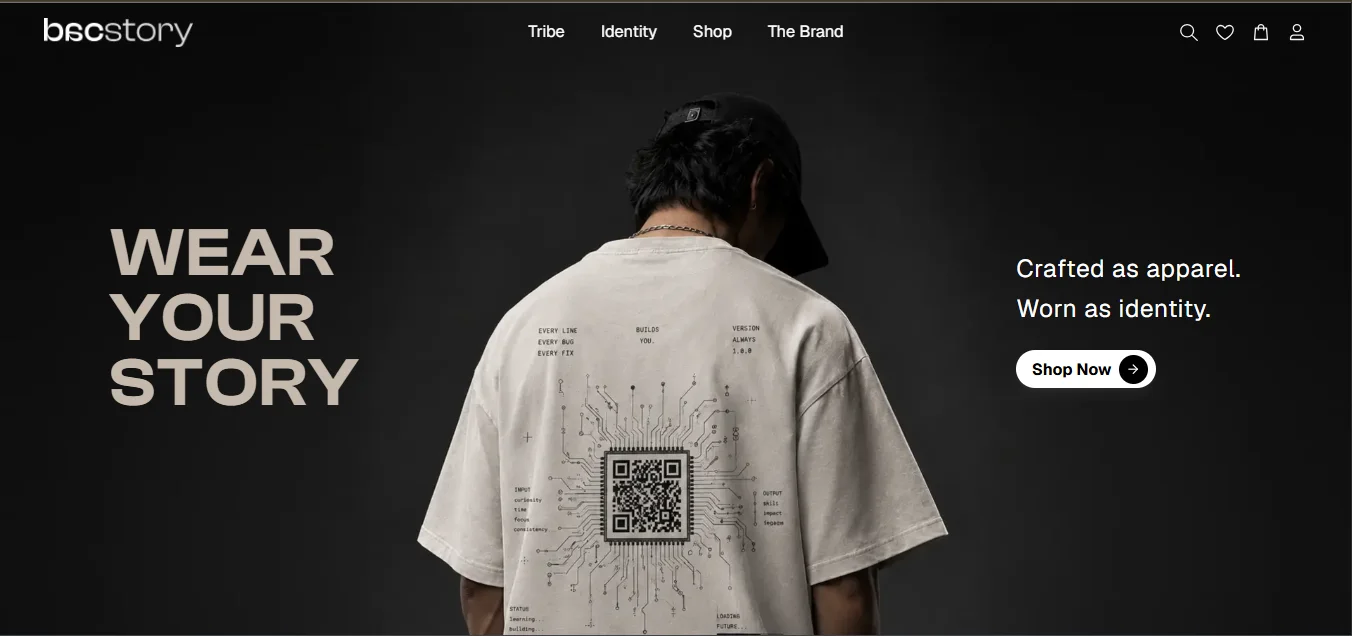
Scan to Reveal
A tag on the label opens a profile, not a product page
Ownership Checked First
Order ID and a one-time code stand before any edit
Store Included
Cart, wallet, and returns live in the same account
The Idea Was Simple to Say and Considerably Harder to Ship
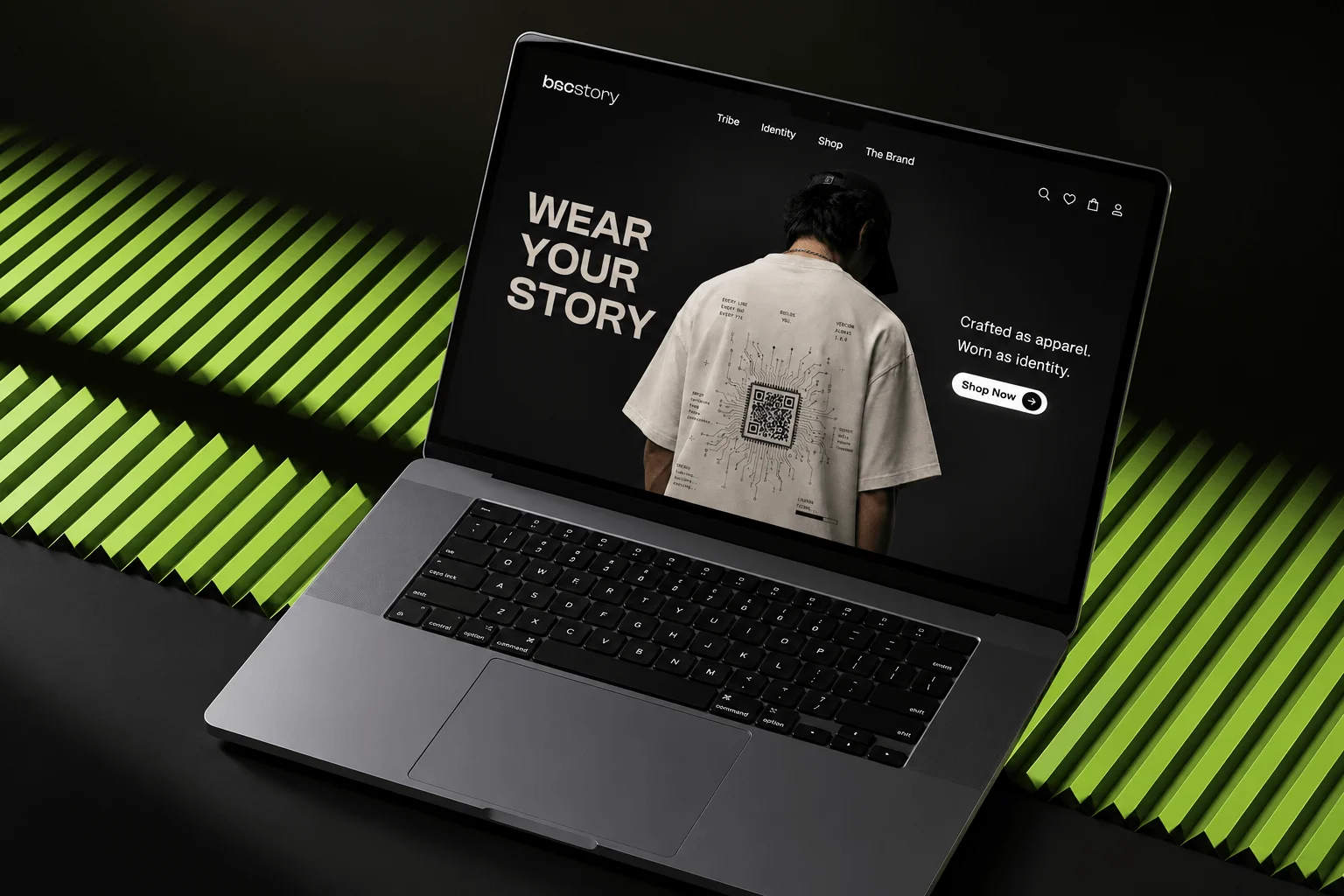
A shirt shouldn't have to say the same thing forever. That was the starting premise: sew a QR tag into the label, point it at a web profile the wearer actually controls, and let the garment carry whatever the person is currently about - not just whatever was printed on it at the factory.
Getting there meant three things had to work as one system rather than three separate features. The store needed to sell real apparel, with sizes and colors and a cart that behaves the way shoppers expect. The claiming step had to confirm that whoever was editing a profile actually owned the matching garment, not just found a tag on a shelf somewhere. And the public side had to open in under a second for a total stranger scanning a shirt at a bar, with nothing to install and nothing to log into.
Akoode built across all three: the commerce layer, an order-ID-and-OTP claiming flow that hands each garment to its rightful owner, and the profile builder plus public viewer that make the whole digital half of the idea usable in practice, not just on paper.
2
Claim Steps
Order ID plus a six-digit code confirm the buyer before a profile unlocks for editing.
1
Account, Everything
Storefront, wallet, returns, and the profile editor sit inside one login.
0
Apps to Install
A scanned tag opens straight in whatever mobile browser the phone already has.
Anytime
Profile Edits
Bio, socials, and current focus can change long after the garment shipped.
Project Info
Client
Bacstory, India
Industry
Apparel & Digital Identity
Use Case
QR-linked apparel with post-purchase profile management
Solution
A connected storefront, garment-claiming flow, and public profile viewer
Engagement
Fixed Cost
A Static Shirt Was Only the First Problem
Fixed graphics, awkward in-person networking, and a customer relationship that stops dead at delivery are three separate frustrations that all happen to live on the same piece of fabric.
Whatever Was Printed Was Permanent
A shirt's design doesn't move once it's manufactured. New job, new project, new interest - none of that shows up unless the wearer goes and buys something else.
Handing Off a Handle Was Still Manual
Passing along an Instagram or a portfolio link at an event usually meant typing it out on the spot, or handing over a card that ends up crumpled in a pocket.
Delivery Was the End of the Story
Most apparel brands had nothing more to say to a customer once the box showed up, aside from the occasional promotional email.
Anyone Could Have Found the Tag
A QR code on a garment is out in the open by definition. Whatever it unlocked needed proof that the scanner was actually the buyer.
"Printing the tag is nothing. Making sure only the buyer can speak through it - that's the actual product."
Three Separate Requirements Had to Behave Like One Product
A working store, a locked-down claiming step, and a profile people would bother keeping current - none of that means much if it ships as three loosely connected features instead of one build.
Ship a Storefront That Stands on Its Own
Catalog, size and color variants, a working cart, checkout - the commerce side needed to hold together independent of anything QR-related sitting on top of it.
Put Ownership Ahead of Access
Finding a tag should never be enough to control a profile. Order ID plus a one-time code had to sit between a scan and any editing rights.
Make Editing a Profile Feel Like Nothing
Bio, avatar, socials, and a "what I'm into right now" field needed to be quick enough that people actually revisit and update them.
Let a Total Stranger View Without Any Setup
Whoever scans a garment in public usually has no account and no history with the brand - the page had to just work, first try.
Give the Relationship a Reason to Continue
Wallet credit and a self-service return window meant the account stayed useful for the customer well past unboxing.
Built in the Order a Customer Actually Moves Through It
Shop first, claim second, customize third, get seen fourth - the build followed that sequence exactly, so each stage could hand off cleanly into the next instead of standing alone.
Catalog and Storefront
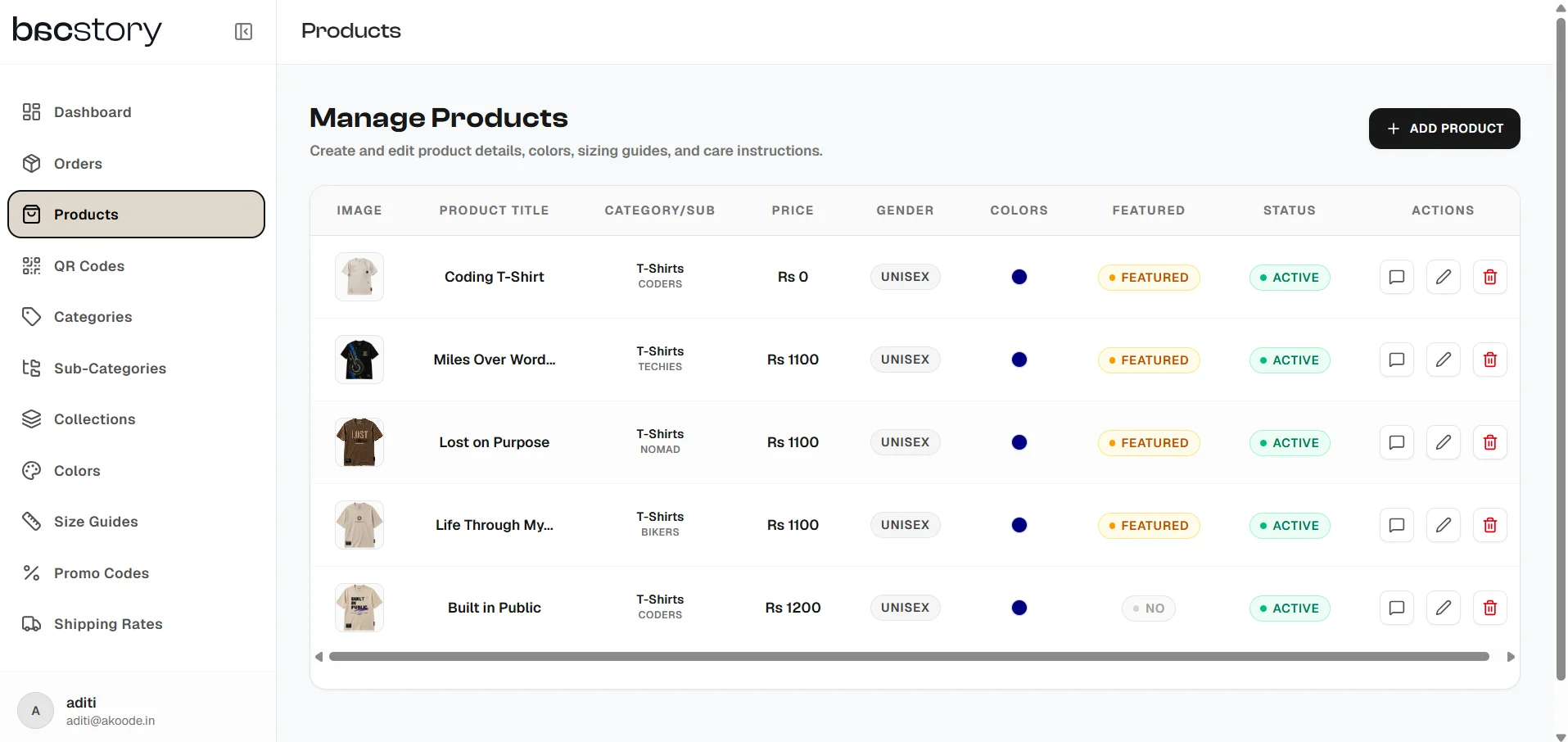
A standard apparel store - color and size variants, a size-guide modal, wishlist, cart - the base everything else sits on top of.
Order ID and OTP Claiming
A verification step tying one garment to one buyer using their order info and a time-limited one-time code, gating any profile access.
Profile Builder
An account-side editor for bio, avatar, cover image, theme color, socials, and a "current focus" field, with edits reflected on the public page right away.
Public Profile Viewer
A page that loads in any mobile browser the second a garment's tag gets scanned - nothing to install, nothing to log into, for the person viewing it.
Wallet and Returns
Account-side wallet credit usable at checkout, plus a self-service return or exchange flow for the ordinary post-purchase path.
What the Platform Actually Lets People Do
Highlight 01
Garment Claiming & OTP Verification
A two-step check - order ID plus a six-digit code sent by email or text - confirms who actually owns a garment before its profile can be touched at all.
- Order ID matched against the account on file
- Time-limited six-digit verification code
- Profile editing stays locked until the claim is confirmed
Highlight 02
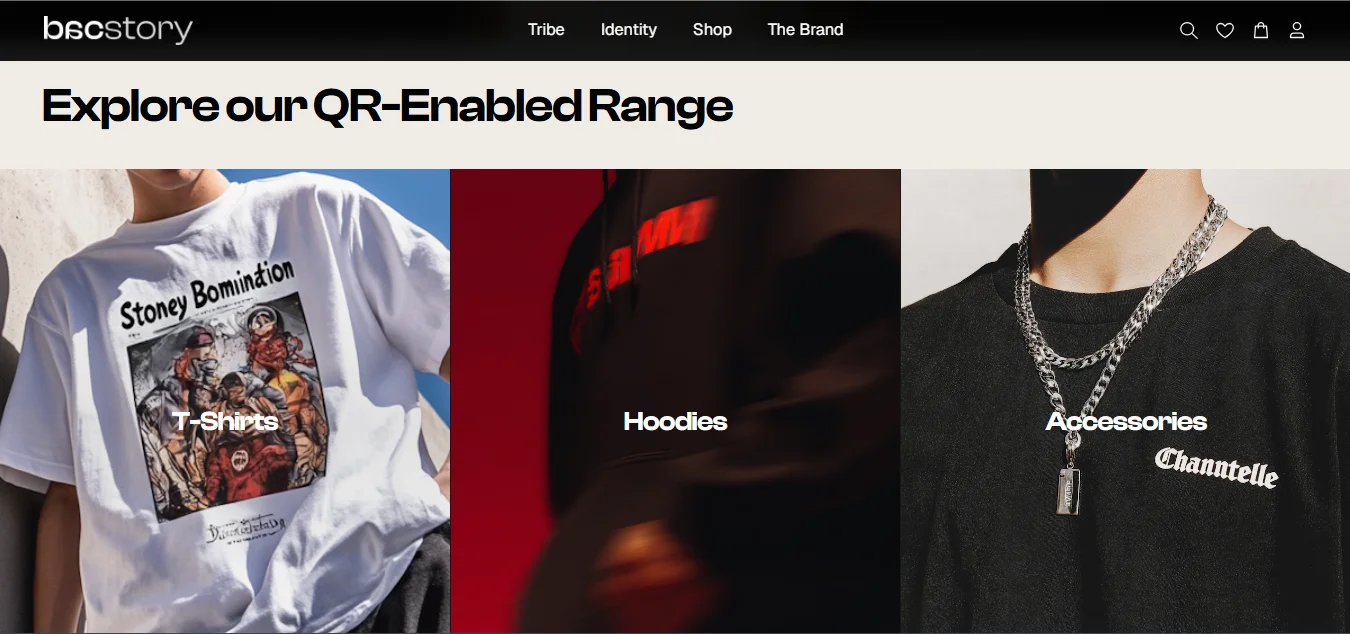
Bacstory Profile Builder
Inside the account dashboard, owners set a bio, avatar, cover image, theme color, linked social channels, and whatever they're currently building, learning, or into.
- Bio, avatar, and cover image editing
- Linked social channels and theme color
- "Right now" focus and story prompts
Highlight 03
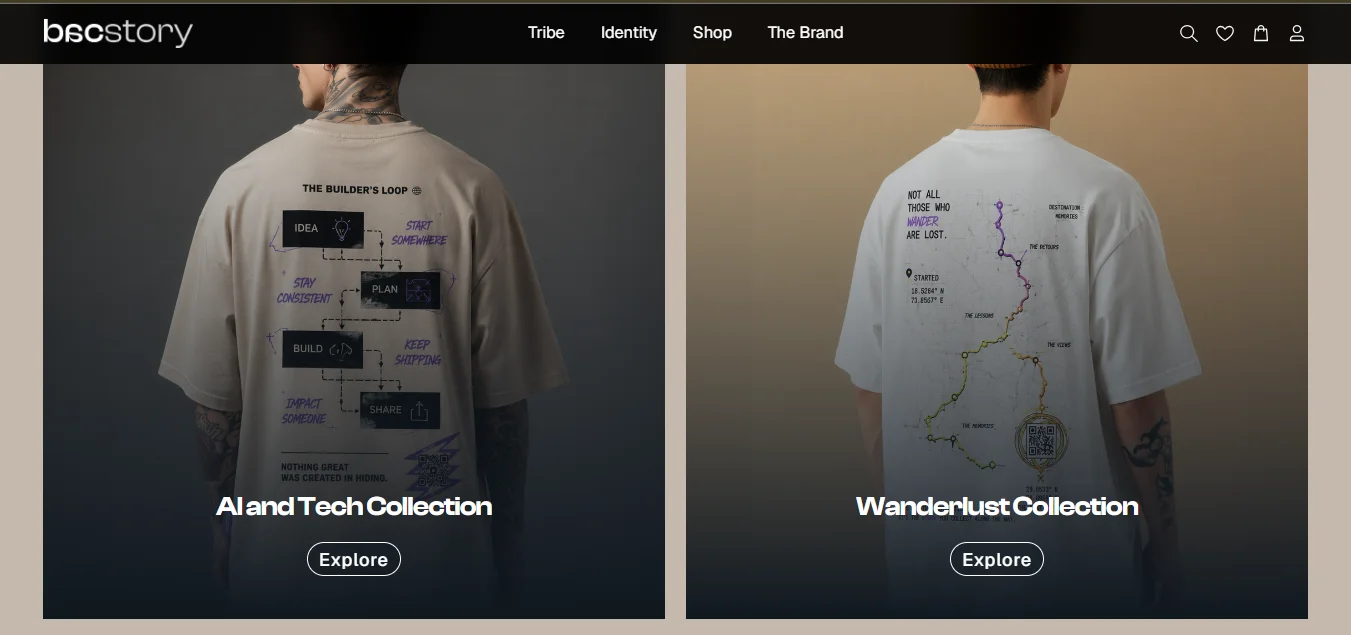
Public Instant QR Profile Viewer
Scan a garment's tag and the owner's profile opens straight in a mobile browser - no app to download, no account needed, no extra step for whoever's scanning.
- Loads on any modern mobile browser
- No account required to view it
- Always reflects the owner's latest saved edits
Highlight 04
Storefront & Size Guide
Catalog browsing, color and size selection, an interactive size-guide popup, and a cart that carries both promo codes and wallet credit through checkout.
- Color and size variant selection
- Interactive size-guide modal
- Cart supports promo codes and wallet credit
Highlight 05
Wallet & Self-Service Returns
Store credit, cashbacks, and refunds sit in an account wallet usable at checkout, alongside a self-service window for return or exchange requests.
- Wallet credit applied at checkout
- Self-service return and exchange requests
- Photo or video proof upload where it's required
The Screens Were Easy. The Connections Between Them Were Not
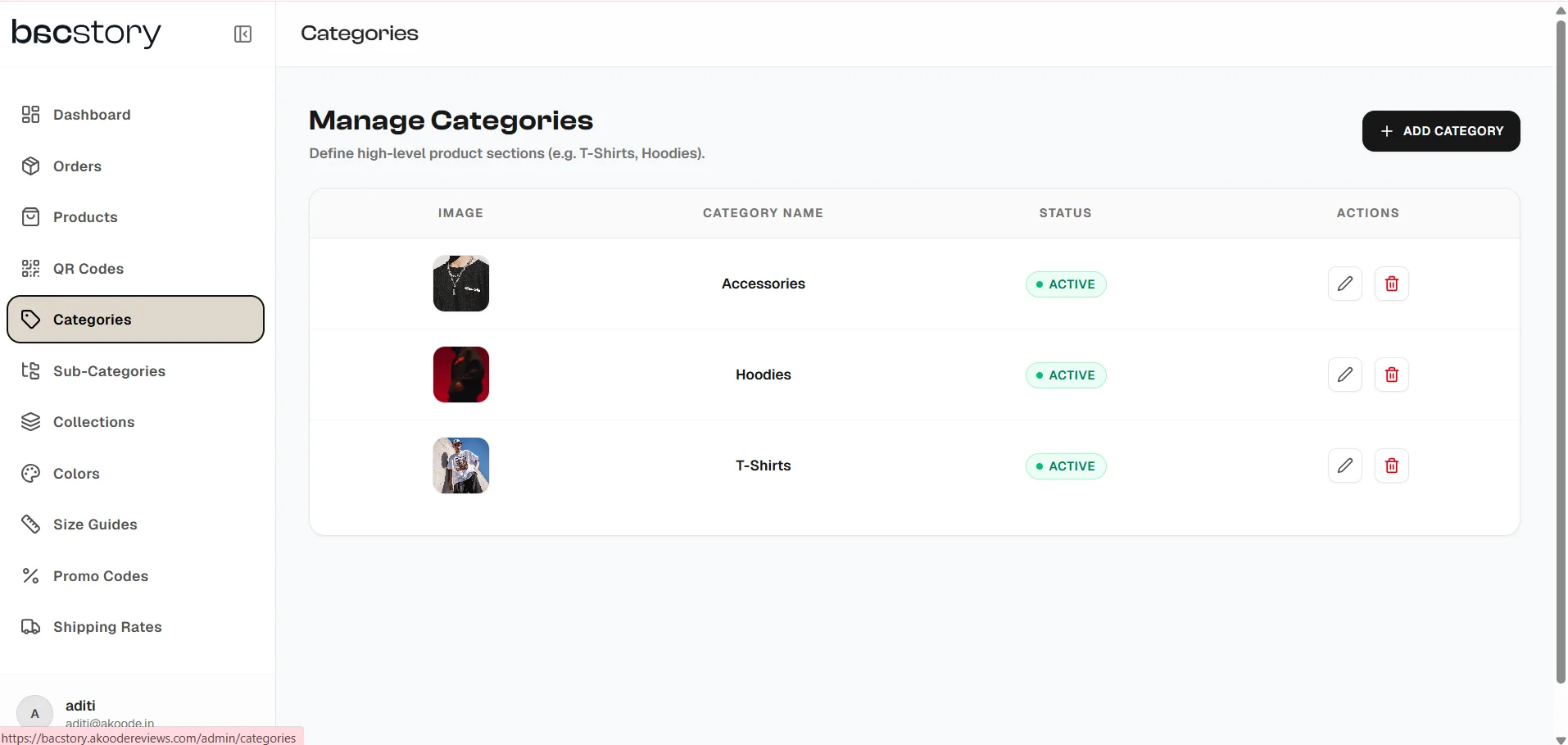
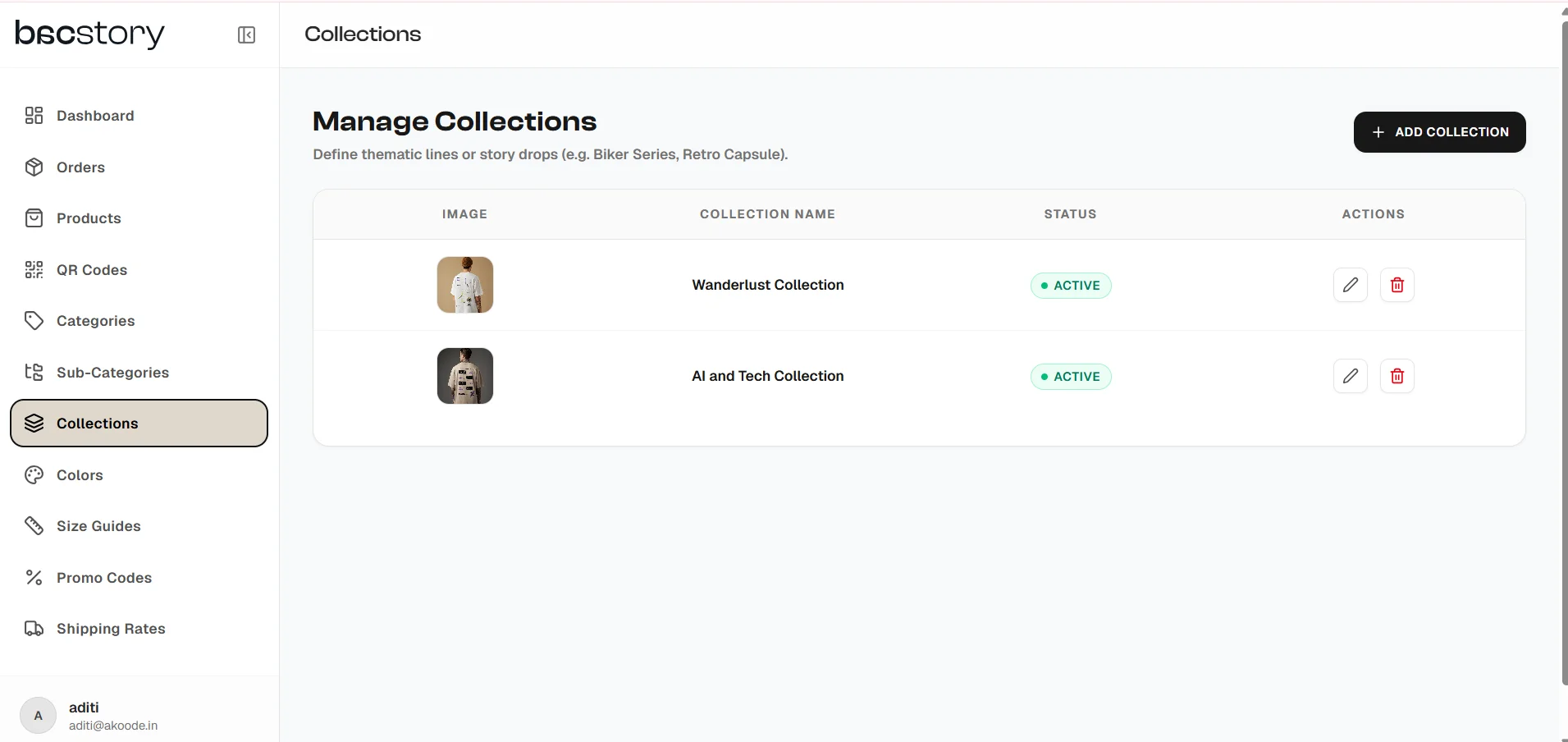
A storefront, a verification step, and a profile page are each familiar on their own. What's genuinely hard is keeping one physical garment reliably tied to one digital identity.
Checking Ownership Without Adding Friction
A found tag shouldn't be enough to claim a garment, but the check also can't feel like a chore the buyer has to fight through.
Our Approach
Order ID plus a time-limited six-digit code together confirm the real owner before any profile can be created.
One Tag, Exactly One Profile
Every garment gets its own QR code, and no two of those codes can ever end up pointing at the same profile.
Our Approach
Each tag carries a unique identifier that only resolves to a profile once a claim succeeds, keeping claimed and unclaimed states cleanly apart.
Editable Forever, Printed Once
The garment itself is fixed the moment it's made, but whatever sits behind its QR code has to stay editable indefinitely.
Our Approach
The QR code always resolves to the same address, while the page content is pulled fresh from the owner's saved profile on every single scan.
Working on the First Try, Every Phone
The person scanning a garment in public is usually a stranger with no app and no account, and the page still needs to load correctly.
Our Approach
Public profile pages open in a standard mobile browser with no login or install step, so a scan behaves the same way for anyone.
Separate Store Tasks Became One Buying Journey
What the brief actually supports is a storefront, a verified claiming system, and a public profile layer working as one product - that's the confirmed outcome. No revenue, conversion, or usage numbers were provided, so none appear below.
No Digital Layer on the Garment
A shirt stopped being interesting the moment checkout finished - nothing tied it back to the wearer once it shipped.
Nothing to Verify a Claim Against
There was no mechanism confirming that whoever edited a profile actually owned the matching physical piece.
Networking Still Meant Typing Something Out
Sharing a handle in person had no shortcut - it was the same manual exchange it's always been.
No Defined Reason to Come Back
Wallet credit and returns were in the brief, but nothing yet existed to build that ongoing relationship on.
A Real eCommerce Foundation
Akoode built the storefront with color, size, and cart handling as a solid base on its own, independent of the QR layer.
Order-ID and OTP Claiming
A two-step verification confirms genuine ownership before a profile can be created or touched.
Instant Public Profile Pages
Scanning a tag opens a live profile in whatever mobile browser is already installed - no account needed to view it.
Wallet and Return Handling
Store credit plus a self-service return window give the brand a reason to stay relevant after delivery.
Garments Carry a Living Identity
Each piece links to a profile its owner can keep updating long after the purchase is done.
Claiming Is a Deliberate Gate
Order ID and OTP verification stand between a found tag and control of someone's profile.
Strangers Connect in One Scan
A scan now replaces the usual back-and-forth of trading handles or business cards.
The Relationship Keeps Going
Wallet credit and self-service returns keep the account worth returning to well after unboxing.
1Connected Platform
Storefront, claiming, and public profiles run as one system, not separate tools bolted together.
2-StepVerified Claiming
Order ID and OTP together confirm ownership before a profile unlocks.
0Apps Needed to View
Public profile pages open directly in a mobile browser once a tag is scanned.
The Same Pattern Reaches Well Beyond a T-Shirt
Strip out the apparel framing and what's left is a general pattern - a physical object, a verified claim, a live page behind it - that fits plenty of situations besides clothing.
Artist and Creator Merch
Musicians and creators can link tour merchandise to a claimable page carrying tour dates, releases, and links, updatable long after the drop sells through.
Event and Conference Badges
Attendee badges could carry a claimed profile with contact details and a talk schedule, replacing the usual paper business card handoff.
Corporate Swag Programs
Company-branded apparel could point to an employee's public work profile instead of a static logo - useful at conferences and recruiting events.
Festival and Venue Wearables
Wristbands or garments at festivals could claim into a profile carrying schedules, links, or a personal story tied to the event.
Limited-Drop Collectibles
A limited apparel run could use claiming to prove authentic ownership and unlock content that's specific to that one piece.
Community and Membership Apparel
Clubs or membership programs could issue apparel that claims into a member profile, giving the garment a role beyond identification.
The Hard Part Is the Seam. That's Where We Actually Focus
A product like this lives or dies on the connection between a physical object and the software behind it - the part that's easy to describe out loud and genuinely hard to build right.
The Seam Is the Core Problem, Not an Add-On
A QR tag is only as good as the claiming and rendering logic sitting behind it. We treat that connection as the actual engineering problem rather than something bolted onto a storefront afterward.
Full Ecommerce, Not a Demo of the Concept
Cart, checkout, wallet, and returns get built to the same standard as the claiming layer, so the commerce half of the product holds up entirely on its own.
Verification Isn't Decoration Here
Order-ID and OTP claiming decides who controls a garment's public identity. We build it like the gate it actually is, not a checkbox to tick off.
Designed for the Stranger Doing the Scanning
The person viewing a profile is often not a customer at all. We build the public-facing side for zero friction, since it doesn't get a second chance to load correctly.