


Blockchain Development Company
Most blockchain projects that fail don't fail on the technology, they fail because nobody checked whether blockchain was actually the right tool before building on it. Akoode is a blockchain development company that starts with that question honestly, then builds smart contracts, decentralized applications, and Web3 platforms engineered for the one thing this category can't fake: security that holds up once real money is moving through the code.

 AI-First Since 2023Build locally, shipped globally
 180+Projects Shipped
 ClutchTop B2B Company
 UK, US & India
 15+Industries Served
IS BLOCKCHAIN ACTUALLY RIGHT FOR YOUR BUSINESS
Before We Build Anything, We Answer This Question Honestly
A surprising share of blockchain inquiries don't need blockchain. They need a well-designed database with an audit log, and building on a blockchain instead just adds cost, latency, and complexity for no real benefit. We'd rather tell you that in the first conversation than take the project anyway.

Blockchain is probably the right fit when:
 Multiple parties who don't fully trust each other need to agree on the same data, a supply chain with several independent vendors, a consortium of banks, a marketplace with anonymous participants
- Removing a central intermediary is the actual point, peer-to-peer payments, decentralized finance, ownership records nobody can unilaterally alter
- Transaction history needs to be genuinely tamper-evident and independently verifiable, not just backed up

A normal database is probably the right fit when:
- You control all the data and all the parties involved trust your organization already
- You need to update or delete records freely, which blockchain is specifically designed to resist
- Speed and low transaction cost matter more than decentralization, and a centralized system with good access controls solves the actual problem

If your use case lands in the first list, we're the right partner. If it lands in the second, we'll say so, and either point you toward a more suitable service or, worse for us but better for you, recommend you don't build this at all yet.
Honest Advice Better Outcomes
Our Blockchain
Development Services
Every engagement gets scoped against a real use case validated in the section above, not a generic "let's add blockchain" brief. Each service below includes the core technology we typically build it with.
 Talk to Our Team
- Talk to Our Team
What it is
Feasibility analysis and architecture planning that answers whether blockchain fits your use case before any development starts.Problem it solves
Projects that get built because blockchain sounded right in a board meeting, then quietly fail because nobody validated the actual use case first.Typical engagement
We map your specific business process against the qualifying questions from the section above, then scope architecture, consensus mechanism, and network type only once the fit is real.Outcome
A validated direction before real budget gets spent, or an honest answer that this isn't the right project yet.Built with
Architecture assessment frameworks, tokenomics modeling, ROI mapping against your actual transaction volume.
Why Security Isn't a
Line Item Here,
It's the Actual Product
What Our Audit Process Actually Checks
A bug in most software gets patched. A bug in a deployed smart contract holding real funds gets exploited, often within hours of anyone finding it, and there's frequently no way to patch it after the fact. That difference is why security review isn't an optional add-on in our process, it's built into the engagement from the start.
• Reentrancy vulnerabilities, the exploit pattern behind some of the industry's largest fund losses
• Access control gaps that let an unauthorized address call functions it shouldn't reach
• Integer overflow and underflow conditions in financial logic
• Logic errors in token distribution, staking, or reward calculations that only surface under specific edge cases
• Front-running and transaction-ordering vulnerabilities in anything involving trades or auctions
• Gas optimization issues that make legitimate use prohibitively expensive
Why Audit and Development
Stay Separate
The person who wrote a contract is the worst-positioned person to catch their own logic errors, the same blind spot that makes code review a standard practice in regular software applies with far higher stakes here. Our audit process runs as a distinct review, not a self-check by the same engineers who wrote the contract, because catching a vulnerability before deployment costs nothing compared to what an exploit costs after.
WHAT THIS ACTUALLY COSTS
AND HOW LONG IT TAKES
On the page directly, rather than left for a sales call, because cost and timeline are usually the two questions that decide whether a shortlist conversation even starts.
What Drives the Cost
- Network type
- A private or consortium network costs less to operate than deploying on a public mainnet with real transaction fees
- Smart contract complexity
- A simple token contract costs meaningfully less than a multi-function DeFi protocol with complex logic
- Audit depth
- A basic automated scan and a full manual audit by independent reviewers sit in genuinely different cost brackets, and for anything handling real funds, the manual audit isn't optional
- Regulatory and compliance scope
- Token launches and financial platforms carry real legal and compliance work that a simple traceability system doesn't need
How Long It Actually Takes
Step -1
A feasibility and architecture engagement typically takes two to four weeks.
2-4WEEKS
Step -2
Smart contract development for a single, well-defined use case usually runs four to eight weeks, including the audit, and we won't compress the audit timeline to hit a deadline, that's exactly the corner that shouldn't get cut.
4-8WEEKS
Step -3
A full dApp with a custom network and integration work typically runs three to six months depending on complexity.
3-6Months
WHERE WEB3
STANDS IN 2026
None of this is a forecast. These are the conditions already shaping blockchain budgets and technical decisions this year.
Is real-world asset tokenization actually happening, or still theoretical?
Tokenization of real-world assets, real estate, invoices, commodities, has moved from conference talk to genuine production deployments in 2026, particularly in markets with clearer regulatory frameworks. The businesses succeeding here are the ones treating the legal and compliance work as equally important as the smart contract itself, not an afterthought to figure out post-launch.
Why has Layer 2 scaling become the default instead of the exception?
Deploying directly on a Layer 1 mainnet for anything with real transaction volume has become the exception rather than the default, as Layer 2 solutions have matured enough to handle production workloads at a fraction of the cost. The architectural conversation in 2026 usually starts with which Layer 2 fits, not whether to use one.
How is regulatory clarity changing which blockchain projects actually launch?
Clearer regulatory frameworks in several major markets have removed a real source of hesitation that stalled token and DeFi launches for years. Projects that would have sat in legal limbo in 2022 now have an actual compliance path, which has shifted more blockchain conversations from "can we legally do this" to "should we."
Why is account abstraction changing who can actually use Web3 products?
Wallet complexity, seed phrases, gas fees, transaction confirmations, has been the biggest adoption barrier for anyone outside the existing crypto-native audience. Account abstraction is finally making it possible to build applications where a user doesn't need to understand any of that, which matters enormously for any consumer-facing blockchain product trying to reach a mainstream audience.
Why do more enterprises now insist on formal verification for high-value contracts?
As exploit losses across the industry have made the cost of a missed vulnerability impossible to ignore, formal verification, mathematically proving a contract behaves as specified, has moved from an academic exercise to a genuine requirement for high-value deployments. A standard audit still catches most issues, but for contracts holding significant value, formal verification is increasingly the expected bar.
Blockchain Across 15+ Industries
Blockchain earns its complexity in specific situations, multiple parties, low trust, a genuine need for tamper-evident records, and those situations look different in every industry. Here's how our blockchain work shows up across the 15 industries we serve.
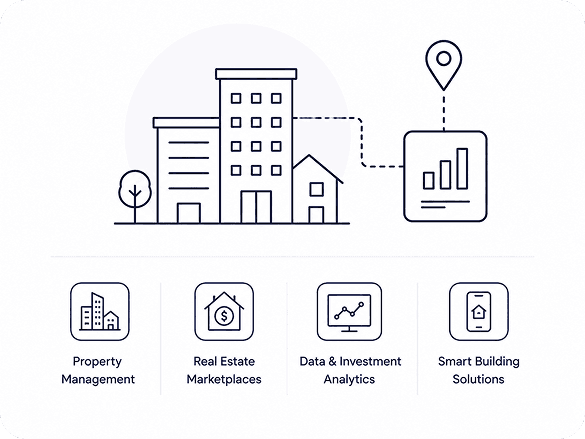
Real Estate
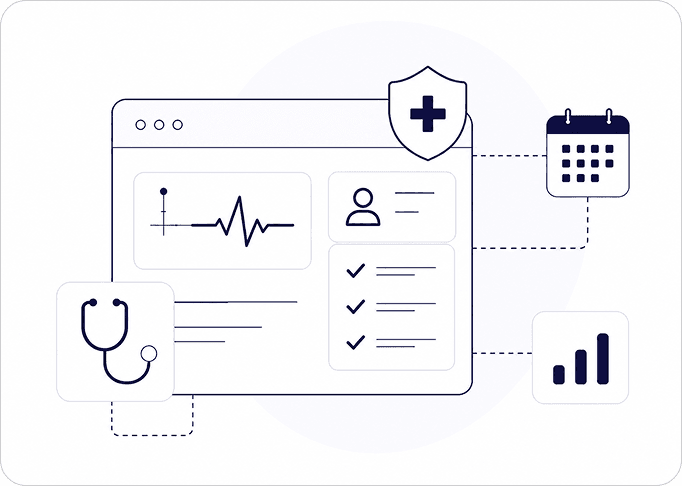
Healthcare
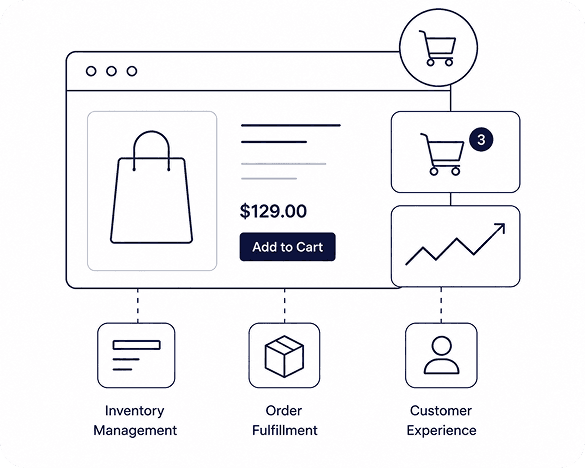
Retail & E-Commerce
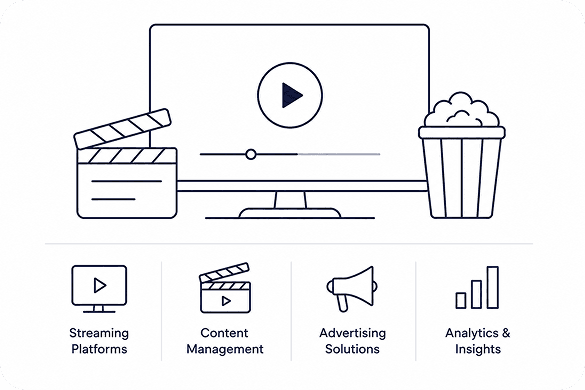
Media & Entertainment
Finance & Banking
Automotive
Agriculture
Telecommunication
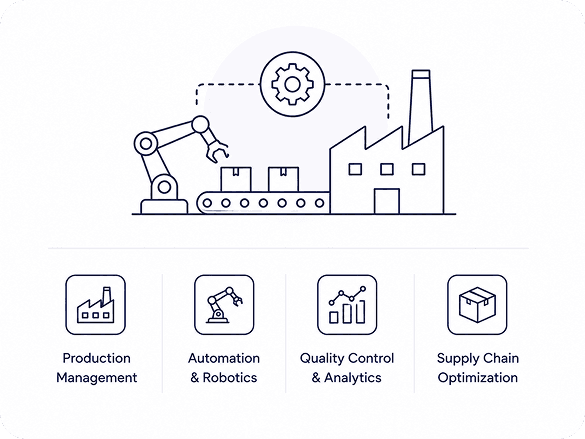
Manufacturing
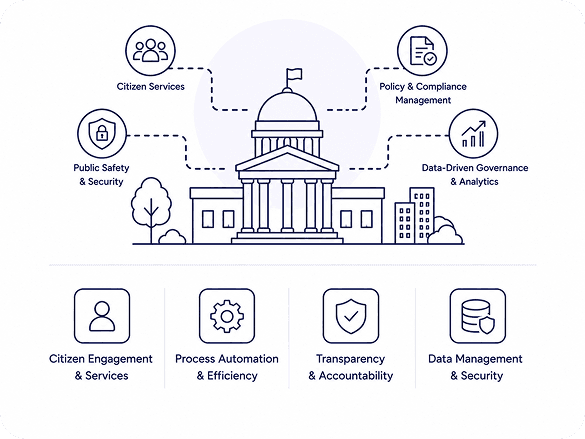
Public Sector & Government
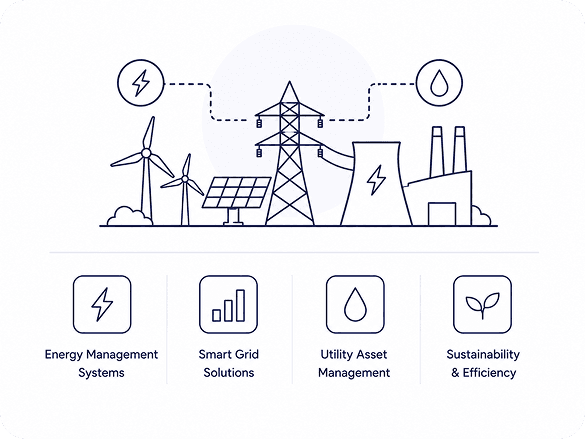
Energy & Utilities
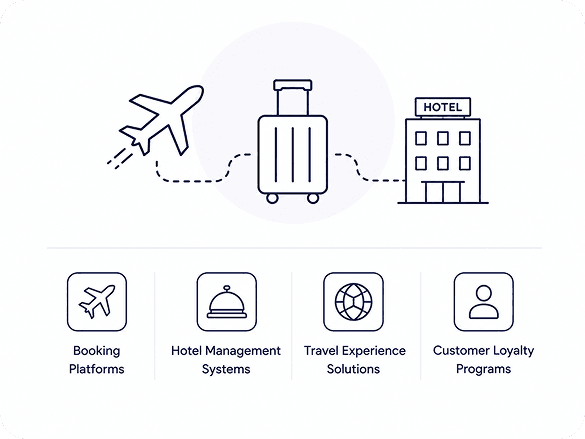
Travel & Hospitality
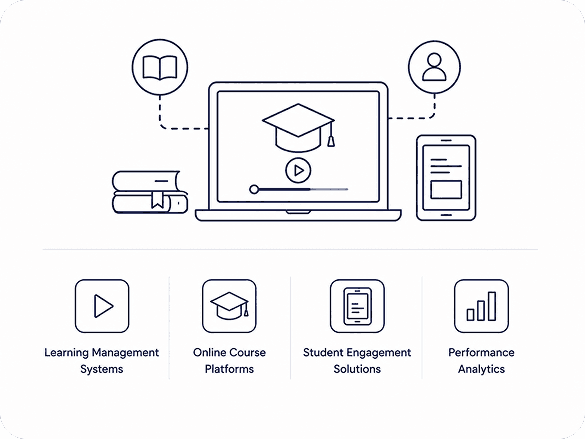
Education & E-Learning
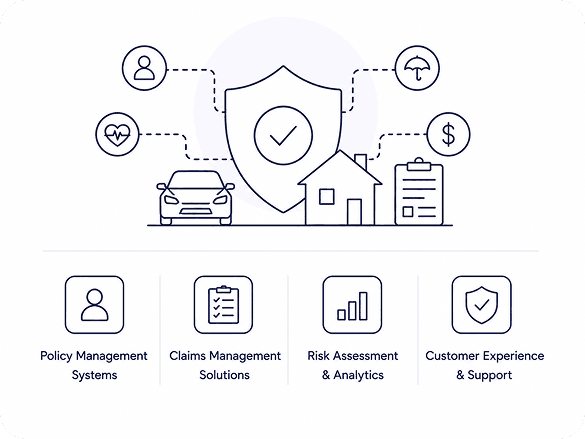
Insurance
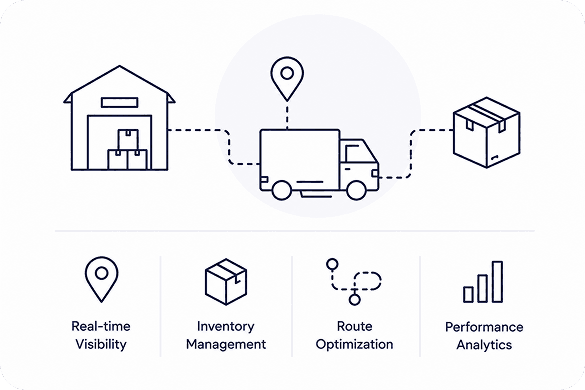
Logistics & Supply Chain
Technologies We Use For Blockchain Development
We leverage a powerful blockchain technology stack to build secure, scalable, and enterprise-grade blockchain solutions. Our blockchain development expertise spans Ethereum, Polygon, Solana, Hyperledger Fabric, BNB Chain, and Avalanche, supported by Solidity, Rust, Hardhat, Foundry, Web3.js, and Ethers.js for smart contract development and decentralized applications (dApps). We combine React.js, Next.js, Node.js, Python, IPFS, Chainlink, and AWS to develop high-performance Web3 platforms, DeFi applications, digital asset tokenization solutions, and enterprise blockchain systems. Our technology-driven approach focuses on security, interoperability, transparency, and long-term scalability.
 Go
 Java
 Node.js
 TypeScript
 Python
 React
 Next.js
 Flutter
 Kotlin
 Swift
 GraphQL
 PostgreSQL
 Elasticsearch
 Redis
 Docker
 Kubernetes
 AWS
 Terraform
 GitHub Actions
 OWASP
OUR BLOCKCHAIN DEVELOPMENT PROCESS
Six stages, and skipping straight past the first one is how a project ends up built on the wrong network for a use case nobody validated.
Use Case Identification and Feasibility
Architecture and Protocol Selection
Smart Contract and Core Development
Application and Integration Development
Testing and Security Audits
Deployment, Monitoring, and Scaling
Flexible Engagement Models for Blockchain Development
Every blockchain project has a different shape, so there are three ways to work with us. Pick whichever fits how validated your use case is right now, and how long you need ongoing platform ownership.
Fixed Cost
Best for: scope that is already nailed down, and a price you want nailed down with it
- Price, timeline and scope agreed before a line of code gets written, and they stay agreed
- Milestones with acceptance criteria you personally sign off, one by one
- The low-risk route for MVPs and launches with a hard deadline attached
- If mid-project surprises are what worry you, this model exists to prevent them
Dedicated Team
Best for: products that will keep evolving long after version one ships
- Engineers, designers, QA and a PM who work as part of your team, not around it
- You set sprint priorities. We build them. That simple
- Grow or shrink the team as the roadmap demands, without renegotiating everything
- Plugs into whatever tools and workflows your team already runs
- You talk to the people writing your code. Never through an account manager
Staff Augmentation
Best for: a skill gap today, or velocity you need by next sprint
- Specialists who slot into your existing team and standups from day one
- Senior skills without the cost, or the three-month wait, of a full-time hire
- Add people when timelines tighten, release them when things calm down
- Onboarded and shipping within days. Not months. Days
Work That Speaks for Itself
As a blockchain development company in India, we treat every engagement as a business problem first: who needs to trust whom, and what it costs when they can’t. These case studies show how our blockchain development services scope the real problem before building smart contracts, dApps, or enterprise blockchain solutions, for clients in Delhi NCR, Mumbai, Bengaluru, and across India.
Website Redesign and Digital Transformation
Website Development and Digital Transformation
Key Outcomes
4+
Service Categories Structured
8+
Industries Represented
Challenge
What We Built
AI Player Performance Tracking Case Study
Why Choose Akoode as Your Blockchain Development Company
Plenty of vendors can deploy a smart contract. Choosing a blockchain partner is really a decision about who's accountable for what happens once that contract is holding real value and a vulnerability would actually cost something.

Talk Directly with Our Founder
Discuss your software vision, AI roadmap, and delivery strategy with the team leading product engineering at Akoode.
Insights on Blockchain Development
View allPractical writing on smart contract security, Web3 architecture, and how to tell when blockchain is, and isn’t, the right call.
 Nov 03, 2026
Mobile App Development Cost in the USA: iOS, Android and Flutter in 2027
What a mobile app costs in the USA in 2027: iOS vs Android vs Flutter, store fees, upkeep, new US...
 Nov 02, 2026
AI Agent Development for US Businesses: Costs, Use Cases and ROI in 2027
What AI agents cost US businesses in 2027, where they pay off, and how to check ROI with real numbers,...
 Nov 01, 2026
Custom Website Development Company in Gurgaon: Fast, Secure and Built to Rank (2027)
Custom website development company in Gurgaon building fast, secure, search-ready websites and web apps for 15+ industries. Book a call...
Frequently Asked Questions
Straight answers on timelines, team shape, security, and how we plug into your existing delivery process.
A blockchain development company designs and builds decentralized systems, smart contracts, and applications that let multiple parties who don't fully trust each other rely on the same tamper-evident record. That includes feasibility assessment, architecture, development, security auditing, and integration with existing systems.
Often a regular database is the right answer, and we'll tell you that honestly during scoping. Blockchain earns its complexity when multiple untrusting parties need to agree on shared data or when removing a central intermediary is the actual goal. If you control all the data and everyone already trusts your organization, a well-designed conventional system is usually faster and cheaper.
It depends on network type, smart contract complexity, and audit depth. A simple token contract and a multi-function DeFi protocol with a full independent audit sit in genuinely different cost brackets. We give a fixed estimate after understanding your actual use case, not a number pulled from a generic range.
A feasibility and architecture engagement typically takes two to four weeks. Smart contract development for a well-defined use case, audit included, usually runs four to eight weeks. A full dApp with custom network and integration work typically takes three to six months, and we won't compress the audit timeline to hit a deadline.
An independent review checks for known vulnerability patterns, reentrancy, access control gaps, integer overflow, logic errors in financial calculations, and more, run separately from the team that wrote the contract. This catches vulnerabilities before deployment rather than after an exploit, which is the only time that actually matters in this category.
Yes, blockchain integration is one of our core services specifically because most businesses need the new system to connect to ERP, CRM, or existing enterprise platforms rather than run in isolation. We build the connection layer so blockchain data reaches the tools your team already uses.
We work across Ethereum, Polygon, Solana, and Hyperledger, and select the network based on your actual requirements, transaction volume, cost sensitivity, and privacy needs, rather than defaulting to whichever network is most discussed.
Yes, including tokenomics design, compliance considerations, and the technical development of the token itself. Token models get stress-tested against realistic usage before launch, not designed to look good in a pitch deck alone.
Not necessarily, scope changes the engagement size, not whether the underlying approach works. A single smart contract for a well-defined use case is a meaningfully smaller and faster engagement than a full custom network, and we scope it as the smaller project it actually is.
Yes, a significant share of our blockchain development work comes from clients in the US, UK and UAE. Communication runs through whatever tools your team already uses, and several of our blockchain engagements have been fully remote from the first feasibility conversation.
Start Your Blockchain Project
Stay Informed With Thoughtful Innovation
Subscribe To The Akoode Newsletter For Carefully Curated Insights On AI, Digital Intelligence, And Real-World Innovation.