Energy Software Development Company
We build smart grid management platforms, energy management systems, renewable energy monitoring software, utility billing platforms, and AI-powered consumption analytics tools for power utilities, renewable energy operators, oil and gas companies, and cleantech businesses. Every system is engineered for grid-scale reliability, regulatory compliance, and the real-time operational demands of critical energy infrastructure.
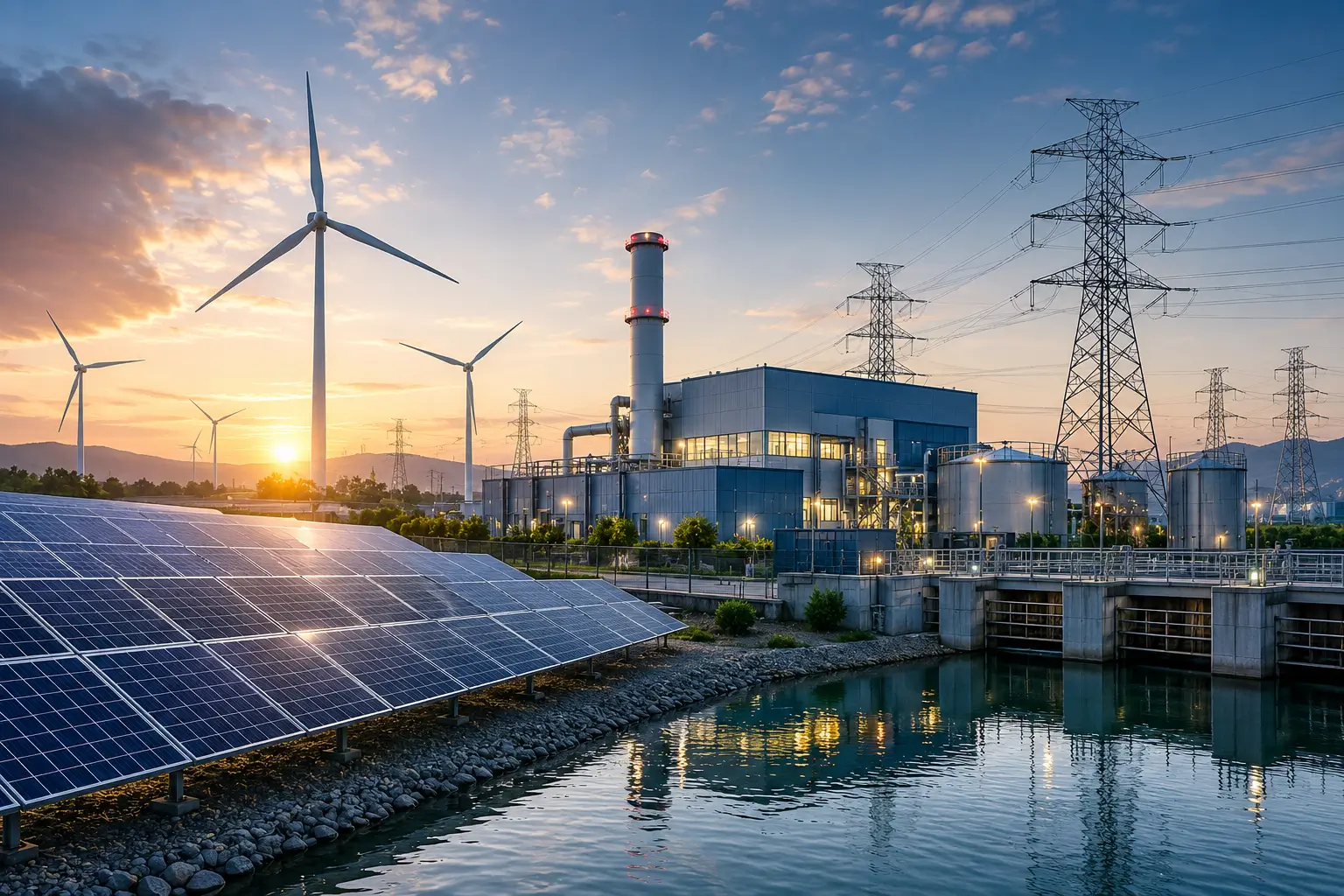
Intelligent, scalable & future-ready software for modern businesses
Our client see measurable results within the first 90 days of launch.
Why Energy and Utilities Businesses Are Losing Efficiency and Revenue to Technology Gaps
Legacy SCADA systems, manual meter reading processes, and disconnected grid operations are not just operational inefficiencies. They are the reason energy businesses pay more to deliver less and respond slower to a sector transforming faster than their infrastructure was built to handle.




Legacy SCADA and OT Systems Creating Cybersecurity Exposure
Operational technology systems running on unpatched legacy software in air-gapped environments that are no longer truly isolated represent the highest-consequence attack surface in critical infrastructure. Energy sector cyberattacks have increased year over year and legacy OT software with no modern security architecture is the primary entry point regulators are now mandating operators to address.
No Predictive Asset Maintenance Capability
Transformer failures, substation equipment degradation, and pipeline integrity issues identified through scheduled inspection rather than continuous sensor monitoring create outage risk that predictive maintenance software eliminates. A transformer failure on a hot summer day costs far more than the sensor network that would have predicted it six weeks earlier.
Energy Trading and Portfolio Management Done in Spreadsheets
Power traders and energy portfolio managers working in Excel and disconnected position management tools cannot respond to market price movements at the speed that energy markets now require. Real-time trading platforms with AI price forecasting, risk exposure dashboards, and automated hedging rules replace manual analysis cycles that lose value with every hour of delay.
EV Charging Infrastructure Without Smart Management Software
Charge point operators managing EV charging networks without demand management software and dynamic load balancing are creating grid stress at peak periods and losing revenue to inefficient session management. EVSE management platforms that optimise charging across a network reduce grid impact while maximising utilisation and operator revenue per charger.
Non-Technical Losses With No Detection Tooling
Electricity theft and meter tampering identified through manual field inspection programmes catch a fraction of non-technical losses. AI-powered consumption pattern analysis running on smart meter data identifies anomalies at the household level before a field team is dispatched, recovering revenue that manual programmes never find.
Regulatory Compliance Reporting Built on Manual Data Extraction
Energy regulators in India, the UAE, and UK require detailed operational performance, emissions, and reliability reporting on compressed timelines. Utilities extracting compliance data manually from SCADA exports and operational databases are spending weeks per reporting cycle on work that automated regulatory reporting software handles in hours with higher data accuracy.
We Build Energy Technology That Cuts Losses, Improves Grid Reliability, and Scales With You
We are a team of senior engineers who specialise in energy software development. Our focus is real-time grid data systems, AI-powered asset and consumption analytics, and energy and utilities platforms built for the reliability standards and regulatory compliance demands of critical energy infrastructure.
AI-First Development
We architect AI into energy platforms from the first sprint. Predictive asset failure models trained on transformer and substation sensor data, AI renewable output forecasting, consumption anomaly detection for loss identification, and demand response optimisation tools are built into the core system, not added as analytics modules that nobody acts on.
End-to-End Platform Engineering
We design, build, and deploy complete energy ecosystems from smart meter data ingestion and grid management through billing, customer portals, regulatory reporting, and trading platforms. Every module connects. Your asset data, your consumption records, and your compliance obligations operate in one coherent system rather than disconnected operational and commercial tools.
Revenue-Focused Architecture
Every technical decision is evaluated for its impact on non-technical loss recovery, billing accuracy, asset uptime, regulatory penalty avoided, and new revenue from demand response and EV charging services. In energy, the ROI on better software is measured in millions per percentage point of loss reduction and minutes per outage avoided.
Domain-Deep Expertise
Our team builds for power utilities, renewable energy operators, oil and gas companies, EV charging networks, and cleantech businesses. We understand SCADA and DERMS data models, MDMS architecture, IEC 61968 and IEC 61970 CIM standards, CERC and OFGEM regulatory reporting requirements, and the grid operations complexity that generic software agencies routinely underestimate.
Energy and Utilities Software Development Services Built for Grid Reliability and Revenue Growth
From smart grid management platforms to AI predictive asset maintenance and renewable energy monitoring software, we build every system an energy business needs to reduce losses, improve reliability, and capture the new revenue streams that the energy transition is creating.
Software Built Around How Your Energy Business Actually Works
We build custom energy software for power utilities, renewable energy operators, oil and gas companies, EV charging network operators, industrial energy managers, and cleantech businesses. Each platform is designed around your asset base, regulatory environment, and the specific operational and commercial outcomes your business needs to deliver.
How We Build: A Seven-Layer Delivery Framework
Every project runs through seven defined layers. Speed and quality are not traded off against each other.
Real-Time Data Pipelines
Smart meter readings, grid sensor telemetry, substation performance data, and renewable generation output flow through high-throughput pipelines to control room dashboards, billing systems, and AI analytics engines in near real time. Grid operators and asset managers see current network state, not a view from the previous hour that has already changed.
What a Well-Built Energy Platform Actually Does for Your Revenue
Energy software is not an infrastructure cost. It is the system that determines how much of the energy you distribute is billed accurately, how much you lose to theft and faults, and how fast you can capture revenue from the clean energy transition happening right now.
Recovered Non-Technical Loss Revenue
AI consumption anomaly detection identifies electricity theft and meter tampering at the household level, recovering revenue that random field inspection programmes never find.
Lower Asset Failure and Outage Cost
Predictive maintenance models detecting transformer and substation degradation before failure cut emergency repair costs and the regulatory penalties that unplanned outages trigger.
Higher Billing Accuracy and Fewer Disputes
Automated smart meter data processing eliminates manual reading errors that generate disputed bills and write-offs, recovering billing revenue that inaccurate processes give away.
New Revenue From Renewable and Flexibility Services
DERMS platforms managing battery dispatch and demand response programmes create ancillary services revenue and grid balancing income that simple generation-only operation cannot access.
EV Charging Revenue Maximisation
Smart EVSE management platforms maximising charger utilisation and session yield per station increase EV charging revenue per site without additional capital investment.
Regulatory Penalty Avoidance
Automated CERC, OFGEM, and RERA compliance reporting with accurate data reduces regulatory audit risk and avoids the penalties that manual reporting errors and late submissions generate.
The Technology Stack We Build With
We select tools based on what your platform needs. No default stacks. No forced frameworks.
Mobile Development








Frontend Development





Backend and APIs






AI and Machine Learning






Cloud and DevOps






Database







Energy Technology Trends Shaping the Industry in 2026 and Beyond
What worked three years ago is already losing ground. The energy and utilities platforms winning in 2026 are built differently. Here is what is driving the shift.
AI Grid Management is Moving From Research to Live Operational Deployment
Distribution utilities are deploying AI fault prediction and load forecasting in live control room environments, not just running pilots. Grid operators that have integrated AI into operational decision-making are reducing fault clearance times and avoiding curtailment events that cost both revenue and regulatory standing.
Battery Storage is Becoming a Core Grid Balancing Asset Requiring Real-Time Software
Grid-scale battery storage deployments have crossed the cost threshold where they are now economically viable for frequency regulation and peak shaving in most markets. Managing battery dispatch for maximum revenue across multiple services simultaneously requires DERMS and ETRM software that manual operations teams cannot replicate at the speed energy markets demand.
Virtual Power Plants Are Creating New Revenue Models for Distributed Energy
Aggregating rooftop solar, residential batteries, and flexible loads into virtual power plant programmes requires software that can coordinate thousands of distributed assets in real time for grid services. Energy companies and utilities building VPP aggregation platforms are accessing ancillary services markets that were previously only available to large generation assets
Smart Meter Data is Becoming an Active Business Intelligence Asset
Utilities that moved beyond using AMI data solely for billing are building consumption analytics platforms that reduce churn through personalised efficiency offers, identify demand response candidates, and detect non-technical losses before they compound. Smart meter data collected but not analysed is a competitive asset being wasted.
Energy Sector Cybersecurity Requirements are Being Enforced at Regulatory Level
CERC, OFGEM, and CISA are moving OT cybersecurity from voluntary guidance to enforced standards with audit and penalty mechanisms. Energy operators still running OT systems with legacy security architectures face both operational risk and regulatory exposure that new energy software development projects must address from the architecture stage, not through post-deployment patching.
Why Energy and Utilities Teams Choose Akoode Technologies
Built for energy infrastructure environments and backed by measurable results. Our clients include power utilities, renewable energy operators, EV charging businesses, and energy analytics companies across India, the UAE, and the UK.
Recognised by leading platforms, startup ecosystems, and global technology communities.












Talk Directly with Our Founder
Discuss your software vision, AI roadmap, and delivery strategy with the team leading product engineering at Akoode.
Our Energy Software Development Process
From first call to grid-connected deployment, here is exactly how we operate. Disciplined execution designed to ship energy platforms that monitor assets in real time, detect losses accurately, and scale with your infrastructure.
We map your asset base, data sources, SCADA and metering infrastructure, regulatory obligations, and the specific operational and commercial problems your energy software needs to solve before designing anything. For grid management projects, that means documenting every data feed, every fault management workflow, and every regulatory reporting requirement. For billing platforms, it means mapping every tariff structure, meter type, and customer class.
Energy UX serves control room operators reading dashboards under operational pressure, field technicians responding to faults on mobile, customer service agents resolving billing queries, and executives reviewing performance data. We design each interface for its specific operational context and the time constraint under which it will be used. Control room interfaces are tested for cognitive load and alarm fatigue before development begins.
We build in two-week sprints with working energy software at the end of each cycle. You review live grid dashboards, meter data processing, and asset monitoring functionality in a staging environment connected to real data where integration test access is available. Energy builds with planned outage windows for integration testing get sprint planning that accounts for those windows.
Predictive maintenance and loss detection models are integrated after core data pipelines and operational systems are stable and processing real asset and meter data. Each model is trained on your actual transformer failure history, sensor data, and consumption records, then validated against your historical outage and loss data before it influences any live operational recommendation.
We load-test meter data ingestion pipelines against your peak AMI event volume. Grid fault detection latency is validated against sub-second response requirements. Billing calculation accuracy is verified across all tariff structures and edge cases before go-live. An energy platform that misses a fault event or produces an incorrect bill is not acceptable in any operational or customer-facing context.
We deploy on high-availability infrastructure with time-series database optimisation for meter and sensor data, disaster recovery configured for critical infrastructure uptime requirements, and auto-scaling for billing cycle processing peaks. Post-launch, we retrain AI models as new asset and consumption data accumulates, manage regulatory reporting updates, and scale infrastructure as your metered asset base grows.
Questions Teams Ask Before They Start
Straight answers on timelines, SCADA integration, AI capabilities, OT security, compliance standards, and how we work within your existing energy operations environment.
For dedicated-pod and hourly engagements, we start within five business days. Smart grid, DERMS, and billing platform builds require a 1 to 2 week discovery phase to map your asset base, data sources, SCADA integration requirements, regulatory obligations, and OT security environment before architecture begins.
Yes. We build integrations with SCADA platforms, RTUs, PLCs, and OT systems using IEC 61968, IEC 61970 CIM, DNP3, IEC 60870, and Modbus protocols. We design OT-IT integration architecture that maintains operational technology security boundaries while enabling data flow to IT analytics and management systems.
A focused energy management system or EVSE management platform takes 12 to 18 weeks. A full smart grid management platform with SCADA integration, AI analytics, and regulatory reporting typically takes 20 to 32 weeks. A utility billing platform with MDMS and customer portal takes 18 to 28 weeks. We build in two-week sprints throughout.
We build regulatory reporting architecture for CERC requirements for India-market utility platforms and OFGEM reporting obligations for UK-market energy businesses. We also build for RERA compliance in UAE energy markets. Reporting data structures, submission formats, and audit trail requirements are designed into the core platform from the architecture stage.
You own 100 percent of the code, IP, and all deliverables from day one. We sign IP-assignment agreements before kickoff. No licensing fees, no retained ownership, and no restrictions on how you use, modify, or scale the platform after delivery.
Yes. We offer ongoing retainers covering platform maintenance, SCADA integration updates, AI model retraining as new asset and meter data accumulates, regulatory reporting updates as compliance requirements evolve, and infrastructure scaling as your metered asset or generation portfolio grows. Energy AI models improve continuously with new operational data.
A focused energy management system or EV charging management platform MVP typically runs between $25,000 and $55,000. A full smart grid management platform with AI predictive maintenance, DERMS, or utility billing with MDMS integration is scoped after discovery. Asset count, data ingestion volume, SCADA integration complexity, and regulatory reporting requirements drive cost.
Yes. We build predictive maintenance models trained on transformer oil analysis data, vibration sensor readings, thermal imaging feeds, and historical fault records. Each model is validated against your asset failure history before it generates a live maintenance recommendation. We build for power transformers, distribution switchgear, substation equipment, and pipeline integrity monitoring.
Yes. We build DERMS platforms for solar, wind, battery storage, and hybrid renewable assets covering generation forecasting, battery dispatch scheduling, curtailment optimisation, and grid service programme management. We also build VPP aggregation platforms for operators managing distributed residential and commercial assets as a coordinated portfolio.
Yes. We build AI-powered NTL detection platforms that analyse smart meter consumption patterns at the household and feeder level to identify electricity theft, meter tampering, and billing anomalies. Each detection model is trained on your historical loss data and validated against known fraud cases before it generates field inspection recommendations.
Yes. We build offline-capable mobile apps for energy field engineers covering work order management, asset inspection data capture, fault reporting, and meter reading. Field data captured without connectivity syncs automatically when network access is restored. We test offline functionality explicitly before any field app goes into operational use.
We build for energy clients across India, the UAE, UK, and international markets. Our platforms handle multi-currency billing for energy retailers, region-specific regulatory reporting for CERC, OFGEM, and RERA, local grid standard protocols including DNP3 variants, and the market-specific settlement and metering standards relevant to each energy market.
Start Your Energy Software Project Energy & Utilities project
Tell us what you are building. A senior engineer, not an account manager, will reply within 30 working minutes. NDA signed before any grid operational data, asset architecture, or OT infrastructure details are discussed.