Big Data & Data Analytics Company in India
Most businesses aren't short on data. They're short on a system that turns it into a decision before the moment to act has passed. Akoode is a big data analytics company in India that builds the full pipeline: collection, storage, processing, and the dashboards people open every day. We work with Indian businesses and with clients in the US, UK and UAE, so the data you already generate stops sitting unused and starts running the business.
- Google Rating
- 4.9
- Client Retention
- 97%
- Industries Served
- 15+
- Projects Delivered
- 180+


Most Businesses Overestimate Their
Data Maturity by One Full Stage
Before recommending anything, we place your business honestly on this curve. Most teams think they're a stage ahead of where they actually are, and building for the wrong stage is the most common reason a data initiative stalls.
Siloed and Reactive
Data lives in separate systems that don't talk to each other, a CRM here, a spreadsheet there, an app database nobody's connected to anything. Decisions get made on whichever number someone could pull together fastest, not the most accurate one.
Centralized and Backward-Looking
Data flows into a warehouse or a set of dashboards, and reporting is reliable, but it tells you what already happened last week, not what's happening right now or what's likely to happen next.
Predictive and Real-Time
Data feeds models and live dashboards that inform decisions as events happen, not after a weekly report compiles them. This is where forecasting, anomaly detection, and automated response actually become possible.
From Raw Data to a Decision
Someone Actually Makes
Every service below maps to a real stage in how data moves through your business. Most engagements need several stages built together, since a pipeline missing one link, storage without processing, or analytics without clean data underneath, breaks at exactly that gap.
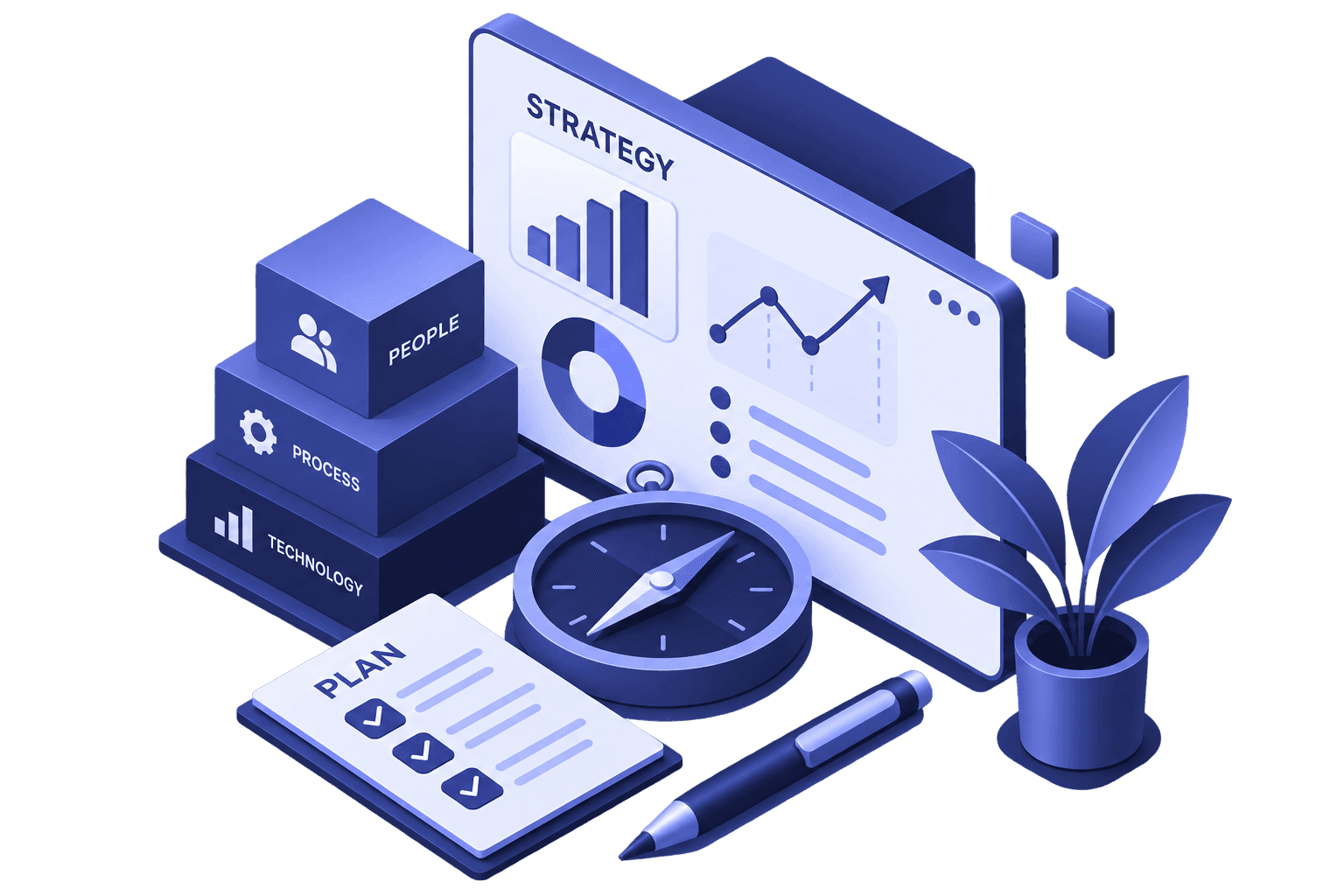
Consulting and Strategy
An honest assessment of your current data ecosystem, business objectives, and the specific stage from the curve above you're actually starting from.
Problem it solves
Big data investments that go straight to buying tools and hiring a data team before anyone's mapped what business question the data is actually supposed to answer.
Typical engagement
We audit your existing data sources, quality, and infrastructure, then define a roadmap tied to a measurable outcome, not a generic maturity model borrowed from a vendor's slide deck.
Outcome
A data strategy anchored to your actual stage and a real business question, not a roadmap for infrastructure you don't need yet.

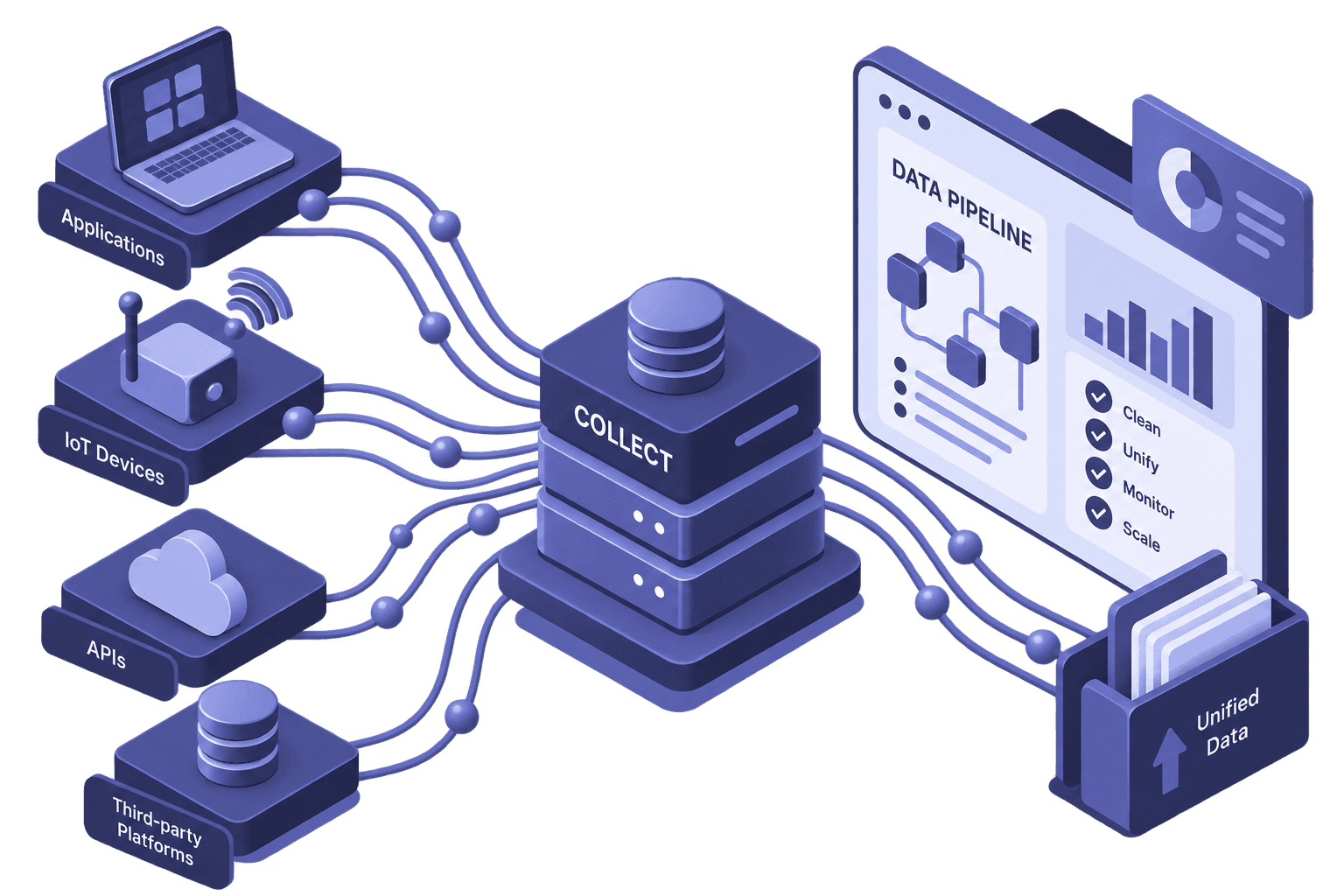
Collect from Every Source
Data engineering and pipeline development that pulls structured and unstructured data from applications, IoT devices, APIs, and third-party platforms into one reliable flow.
Problem it solves
Data trapped in five different systems that each tell a slightly different version of the truth, because nothing's actually pulling them together consistently.
Typical engagement
We map every real data source, design pipelines for the specific volume and update frequency you actually need, and build in the monitoring that catches a broken pipeline before a stakeholder notices a dashboard's gone stale.
Outcome
Reliable, consistent data flow from every source that matters, instead of five sources quietly disagreeing with each other.
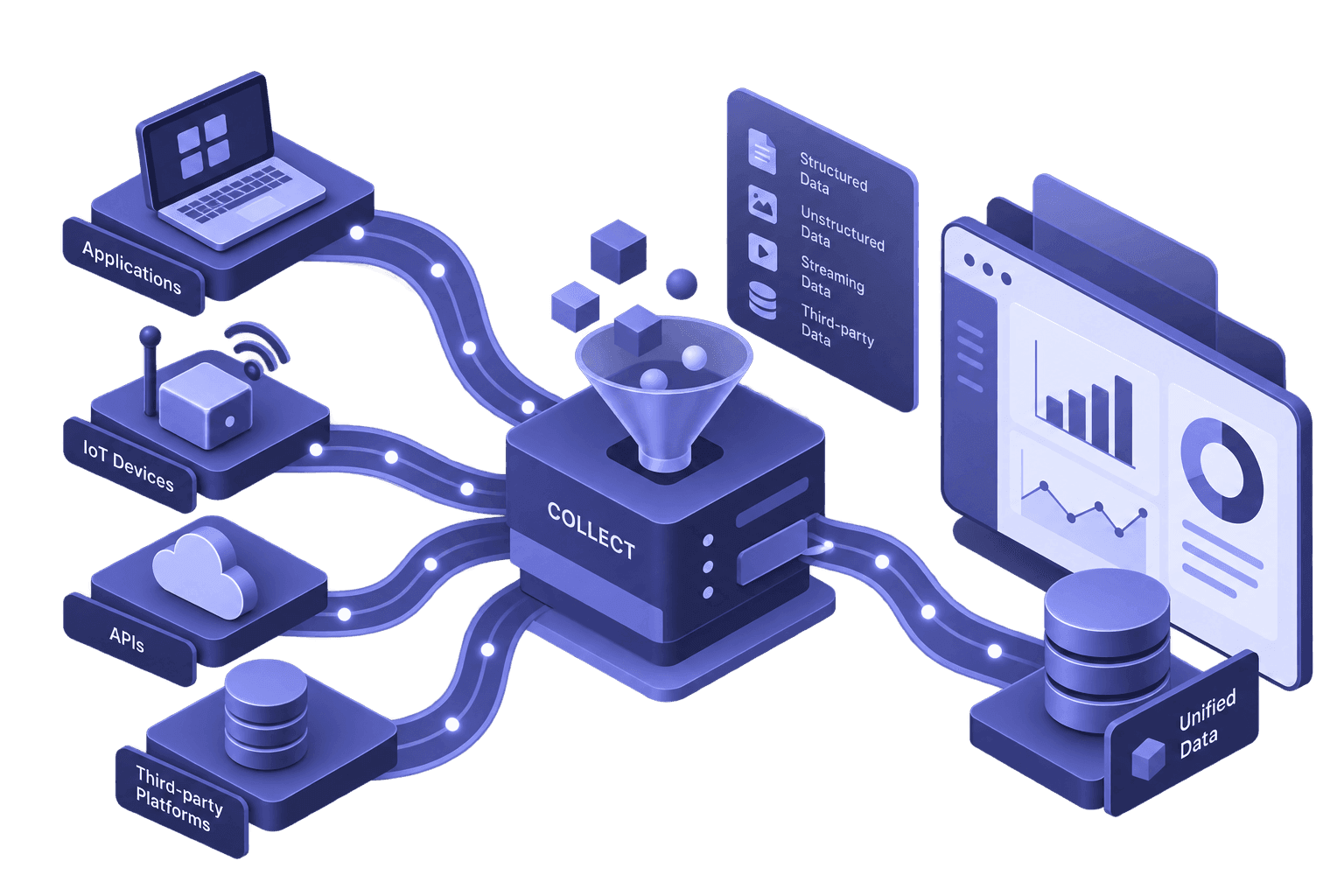
Store in One Place
Data warehouses and data lakes that consolidate collected data into a unified, queryable environment built to scale as volume grows.
Problem it solves
Data that's technically collected but scattered across formats and locations that make it genuinely difficult to query or analyze together.
Typical engagement
We design storage architecture around your actual query patterns and growth trajectory, not a generic setup that gets expensive to restructure once volume triples.
Outcome
A single, accessible source of truth that scales with your data instead of needing a rebuild at the first real growth spike.
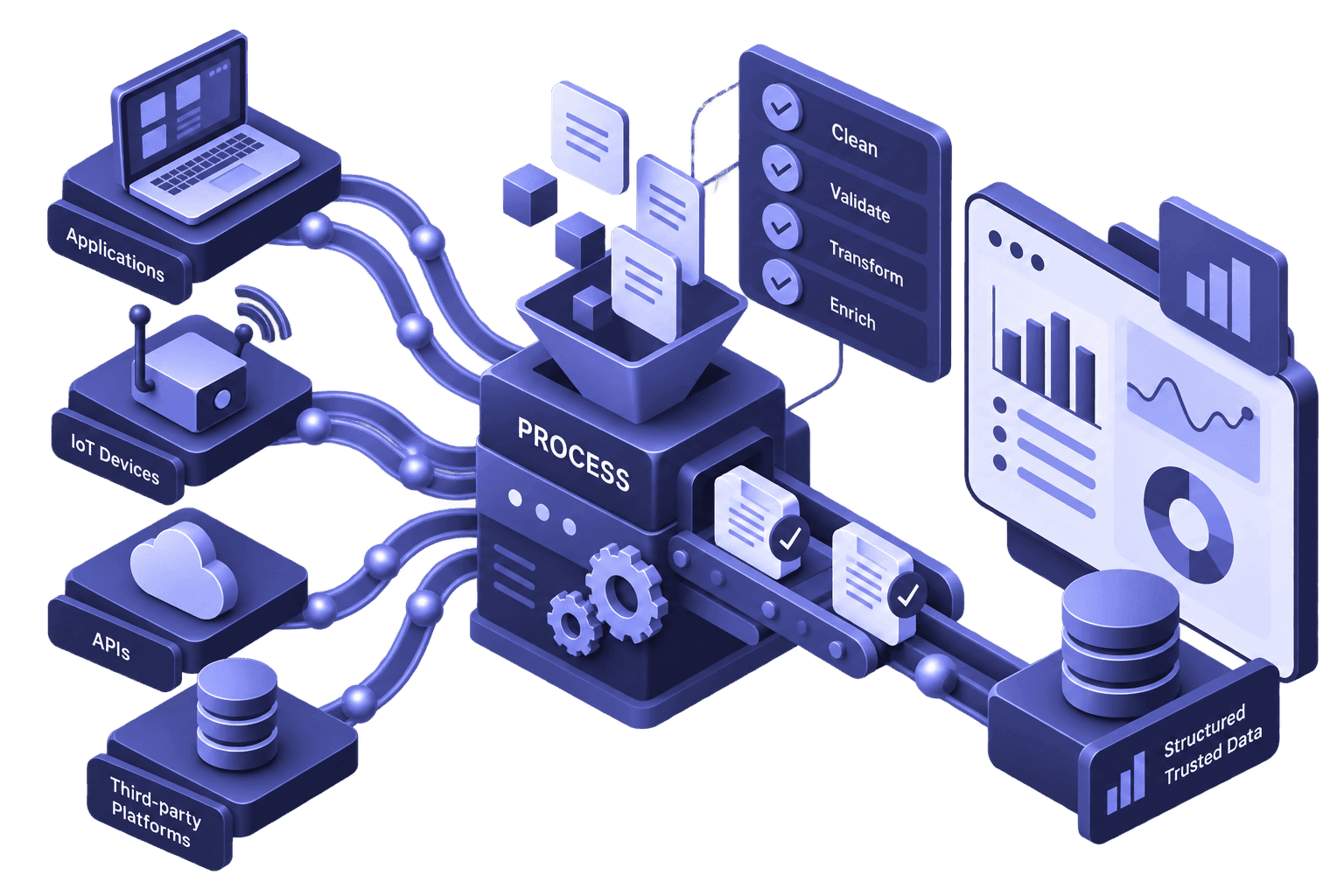
Process and Validate
Cleaning, validating, and transforming raw data into structured, trustworthy formats before it ever reaches an analysis or a dashboard.
Problem it solves
Analytics and machine learning models that quietly produce bad output because nobody caught the dirty, inconsistent data feeding them, the classic failure mode hiding behind a confident-looking chart.
Typical engagement
We build validation and transformation rules specific to your data's actual quality issues, with monitoring that flags a data quality problem before it reaches a report someone makes a decision from.
Outcome
Data trustworthy enough that people actually act on what it shows, instead of quietly double-checking it every time.
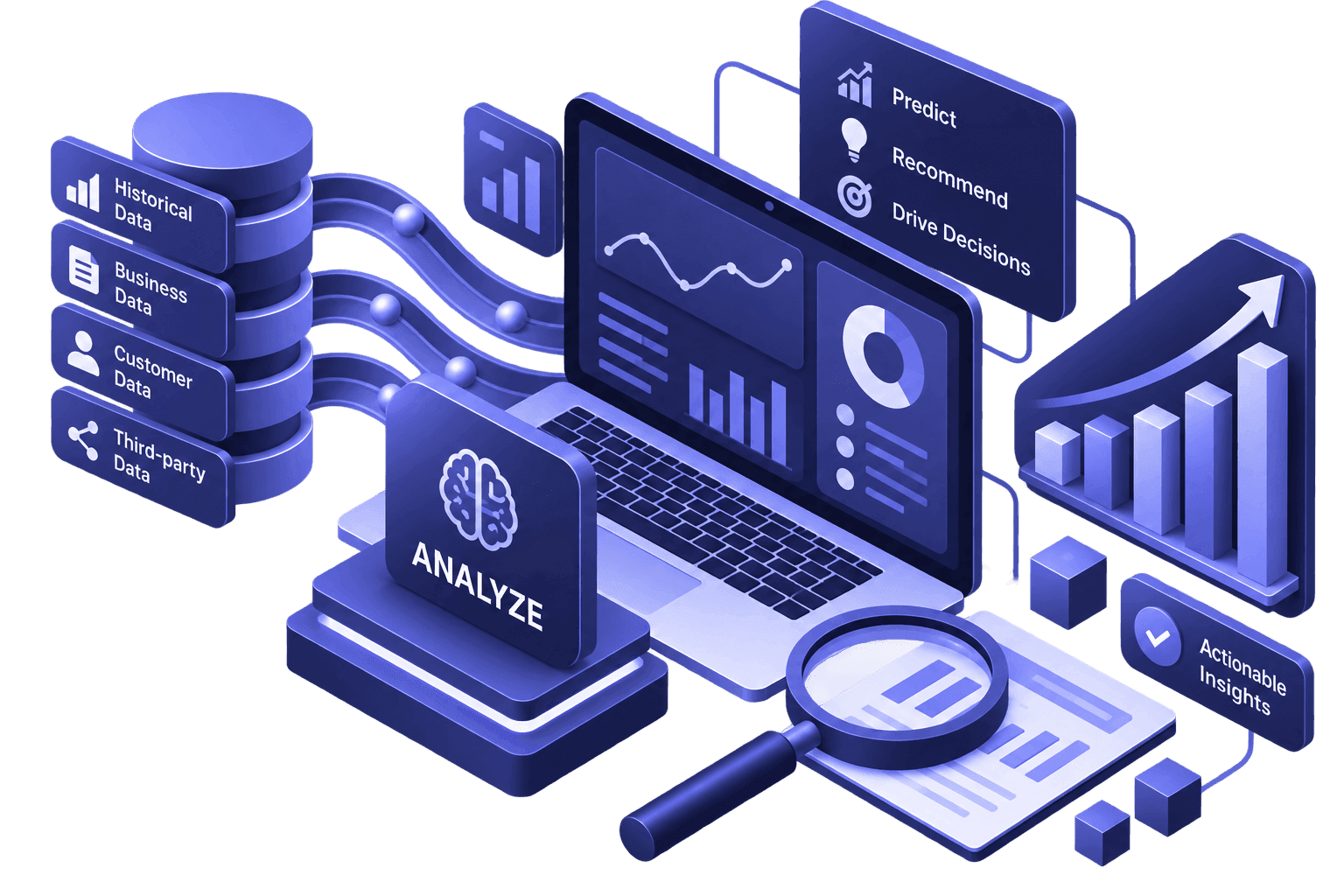
Analyze and Predict
Advanced analytics and predictive modeling that move beyond descriptive reporting, what happened, into predictive and prescriptive territory, what's likely to happen and what to do about it.
Problem it solves
Reporting that accurately describes the past while the business still has to guess about what's coming next.
Typical engagement
We build models against your actual historical patterns and business context, not a generic industry template, and validate them against real outcomes before anyone relies on their output.
Outcome
Forecasts and recommendations specific enough to actually change a decision, not a probability score nobody trusts enough to act on.
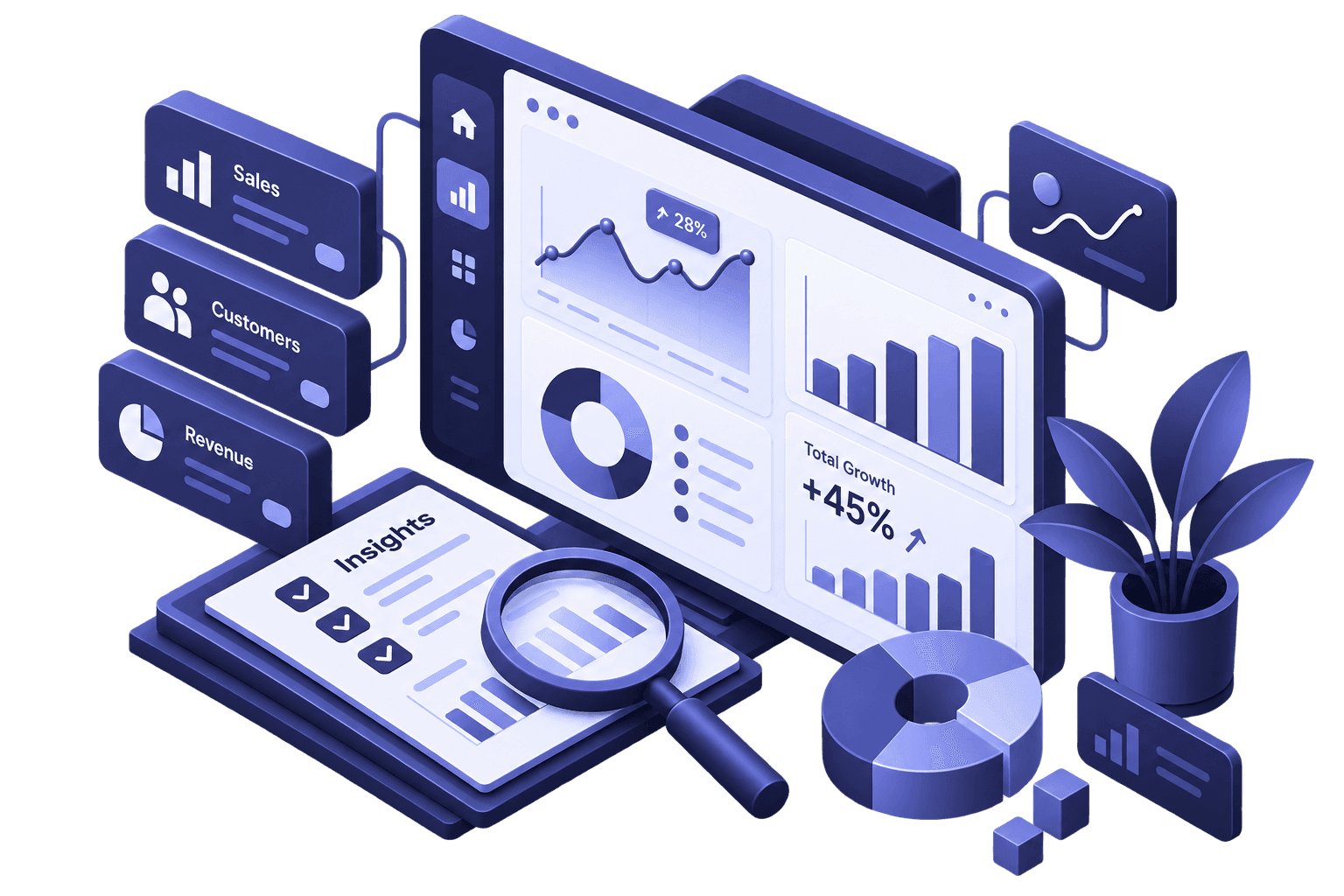
Visualize for Decisions
Business intelligence dashboards and reporting systems that turn processed, analyzed data into something a non-technical stakeholder can actually read and act on.
Problem it solves
Insight that exists somewhere in a data team's analysis but never reaches the person who'd actually use it to make a decision, because nobody built the interface that translates it.
Typical engagement
We design dashboards around the specific decisions your stakeholders actually make, not a generic metrics wall, so the number that matters is the one that's easy to find.
Outcome
Real-time visibility that reaches the people making decisions, without needing a data analyst to translate it for them.
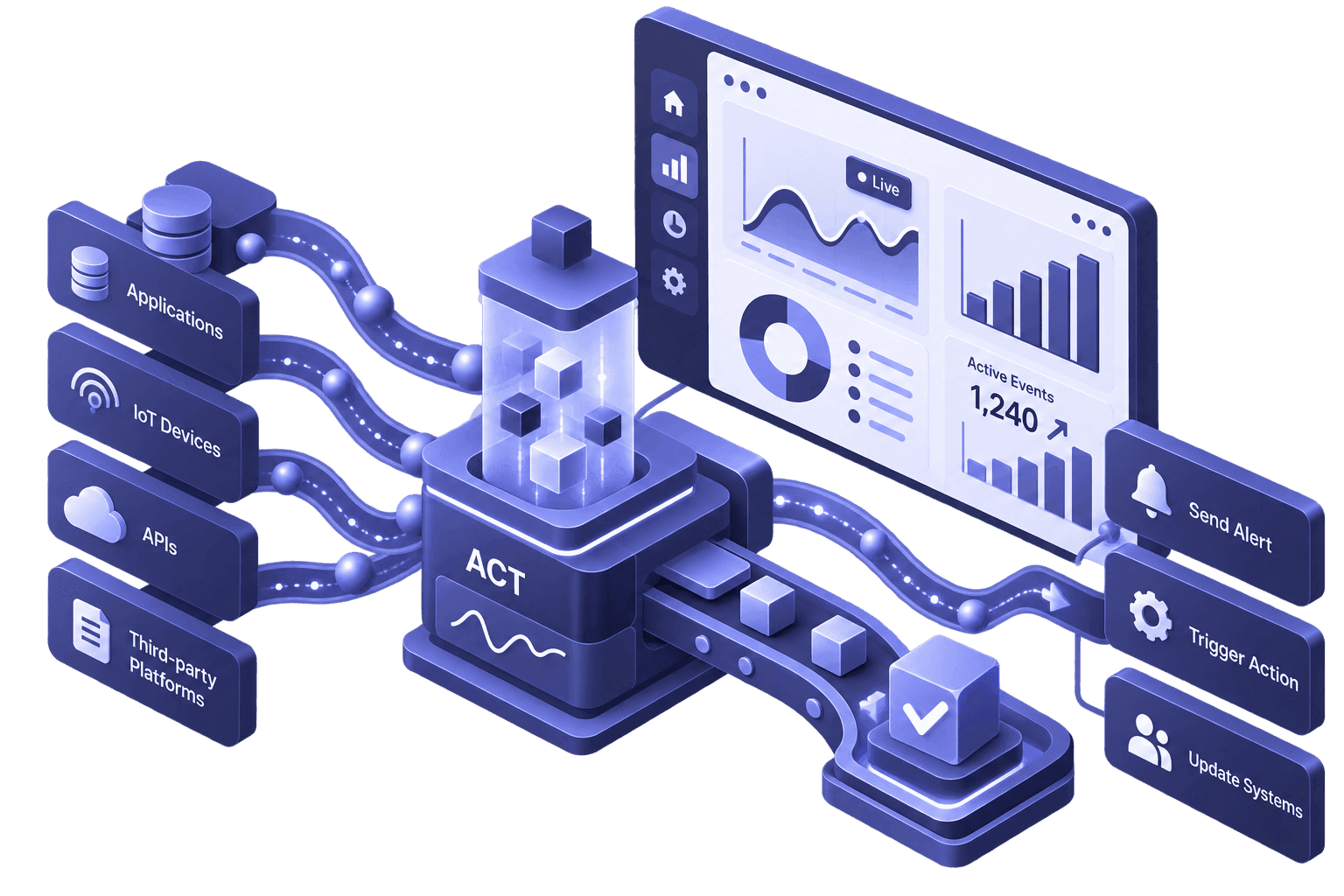
Act in Real Time
Real-time data processing and streaming that lets a business respond to events as they happen, not after a batch report runs.
Problem it solves
A fraud pattern, an inventory shortage, or an operational anomaly discovered a day later in a report, after the moment to act cheaply on it has already passed.
Typical engagement
We build streaming architecture for the specific latency your use case actually needs, since real-time infrastructure is expensive to over-build for a problem that a daily batch job would have solved just as well.
Outcome
Responses triggered while an event is still happening, in the industries where that timing genuinely changes the outcome.
What Separates a Working Pipeline
From One That Keeps Working
Building the pipeline is the first job. Keeping it accurate, fast, and affordable as volume grows and sources change is the longer one, and these four capabilities are where most pipelines either hold up or start to fail.
What This Actually Costs
And How Long It Takes
A number quoted before we have seen your data ecosystem is a guess, not a quote. We quote in rupees plus GST and give a fixed estimate after a real assessment, so you are comparing an actual number, not a marketing range.
What Drives the Cost
Number and complexity of data sources
Three clean data sources cost meaningfully less to integrate than fifteen sources in inconsistent formats
Data volume and velocity
Batch reporting on modest volume is a different engagement than real-time streaming at high throughput
Analytics depth
Descriptive dashboards cost less than predictive models that need to be trained, validated, and maintained
Existing data quality
Clean, documented data is a different starting point than data scattered across spreadsheets and undocumented legacy systems
How Long It Actually Takes
A focused analytics setup, one or two data sources feeding a dashboard, typically takes four to eight weeks. A full data pipeline with a warehouse and integrated BI usually runs three to six months, depending on data quality and how many sources are involved. Real-time streaming and predictive modeling projects vary the most, since model validation against real outcomes takes as long as it takes, and we won't quote a shortcut on that step just to hit a date.


4-8 weeks
Focused Analytics Setup
One or two data sources feeding a dashboard.
3-6 months
Full Data Pipeline
With a warehouse and integrated BI.
Varies based on scope
Real-Time Streaming & Predictive Modeling
Varies the most, since model validation against real outcomes takes as long as it takes.
Where Big Data Stands in 2026
None of this is a forecast. These are the conditions already shaping data budgets and technical decisions this year.
- Real-time analytics
Is real-time analytics now standard, or still reserved for large enterprises?
Real-time processing has moved down-market meaningfully as managed streaming infrastructure has gotten cheaper and easier to operate. Mid-sized businesses that would have accepted daily batch reporting two years ago increasingly expect near real-time visibility, particularly in inventory, fraud, and operational monitoring use cases.
- DATA QUALITY
Why is data quality getting more budget attention than analytics tooling?
Businesses that jumped straight to predictive models on shaky data foundations in the last few years learned that lesson expensively, and budget allocation has shifted accordingly. More data initiatives in 2026 lead with a data quality and governance phase before any model gets built, not after one underperforms.
- AI & SKILLS
How is AI changing what counts as a data team's core skill set?
AI-assisted data engineering, automated schema mapping, anomaly detection in pipelines, has genuinely reduced the manual toil in building and maintaining data infrastructure. The shift underway is less about replacing data engineers and more about freeing them from repetitive pipeline maintenance to spend more time on the modeling work that actually needs human judgment.
- BI TOOL CONSOLIDATION
Why are more businesses consolidating from multiple BI tools into one platform?
Businesses running three different dashboarding tools across departments are increasingly finding the inconsistency between them, different numbers for the same metric depending on which tool you ask, is itself becoming a trust problem. Consolidation to a single BI platform with one governed data model is a growing priority specifically to fix that.
- DATA LAKE VS WAREHOUSE
Is the data lake or data warehouse debate actually settled yet?
Mostly resolved into "both, for different purposes" rather than a real either-or choice. The lakehouse pattern, combining a data lake's flexibility with a warehouse's structure and query performance, has become the practical default for businesses that don't want to choose between the two and increasingly don't have to.
Big Data Analytics Across 15+ Industries in India
Indian businesses work under rules and data conditions that differ from one industry to the next: the DPDP Act for customer records, RBI requirements in finance, ABDM in healthcare, and UPI-scale transaction volumes in retail and payments. A pipeline that suits a hospital network and one that suits a logistics company solve different problems, so here is how our big data work shows up across the 15 industries we serve.
Healthcare
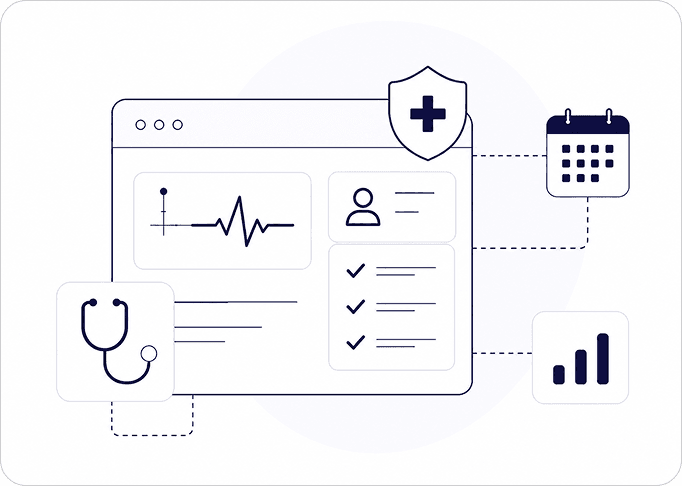
Patient data, medical records, and operational metrics carry real compliance weight. Pipelines get built around the DPDP Act and, where hospitals connect to the national digital health ecosystem, ABDM requirements, with HIPAA-aligned handling for US clients. The goal is better diagnostics and hospital management with an audit trail a regulator can follow.
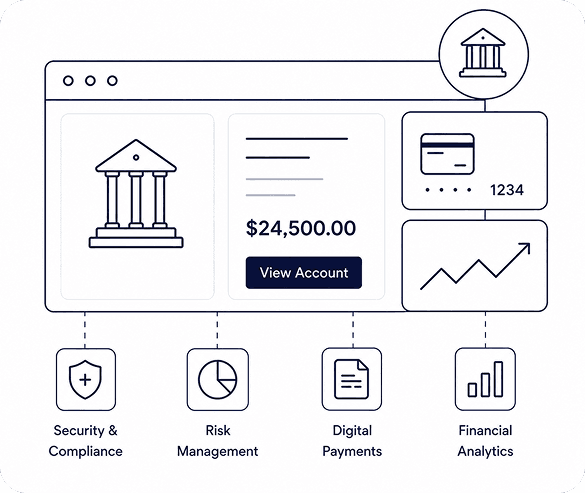
Finance & Banking
Transaction data, fraud detection, and risk scoring carry the heaviest accuracy and compliance demands on this list. We build for RBI expectations, audit-ready records, and the low-latency processing that catching UPI or card fraud needs, since a batch report that flags it the next morning is too late.
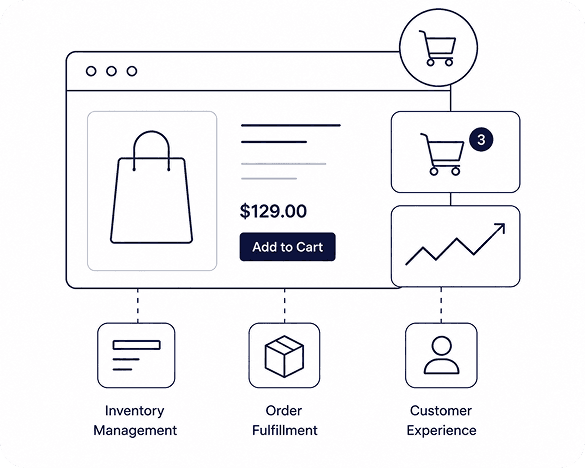
Retail & E-Commerce
UPI, cards, and cash on delivery each leave a different data trail, and returns on COD orders behave nothing like prepaid ones. We build the pipeline that joins them with inventory and customer behaviour, so pricing and stock follow demand, including the Diwali and end-of-season spikes that break batch reporting.
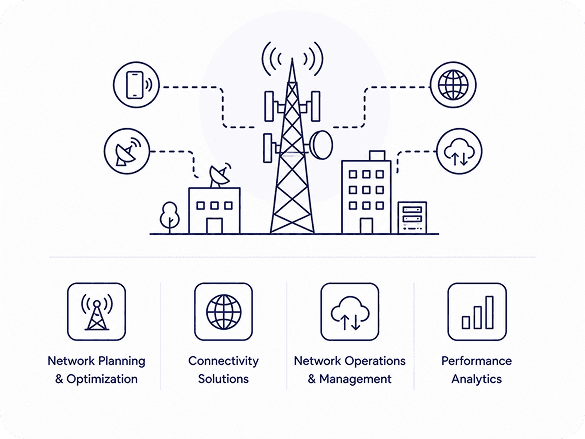
Telecommunication
Network and usage data at Indian subscriber volumes overwhelms generic analytics platforms. We build pipelines that keep network monitoring proactive, with congestion and churn signals available in near real time instead of in a day-old report.
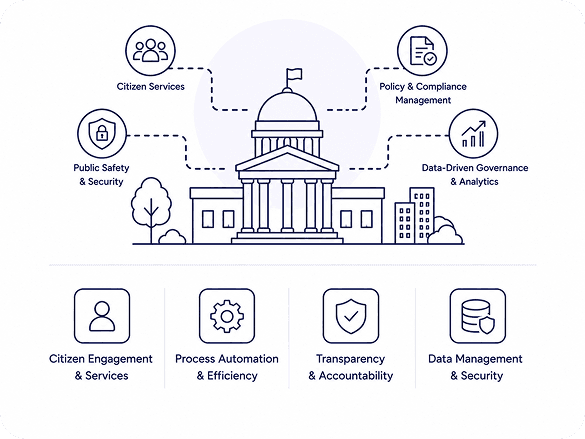
Public Sector & Government
Government analytics projects come with procurement rules, accessibility standards, and audit trails that many vendors handle poorly. We structure the work around them from day one, including data residency inside India where a department requires it.
Logistics & Supply Chain
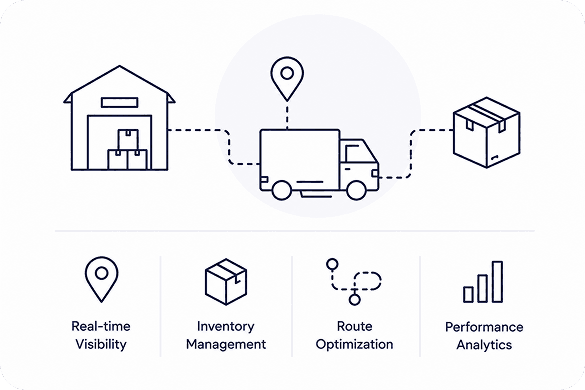
Shipment, route, and warehouse data from carriers, 3PLs, and field apps rarely agree on formats. We unify them into one view and add the demand and delay forecasting that cuts fuel waste, with address cleaning built in for the unstructured addresses Indian last-mile delivery runs on.
Real Estate
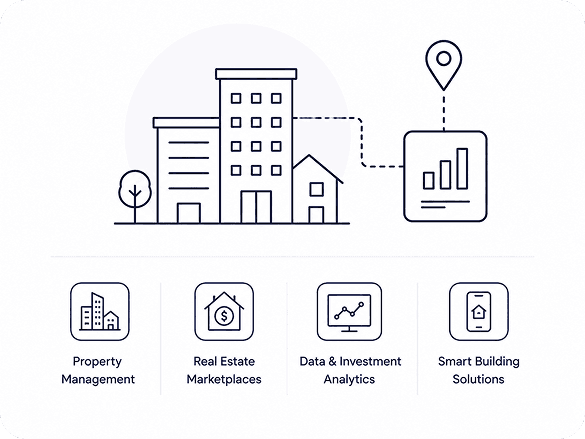
Property portfolios generate pricing, occupancy, and leasing data across dozens of listings that most teams still analyze manually. We build the pipeline that turns scattered property data into pricing and demand forecasts made in days, not the following quarter.
Automotive
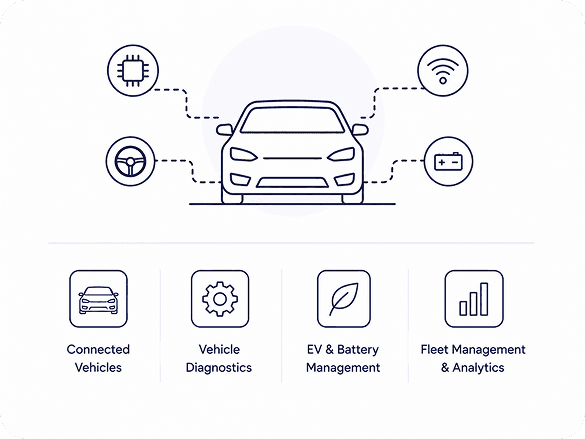
Connected vehicle and manufacturing data generate volume and velocity that most standard analytics setups aren't built to handle. We design for that specific data profile, telemetry streams and production line sensor data that behave nothing like a typical business application's data.
Agriculture
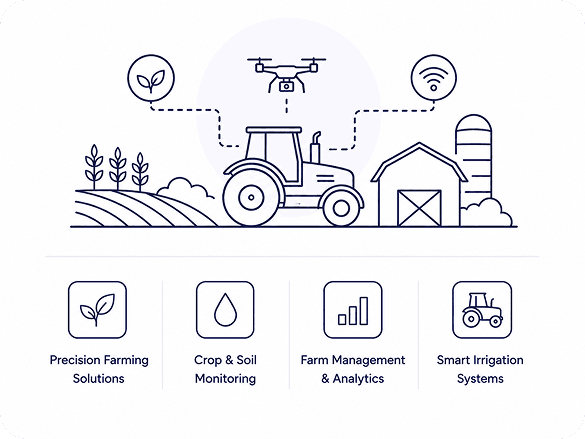
Agri-businesses need to unify field sensor data, weather patterns, and market pricing across genuinely unreliable rural connectivity. We design ingestion that tolerates intermittent connections instead of assuming the constant uptime most analytics platforms default to.
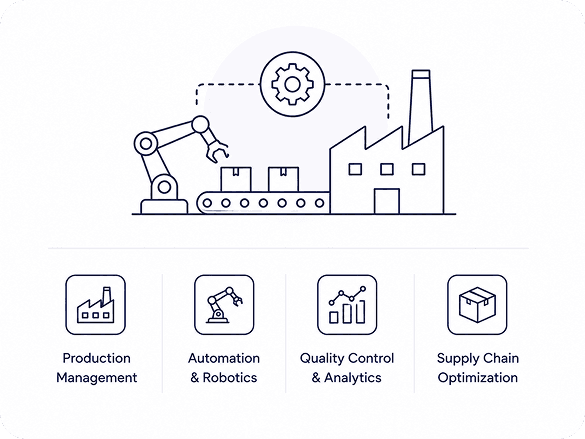
Manufacturing
Equipment performance and production data feed predictive maintenance models that catch failures before they cause downtime, one of the clearest, most measurable returns in this entire list. We build the sensor-to-dashboard pipeline that makes that prediction trustworthy enough to act on.
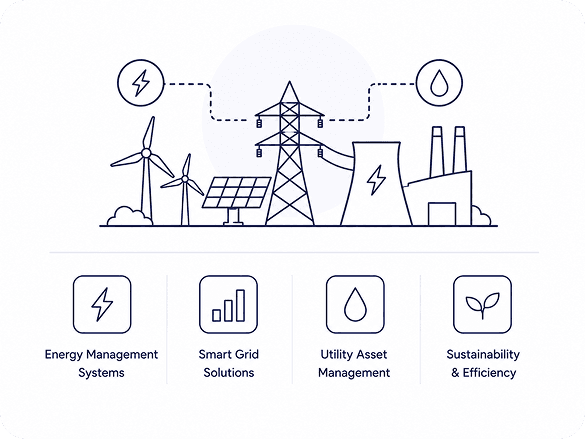
Energy & Utilities
Consumption data and grid monitoring help utilities catch inefficiencies and manage load in ways manual metering never could. We build for the legacy SCADA and metering infrastructure this sector runs on, rather than proposing a rebuild that ignores decades of working systems.
Travel & Hospitality
Booking patterns and seasonal demand data let travel businesses forecast and price dynamically instead of reactively. We build pipelines that handle the sharp seasonal swings this sector actually sees.
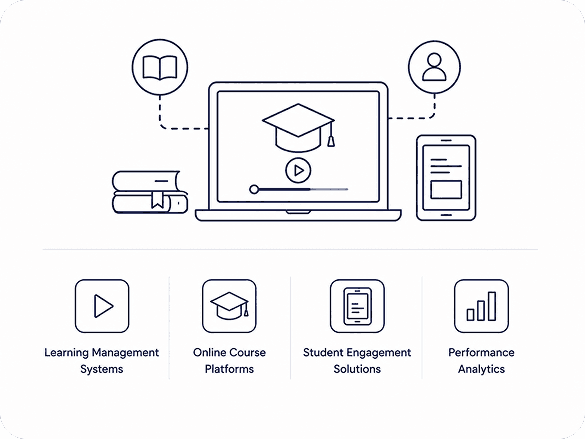
Education & E-Learning
Student engagement and performance data help institutions spot at-risk patterns early enough to actually intervene, rather than discovering the problem at semester's end. We build for that specific timing requirement.
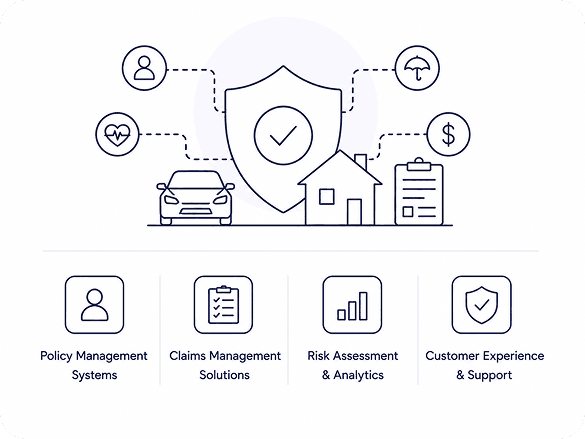
Insurance
Claims data and risk modeling need the same audit-ready accuracy as banking, with pricing models that need to be both predictive and defensible to a regulator. We design for both simultaneously.
Media & Entertainment
Audience behavior and content performance data help media companies understand what's actually working, not what a monthly report says worked a month ago. We build the pipeline that feeds content and engagement decisions in near real time.
Technologies We Use For Big Data Analytics
We pick tools to match your data volume, your team's skills, and where your data is allowed to live, not the other way round. These are the languages, platforms, and cloud services we build big data systems on, including Indian regions on all three major clouds.
 Python
 TensorFlow
 scikit-learn
 AWS
 Microsoft Azure
 Google Cloud
How We Deliver It
The stages above cover what we build. This is how a project runs, from the first scoping call to a platform your team can operate without us.
Discovery & Scoping
Architecture & Design
Build & Integrate
Validate & Launch
Handover & Training
Monitor & Improve
Flexible Engagement Models for Big Data Analytics
Every data initiative has a different shape, so there are three ways to work with us. Pick whichever fits how defined your scope is right now, and how long you need ongoing platform ownership.
Fixed Cost
Best for: a defined pipeline, dashboard, or analytics project with clear boundaries
- Price, timeline and scope agreed before a line of code gets written, and they stay agreed
- Milestones with acceptance criteria you personally sign off, one by one
- The low-risk route for a focused analytics setup with a defined deliverable
- If mid-project surprises are what worry you, this model exists to prevent them
Dedicated Team
Best for: a full data platform build or ongoing analytics development
- Engineers who work as part of your team, not around it
- You set priorities. We build them. That simple
- Grow or shrink the engagement as data scope and volume evolve
- Plugs into whatever tools and workflows your team already runs
- You talk to the people building your pipelines. Never through an account manager
Staff Augmentation
Best for: a specific data engineering or analytics skill gap today
- Specialists who slot into your existing team and standups from day one
- Senior data engineering, analytics, or ML skills without a full-time hire
- Add capacity when a phase tightens the timeline, release it when it's done
- Onboarded and contributing within days. Not months. Days
Work That Speaks for Itself
Every project we take on is a business problem before it is a technical one. Here is a snapshot of how we have helped businesses across industries build software that made a measurable difference.
Building a Real Estate CRM That Runs the Whole Brokerage — Web Dashboard, Field Mobile App, and Subscription Billing
Building a Multi-Brand Beauty Storefront on Shopify
Real-Time Peer Support Platform for Mental Wellness
Key Outcomes
3
Role-Based Experiences
100%
Real-Time Message Delivery
Challenge
What We Built
Why Choose Akoode as Your Big Data Analytics Company
Six reasons teams in India, the US, UK and UAE choose us for data work, and keep working with us once the first pipeline is live.

Talk Directly with Our Founder
Discuss your software vision, AI roadmap, and delivery strategy with the team leading product engineering at Akoode.
Frequently Asked Questions
Straight answers on timelines, team shape, security, and how we plug into your existing delivery process.
A big data analytics company builds the full pipeline that turns raw, scattered data into decisions people actually act on, collection, storage, processing, analysis, and the dashboards or automated responses that use the results. It's not just running a report, it's the entire chain from source system to decision.
Most businesses sit at Stage 1, data siloed across disconnected systems, or Stage 2, centralized reporting that describes the past accurately but doesn't predict anything. If you're not sure, that uncertainty itself is usually a sign you're earlier on the curve than you assume, and we assess this honestly before recommending anything.
Cost depends on three things: how many sources need connecting, how clean they are today, and whether the work stops at dashboards or goes into predictive or real-time processing. A single dashboard on two sources and a streaming platform across fifteen are priced very differently. Once we have reviewed your sources, you get a fixed quote in rupees, with GST shown separately.
Most focused analytics setups go live in four to eight weeks, and a full platform with a warehouse and BI layer in three to six months. Where a project lands in that range depends mostly on how clean your source data is. Predictive models add a validation period against real outcomes, which we don't cut short to meet a launch date.
Big data refers to the volume, variety, and speed of data too large or complex for traditional systems to handle well. Data analytics is the process of extracting insight from that data. Big data analytics combines both, processing large, complex datasets and applying analytical techniques to generate real business value.
Often both, for different purposes, which is why the lakehouse pattern has become common. A data lake handles raw, flexible storage well. A warehouse handles structured, fast querying well. We design for your actual query patterns rather than defaulting to one because it's more familiar.
Yes, integrating scattered systems into one coherent data flow is one of our core services specifically because most businesses' real problem is disconnected data, not a lack of data. We connect what's already there rather than asking you to replace working systems.
Both, and we're honest about which one your business actually needs first. Predictive modeling needs a clean, validated data foundation underneath it, and building predictive infrastructure on unclean data produces confident-looking predictions that quietly aren't reliable.
We design for it at the architecture stage. That means consent records tied to the data they cover, retention rules that delete on schedule, a way to answer a data principal's access or erasure request, and breach logging that supports the reporting window. The DPDP Rules were notified in November 2025, with full obligations applying from May 2027, so projects we start now are built to the final requirements rather than an interim version. This is engineering practice, not legal advice, and we work alongside your counsel.
Yes, a significant share of our big data analytics work comes from clients in the US, UK and UAE. Communication runs through whatever tools your team already uses, and several of our longest-running data engagements have been fully remote from the first assessment conversation.
Our India team works from Gurugram, in Sector 49 on Sohna Road. We run assessment workshops and sprint reviews at client offices across Delhi NCR, and we work remotely with teams in other Indian cities and abroad.
Yes. AWS, Azure, and Google Cloud all run regions in India, and we can build the warehouse and lake entirely inside them when your policy or sector rules call for data to stay in the country. We confirm residency requirements during the assessment, before choosing the architecture.
Start Your Big Data Project
Stay Informed With Thoughtful Innovation
Subscribe To The Akoode Newsletter For Carefully Curated Insights On AI, Digital Intelligence, And Real-World Innovation.