


Cloud and DevOps Company in India

Most engineering teams don't have a tooling problem, they have a deployment that takes an afternoon and a rollback that takes a war room. Akoode is a Cloud & DevOps services company in India that fixes the actual bottleneck: infrastructure that fights you instead of scaling with you. We build CI/CD pipelines, cloud architecture, and Kubernetes platforms that let engineers ship without holding their breath every release.

4.9Google Rating
97%Client Retention
180+Project Delivered
15+Industries Served

Your Deploys Are Slow Because Nobody Ever Designed the Path, It Just Grew

Most infrastructure isn't broken on purpose. It's the accumulated result of six different engineers making six reasonable decisions over three years, none of which were made together.

Akoode is not a tools vendor who installs Kubernetes and leaves.

We are a cloud and DevOps company that owns the outcome, from a messy first assessment through infrastructure your team can actually run without us once it's stable.

( 01 )

Here's the pattern behind most of the DevOps engagements we take on. A team ships fast in year one on whatever infrastructure got them live, a single EC2 instance, a manual deploy script, maybe a Jenkins job someone half-configured and never touched again. It works, right up until it doesn't: a deploy breaks production at 2am, a traffic spike takes the whole site down, or a new engineer spends their first two weeks just figuring out how anything actually gets to production.

( 02 )

By the time a business calls a DevOps company, the cost of the current setup usually isn't hypothetical anymore. It's measured in incident hours, in engineers who'd rather quit than touch the deploy script again, and in a roadmap that's quietly been rewritten around what the infrastructure can survive rather than what the product actually needs.

( 03 )

In 2026, with cloud costs under real scrutiny and uptime expectations higher than ever, the businesses still running on accumulated infrastructure decisions are the ones losing both money and engineering time to a problem that was solvable eighteen months ago.

Our Cloud & DevOps Services

Every engagement gets scoped against a measurable outcome: faster deploys, lower cloud spend, fewer incidents, or infrastructure that finally supports what the roadmap actually needs next.

( 01 )

CI/CD Pipeline Implementation

What it is: Automated pipelines that test, build, and deploy code without manual release steps.
Why it matters: Faster, safer releases with built-in rollback when something goes wrong.

Talk to Our Team

( 02 )

Cloud Infrastructure and Migration

What it is: Cloud architecture and migrations built around your actual traffic, availability, and growth.
Why it matters: Move away from outdated infrastructure without turning migration into a downtime risk.

Talk to Our Team

( 03 )

Infrastructure as Code

What it is: Version-controlled infrastructure using tools like Terraform instead of manual cloud configuration.
Why it matters: Consistent environments, repeatable deployments, and infrastructure changes your team

Talk to Our Team

( 04 )

Containerization and Orchestration

What it is: Docker and Kubernetes setups that keep applications consistent across environments.
Why it matters: Fewer deployment surprises and the ability to scale individual services as needed.

Talk to Our Team

Capabilities Most DevOps Vendors Treat as an Afterthought

Setting up a pipeline is the easy part of this work. The capabilities below are what decide whether that pipeline still makes sense a year later.

01

GitOps Workflows

Infrastructure and deployment state managed entirely through Git, so every change is reviewable, revertible, and auditable the same way application code already is. No more configuration that only exists in someone's memory of what they clicked.

02

Multi-Cloud and Hybrid Architecture

Infrastructure designed to run across AWS, GCP, and Azure, or bridge existing on-premise systems with cloud infrastructure, when a single-vendor lock-in genuinely isn't the right call for your business.

03

Zero-Downtime Deployment Strategies

Blue-green deployments, canary releases, and feature flags built into the release process, so shipping a new version doesn't mean scheduling a maintenance window and hoping.

04

Disaster Recovery Planning

Recovery plans that get tested, not just documented. A disaster recovery plan nobody's actually run is a guess dressed up as a plan.

05

FinOps and Cost Governance

Ongoing cost visibility and accountability built into how infrastructure decisions get made, not a one-time audit that goes stale the moment the next feature ships.

06

Platform Engineering

Internal developer platforms that let your engineering team self-serve infrastructure, spin up environments, provision resources, without filing a ticket and waiting on a DevOps team that's become a bottleneck itself.

DevOps Consulting, Managed Services, or an Internal Hire: Which One Fits

These three get treated as interchangeable in sales conversations, and they solve genuinely different problems. Picking the wrong one is the most common reason a DevOps engagement disappoints on both sides.

DevOps Consulting

Best for a defined transformation with a clear end in mind.

Best Fit

A defined transformation: migrate, containerize, build a pipeline

Who Owns It Long-Term

You, once it's handed off

Typical Duration

Weeks to a few months

Managed DevOps

Best for ongoing infrastructure ownership without building a team.

Best Fit

Ongoing infrastructure ownership without hiring an internal team

Who Owns It Long-Term

Us, accountable to SLOs

Typical Duration

Ongoing

Internal Hire

Best for a defined transformation with a clear end in mind.

Best Fit

A team large enough to justify full-time headcount and clear technical leadership already in place

Who Owns It Long-Term

You, from day one

Typical Duration

Permanent

If you need a specific transformation completed and your team can maintain it afterward, consulting is usually the right call. If infrastructure needs ongoing ownership but you're not at the scale where a full internal platform team makes sense yet, managed DevOps closes that gap. We'll tell you during scoping if what you actually need is a hire, not a vendor, even though that's the answer that doesn't get us the engagement.

DevOps consulting or managed services work badly when the infrastructure need is so central to the product that it needs a full-time technical owner making daily judgment calls, not a partner brought in periodically. If that's genuinely where you are, we'll say so in the first call rather than selling a retainer that was never going to be the right shape for the problem.

What Cloud and DevOps Work Actually Costs and How Long It Takes

On the page deliberately, rather than left for a sales call, because cost and timeline are usually the two questions that decide whether a shortlist conversation even starts.

i

A number quoted before we've seen your actual infrastructure is a guess, not a quote. We give a fixed estimate after a technical assessment, so you're comparing a real number, not a marketing range.

01What Drives the Cost

Current infrastructure complexity

A single application on one cloud provider costs less to transform than a multi-service system spread across three environments

Scope of transformation

A single CI/CD pipeline is a different engagement than a full cloud migration with containerization and monitoring included

Compliance requirements

HIPAA, SOC 2, or PCI DSS-aligned infrastructure adds real engineering time that a standard build doesn't need

Ongoing vs one-time

A defined migration project and an ongoing managed DevOps retainer sit in genuinely different cost brackets

02How Long It Actually Takes

CI/CD Pipeline Implementation

2–4Weeks

Full Cloud Migration

6–12Weeks

Containerization & Kubernetes Adoption

4–8Weeks
03From Unknown to Clear, Fixed Estimate

Technical Assessment

We evaluate your environment, requirements, and goals in detail.

Fixed Estimate

We provide a clear, fixed estimate based on real understanding.

Real Numbers

You get a real number, not a marketing range or rough guess.

Execution Plan

We align on scope, timeline, and delivery plan.

Delivery

We build, deploy, and optimize on time, on budget.

Where Cloud and DevOps Work Stands in 2026

None of this is a forecast. These are the conditions already shaping infrastructure budgets and technical decisions this year.

i

A number quoted before we've seen your actual infrastructure is a guess, not a quote. We give a fixed estimate after a technical assessment, so you're comparing a real number, not a marketing range.

01

Why is platform engineering replacing traditional DevOps teams?

DevOps teams that spend most of their time responding to ticket requests from other engineers have quietly become the bottleneck they were built to remove. Platform engineering flips that: building self-service infrastructure that other teams use directly, without a DevOps engineer standing between every request and its fulfillment. The businesses making this shift are seeing DevOps headcount stop scaling linearly with engineering headcount, which is the actual point.

02

How has FinOps changed cloud spending decisions in 2026?

Cloud cost has moved from a finance-team line item reviewed quarterly to an engineering decision made daily. Teams increasingly see real-time cost attribution per service, per feature, sometimes per pull request, and that visibility is changing which architectural decisions get made before code ships, not after the bill arrives.

03

Is Kubernetes still the default choice for container orchestration?

Mostly yes, but with real pushback in specific cases. Kubernetes remains the default for genuinely complex, multi-service systems, but a growing number of smaller teams are choosing simpler managed container platforms specifically because Kubernetes's operational overhead isn't worth carrying at their actual scale. The businesses getting this decision right are sizing the tool to the problem instead of defaulting to whatever's most talked about.

04

Why are zero-downtime deployments now a baseline expectation, not a differentiator?

Scheduled maintenance windows have become a genuine competitive disadvantage as user tolerance for planned downtime has dropped further. Blue-green deployments and canary releases, once considered advanced practice, are increasingly treated as the minimum bar for any business running a customer-facing product, not something to eventually get around to.

05

How is AI changing DevOps and infrastructure work itself?

AI-assisted incident response and anomaly detection have moved from experimental to genuinely useful, catching infrastructure problems before they page a human in a growing number of production environments. The realistic picture is narrower than the hype though, AI is proving useful for pattern detection and alert triage, not for making architectural decisions, and teams treating it as a replacement for engineering judgment are the ones getting burned.

Cloud & DevOps Expertise Across 15+ Industries

Infrastructure that works for a fintech platform handling transaction volume and infrastructure that works for a healthcare system holding patient data solve genuinely different problems, and building without that context produces infrastructure that technically works and practically doesn't fit. Here's how our cloud and DevOps work shows up across the 15 industries we serve.

Healthcare

Compliance shapes every infrastructure decision here, so DevSecOps pipelines get built around HIPAA-aligned access controls and audit logging from the start, not retrofitted before a compliance review. Uptime matters more than almost anywhere else, since a deployment failure in a clinical system isn't just an inconvenience. 

Healthcare
Explore Healthcare

Real Estate

Property platforms see traffic spikes around listing launches and open houses that generic auto-scaling handles poorly. We design infrastructure around those specific patterns, with cost-aware scaling that handles the spike without leaving expensive capacity running idle the rest of the month. 

Real Estate
Explore Real Estate

Retail & E-Commerce

Retail infrastructure lives or dies during predictable traffic spikes, sales events, product launches, that generic infrastructure handles badly precisely because it's built for average load, not peak load. We design for the spike specifically, with cost optimization that doesn't leave that same capacity running year-round. 

Retail & E-Commerce
Explore Retail & E-Commerce

Media & Entertainment

Content delivery at scale needs infrastructure that handles unpredictable traffic spikes and heavy media without buckling, and CDN and caching architecture that most generic cloud setups underinvest in. We build for the spike pattern this sector actually sees, not average daily traffic. 

Media & Entertainment
Explore Media & Entertainment

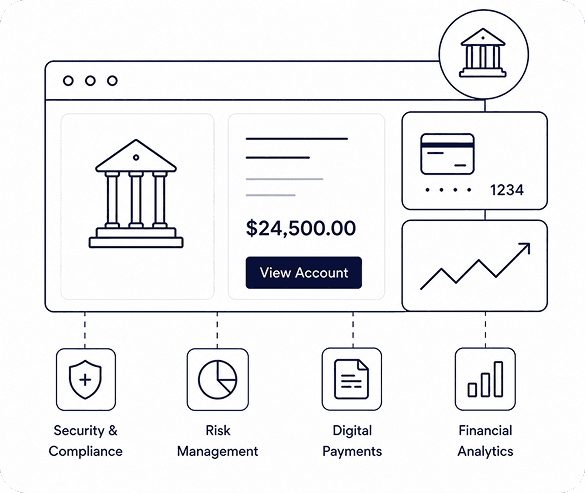
Finance & Banking

Security and audit requirements shape every pipeline decision in this sector, so DevSecOps isn't optional, it's the baseline. Clients in finance also need infrastructure that can prove compliance on demand, which means audit logging and access control built in from the architecture stage, not added before an examination.

Finance & Banking
Explore Finance & Banking

Automotive

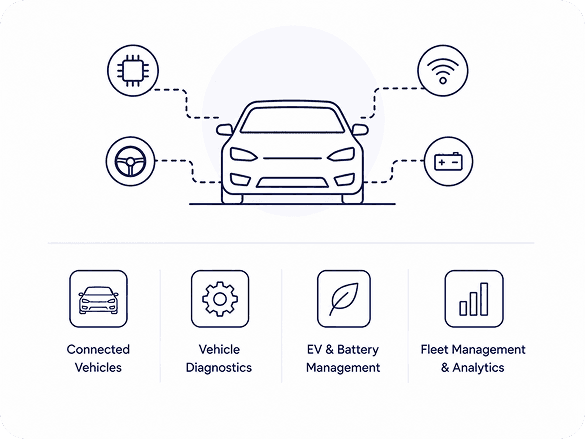
Automotive clients increasingly run infrastructure connected to real-time telematics and IoT data streams, which needs different scaling patterns than a standard web application. We design for that specific data volume and latency requirement rather than treating it like generic API traffic.

Automotive
Explore Automotive

Agriculture

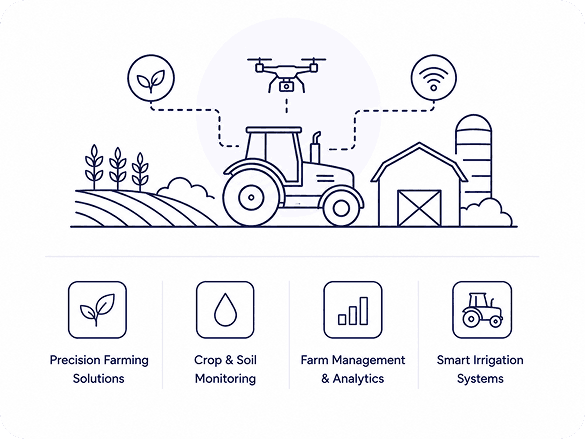
Agri-tech infrastructure often needs to handle intermittent connectivity from field devices and sensors, a real constraint that standard cloud architecture assumptions don't account for. We design ingestion and sync patterns that tolerate genuinely unreliable connections instead of assuming constant uptime from every data source. 

Agriculture
Explore Agriculture

Telecommunication

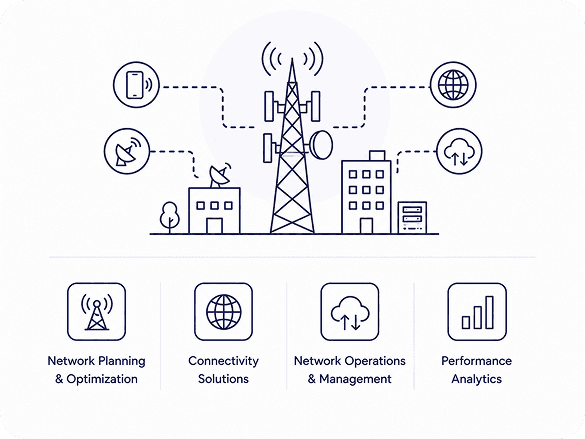
Telecom infrastructure demands real-time provisioning and uptime that most standard architecture patterns aren't built for. We design for high-availability requirements specifically, with monitoring tuned to catch degradation before it becomes an outage customers notice. 

Telecommunication
Explore Telecommunication

Manufacturing

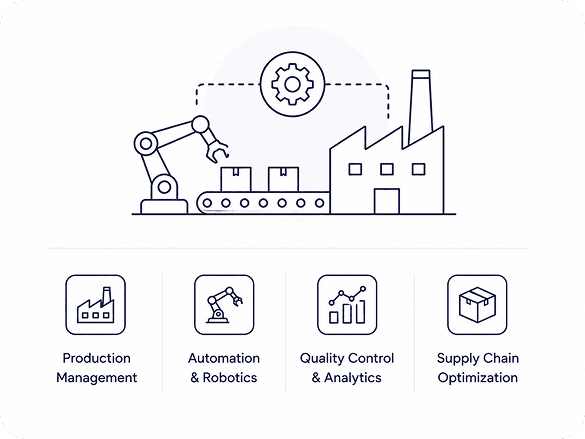
Manufacturing clients increasingly run infrastructure connected to shop-floor sensors and ERP systems that were never designed to talk to modern cloud infrastructure. We build the integration layer and the monitoring around it, so a shop-floor connectivity issue surfaces as an alert, not a mystery three days later. 

Manufacturing
Explore Manufacturing

Public Sector & Government

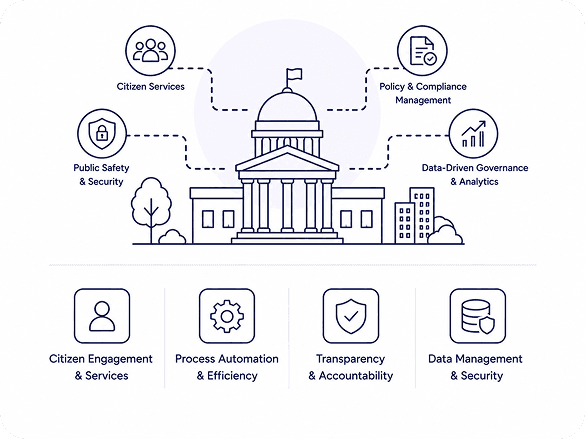
Government infrastructure carries procurement, security, and audit requirements most DevOps vendors aren't set up to handle smoothly. We structure infrastructure work against those requirements from the outset, including the documentation trail public sector engagements typically require. 

Public Sector & Government
Explore Public Sector & Government

Energy & Utilities

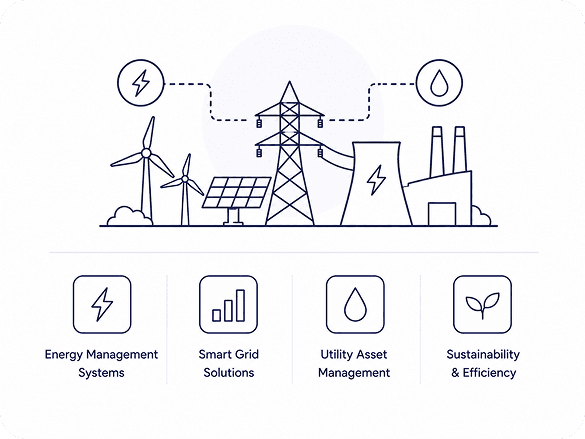
Utility infrastructure often needs to integrate with legacy SCADA and monitoring systems that are genuinely difficult to work with. We design around that legacy complexity directly instead of proposing a rebuild that ignores decades of working infrastructure. 

Energy & Utilities
Explore Energy & Utilities

Travel & Hospitality

Booking systems see extreme seasonal traffic swings that flat, always-on infrastructure handles expensively and inefficiently. We design scaling patterns around the actual seasonal curve, so capacity costs track demand instead of running at peak size year-round. 

Travel & Hospitality
Explore Travel & Hospitality

Education & E-Learning

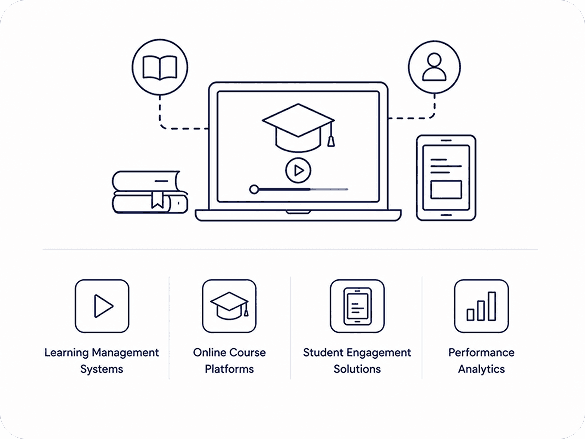
Ed-tech platforms see sharp usage spikes around semester starts and assignment deadlines, traffic patterns that are predictable in shape but still need real infrastructure design to handle gracefully. We build for that specific rhythm rather than generic steady-state assumptions. 

Education & E-Learning
Explore Education & E-Learning

Insurance

Insurance infrastructure needs to prove compliance and maintain audit trails the same way finance does, with claims processing systems that can't afford unplanned downtime during high-volume periods like renewal season. We design for that predictable seasonal load alongside the compliance requirement. 

Insurance
Explore Insurance

Logistics & Supply Chain

Logistics platforms run on real-time tracking and carrier API integrations that need low-latency infrastructure and genuine resilience, since a tracking system going down during peak shipping season has real operational consequences. We design for that reliability requirement specifically, not as a generic uptime target. 

Logistics & Supply Chain
Explore Logistics & Supply Chain

Cloud and DevOps Technology Stack

We select cloud, DevOps and infrastructure technologies based on your application architecture, scalability requirements, security needs and long-term operational goals.

Jenkins logoJenkins
GitHub Actions logoGitHub Actions
AWS logoAWS

Our Cloud and DevOps Process

Six stages, and the first one determines whether everything after it actually fixes the real problem or just moves it somewhere less visible.

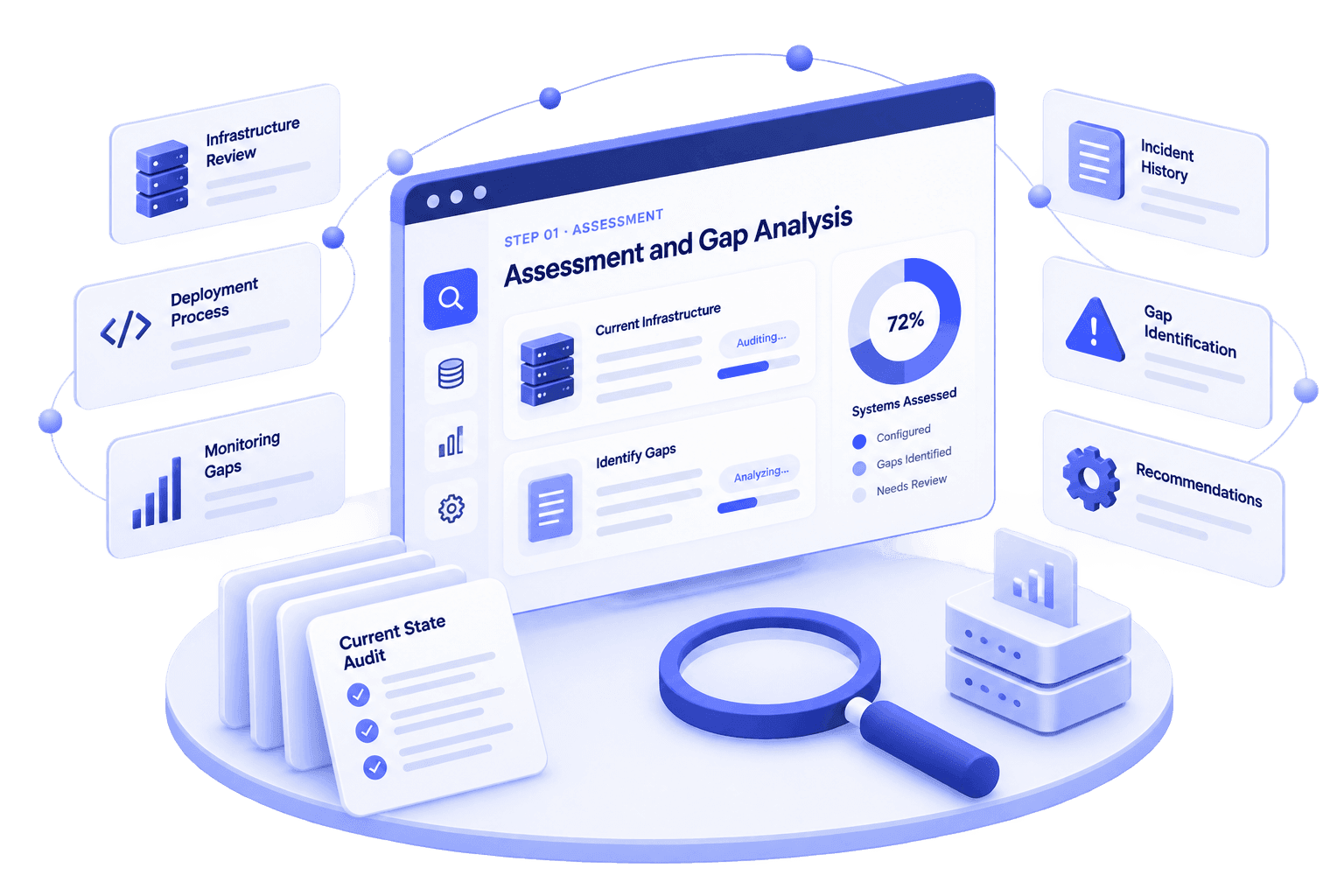
Stage 01: Assessment and Gap Analysis

We start by evaluating what you actually have, not what the architecture diagram says you have, which are often two different things once nobody's updated the diagram in a year. Deploy process, infrastructure setup, monitoring gaps, and where incidents actually come from all get audited before anything gets proposed. 

Outcome: An assessment that skips your actual current state produces a plan for infrastructure you don't have.

Stage 02: Architecture and Pipeline Design

Cloud architecture and CI/CD pipelines get designed against your specific application and traffic patterns, not a generic reference architecture pulled from a vendor's documentation. Every design decision gets tied back to a problem the assessment actually found. 

Outcome: Generic architecture solves generic problems. Yours usually aren't generic.

Stage 03: Implementation and Automation

Tools get implemented and workflows automated in stages, with each stage validated before the next one starts. Manual intervention gets removed piece by piece, not replaced all at once in a way nobody can safely roll back. 

Outcome: Automating everything at once is how a small mistake becomes a large incident.

Stage 04: Security and Compliance Integration

Automated security scanning, dependency audits, and compliance validation get built directly into the pipeline itself, so security runs on every commit instead of surfacing as a pre-launch scramble. This isn't a separate phase bolted on afterward, it's part of the pipeline from the start.

Outcome: Security added after the pipeline exists is always weaker than security designed into it.

Stage 05: Testing and Deployment

Deployment pipelines go live with rollback capability, blue-green or canary release strategies, and environment-specific configuration management already in place. Every release is controlled and auditable before it ever reaches production traffic.

Outcome: A deployment strategy without a tested rollback path is a hope, not a strategy.

Stage 06: Monitoring and Continuous Improvement

Real-time dashboards, alerting thresholds, and incident response workflows get configured post-deployment, tuned against your actual failure modes rather than a generic template. We stay engaged for ongoing reviews and optimization as the system scales, not just through go-live. 

Outcome: Infrastructure that isn't monitored against real failure modes fails quietly until it doesn't.

ASSESSMENT
ASSESSMENT

Assessment and Gap Analysis

We start by evaluating what you actually have, not what the architecture diagram says you have, which are often two different things once nobody's updated the diagram in a year. Deploy process, infrastructure setup, monitoring gaps, and where incidents actually come from all get audited before anything gets proposed. 

An assessment that skips your actual current state produces a plan for infrastructure you don't have.

Flexible Engagement Models for Cloud and DevOps

Every infrastructure need has a different shape, so there are three ways to work with us. Pick whichever fits how defined your transformation is right now, and how long you need ongoing ownership afterward.

Fixed Cost

Best for: scope that is already nailed down, and a price you want nailed down with it

  • Price, timeline and scope agreed before a line of code gets written, and they stay agreed
  • Milestones with acceptance criteria you personally sign off, one by one
  • The low-risk route for a defined migration or pipeline build with a hard deadline attached
  • If mid-project surprises are what worry you, this model exists to prevent them
MOST POPULAR

Dedicated Team

Best for: infrastructure that will keep evolving long after the first migration ships

  • Engineers who work as part of your team, not around it
  • You set priorities. We build them. That simple
  • Grow or shrink the engagement as infrastructure needs change, without renegotiating everything
  • Plugs into whatever tools and workflows your team already runs
  • You talk to the people writing your infrastructure code. Never through an account manager

Staff Augmentation

Best for: a DevOps skill gap today, or capacity you need by next sprint

  • Specialists who slot into your existing team and standups from day one
  • Senior DevOps and cloud skills without the cost, or the three-month wait, of a full-time hire
  • Add capacity when a migration tightens the timeline, release it when things calm down
  • Onboarded and shipping within days. Not months. Days

Work That Speaks for Itself

The live site's case study cards are managed dynamically through the admin panel, per the established pattern for this content type. The three summaries below are illustrative scope examples for design and copy-length purposes, not verified client outcomes, and should be replaced with real, client-approved case data before publishing.

QR-Linked Apparel Platform: One Store, One Verified Digital Identity

Key Outcomes

2

Claim Steps

1

Account, Everything

Challenge

Fixed graphics, awkward in-person networking, and a customer relationship that stops dead at delivery are three separate frustrations that all happen to live on the same piece of fabric.

What We Built

A working store, a locked-down claiming step, and a profile people would bother keeping current - none of that means much if it ships as three loosely connected features instead of one build.

AI-Powered Hair Analysis

Key Outcomes

Seconds

Scalp Analysis Speed

Real-Time

3D Simulation Output

Challenge

Hair transplant consultations have not kept pace with patient expectations. Most clinics still rely on manual scalp inspection, verbal outcome descriptions, and approximate graft estimates that vary between practitioners. For a patient making a significant financial and personal decision about a visible aesthetic procedure, that process generates more hesitation than confidence. The clinics with the strongest clinical capability are often losing patients not because of their outcomes but because of how those outcomes are communicated before treatment begins.

What We Built

The brief required a complete AI-powered consultation platform that could run on flagship smartphones, deliver scalp analysis results within seconds, simulate post-transplant outcomes in real time, calculate graft counts and pricing through a standardised engine, and support at-home patient assessment as well as in-clinic use. Every objective connected directly to a specific point in the patient decision journey where the existing process was creating friction or losing conversions.

AI Player Performance Tracking Case Study

Key Outcomes

10x

Faster Coaching

94%

Tracking Accuracy

Challenge

Performance coaching at the elite level demands data granularity that traditional video review simply cannot deliver. Coaching teams were spending enormous amounts of time rewatching unstructured footage, drawing conclusions by observation, and making player evaluation decisions without a single objective metric to support them. The problem was not effort. It was the absence of the right system.

What We Built

The client needed a next-generation AI system that could take raw, unstructured game footage and turn it into structured, real-time performance intelligence that coaching staff could act on immediately. Every objective defined at the start of this project was tied directly to a coaching workflow problem that needed solving.

Why Choose Akoode as Your Cloud & DevOps Company

Plenty of vendors can install Kubernetes. Choosing a DevOps partner is really a decision about who's accountable when that infrastructure has to actually hold up under real production traffic, not just pass a demo.

AI-First Development

Our monitoring and incident response practice includes genuine AI-assisted anomaly detection, not a dashboard with "AI" in the name and nothing behind it. When it helps catch a problem before it pages someone, we use it. When it doesn't, we don't pretend otherwise. 

End-to-End Platform Engineering

Cloud architecture, CI/CD, security, and monitoring all get designed as one system by one accountable team, not stitched together from whichever tool each engineer happened to prefer. Nothing falls into the gap between a cloud consultant and a separate security vendor. 

Revenue-Focused Architecture

Every infrastructure decision faces the same question: does this reduce incidents, cut cloud spend, or speed up deployment? If the answer is none of those, we don't build it just because it's technically interesting. 

Domain-Deep Expertise

We've built infrastructure across 15+ industries, and the compliance and scaling requirements are genuinely different in each one. That context means less time spent explaining your industry's constraints and more time spent actually solving for them. 

Security Built In, Not Bolted On

DevSecOps runs on every commit, not once a quarter, with compliance validation designed into the pipeline architecture from day one rather than retrofitted before an audit deadline. 

Direct Engineering Access

You talk to the engineers actually managing your infrastructure, not an account manager relaying updates. When something breaks at 2am, you know exactly who's accountable, and it's not a support ticket queue. 

Akhilesh K Verma, Founder of Akoode Technologies

Talk Directly with Our Founder

Discuss your software vision, AI roadmap, and delivery strategy with the team leading product engineering at Akoode.

Frequently Asked Questions

Straight answers on timelines, team shape, security, and how we plug into your existing delivery process.

A DevOps company builds and manages the infrastructure and processes that get code from a developer's machine to production reliably, CI/CD pipelines, cloud architecture, monitoring, and the automation that removes manual steps from deployment. The goal is faster, safer releases with fewer incidents, not just installing a set of trendy tools.

Consulting solves a defined transformation, migrate to the cloud, build a pipeline, containerize an application, and hands off a system your team maintains going forward. Managed services keep infrastructure under our ongoing ownership, accountable to uptime and performance targets, for teams that need continuous DevOps support without hiring a full internal team.

It depends on your current infrastructure's complexity, the scope of the transformation, and whether compliance requirements like HIPAA or SOC 2 are involved. A single CI/CD pipeline and a full cloud migration with containerization sit in genuinely different cost brackets. We give a fixed estimate after a technical assessment of your actual infrastructure.

Most cloud migrations run six to twelve weeks depending on how many services are involved and how much testing happens before cutover. A single CI/CD pipeline typically takes two to four weeks. We give realistic timelines during assessment rather than a number designed to win the pitch.

We work with AWS, Google Cloud, and Microsoft Azure, and in most cases the right move is optimizing your existing setup rather than switching providers. Provider migration only gets recommended when there's a real cost or capability reason for it, not as a default suggestion.

Yes, cost optimization is often the fastest engagement we run. Right-sizing over-provisioned resources and setting up cost visibility frequently cuts spend meaningfully without touching the underlying architecture at all.

For consulting engagements, we document everything and train your team before handoff, and most clients keep a support arrangement for the first few months while the team gets comfortable. For managed DevOps clients, we stay accountable to agreed uptime targets on an ongoing basis, incident response included.

Yes, compliance gets built into the architecture and pipeline design from the start, access controls, audit logging, and automated compliance checks, rather than treated as a separate certification exercise bolted on before an audit.

No, and we'll tell you when it isn't. Kubernetes earns its operational complexity for genuinely large, multi-service systems. For smaller applications, a simpler managed container platform is often the better call, and recommending Kubernetes anyway just because it's the industry default isn't how we scope a project.

Yes, a significant share of our cloud and DevOps work comes from clients in the US, UK and UAE. Overlap hours are set against your timezone specifically, communication runs through whatever tools your team already uses, and several of our longest-running infrastructure engagements have been fully remote from day one.

READY TO SCALE YOUR TEAM?

Bring the Right Engineers On Board This Quarter

Tell us what your team is missing, and we’ll help you find the right developers, specialists, or technical talent to move the work forward - without adding unnecessary hiring delays.
Reply Time
< 30 working minutes
NDA-Friendly
Signed before kickoff
IP Ownership
100% yours from day one
Security check *
= ?

Stay Informed With Thoughtful Innovation

Subscribe To The Akoode Newsletter For Carefully Curated Insights On AI, Digital Intelligence, And Real-World Innovation.

P
J
S
A
110+Happy Clients Trusted By Akoode