Logistics Software Development Company
We build transport management systems, warehouse management software, fleet tracking platforms, supply chain visibility tools, and AI-powered route optimisation solutions for logistics companies, 3PLs, freight forwarders, and supply chain businesses. Every system is engineered around real logistics workflows, real-time shipment data, and the operational scale your network demands.
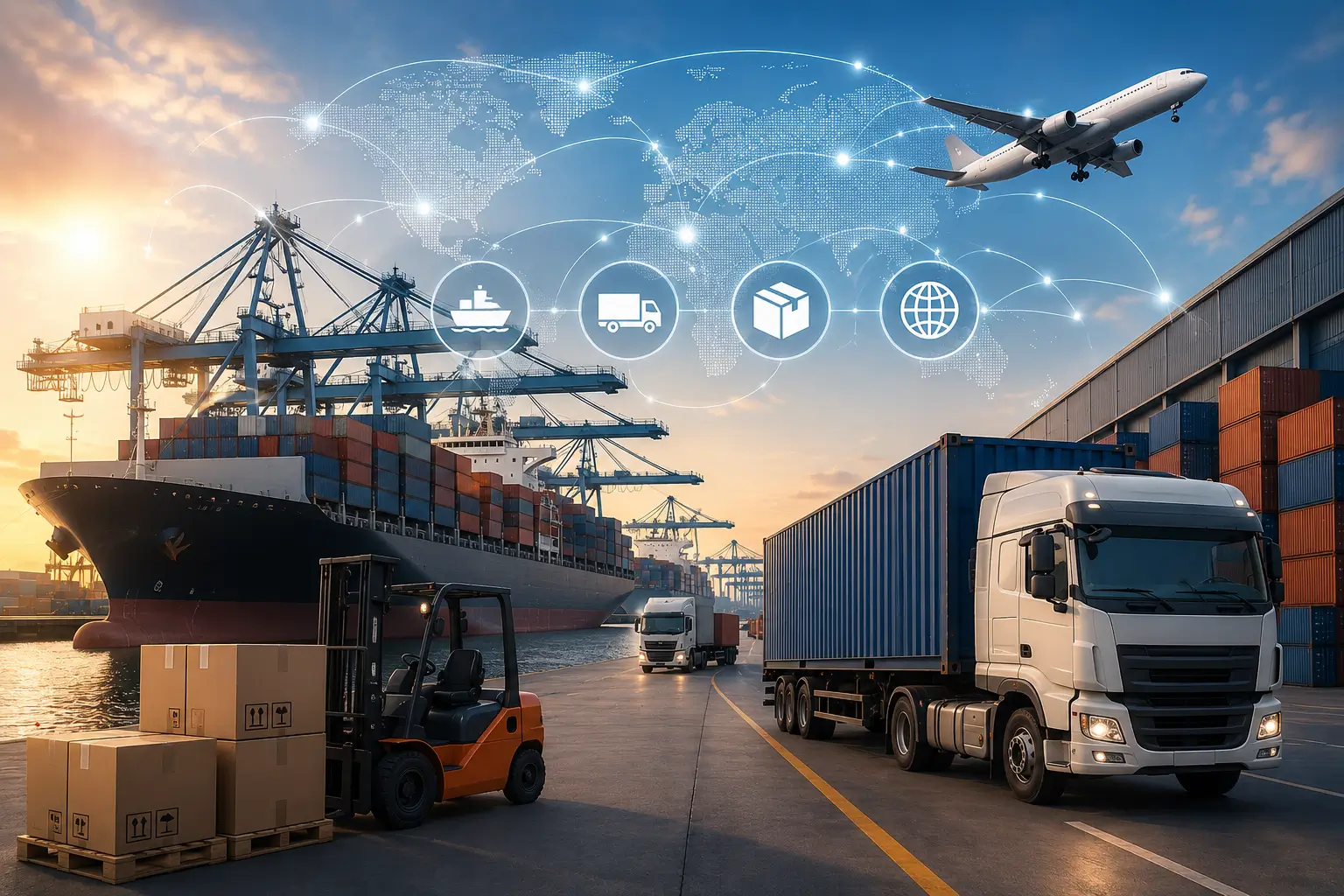
Intelligent, scalable & future-ready software for modern businesses
Our client see measurable results within the first 90 days of launch.
Why Logistics and Supply Chain Businesses Are Losing Margin to Technology Gaps
Manual dispatch processes, disconnected warehouse systems, and no real-time supply chain visibility are not just operational inefficiencies. Every gap in your logistics technology stack is a gap in your margin, your delivery SLA, and your customer retention.


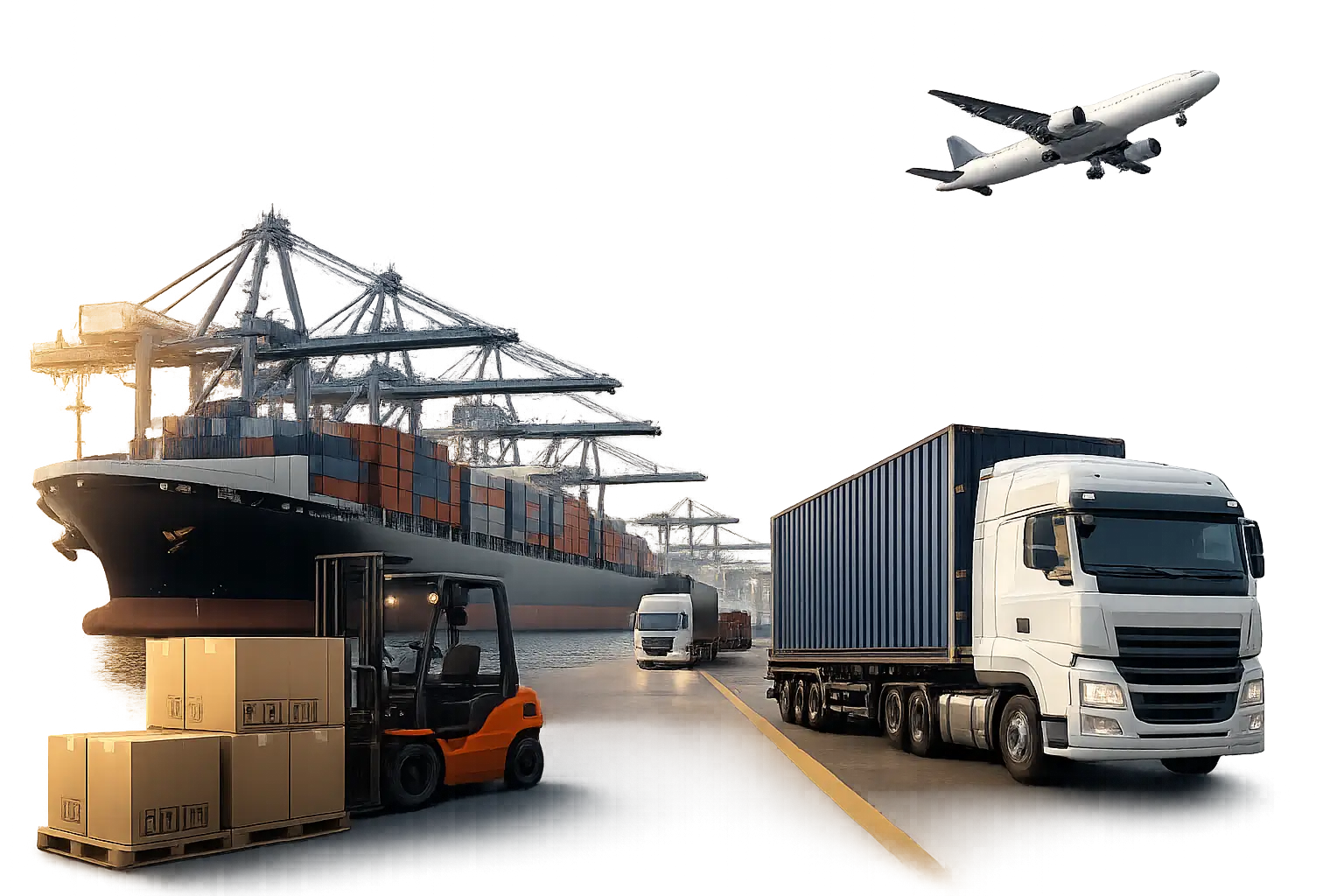


Supply Chain Disruptions With No Early Warning or Response Playbook
Supply chain managers discovering a critical supplier delay when a production line stops have no buffer because their visibility ends at the first tier. End-to-end supply chain visibility platforms that track supplier lead times, port congestion events, and inventory buffer levels across the full chain give procurement teams the signal to act before the disruption reaches the warehouse floor.
Last-Mile Delivery Costs Eroding E-Commerce Margins
Last-mile delivery is the most expensive segment in the logistics chain and the one customers care most about. Logistics businesses without AI-optimised last-mile routing, dynamic slot management, and failed delivery prediction tools are absorbing re-delivery costs and customer complaints that custom logistics software development eliminates through better planning at the dispatch stage.
No Digital Freight Marketplace or Spot Rate Visibility
Freight forwarders and shippers negotiating spot rates through brokers and phone calls cannot access the market intelligence that digital freight platforms provide. Logistics businesses building digital freight marketplaces or connecting to freight rate APIs are quoting faster, winning more spot business, and retaining the contract accounts that manual quoting processes lose to faster competitors.
Cold Chain and Compliance Monitoring Done Manually
Pharmaceutical, food, and fresh produce logistics operations managing temperature compliance through paper temperature logs and periodic sensor checks are carrying regulatory and product loss risk that IoT-connected cold chain monitoring eliminates. A temperature excursion identified in real time is recoverable. One identified at delivery is a product write-off and a compliance incident.
Fleet Maintenance Reactive Rather Than Predictive
Fleet operators discovering a vehicle breakdown during a delivery run face a recovery cost, a missed SLA, and a customer who notices. IoT telematics and predictive maintenance models that flag engine faults, brake wear, and tyre pressure anomalies before departure eliminate the breakdown events that reactive maintenance programmes cannot prevent.
Customs and Cross-Border Documentation Still Paper-Based
International freight businesses managing customs documentation, certificates of origin, and import declarations through manual data entry and paper forms are creating delays and errors at border crossings that automated trade compliance software eliminates. Every hour a shipment sits at customs waiting for a corrected document is a cost paid by the shipper and a service failure logged by the consignee.
We Build Logistics Technology That Cuts Cost Per Shipment, Improves On-Time Delivery, and Scales With You
We are a team of senior engineers who specialise in logistics software development. Our focus is real-time shipment intelligence, AI-powered route and demand optimisation, and supply chain platforms built for the operational scale and integration complexity that logistics networks demand.
AI-First Development
We architect AI into logistics platforms from the first sprint. Route optimisation engines processing live traffic and capacity data, demand forecasting models informing inventory positioning, predictive ETAs for shipment tracking, and carrier performance scoring tools are built into the core system from day one. Not added as analytics dashboards that dispatchers check after making decisions manually.
End-to-End Platform Engineering
We design, build, and deploy complete logistics ecosystems from order management and warehouse operations through transport planning, carrier management, tracking, and supply chain analytics. Every module connects. Your order data, inventory position, and shipment status operate in one coherent system rather than disconnected TMS, WMS, and visibility tools that require manual reconciliation.
Revenue-Focused Architecture
Every technical decision is evaluated against cost per shipment, on-time delivery rate, fleet utilisation, warehouse throughput per shift, and customer retention. Fewer kilometres per delivery means lower fuel cost. Higher pick accuracy means fewer returns. Better demand forecasting means lower safety stock and less working capital tied up in buffer inventory.
Domain-Deep Expertise
Our team builds for 3PLs, freight forwarders, courier companies, last-mile delivery operators, cold chain logistics providers, and supply chain SaaS businesses. We understand EDI and API carrier integrations, WMS slotting and bin location logic, TMS load optimisation algorithms, customs and trade compliance data requirements, and the multi-modal routing complexity that generic software agencies get wrong.
Logistics Software Development Services Built for Operational Efficiency and Supply Chain Resilience
From custom transport management systems to AI route optimisation and supply chain visibility platforms, we build every application a logistics business needs to move goods faster, at lower cost, and with the end-to-end visibility that shippers and regulators increasingly require.
Software Built Around How Your Logistics Business Actually Works
We build custom logistics software for 3PLs, courier and last-mile operators, freight forwarders, cold chain providers, supply chain managers, and LogTech startups. Each platform is designed around your network model, carrier relationships, compliance environment, and the specific cost and service metrics your business is measured against.
How We Build: A Seven-Layer Delivery Framework
Every project runs through seven defined layers. Speed and quality are not traded off against each other.
Real-Time Data Pipelines
GPS vehicle telemetry, IoT sensor readings, carrier tracking events, warehouse scan data, and supplier shipment updates flow through high-throughput pipelines to control tower dashboards, customer tracking portals, and AI optimisation engines in real time. A logistics operations manager sees current network state, not a view from the previous hour that has already changed.
What a Well-Built Logistics Platform Actually Does for Your Revenue
Logistics software is not an operational support cost. It determines your cost per delivery, your on-time rate, your warehouse throughput per shift, and whether enterprise customers sign multi-year contracts or take their freight to competitors with better digital infrastructure.
Lower Cost Per Delivery
AI route optimisation reducing kilometres per delivery and improving multi-drop sequencing cuts fuel cost and driver time per shipment across the entire fleet every working day.
Higher On-Time Delivery Rate
Predictive ETAs, proactive exception alerts, and carrier performance visibility give operations teams the lead time to intervene before a delay becomes an SLA breach.
Higher Warehouse Throughput Per Shift
Pick path optimisation, bin location intelligence, and real-time labour task allocation increase the lines picked per hour without increasing headcount or extending shift length.
Lower Inventory and Safety Stock Cost
Demand forecasting and supply chain visibility connected to real supplier lead time data reduces the safety stock buffer needed to protect service levels, freeing working capital.
New Revenue From Data and Value-Added Services
Supply chain visibility data, carrier benchmarking reports, and predictive analytics delivered to shipper customers create premium service tiers and consulting revenue streams beyond basic freight.
Enterprise Contract Wins Through Better Technology
Enterprise shipper RFPs now score logistics technology capability as heavily as rate and network coverage. Better TMS, WMS, and visibility platforms win contracts that logistics providers without them lose on paper before pricing is discussed.
The Technology Stack We Build With
We select tools based on what your platform needs. No default stacks. No forced frameworks.
Mobile Development









Frontend Development







Backend and APIs








AI and Machine Learning








Cloud and DevOps




Database






Logistics Technology Trends Shaping the Industry in 2026 and Beyond
What worked three years ago is already losing ground. The logistics platforms winning in 2026 are built differently. Here is what is driving the shift.
AI Route Optimisation is Delivering Measurable Cost Reductions at Scale
Logistics operators that have deployed AI-powered route planning across their fleets are reducing fuel consumption by 10 to 20 percent per vehicle compared to manual or basic optimisation approaches. The gap between AI-optimised and manually planned routing is wide enough that it is showing up in carrier rate competitiveness, not just internal efficiency metrics.
Supply Chain Visibility Has Moved From Nice-to-Have to Contract Requirement
Enterprise shippers including manufacturers, retailers, and FMCG companies are making real-time supply chain visibility a contractual requirement in 3PL and carrier tenders. Logistics businesses that cannot provide end-to-end shipment tracking, exception alerts, and performance reporting through a digital portal are no longer qualifying for the contracts they competed for two years ago.
Warehouse Automation is Creating New WMS Requirements Beyond Inventory Control
Distribution centres deploying automated storage and retrieval systems, goods-to-person robotics, and conveyor sorters need WMS platforms that can orchestrate both human and robotic task execution in the same facility. WMS software built for purely manual operations cannot manage the task routing, priority logic, and system interfaces that automated warehouse equipment requires.
Green Logistics Requirements Are Entering Procurement Scoring
Scope 3 emissions reporting obligations and ESG procurement policies at major shippers are creating demand for logistics carbon footprint data at the shipment level. Logistics businesses that can report emissions per delivery, per lane, and per carrier are gaining a scoring advantage in enterprise tenders that competitors without emissions data management software cannot match.
Quick Commerce and Micro-Fulfilment Are Reshaping Last-Mile Infrastructure
Ten-minute and same-day delivery expectations in urban markets are driving investment in dark store and micro-fulfilment centre networks that require purpose-built inventory management, order orchestration, and hyperlocal route optimisation software. Logistics operators building the technology infrastructure for rapid fulfilment models now are positioning for the urban last-mile market share that longer-cycle delivery operators cannot serve.
Why Logistics and Supply Chain Teams Choose Akoode
Built for logistics operations and backed by measurable results. Our clients include 3PLs, courier networks, freight forwarders, supply chain managers, and LogTech startups across India, the UAE, and the UK.
Recognised by leading platforms, startup ecosystems, and global technology communities.














Talk Directly with Our Founder
Discuss your software vision, AI roadmap, and delivery strategy with the team leading product engineering at Akoode.
Our Logistics Software Development Process
From first call to live logistics operations, here is exactly how we operate. Disciplined execution designed to ship logistics platforms that track shipments in real time, optimise routes at dispatch, and scale with your network.
We map your shipment flows, network topology, carrier relationships, warehouse layout, compliance obligations, and the specific operational problems your logistics software needs to solve before designing anything. For TMS projects, that means documenting every carrier integration, every shipment type, and every freight audit rule. For WMS, it means mapping every product type, every storage zone, and every pick sequence requirement in your facility.
Logistics UX serves dispatch planners optimising routes under time pressure, warehouse pickers reading scan screens in a moving environment, drivers navigating on a phone while parked, and supply chain managers reviewing exception dashboards. We design each interface for its specific operational context. A driver app must work with one glance and one tap. A control tower dashboard must surface exceptions without burying them in data.
We build in two-week sprints with working logistics software at the end of each cycle. You review live shipment tracking, route planning, and warehouse management modules in a staging environment connected to test carrier and GPS data where available. Logistics builds aligned to seasonal peak periods get sprint planning that ensures core functionality is stable before the busiest operational windows.
Route optimisation and demand forecasting models are integrated after core TMS and data pipeline systems are stable and processing real shipment and GPS data. Each AI model is trained on your actual historical route, delivery, and inventory data, then validated against your historical delivery performance before it influences any live routing or replenishment decision.
We load-test GPS ingestion pipelines against your peak vehicle event volume, route optimisation engine performance under full fleet dispatch load, and warehouse scan throughput under peak pick rate conditions before launch. Offline mobile functionality for driver and picker apps is tested without network connectivity. A logistics platform that slows down at morning dispatch or loses GPS data during a delivery run is not acceptable.
We deploy on auto-scaling infrastructure with time-series database optimisation for GPS and sensor data, geospatial index configuration for route and tracking map performance, and high-availability configuration for systems that operations depend on daily. Post-launch, we retrain AI models as new route and delivery data accumulates, manage carrier API updates, and scale infrastructure as your shipment volume and fleet size grow.
Questions Teams Ask Before They Start
Straight answers on timelines, carrier integrations, AI route optimisation, WMS architecture, cold chain compliance, and how we work within your existing logistics operations.
For dedicated-pod and hourly engagements, we start within five business days. TMS, WMS, and supply chain visibility platform builds require a 1 to 2 week discovery phase to map your shipment flows, carrier relationships, warehouse layout, compliance requirements, and the integration landscape before architecture begins.
Yes. We build carrier API integrations and EDI connections for major courier, freight, and parcel carriers. We handle EDIFACT, X12, and API-based carrier integrations covering booking, label generation, tracking event consumption, and freight invoice reconciliation. Every integration is built for the message volume and reliability requirements of a live logistics operation.
A focused fleet tracking or last-mile delivery platform takes 12 to 18 weeks. A full TMS with carrier integrations and AI route optimisation typically takes 18 to 28 weeks. A WMS with RFID integration and warehouse automation interfaces takes 16 to 26 weeks. We build in two-week sprints and align delivery milestones to peak season and go-live requirements.
Yes. We build offline-capable mobile apps for delivery drivers and warehouse operators. Proof of delivery capture, barcode scanning, route navigation, pick task completion, and exception reporting all function without network connectivity and sync automatically when connection is restored. Offline functionality is tested explicitly in no-connectivity conditions before any logistics app goes to production.
Yes. We build 3PL management platforms with complete inventory segregation between clients, activity-based billing engines, client self-service portals with their own inventory and shipment visibility, and SLA performance reporting per client. The billing logic correctly attributes storage, handling, and transport costs to each client account without manual calculation.
Yes. We offer ongoing retainers covering platform maintenance, carrier integration updates as APIs change, AI route and demand model retraining as new operational data accumulates, infrastructure scaling as shipment volume grows, and feature development as your logistics network expands into new regions or service types.
A focused fleet tracking platform or last-mile delivery app MVP typically runs between $20,000 and $50,000. A full TMS or WMS with AI route optimisation, carrier integrations, and supply chain visibility modules is scoped after discovery. Shipment volume, carrier count, warehouse complexity, and AI model requirements drive cost more than feature count.
Yes. We build route optimisation engines that solve multi-stop sequencing against vehicle capacity, delivery time windows, driver hours regulations, and live traffic data simultaneously. Each model is trained on your historical route and delivery data and validated against your actual delivery performance before it plans any live route.
Yes. We build supply chain visibility platforms tracking purchase orders, supplier shipments, port and customs events, and inbound freight across multiple supplier tiers. Integration with supplier systems, freight forwarder APIs, port and customs data feeds, and carrier tracking systems is built into the control tower architecture from day one.
Yes. We build cold chain monitoring platforms with real-time temperature, humidity, and shock sensor integration for pharmaceutical, food, and perishable goods logistics. Automated excursion alerting, compliance audit trail generation for GDP and FDA cold chain requirements, and digital temperature certificates for delivery documentation are all built as core platform capabilities.
You own 100 percent of the code, IP, and all deliverables from day one. We sign IP-assignment agreements before kickoff. No licensing fees, no retained ownership, and no restrictions on how you use, modify, or scale the platform after delivery.
We build for logistics clients across India, the UAE, UK, and international markets. Our platforms handle multi-currency freight billing, multilingual driver and warehouse apps, region-specific carrier integrations, customs and trade compliance documentation for cross-border shipments, and GDPR and DPDP-compliant handling of driver and consignee personal data. If your logistics network crosses borders, we build the platform to match.
Start Your Logistics Software Project Logistics & Supply Chain project
Tell us what you are building. A senior engineer, not an account manager, will reply within 30 working minutes. NDA signed before any route data, carrier commercial relationships, or warehouse architecture details are discussed.