Precious Metals Ecommerce Platform: A Connected Silver Store, Cart to Checkout
Akoode designed and developed an OpenCart ecommerce platform for Gold Invest Worldwide, a precious metals business serving customers in Canada. The store brings silver product discovery, cart management, checkout, customer accounts, payments, and order history into one connected buying journey built around clear, practical commerce workflows.

Connected Cart
Selected products remain organized before checkout
Payment Checkout
A guided path from cart review to payment
Customer Accounts
Account details and order records in one place
Bringing Precious Metal Purchases Into a Clearer Online Journey
Gold Invest Worldwide operates in the gold and silver industry in Canada. Its offering includes refinery support, storage services, and a Sell To Us service, alongside ecommerce categories covering silver bars, silver coins, and silver rounds. The website therefore needed to explain services while also functioning as a usable online store.
Buying precious metals online involves more than placing attractive product photographs on a page. Customers need to locate the right product category, review available information, adjust a cart, move through checkout, complete payment, and find the resulting order inside an account. A weak link in that sequence can interrupt the purchase.
Akoode designed and developed the platform on OpenCart. The work covered the storefront experience, product catalogue, shopping cart, checkout, payment gateway connection, customer accounts, and order listing. We treated those parts as one commerce flow rather than a collection of screens built and reviewed separately.
3
Silver Categories
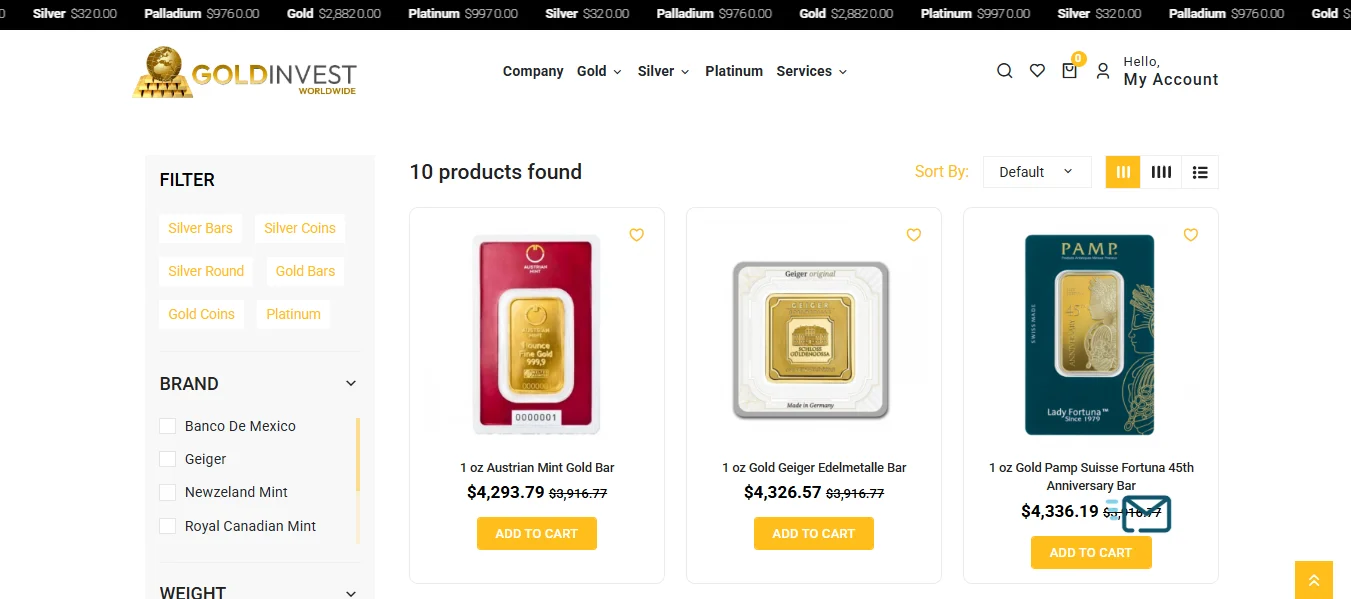
Silver bars, silver coins, and silver rounds are organized as distinct catalogue categories, helping customers narrow the product range before opening individual listings or adding products to the cart.
3
Service Areas
Refinery Service, Storage Services, and Sell To Us give the business room to explain its wider precious metal offering beyond the standard ecommerce purchase journey.
1 Platform
Connected Commerce
Product browsing, cart management, checkout, account access, payment, and order records operate within the same OpenCart environment instead of sending customers across disconnected systems.
Zero Separate Storefronts
Unified Experience
The supplied product categories and service information are presented through one ecommerce platform, giving customers a consistent route into the appropriate product or service area.
Project Information
Client
Confidential, Canada
Industry
Retail and e-Commerce
Use Case
Precious Metals Ecommerce and Customer Order Management
Solution
OpenCart Storefront, Cart, Checkout, Payments, Accounts and Orders
Engagement
Fixed Cost
What Made This More Than a Basic Online Store?
The platform needed to connect service-led content with a working retail journey. A customer might arrive to explore silver bars, research silver coins, review silver rounds, or understand a storage or refinery service. Product discovery, cart actions, checkout, payment, accounts, and orders all had to make sense together.
Different Products Needed a Clear Structure
Silver bars, coins, and rounds belong to the same broad market, but customers may shop for them differently. The store needed recognizable categories so visitors could narrow the catalogue without working through an undifferentiated product list.
Cart Actions Had to Feel Predictable
A cart is where browsing becomes buying. Customers needed a straightforward way to add products, review selections, change quantities, remove unwanted items, and understand what would move forward into checkout.
Payment Sat Inside a Longer Journey
Connecting a payment gateway was only one part of checkout. The surrounding steps needed to carry the correct cart and customer information forward without making the buyer repeat decisions already made earlier in the journey.
Orders Needed a Customer-Facing Home
Completing checkout should not leave the customer without a clear record. Account management and order listing were required so buyers could return to the platform and find information associated with their purchases.
The hard part was not displaying silver online. It was keeping the buying journey coherent from the first category click to the saved order.
Replacing Disconnected Purchase Steps With One Commerce Flow
The brief called for a functioning ecommerce platform, not a catalogue with a payment button attached at the end. Akoode needed to connect product discovery, cart behavior, customer details, checkout, payment, account management, and order records inside OpenCart while keeping the public interface easy to understand.
Organize the Precious Metals Catalogue
Separate silver bars, coins, and rounds into clear product paths so customers can browse with intent. The catalogue also needed enough structure to support individual product pages without making the wider store difficult to navigate.
Design a Practical Shopping Cart
Give customers a dependable place to review selections before payment. Common actions such as adding an item, changing its quantity, removing it, and continuing to checkout needed to remain visible and understandable.
Connect Checkout and Payment
Carry the customer from cart review into a guided checkout and payment journey. The payment gateway needed to sit within the ecommerce flow rather than feel like an unrelated step attached after the store experience.
Provide Account and Order Access
Create a customer area for account management and order listing. Buyers needed a recognizable place to maintain relevant account information and return to the orders associated with the online store.
Keep Store Management Inside OpenCart
Use OpenCart as the central commerce platform rather than building separate tools for each module. This kept catalogue, customer, cart, checkout, and order functions within a system chosen for ecommerce administration.
Building the Store as One Connected OpenCart System
Akoode built the customer journey around the way information moves through a store. A product selection becomes a cart item. The cart moves into checkout. Checkout passes the required transaction information to payment, and a completed purchase becomes an order connected to the customer account. Each module had a clear place.
Commerce Structure and Journey Planning
We mapped the store around the supplied categories, services, cart, checkout, payment, account, and order requirements. This established where each customer action should begin, what information it depended on, and which OpenCart module would own it.
Storefront and Catalogue Design
We designed the public store to distinguish silver bars, silver coins, and silver rounds while leaving room for refinery, storage, and Sell To Us services. Products could be browsed without mixing service enquiries into the purchase path.
Cart and Checkout Development
Cart behavior and checkout were implemented as consecutive parts of the same task. Customers could review selected products first, then continue into the required checkout stages without restarting the buying process or losing the context of the cart.
Payment, Accounts and Orders
The payment gateway was connected to the checkout journey, while customer account functionality provided a home for account details and order listings. The exact gateway, supported methods, and payment-status rules require confirmation before publication.
Ecommerce QA and Release Review
The store journey was reviewed across catalogue browsing, cart actions, checkout, account access, and order visibility. Final publication should include the confirmed test coverage, supported devices, payment scenarios, and launch details rather than implying checks not documented in the brief.
What Customers Can Do on the Platform
Highlight 01
Product Catalogue for Silver Categories
Customers can browse silver bars, silver coins, and silver rounds through a structured OpenCart catalogue. The category split reduces unnecessary searching and gives each product type its own route into the store.
- Separate silver product categories
- Individual product browsing paths
- Catalogue maintained through OpenCart

Highlight 02
Shopping Cart Management
The cart gives customers a final review point before checkout begins. Selected products remain together while buyers inspect the order, revise quantities, remove an item, or continue shopping before committing to payment.
- Add and review selected products
- Update quantities before checkout
- Remove unwanted cart items

Highlight 03
Checkout and Payment Gateway
Checkout carries the confirmed cart into the transaction stage and gathers the information required for the order. The connected payment gateway then handles payment within the purchase journey defined for the store.
- Guided movement from cart to payment
- Connected payment gateway step
- Order creation within the store journey

Highlight 04
Customer Account Management
Registered customers have an account area connected to their store activity. The module gives buyers a familiar place to access relevant account functions rather than treating every visit as an unrelated shopping session.
- Central customer account area
- Access linked to store activity
- Account functions inside OpenCart

Highlight 05
Customer Order Listing
Order listing keeps purchase records connected to the customer account after checkout. Buyers can return to the store and locate their previous order entries without relying on the active cart to preserve completed purchase information.
- Orders linked to customer accounts
- Previous purchases shown in one list
- Clear separation of cart and order records
Where Did the Ecommerce Work Become Difficult? How We Solve Them
The main challenge was not creating individual screens. It was preserving the relationships between them. A catalogue item had to become the correct cart entry, the cart had to enter checkout intact, payment needed the right transaction context, and the resulting order had to appear under the appropriate customer account.

Keeping Cart Data Consistent
Customers can change a cart several times before checkout. Product references, selected quantities, pricing data, and the final cart state must remain aligned as the customer moves between store pages.
Our Approach
OpenCart’s cart workflow was used as the central point for selections before checkout. Confirm any custom cart validation, stock check, session handling, or pricing logic implemented by Akoode.
Connecting Payment to the Correct Order
A payment attempt and an ecommerce order are related, but they are not the same record. The store needed a defined way to carry the purchase into the gateway and handle the response returned to OpenCart.
Our Approach
The gateway was connected to the checkout flow through OpenCart. Confirm gateway name, callback or webhook handling, order-status mapping, duplicate-response protection, and failed-payment behavior.
Linking Orders to Customer Accounts
Customers needed to find completed purchase records after leaving the checkout page. An order list only helps when the platform associates each record with the correct customer context and access rules.
Our Approach
Account management and order listing were kept within the same OpenCart platform. Guest checkout availability, account verification, order-detail access, and any reordering or invoice functionality.
Separating Services From Product Sales
Refinery, storage, and Sell To Us are service journeys, while silver bars, coins, and rounds belong to the ecommerce catalogue. Combining everything into one undifferentiated navigation path could make both areas harder to understand.
Our Approach
Service content and product categories were given distinct roles within the website structure. Service enquiry forms, lead routing, appointment flow, CRM connection, or document-upload requirements.
Turning Separate Store Tasks Into One Buying Journey
The delivered platform brings product discovery, cart handling, checkout, online payment, customer accounts, and order visibility into OpenCart. That is the verified outcome available from the brief. No claims are made about revenue, conversion rate, transaction volume, checkout completion, customer growth, or operating cost because those figures were not provided.
Product Structure Required Definition
The business needed an online structure for silver bars, silver coins, and silver rounds. Without distinct catalogue paths, customers would have to work through mixed product listings to find the type of silver product they intended to review.
No Confirmed Connected Cart Flow
The project brief called for cart functionality as part of the new platform. A customer journey was needed to preserve selected products, support common revisions, and provide a clear next step into checkout.
Payment Needed Ecommerce Context
A gateway could not operate as a detached payment link. It needed to receive the transaction from the checkout journey and return an outcome that the ecommerce platform could associate with the purchase.
Account and Order Access Was Required
Buyers needed more than a checkout confirmation screen. The brief included account management and order listing so customer activity could remain accessible after the active shopping session ended.
Structured OpenCart Catalogue
Akoode organized the ecommerce experience around silver bars, silver coins, and silver rounds. Each category could guide customers toward relevant product listings while OpenCart provided the underlying catalogue-management environment.
Connected Cart and Checkout
Product selection, cart review, and checkout formed consecutive stages rather than isolated pages. Customers could confirm what had been selected before moving into the information and payment steps required to place an order.
Payment Gateway Connection
Online payment was placed inside the OpenCart checkout journey. The exact gateway and technical response logic require confirmation, so no unsupported provider, payment method, fraud rule, or settlement process is claimed.
Accounts With Order Listings
The customer area and order list provided a post-checkout home for purchase records. The solution kept those records within the same commerce platform rather than creating an unrelated customer portal.
One Ecommerce Platform
Catalogue browsing, cart handling, checkout, payment, customer accounts, and order records now sit inside the OpenCart solution described in the brief. Customers have a connected path instead of a set of unrelated commerce touchpoints.
Clearer Silver Product Discovery
Visitors can approach the catalogue through silver bars, silver coins, or silver rounds. The category structure gives customers an earlier way to narrow their intent before examining individual products.
Purchases Remain Account-Connected
Customer account management and order listing remain part of the platform after checkout. Buyers have a defined place to return to instead of depending on the cart to represent purchases that have already become orders.
Commerce Administration Is Centralized
OpenCart provides one working environment for the ecommerce modules named in the project brief. Specific administrative permissions, reporting tools, inventory processes, and fulfillment workflows still require confirmation before they can be described.
3 CategoriesSilver Product Structure
Silver bars, silver coins, and silver rounds have distinct catalogue paths, giving customers a simple way to begin browsing according to the form of silver they want to consider.
1 PlatformConnected Commerce
Catalogue, cart, checkout, customer accounts, payment, and order listing are brought together inside the OpenCart ecommerce environment described in the project brief.
Zero Separate Order PortalsAccount Continuity
Customers can access order listings through the account experience within the ecommerce platform rather than being redirected to a separately described order-management portal.
Where the Same Ecommerce Model Can Be Applied
This architecture suits stores that need more than a product grid and a generic checkout button. It is useful where category structure, cart continuity, payment handling, customer accounts, and order records must operate together, particularly when the business also offers services that sit outside a conventional product purchase.
Precious Metal Retailers
Gold and silver retailers can separate products by metal, form, or other approved catalogue attributes while keeping cart, checkout, accounts, payments, and order history inside one ecommerce platform.
Collectible Product Stores
Coin, collectible, and limited-range stores can use structured categories to make browsing less cumbersome. Product availability rules, grading fields, certification details, and reservation logic should be added only when the business supplies those requirements.
Specialist Ecommerce Businesses
Stores with technical or high-consideration products can use the same journey to connect detailed listings with a conventional cart and checkout. The platform gives customers time to review selections before moving into payment.
Category-Led Product Catalogues
Retailers with clearly separated product families can build navigation around the way customers already shop. This avoids forcing unrelated items into the same list and gives each category room for relevant information.
Product and Service Businesses
Companies that both sell products and offer services can give each journey a distinct purpose. Ecommerce customers can proceed toward checkout while service visitors move toward information or an enquiry route.
Regional Online Stores
A regional ecommerce platform can combine a focused product catalogue with customer accounts, payment, and orders. Currency, tax, shipping, language, and compliance behavior must be defined for the exact market rather than assumed.
Why Choose Akoode for OpenCart Ecommerce Development?
Akoode works across the complete purchase path rather than treating the storefront as the entire product. For Gold Invest Worldwide, that meant considering how catalogue structure, cart state, checkout, payment, customer access, and order records fit together inside OpenCart. The result is grounded in the store’s actual operating requirement.
We Follow the Data Between Screens
A product does not stop being important after a customer clicks “Add to Cart.” We design around how that selection moves through the cart, checkout, payment, order creation, and customer account instead of reviewing each screen in isolation.
Ecommerce Logic Comes Before Decoration
The storefront still needs to look credible, but a polished layout cannot repair a broken checkout journey. We give product organization, cart behavior, account access, and order continuity the same attention as the visible design.
We Build Around the Chosen Platform
OpenCart already provides an ecommerce foundation, so the project did not need a custom commerce engine invented from scratch. Our work focused on shaping the supplied modules into a store that matched the stated product and service model.
Gurgaon Engineering for Canada-Focused Delivery
Akoode Technologies operates from Gurgaon and serves clients in India and the USA, while this engagement was for a Canada-based business. We document market-specific behavior only when it has been confirmed rather than guessing tax, shipping, payment, or compliance rules.