
AI Agent Development Company

Akoode Technologies designs and builds AI agents that go beyond answering questions to actually completing tasks: checking records, calling internal tools, making rule-based decisions, and handing off to a person only when the situation calls for it. We work with businesses in India and abroad that have already tried a basic chatbot and are ready for something that does real work.

4.9

Google Rating

97%

Client Retention

15+

Industries Served

Global

Delivery

AI Agent Development Company services by Akoode — a robotic hand shaking a human hand

The Gap Between Automating a Task and Delegating It to an Agent

Most businesses are not short on ideas for where AI could help. They are short on a system that can actually go do the work, instead of just suggesting it.

We build the full agent stack: reasoning, memory, tool access, and the guardrails that make it safe to run without a person watching every step, all under one engagement.

There is a real difference between a business that uses AI to draft an email and one that has an agent handling the whole thread: reading it, checking a policy, updating a record, and replying, without a person doing any of those steps by hand. The first is assistance. The second is delegation.
That gap shows up in hours saved, not in a demo. A well-built agent does not get tired doing the hundredth ticket the same way it did the first. Businesses still relying on a person to manually bridge two or three systems for every routine decision are paying for work an agent can now do at a fraction of the cost, around the clock.

What changes once agents are actually doing the work:

01

A repetitive multi-step task that took a person twenty minutes gets done in under a minute

02

Work that used to queue overnight for someone to review gets handled the moment it arrives

03

Support and operations teams spend their time on judgment calls instead of data entry

04

Errors get caught by the agent's own checks before they reach a customer, not after

05

Scaling volume no longer means scaling headcount at the same rate

Our AI Agent Development Services

We build agents scoped to a real workflow, not a generic assistant with your logo on it. Every engagement starts with the actual process you want handled and works backward to the right architecture.

01.

Custom AI Agent Development

Built around one specific business process rather than a general-purpose bot. We map the workflow first, including every edge case the person doing it today has learned to handle, and build the agent to match that reality.
Learn More about Custom AI Agent Development
02.

Multi-Agent System Development

For workflows too broad for a single agent to own well. We split the work across specialized agents that hand off to each other through a controller or a defined routing rule, useful for anything that spans research, drafting, and review in one pipeline.
Learn More about Multi-Agent System Development
03.

Autonomous AI Agents

Agents that run a sequence of steps without approval at every stage. We build in spending caps, an allowlist of permitted actions, and a clear rule for when the agent should stop and hand off to a person.
Learn More about Autonomous AI Agents
04.

Enterprise Agent Integration

Connecting agents into what you already run: a CRM, an ERP, internal ticketing, or a database with no clean API. Most of the real engineering effort on enterprise projects goes here, not into the agent's reasoning.
Learn More about Enterprise Agent Integration
05.

RAG-Powered AI Agents

Agents that check your actual documents, policies, and records before acting, instead of relying on general model knowledge, which matters anywhere a wrong guess has a real cost.
Learn More about RAG-Powered AI Agents
06.

AI Agent Strategy & Consulting

If you are not sure where to start, we will review two or three of your most repetitive workflows and tell you plainly which ones are worth building an agent for and which are not.
Learn More about AI Agent Strategy & Consulting

Service 1 of 6: Custom AI Agent Development
Specialised Agent Capabilities We Build

Anyone can wire a language model to a chat window. Getting an agent to reliably take the right action, in the right order, inside limits you actually trust, is a different job entirely.

We treat an agent as a system with moving parts: reasoning, memory, tool access, and oversight. Each one gets built and tested on its own before the whole thing goes live, which is why our agents tend to keep working the same way in month six as they did in week one.

Tool-Calling & Function Execution

Agents that call real APIs and internal functions rather than just describing what they would do. This is what turns a chat response into an actual completed action.

Multi-Agent Orchestration

Coordinating several specialized agents so they hand off cleanly and do not duplicate or contradict each other's work, which is where most DIY agent projects fall apart.

Agent Observability & Guardrails

Logging every decision an agent makes and why, with alerts when its behaviour drifts from what you expect, instead of finding out something went wrong from a customer complaint.

Long-Term Memory & Context Retention

Agents that remember what happened earlier in a task, or across sessions with the same customer, instead of starting from zero on every message.

Human-in-the-Loop Controls

Approval steps, spending limits, and clear escalation rules built in from the start, so autonomy stops exactly where you want it to.

Voice & Conversational Agent Interfaces

Agents that handle voice calls and chat with the same underlying reasoning and tool access as their text-based counterparts, for teams that need phone-based automation, not just a web widget.

Where Agentic AI Stands in 2026 and What It Means for Your Business

Agent technology has moved fast enough in the last year that guidance from early 2025 is already outdated. Here is what has actually changed and what it means if you are building now.

Agent Orchestration Frameworks Have Matured Past Early Experiments

Tools like LangGraph and CrewAI that were rough a year ago now handle production-grade state management and error recovery, which means fewer custom workarounds and faster builds than what was possible in 2025.

Enterprises Are Moving from One Agent to Agent Teams

The single do-everything agent is giving way to small teams of specialized agents that each own one part of a process, mirroring how a human team would actually divide the same work.

Memory and Context Windows Are the Real Bottleneck, Not Reasoning

Modern models reason well enough for most business tasks. What breaks agents in production is losing track of what happened three steps ago, which is why memory architecture gets as much attention on our builds as the model choice itself.

Agent Observability Is Now a Deployment Requirement, Not a Nice-to-Have

Enterprises running agents at any real volume now expect a full audit trail of every action taken and why, largely because early 2025 deployments without this visibility caused problems nobody could diagnose after the fact.

Voice-Native Agents Are Replacing Basic IVR and Web Chat

Voice agents with the same tool access and reasoning as their text counterparts are handling call volume that used to route to an IVR tree or a basic FAQ bot, with far higher resolution rates.

AI Agent Development Services Across 15 Industries

The value of an agent depends on how well it fits how a specific industry actually operates: what decisions repeat, what data is available, and where a wrong autonomous action would actually cost something. Here is how that plays out sector by sector.

Healthcare

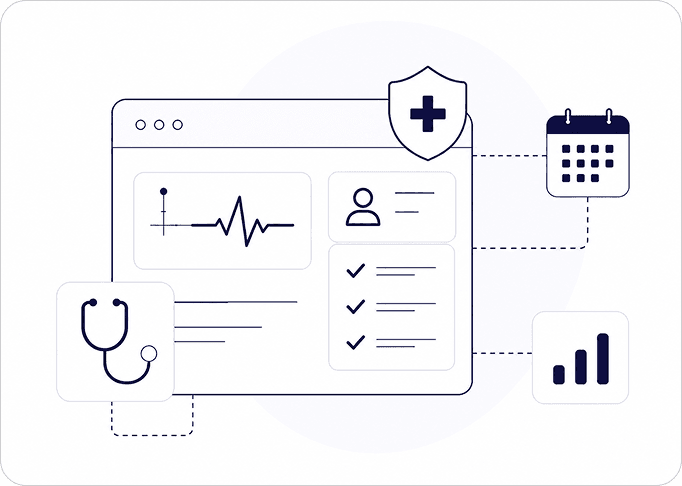
In healthcare, agents handle the parts of a workflow that involve checking multiple systems before acting: verifying insurance eligibility, scheduling around provider availability, and following up on missed appointments without a staff member manually working through each case. We build these with strict access controls given the sensitivity of patient data, and always with a clear handoff point to clinical staff for anything outside the agent's defined scope.
Healthcare
Explore Healthcare

Finance and Banking

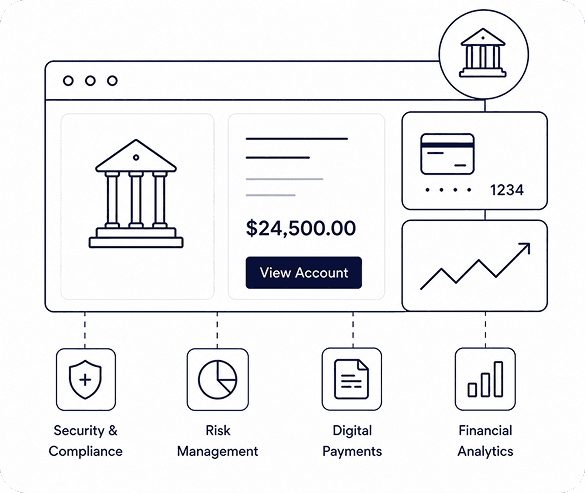
Agents in financial services handle document-heavy, rule-bound processes: pulling a customer's transaction history, checking it against fraud rules, and either clearing or flagging a transaction for review. Because the cost of a wrong autonomous decision is high here, every financial agent we build ships with a full audit trail and conservative default limits on what it can approve without a human sign-off.
Finance and Banking
Explore Finance and Banking

Retail and E-Commerce

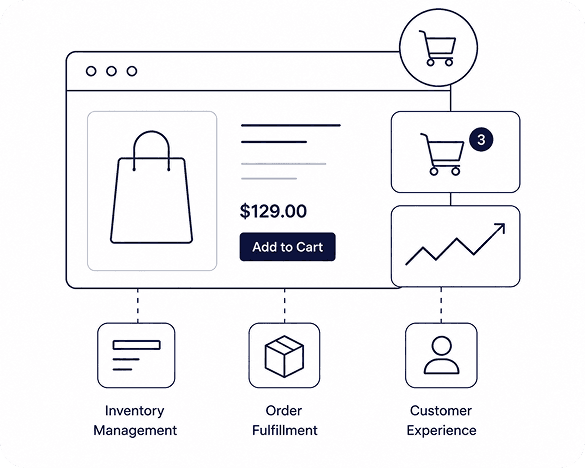
Retail agents handle the operational grind behind the storefront: checking inventory across warehouses before confirming an order, following up on abandoned carts with a genuinely relevant offer instead of a generic discount, and answering post-purchase questions by actually looking up the order rather than guessing. They free support and operations staff for the escalations that need a person.
Retail and E-Commerce
Explore Retail and E-Commerce

Manufacturing

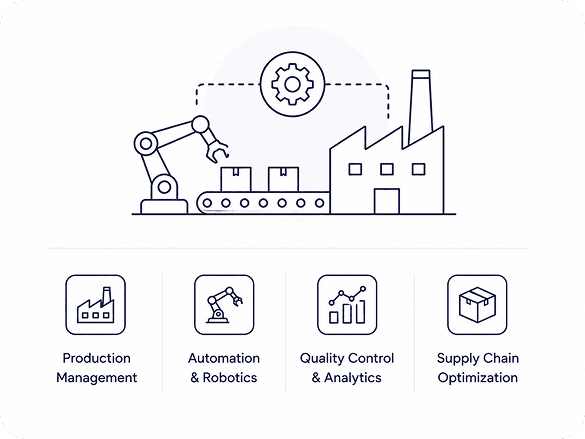
On the shop floor, agents monitor sensor and production data continuously and act on what they find: flagging a machine for maintenance before it fails, adjusting a schedule when a material shipment is delayed, or routing a quality issue to the right supervisor automatically. The value is in the agent catching and acting on a pattern before someone would have noticed it manually.
Manufacturing
Explore Manufacturing

Logistics and Supply Chain

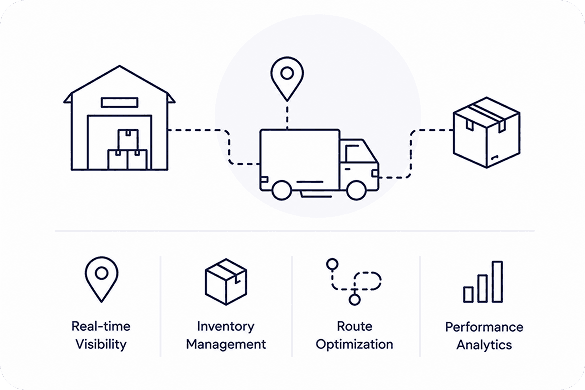
Supply chain agents track shipments, supplier performance, and demand signals across systems that rarely talk to each other cleanly, and act on what they find: rerouting a delayed shipment, flagging a supplier risk before it cascades, or adjusting a reorder point automatically. This is where multi-system integration work matters as much as the agent's own logic.
Logistics and Supply Chain
Explore Logistics and Supply Chain

Real Estate

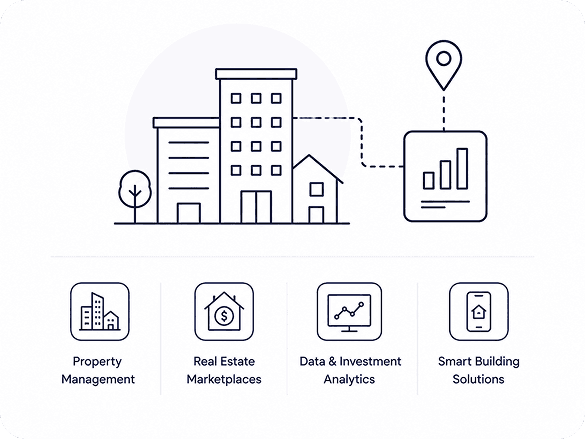
Real estate agents, the software kind, handle the document and coordination-heavy parts of a deal: extracting key terms from a lease automatically, matching a listing to a buyer's stated criteria, and following up on leads at the right cadence instead of letting them go cold. For property managers, they can also triage maintenance requests and route them to the right vendor without a person reading every ticket.
Real Estate
Explore Real Estate

Insurance

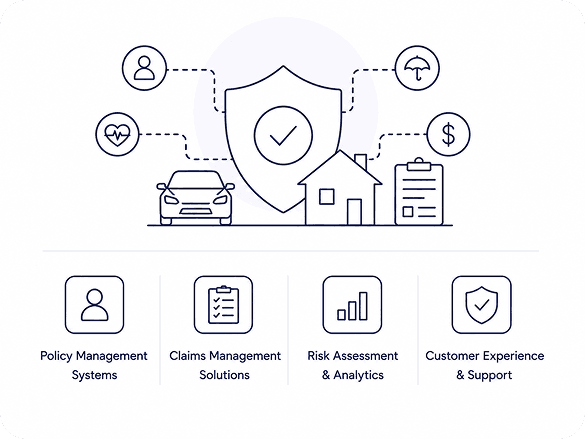
Insurance agents work through claims and underwriting steps that involve checking multiple documents and data sources: validating a claim against policy terms, flagging inconsistencies for a human adjuster, and following up with policyholders on missing documentation. The goal is cutting the time between a claim being filed and a decision being reached, without lowering the bar on accuracy.
Insurance
Explore Insurance

Education and E-Learning

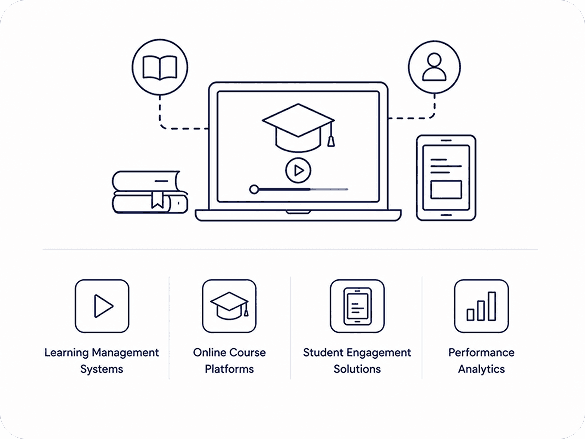
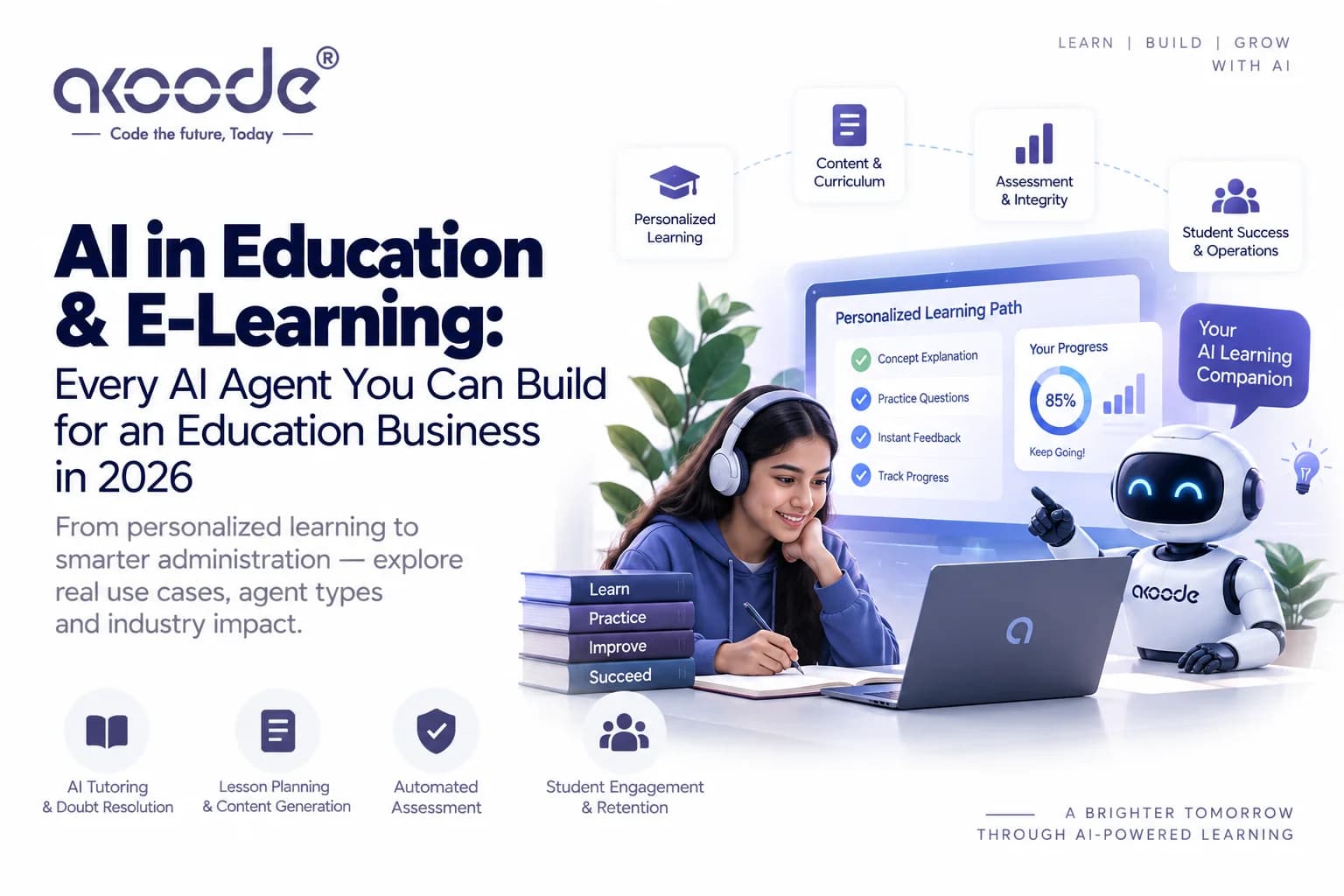
In education platforms, agents handle the individualised follow-up that does not scale with a human team: checking a learner's progress and reaching out with the right next step, grading structured assessments, and flagging students showing early signs of disengagement so a real instructor can step in before it becomes a dropout.
Education and E-Learning
Explore Education and E-Learning

Travel and Hospitality

Travel agents, again the software kind, manage the high-volume, repetitive requests that eat up a support team's day: processing a booking change against fare rules, checking availability across a live inventory system, and answering cancellation questions correctly the first time. They are built to keep working through seasonal spikes without the wait times a purely human team would hit.
Travel and Hospitality
Explore Travel and Hospitality

Media and Entertainment

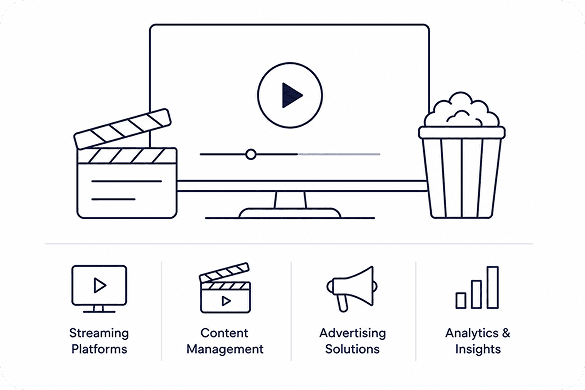
Media agents handle the operational side of content at scale: tagging and categorising new content as it comes in, matching it to the right audience segment, and flagging underperforming content early enough to adjust distribution. They take on the volume work so editorial and creative teams can stay focused on judgment calls.
Media and Entertainment
Explore Media and Entertainment

Automotive

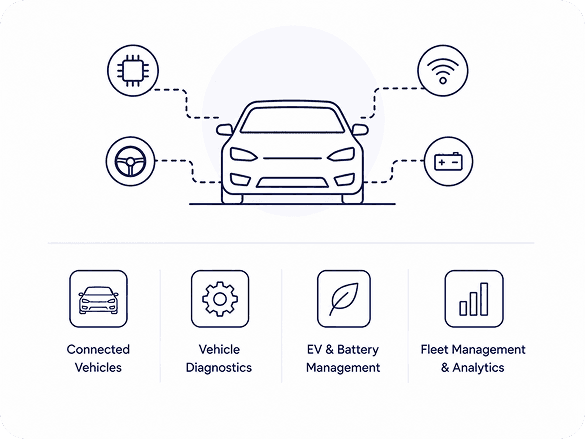
Automotive and fleet agents monitor vehicle and asset data continuously and act on it: scheduling maintenance before a part fails, flagging a fleet vehicle running outside expected parameters, and pulling together the reporting that used to require someone manually combining data from several systems.
Automotive
Explore Automotive

Agriculture

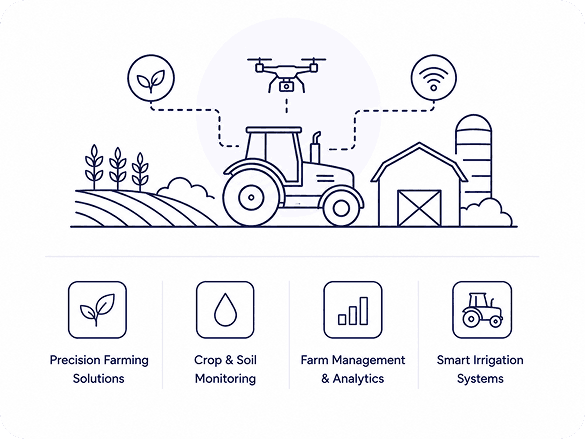
Agriculture agents work with the patchy, inconsistent data that real field conditions produce: pulling together sensor readings, satellite imagery, and weather data to flag a pest risk or irrigation need, and routing that alert to the right person before it becomes a yield problem. Built to handle gaps in the data rather than assuming a clean feed.
Agriculture
Explore Agriculture

Telecommunications

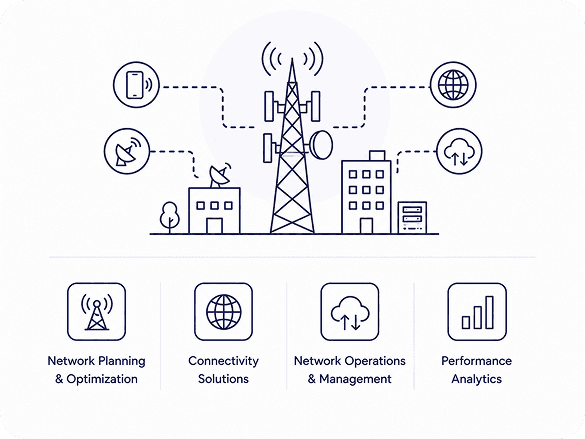
Telecom agents handle the volume of customer and network events no manual team could keep up with: resolving common billing disputes automatically, flagging a network anomaly before it becomes an outage, and routing a support ticket to the right queue based on what is actually wrong, not a static keyword match.
Telecommunications
Explore Telecommunications

Energy and Utilities

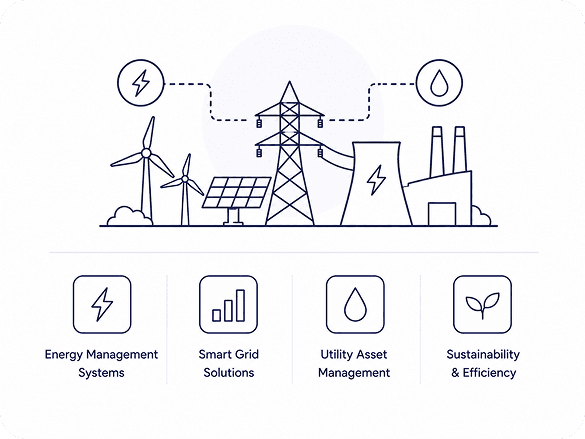
In energy and utilities, agents monitor grid and asset data and act on what changes: flagging equipment for maintenance ahead of failure, adjusting demand forecasts as conditions shift, and compiling the sustainability and compliance reporting that used to be a manual quarterly scramble.
Energy and Utilities
Explore Energy and Utilities

Public Sector and Government

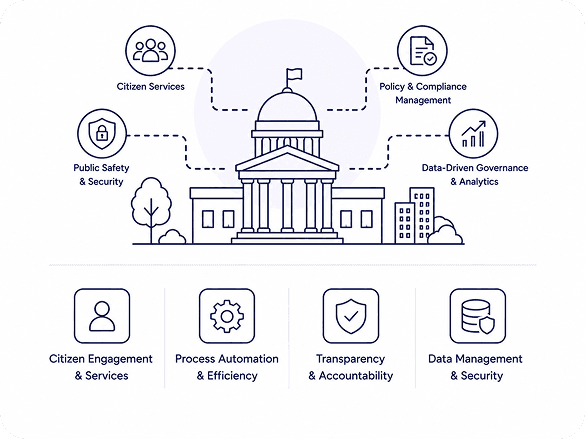
Public sector agents handle citizen queries and case processing at the volume government services actually see: answering common questions correctly and consistently, routing complex cases to the right department, and flagging documentation gaps early. Every action is logged for the audit and transparency standards this sector requires, not added afterward to pass a review.
Public Sector and Government
Explore Public Sector and Government

Technologies We Use to Build Production AI Agents

We select frameworks, models, and infrastructure based on the workflow's complexity, latency needs, and data residency requirements. Not familiarity. Not whichever framework is trending this quarter.

OpenAI API logoOpenAI API
Anthropic logoAnthropic
LlamaIndex logoLlamaIndex

Our AI Agent Development Process
The gap between wanting an agent and having one running reliably in production is where most projects fail, usually from a poorly scoped workflow or missing guardrails rather than a weak model.

01Discovery

Discovery & Workflow Mapping

We sit down with whoever actually does the task today and map every decision point and edge case, usually over one to two weeks. This is where most scope changes get caught before they cost anything.
02Architecture

Architecture & Framework Selection

We choose the framework and model based on the task: LangGraph for stateful multi-step flows, CrewAI for role-based multi-agent setups, and a model chosen for latency, cost, and data residency needs rather than name recognition.
03Build

Agent Build & Tool Integration

The agent gets built here: tool connections, memory setup, prompt design, and the guardrails that keep it inside its intended scope.
04Testing

Testing Against Real Scenarios

We test with real historical data and the edge cases you flag, not a curated happy-path demo. If the agent gets something wrong in one case out of ten, we want to know before launch.
05Deployment

Deployment with Guardrails

Spending caps, action allowlists, and human escalation rules go live with the agent, not after an incident makes them necessary.
06Monitoring

Monitoring & Continuous Tuning

Usage patterns shift as adoption grows, so we track agent decisions over time and retune on a set cadence instead of treating launch as the finish line.

Flexible Engagement Models for AI Agent Development

Choose how you want to work with us. Every model includes dedicated engineers, full IP ownership, transparent communication, and direct access to the people building your agent.

Fixed Cost

Best for: scope that is already nailed down, and a price you want nailed down with it

  • Price, timeline and scope agreed before a line of code gets written, and they stay agreed
  • Milestones with acceptance criteria you personally sign off, one by one
  • The low-risk route for MVPs and launches with a hard deadline attached
  • If mid-project surprises are what worry you, this model exists to prevent them
MOST POPULAR

Dedicated Team

Best for: products that will keep evolving long after version one ships

  • Engineers, designers, QA and a PM who work as part of your team, not around it
  • You set sprint priorities. We build them. That simple
  • Grow or shrink the team as the roadmap demands, without renegotiating everything
  • Plugs into whatever tools and workflows your team already runs
  • You talk to the people writing your code. Never through an account manager

Staff Augmentation

Best for: a skill gap today, or velocity you need by next sprint

  • Specialists who slot into your existing team and standups from day one
  • Senior skills without the cost, or the three-month wait, of a full-time hire
  • Add people when timelines tighten, release them when things calm down
  • Onboarded and shipping within days. Not months. Days

Work That Speaks for Itself

Every agent we build starts as a workflow problem before it becomes an engineering one. Here is a snapshot of how that plays out.

AI-Powered Advertisement Catalogue Generator

Key Outcomes

6

Production-Ready Templates

9

Visual Style Tones

Challenge

The creative production bottleneck in ecommerce and B2B marketing is not a talent problem. It is a process problem. Every product needs multiple ad formats. Every format needs channel-appropriate copy. Every piece of copy needs to stay on-brand across a growing catalogue. When that work is done manually, it does not scale, it does not stay consistent, and it cannot be reviewed efficiently when the output looks different every time a different person touched it.

What We Built

The brief required a modular AI pipeline that could take a product image, understand what it was selling and to whom, generate structured marketing copy across multiple formats, and render downloadable catalogue assets that looked the same every time. Deterministic output was non-negotiable. The system needed to produce layouts a marketing team could review, approve, and send without visual surprises or format inconsistencies between runs.

AI-Powered Hair Analysis

Key Outcomes

Seconds

Scalp Analysis Speed

Real-Time

3D Simulation Output

Challenge

Hair transplant consultations have not kept pace with patient expectations. Most clinics still rely on manual scalp inspection, verbal outcome descriptions, and approximate graft estimates that vary between practitioners. For a patient making a significant financial and personal decision about a visible aesthetic procedure, that process generates more hesitation than confidence. The clinics with the strongest clinical capability are often losing patients not because of their outcomes but because of how those outcomes are communicated before treatment begins.

What We Built

The brief required a complete AI-powered consultation platform that could run on flagship smartphones, deliver scalp analysis results within seconds, simulate post-transplant outcomes in real time, calculate graft counts and pricing through a standardised engine, and support at-home patient assessment as well as in-clinic use. Every objective connected directly to a specific point in the patient decision journey where the existing process was creating friction or losing conversions.

AI-Powered Quantity Takeoff Desktop Application

Key Outcomes

80%

Time Reduction

Zero

Cloud Dependency

Challenge

Quantity takeoff is one of the most time-intensive stages of construction estimation, and it is one of the most resistant to standard automation. Engineering drawings are large, dense, and proprietary. The elements that need counting are small, numerous, and visually similar across categories. Cloud-based AI tools introduce data security risks that firms working on sensitive or high-value projects cannot accept. The result is an industry where experienced estimators spend a disproportionate share of their time on a counting task that technology should have solved years ago.

What We Built

The brief required a production-ready desktop application that could automate quantity takeoff from architectural and engineering drawings, run entirely offline, and produce professional cost estimate outputs without requiring any cloud connectivity. Every objective connected directly to the operational reality of a construction estimator working with sensitive, large-format blueprint files under time pressure.

Why Choose Akoode Technologies

Building an agent that talks well is the easy part. Building one that takes the right action reliably, inside limits you trust, without babysitting it, is what separates a working system from an expensive demo.

Guardrails Built In From Day One

Spending caps, action allowlists, and human escalation rules are part of the initial build, not a patch added after something goes wrong.

Real Multi-Agent Experience

We have built coordinated multi-agent systems, not just single chatbots with a new name, and we know where that coordination tends to break.

Framework-Agnostic Approach

We choose LangGraph, CrewAI, AutoGen, or a custom build based on your workflow, not based on whichever framework we happen to know best.

Full IP Ownership & Source Access

Every line of code, every prompt, and every configuration transfers to you at the end of the engagement. Nothing stays locked to us.

Monitoring Included After Launch

We set up logging and alerting before go-live and offer ongoing tuning plans, because an agent that is never reviewed after launch tends to drift.

Enterprise Integration Experience

We have connected agents into CRMs, ERPs, and internal systems that do not have clean APIs, which is where most of the real engineering effort on enterprise projects goes.
Awards & Recognitions

Recognised by leading platforms, startup ecosystems, and global technology communities.

Top US-Based IT Services Firm 2026
Clutch
Outlook
Ai Automation
Business Standard
YourStory
Good Firms
Top Machine Learning Companies - Goodfirms
Top eCommerce Development Company

Entrepreneur
ZBusiness
Times of India
Hindustan Times
Top US-Based IT Services Firm 2026
Clutch
Outlook
Ai Automation
Business Standard
YourStory
Good Firms
Top Machine Learning Companies - Goodfirms
Top eCommerce Development Company

Entrepreneur
ZBusiness
Times of India
Hindustan Times

Insights on AI Agents

View all

Practical thinking from the Akoode team on where agents fit, where they do not, and what actually breaks in production.

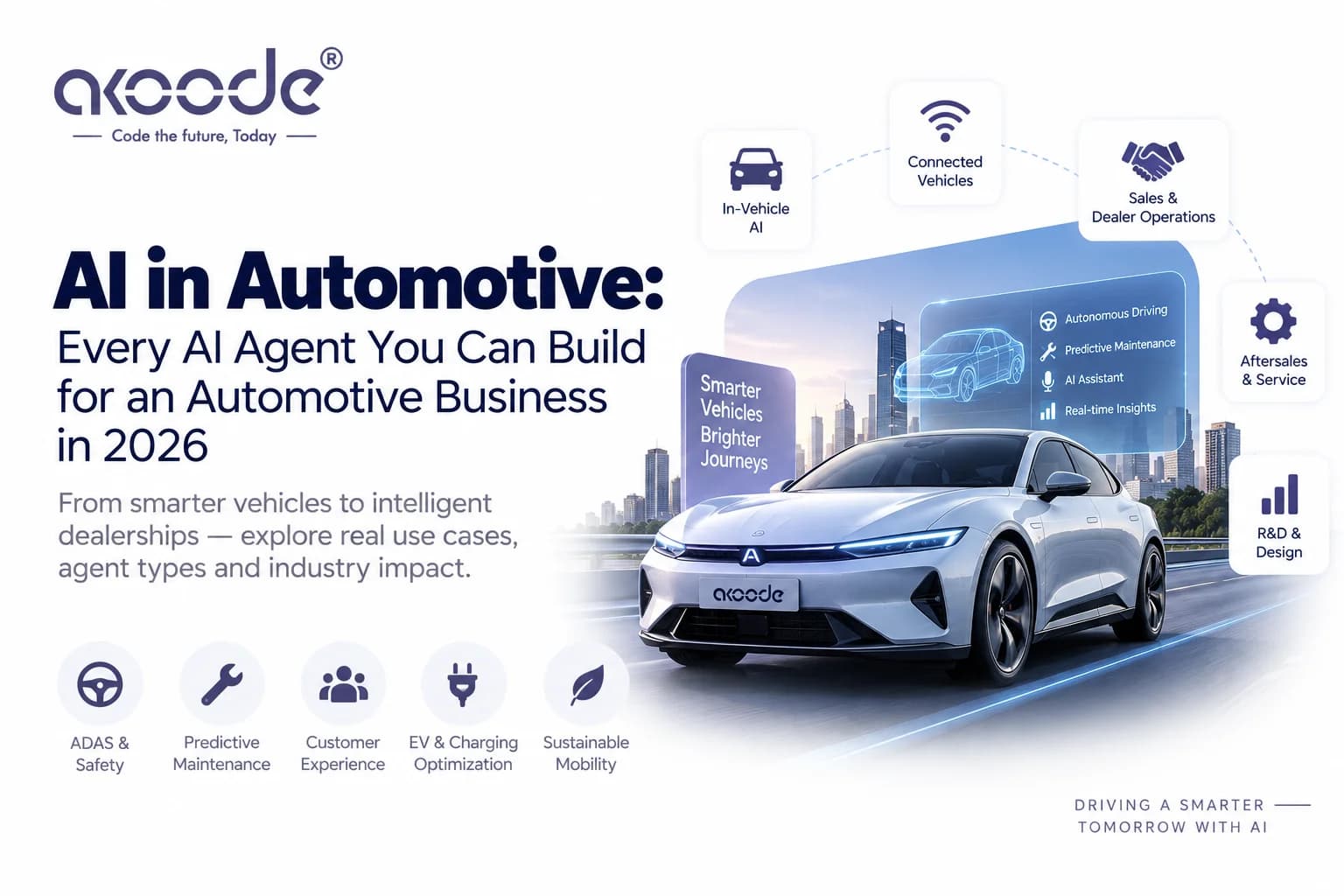
AI in Automotive: Every AI Agent You Can Build for an Automotive Business in 2026
dateSep 19, 2026

AI in Automotive: Every AI Agent You Can Build for an Automotive Business in 2026

A complete guide to AI agents for automotive businesses connected vehicles, dealer sales, predictive service, EV charging, and more. Built...

AI in Education & E-Learning: Every AI Agent You Can Build for an Education Business in 2026
dateSep 20, 2026

AI in Education & E-Learning: Every AI Agent You Can Build for an Education Business in 2026

A complete guide to AI agents for education businesses adaptive learning, AI tutoring, grading automation, dropout prediction, and more. Built...

Top AI Development Companies in Gurgaon (2026): A Researched Comparison
dateSep 22, 2026

Top AI Development Companies in Gurgaon (2026): A Researched Comparison

A researched, fact-checked comparison of AI development companies based in Gurgaon/Gurugram Nagarro, Genpact and Akoode with costs, specializations, and a...

Frequently Asked Questions

Straight answers on timelines, team shape, security, and how we plug into your existing delivery process.

A chatbot answers questions from a script or a knowledge base. An agent can take action: query a database, call an API, update a record, or complete a multi-step task on its own, chaining those steps together instead of just responding once.

If the task has a real decision point and touches more than one system, an agent usually earns its cost. If it is two steps with no real judgment call, a simpler automation is cheaper to build and maintain, and we will tell you that honestly during discovery.

It is a setup where several specialised agents each handle one part of a workflow and pass work to each other, instead of one agent trying to do everything. You need one when a process spans genuinely different kinds of work, like research, drafting, and review, each needing a different tool or reasoning style.

A single-purpose agent typically takes four to six weeks from discovery to deployment. Multi-agent systems or deep enterprise integrations usually run eight to twelve weeks, mostly due to integration work rather than the agent's core logic.

It depends on scope: number of integrations, whether it is a single agent or a coordinated system, and how much guardrail and monitoring work is needed. We quote a fixed price after the discovery call rather than a generic number that does not reflect your actual workflow.

In most cases yes, through an API or a middleware layer if the system does not expose a clean one. We assess this during discovery and flag any system that will need extra integration work before we quote the project.

Only with limits built in. We set spending caps, restrict which actions an agent can take without approval, and define escalation rules for when it should stop and hand off to a person. We will not ship an autonomous agent without those guardrails in place.

We work with OpenAI, Anthropic, and open-source models depending on the use case, cost, and whether data needs to stay within a specific region or infrastructure. We recommend whichever model fits the job, not whichever one we default to.

Yes. We set up monitoring and logging at launch and offer ongoing plans for tuning, retraining, and adding capabilities as your workflow changes. We recommend at least a quarterly review, since usage patterns shift as adoption grows.

We scope access on a need-to-know basis for each agent, log every action it takes, and design the integration so the agent reaches only the specific systems and fields it needs. For India-based clients, we also account for DPDP Act requirements around consent and data handling from the architecture stage.

Start Your Agent Project

Ready to Build an Agent That Actually Gets the Work Done?

Tell us about the workflow you want handled end to end. We will tell you honestly whether an agent is the right tool for it, and what it would take to build.
Reply Time
< 30 working minutes
NDA-Friendly
Signed before kickoff
IP Ownership
100% yours from day one
Security check *
= ?

Stay Informed With Thoughtful Innovation

Subscribe To The Akoode Newsletter For Carefully Curated Insights On AI, Digital Intelligence, And Real-World Innovation.

P
J
S
A
110+Happy Clients Trusted By Akoode