
RAG Application Development Company

A generic LLM answers from what it was trained on, which means it guesses when it does not actually know your business. Retrieval-augmented generation fixes that by grounding every answer in your real documents, databases, and records before the model responds. Akoode builds RAG applications for teams in India and abroad who need an AI system that is accurate about their business, not just fluent in general knowledge.

4.9

Google Rating

97%

Client Retention

15+

Industries Served

Global

Delivery

RAG Application Development Company services by Akoode — a robotic hand shaking a human hand

The Gap Between an LLM Demo and an LLM You Can Actually Trust

A chatbot that sounds confident and a chatbot that is correct are two different products. RAG is the difference between them.

We build the retrieval layer, not just the chat interface: how your documents get indexed, how the right ones get found, and how the model uses them to answer instead of filling gaps with a guess.

Most teams that come to us have already tried a general-purpose model on their own data and hit the same wall: it sounds right even when it is wrong, because it was never actually checking anything. It was pattern-matching against its training data and hoping that was close enough. For a marketing draft, that is fine. For a policy answer, a contract clause, or a customer's account details, it is not.
RAG closes that gap by having the system look something up before it answers, the same way a competent employee would check the actual file instead of answering from memory. Get the retrieval step wrong and the whole system inherits the same hallucination problem with extra steps. Get it right and you have an AI system that can say, correctly, exactly where an answer came from.

What changes once your AI is actually grounded in your own data:

01

Answers cite the actual document or record they came from, not a plausible-sounding guess

02

Updating the knowledge base means updating documents, not retraining a model

03

Sensitive information stays inside your retrieval layer instead of being baked into a model's weights

04

Support and internal teams get a direct answer instead of a link to search through themselves

05

You can measure exactly how often the system is right, because every answer traces back to a source

Our RAG Application Development Services

We build the full retrieval stack for a specific use case rather than bolting a vector database onto an existing chatbot and calling it RAG.

01.

RAG Application Development

A complete retrieval-augmented application built around your documents, policies, or records, from ingestion through to a working interface your team or customers actually use.
Learn More about RAG Application Development
02.

RAG Pipeline Development

The ingestion, chunking, and embedding pipeline that decides what the model can find in the first place. Most RAG accuracy problems trace back to this stage, not the model itself.
Learn More about RAG Pipeline Development
03.

Enterprise RAG Solutions

RAG systems built for large, permission-sensitive document sets: internal wikis, contracts, compliance records, and anything where the wrong person seeing the wrong answer is a real problem.
Learn More about Enterprise RAG Solutions
06.

RAG Strategy & Consulting

If you already have an LLM feature that is hallucinating on your own data, we will audit the retrieval layer and tell you exactly what is broken before you rebuild anything.
Learn More about RAG Strategy & Consulting

Service 1 of 6: RAG Application Development
Specialised RAG Capabilities We Build

Connecting a vector database to a language model takes an afternoon. Making the retrieval actually accurate, for your real documents and your real questions, is the part that takes engineering.

We treat retrieval quality as its own discipline, separate from the model. Chunking strategy, embedding choice, and search method all get tuned to your content, not left at whatever a tutorial defaults to.

Document Ingestion & Chunking Pipelines

Breaking documents into pieces the right size for retrieval, in a way that preserves context instead of cutting a policy clause in half.

Embedding & Vector Search Architecture

Choosing the embedding model and vector store based on your content type and query volume, not defaulting to whichever one is easiest to set up.

Permission-Aware Retrieval

Making sure the system only retrieves documents a given user is actually allowed to see, which most off-the-shelf RAG tutorials skip entirely.

Hybrid Search (Keyword + Semantic)

Combining traditional keyword search with vector similarity, since pure semantic search misses exact terms like account numbers or product codes that a customer actually typed.

Retrieval Evaluation & Accuracy Tuning

Measuring whether the system is actually retrieving the right passage before worrying about how well it writes the answer, since a great answer built on the wrong source is still wrong.

Multi-Source RAG

Retrieving across a mix of structured data (a database) and unstructured content (documents, PDFs, wikis) in the same query, when a question needs both to be answered properly.

Where RAG Stands in 2026 and What It Means for Your Business

RAG went from a research technique to standard enterprise practice faster than most teams updated their approach to it. Here is what has actually changed.

RAG Is No Longer Optional for Enterprise LLM Applications

Any LLM feature answering questions about your own business now needs a retrieval layer behind it. Shipping without one, in 2026, reads as a known gap rather than a shortcut.

Hybrid Search Has Replaced Pure Vector Search as the Default

Teams that launched with vector-only search in 2024 and 2025 are adding keyword search back in, because semantic similarity alone misses exact-match terms users actually type.

Agentic RAG Is Emerging, Where the System Decides What to Retrieve

Instead of retrieving once per question, newer systems let an agent decide whether to search again, search a different source, or ask a clarifying question first, closer to how a person actually researches an answer.

Retrieval Evaluation Frameworks Have Matured

Tools that score retrieval accuracy directly, rather than just the fluency of the final answer, are now standard practice, catching failures that used to only surface after a user complained.

Permission-Aware Retrieval Is Now a Deployment Requirement

Enterprise buyers now ask directly whether a RAG system respects existing document permissions, after a wave of 2025 deployments that quietly leaked access to content users should not have seen.

RAG Application Development Across 15 Industries
The documents differ by industry: clinical notes, policy wordings, product catalogues, contracts. What stays the same is the need for an answer that traces back to something real. Here is how that plays out sector by sector.

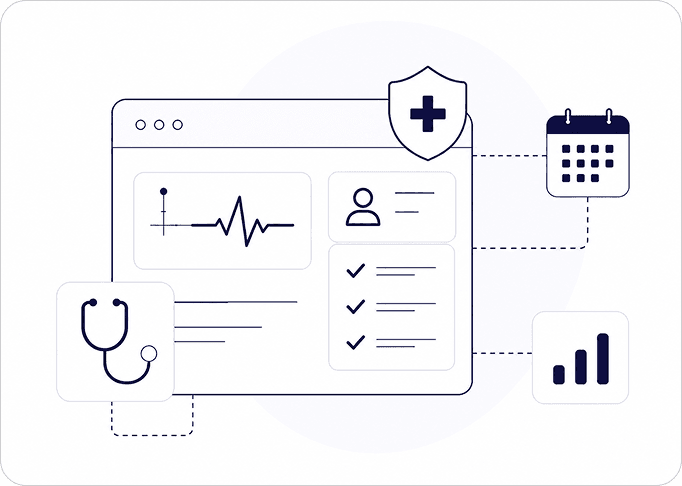
Healthcare

Healthcare RAG systems answer clinical and administrative questions by retrieving from actual clinical guidelines, formularies, and patient records rather than general medical knowledge, which matters when a wrong general answer could affect care. We build these with strict access controls and audit trails, since who retrieved what is often as important as the answer itself.
Healthcare
Explore Healthcare

Finance and Banking

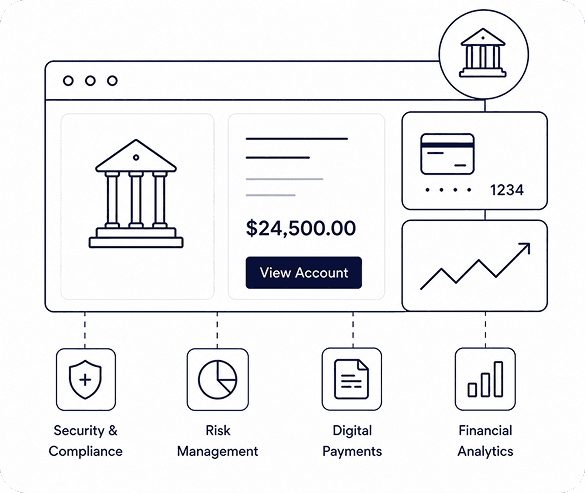
Financial RAG systems retrieve from policy documents, regulatory filings, and product terms to answer compliance and customer questions accurately, with a citation back to the specific clause. This matters directly for audit purposes, where an answer with no traceable source is not usable regardless of how confident it sounds.
Finance and Banking
Explore Finance and Banking

Retail and E-Commerce

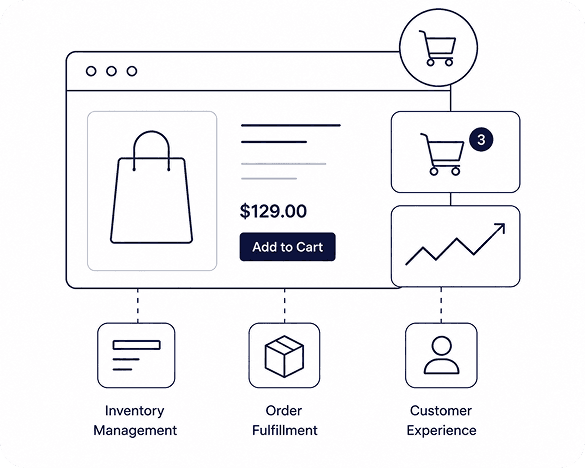
Retail RAG applications answer product and policy questions by retrieving from the actual catalogue, return policy, and inventory data, instead of a model guessing at specs or availability. This cuts the volume of tickets that exist only because a generic chatbot gave a plausible but wrong answer.
Retail and E-Commerce
Explore Retail and E-Commerce

Manufacturing

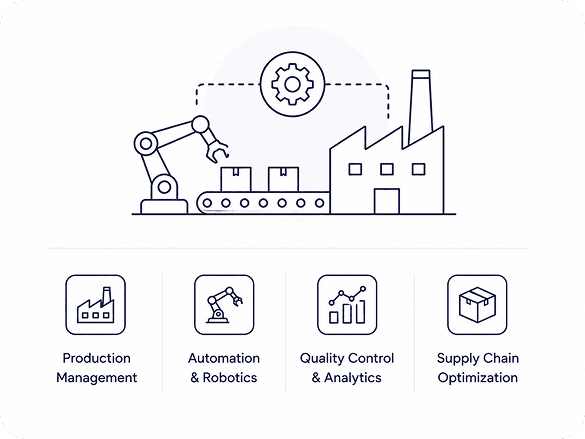
Manufacturing RAG systems retrieve from equipment manuals, maintenance logs, and safety documentation to answer technician questions on the floor, cutting the time spent searching a shared drive for the right PDF during a live issue.
Manufacturing
Explore Manufacturing

Logistics and Supply Chain

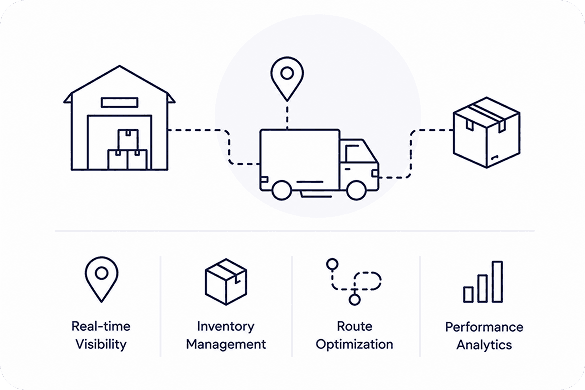
Logistics RAG applications retrieve from shipping contracts, customs documentation, and supplier agreements to answer operational questions accurately, which matters when the wrong answer about a customs requirement causes a real delay, not just an inconvenience.
Logistics and Supply Chain
Explore Logistics and Supply Chain

Real Estate

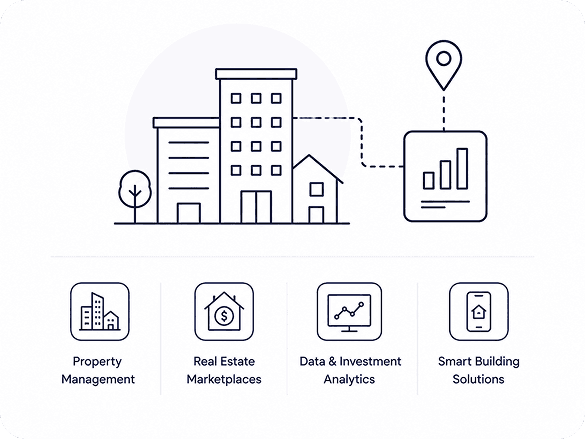
Real estate RAG systems retrieve from lease agreements, property listings, and zoning documents to answer tenant, buyer, and agent questions with the actual clause behind the answer, instead of a summary that misses a detail that matters.
Real Estate
Explore Real Estate

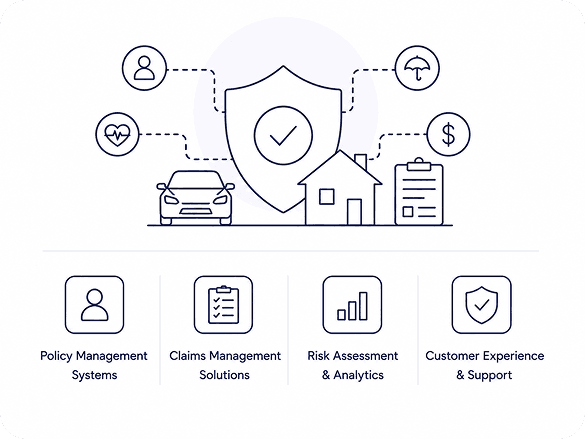
Insurance

Insurance RAG applications retrieve from policy wordings and claims history to answer coverage questions with the exact clause cited, which is the difference between an answer a customer or adjuster can actually rely on and one that needs to be double-checked anyway.
Insurance
Explore Insurance

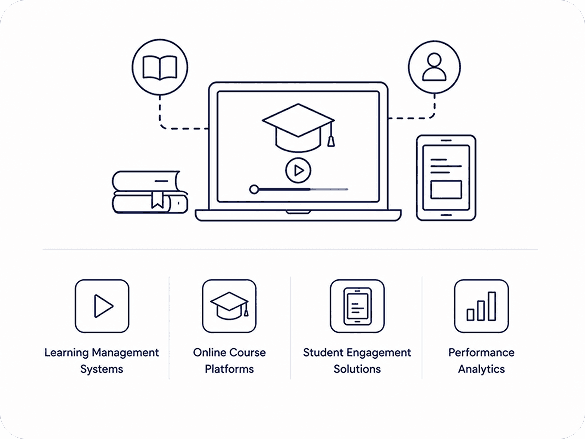
Education and E-Learning

Education RAG systems retrieve from course materials, institutional policy, and past student queries to answer questions accurately and consistently, freeing instructors and support staff from repeating the same lookup for every student who asks.
Education and E-Learning
Explore Education and E-Learning

Travel and Hospitality

Travel RAG applications retrieve from booking terms, property information, and destination guides to answer guest questions with current, source-backed information instead of a static FAQ that goes stale the moment a policy changes.
Travel and Hospitality
Explore Travel and Hospitality

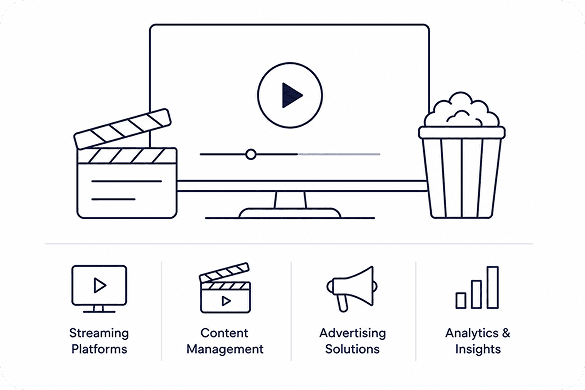
Media and Entertainment

Media RAG systems retrieve from content libraries, rights documentation, and internal style guides to answer questions about what a business actually owns and can use, which matters more than fluency when the answer touches licensing.
Media and Entertainment
Explore Media and Entertainment

Automotive

Automotive RAG applications retrieve from service manuals, parts catalogues, and warranty terms to answer technician and customer questions with the specific document behind the answer, rather than a generalised guess about a specific model or year.
Automotive
Explore Automotive

Agriculture

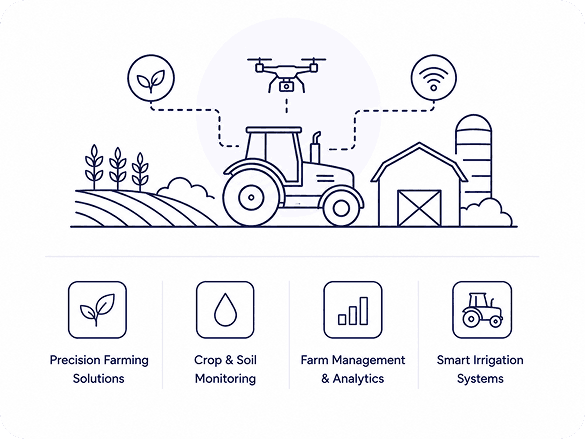
Agriculture RAG systems retrieve from agronomy guides, regulatory documentation, and farm-specific records to answer questions relevant to a specific crop, region, or season, rather than generic advice that ignores local conditions.
Agriculture
Explore Agriculture

Telecommunications

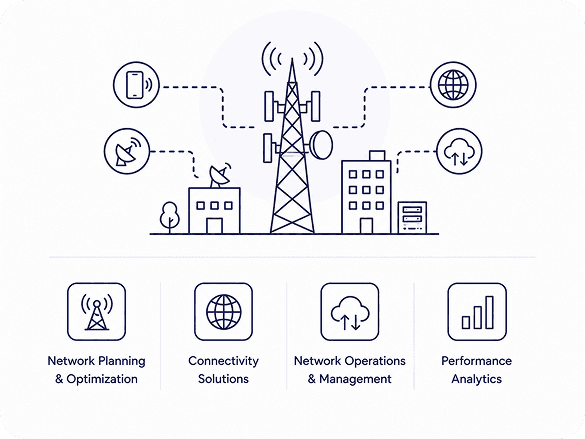
Telecom RAG applications retrieve from plan documents, network policy, and troubleshooting guides to resolve customer and internal support queries with an answer tied to an actual document, cutting escalations caused by an agent guessing at a policy detail.
Telecommunications
Explore Telecommunications

Energy and Utilities

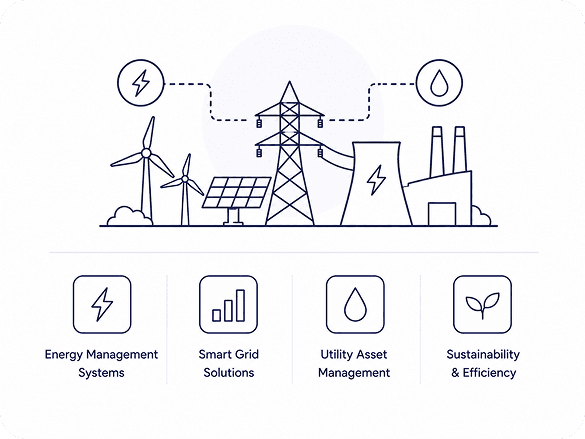
Energy and utilities RAG systems retrieve from regulatory filings, asset documentation, and compliance records to answer questions with the source attached, which matters directly when the answer feeds into a compliance report.
Energy and Utilities
Explore Energy and Utilities

Public Sector and Government

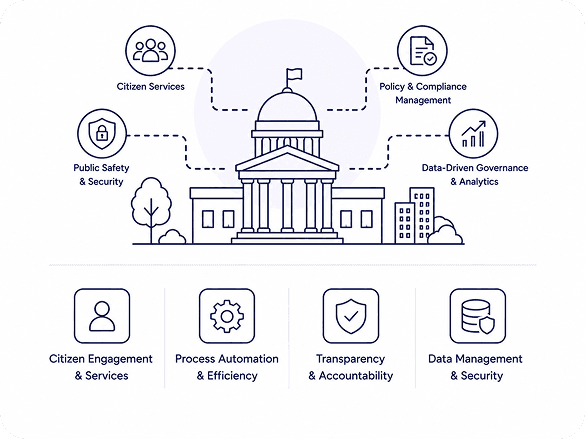
Public sector RAG applications retrieve from policy documents, legislation, and case files to answer citizen and staff queries accurately, with the retrieval trail available for the audit and transparency standards this sector requires.
Public Sector and Government
Explore Public Sector and Government

Technologies We Use to Build Production RAG Systems

We select the retrieval architecture based on your content type, query volume, and accuracy requirements. Not whichever vector database has the best marketing this quarter.

LangChain logoLangChain
LlamaIndex logoLlamaIndex
Ollama logoOllama

Our RAG Development Process

Most RAG projects that fail do so quietly: the system launches, sounds fine, and is wrong more often than anyone notices until a customer catches it. Our process is built to catch that before launch.

01Discovery

Discovery & Data Audit

We review what documents actually exist, how current they are, and how they are structured, since retrieval quality is capped by the quality of what is being retrieved from.
02Ingestion

Ingestion & Chunking Strategy

We design how documents get broken down and indexed, tuned to the content type, since a chunking strategy built for short FAQs will not work for long contracts.
03Architecture

Embedding & Retrieval Architecture

We choose the embedding model and search method, hybrid or pure semantic, based on the kinds of questions the system needs to answer.
04Generation

Generation & Prompt Design

We design how the model uses what it retrieves, including what it should say when nothing relevant is found, instead of guessing anyway.
05Evaluation

Evaluation & Accuracy Tuning

We test retrieval accuracy against real questions before launch, since a wrong retrieval produces a confident wrong answer regardless of how well the model writes.
06Deployment

Deployment & Monitoring

We deploy with logging on what was retrieved and why, so accuracy issues can be traced to a specific document or query pattern instead of guessed at after the fact.

Flexible Engagement Models for RAG Application Development

Choose how you want to work with us. Every model includes dedicated engineers, full IP ownership, transparent communication, and direct access to the people building your retrieval system.

Fixed Cost

Best for: scope that is already nailed down, and a price you want nailed down with it

  • Price, timeline and scope agreed before a line of code gets written, and they stay agreed
  • Milestones with acceptance criteria you personally sign off, one by one
  • The low-risk route for MVPs and launches with a hard deadline attached
  • If mid-project surprises are what worry you, this model exists to prevent them
MOST POPULAR

Dedicated Team

Best for: products that will keep evolving long after version one ships

  • Engineers, designers, QA and a PM who work as part of your team, not around it
  • You set sprint priorities. We build them. That simple
  • Grow or shrink the team as the roadmap demands, without renegotiating everything
  • Plugs into whatever tools and workflows your team already runs
  • You talk to the people writing your code. Never through an account manager

Staff Augmentation

Best for: a skill gap today, or velocity you need by next sprint

  • Specialists who slot into your existing team and standups from day one
  • Senior skills without the cost, or the three-month wait, of a full-time hire
  • Add people when timelines tighten, release them when things calm down
  • Onboarded and shipping within days. Not months. Days

Work That Speaks for Itself

Every RAG system we build starts with the same question: what does this business need answered correctly, and from what source.

AI Player Performance Tracking Case Study

Key Outcomes

10x

Faster Coaching

94%

Tracking Accuracy

Challenge

Performance coaching at the elite level demands data granularity that traditional video review simply cannot deliver. Coaching teams were spending enormous amounts of time rewatching unstructured footage, drawing conclusions by observation, and making player evaluation decisions without a single objective metric to support them. The problem was not effort. It was the absence of the right system.

What We Built

The client needed a next-generation AI system that could take raw, unstructured game footage and turn it into structured, real-time performance intelligence that coaching staff could act on immediately. Every objective defined at the start of this project was tied directly to a coaching workflow problem that needed solving.

AI-Powered Quantity Takeoff Desktop Application

Key Outcomes

80%

Time Reduction

Zero

Cloud Dependency

Challenge

Quantity takeoff is one of the most time-intensive stages of construction estimation, and it is one of the most resistant to standard automation. Engineering drawings are large, dense, and proprietary. The elements that need counting are small, numerous, and visually similar across categories. Cloud-based AI tools introduce data security risks that firms working on sensitive or high-value projects cannot accept. The result is an industry where experienced estimators spend a disproportionate share of their time on a counting task that technology should have solved years ago.

What We Built

The brief required a production-ready desktop application that could automate quantity takeoff from architectural and engineering drawings, run entirely offline, and produce professional cost estimate outputs without requiring any cloud connectivity. Every objective connected directly to the operational reality of a construction estimator working with sensitive, large-format blueprint files under time pressure.

AI-Powered Pelvic Floor Fitness App

Key Outcomes

300ms

Max Feedback Latency

2

Platforms Live

Challenge

Pelvic floor rehabilitation requires a level of movement precision that standard fitness apps are not built to verify. Users performing exercises at home have no mechanism for knowing whether their form meets the biomechanical criteria that make the exercise therapeutic rather than harmful. Building a platform that bridges that gap requires solving problems in real-time pose validation, data privacy, cross-platform delivery, and subscription-based programme access that most fitness app frameworks do not address out of the box.

What We Built

The brief required productising a validated AI proof of concept into a fully deployable, subscription-based mobile fitness platform. The finished system needed to deliver real-time pose correction on standard smartphones, support structured 12-week pelvic health programmes with group and subscription access controls, and give M2 Method's team complete independence to manage content, users, and programmes without developer involvement.

Why Choose Akoode Technologies

A RAG system that sounds fluent but retrieves the wrong document is worse than no AI system at all, because it is wrong with confidence. We build for retrieval accuracy first and fluency second.

Accuracy-First Evaluation

We measure and tune retrieval accuracy before we worry about how polished the final answer sounds, since a fluent wrong answer is still wrong.

Permission-Aware Architecture

Access controls on what a system can retrieve are part of the initial build, not bolted on after a security review flags a gap.

Framework-Agnostic Approach

We choose LangChain, LlamaIndex, or a custom pipeline based on your content and scale, not whichever framework we happen to default to.

Full IP Ownership & Source Access

Every pipeline, prompt, and configuration transfers to you at the end of the engagement. Nothing stays locked to us.

Monitoring Included After Launch

We set up retrieval logging before go-live and offer ongoing tuning plans, since documents change and a system that is not reviewed will drift out of date.

Enterprise Document Experience

We have built RAG systems on top of large, messy, permission-sensitive document sets, which is where most off-the-shelf RAG tutorials fall apart.
Awards & Recognitions

Recognised by leading platforms, startup ecosystems, and global technology communities.

Top US-Based IT Services Firm 2026
Clutch
Outlook
Ai Automation
Business Standard
YourStory
Good Firms
Top Machine Learning Companies - Goodfirms
Top eCommerce Development Company

Entrepreneur
ZBusiness
Times of India
Hindustan Times
Top US-Based IT Services Firm 2026
Clutch
Outlook
Ai Automation
Business Standard
YourStory
Good Firms
Top Machine Learning Companies - Goodfirms
Top eCommerce Development Company

Entrepreneur
ZBusiness
Times of India
Hindustan Times

Insights on RAG and Grounded AI

View all

Practical thinking from the Akoode team on retrieval accuracy, hallucination, and what actually makes a RAG system trustworthy.

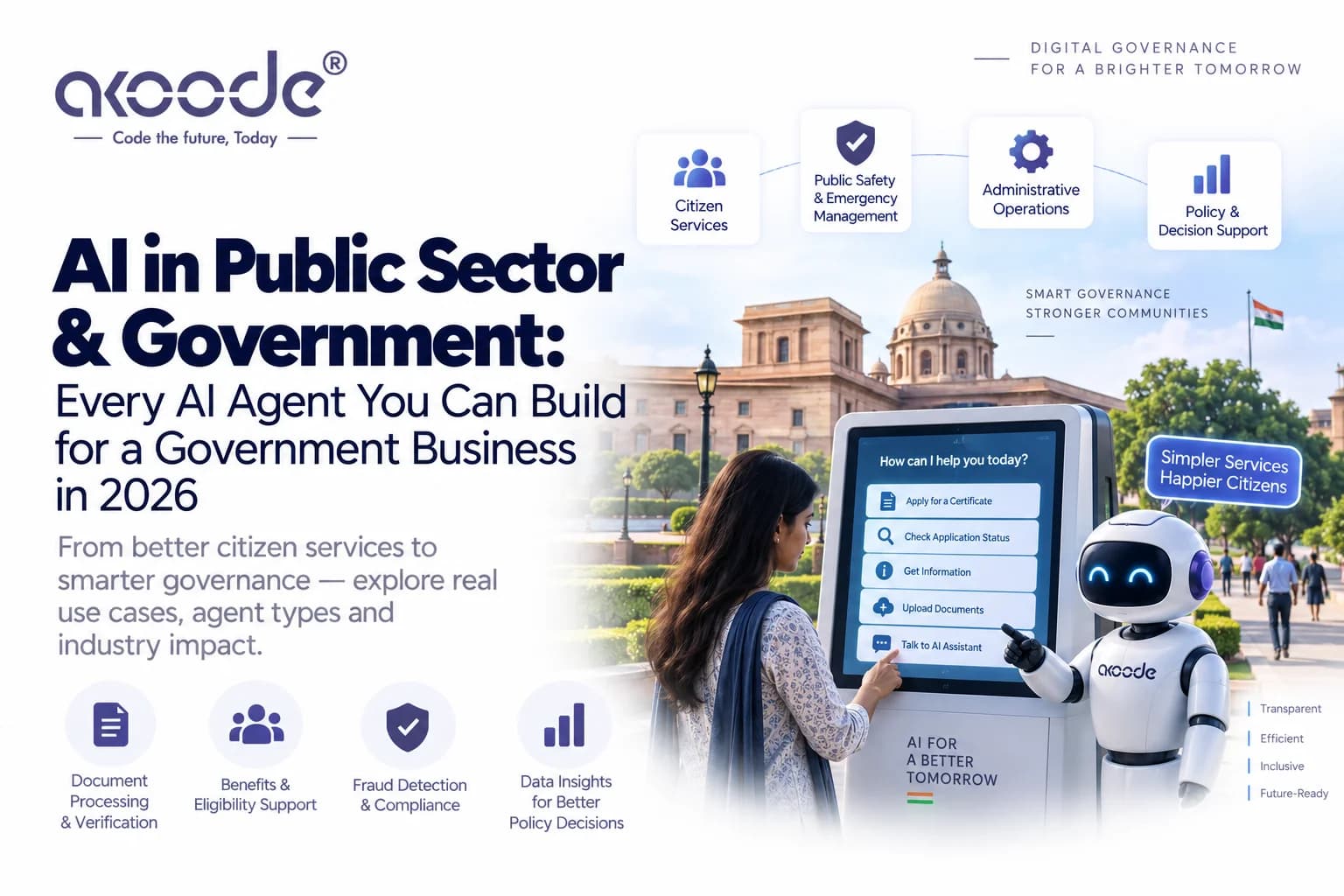
AI in Public Sector & Government: Every AI Agent You Can Build for a Government Business in 2026
dateSep 20, 2026

AI in Public Sector & Government: Every AI Agent You Can Build for a Government Business in 2026

A complete guide to AI agents for government and public-sector businesses citizen services, benefits eligibility, fraud detection, and more. Built...

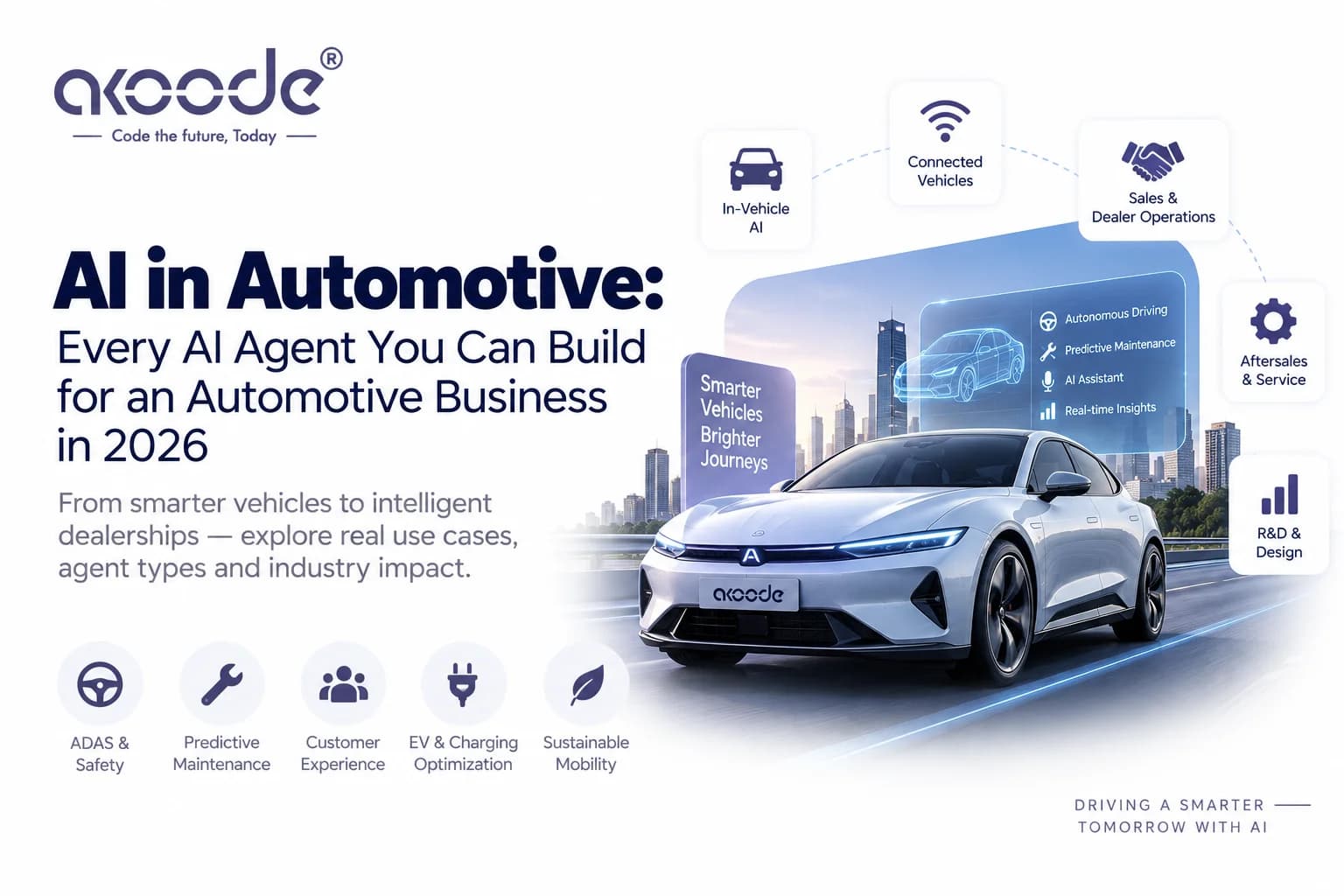
AI in Automotive: Every AI Agent You Can Build for an Automotive Business in 2026
dateSep 19, 2026

AI in Automotive: Every AI Agent You Can Build for an Automotive Business in 2026

A complete guide to AI agents for automotive businesses connected vehicles, dealer sales, predictive service, EV charging, and more. Built...

AI in Manufacturing: Every AI Agent You Can Build for a Manufacturing Business in 2026
dateSep 15, 2026

AI in Manufacturing: Every AI Agent You Can Build for a Manufacturing Business in 2026

A complete guide to AI agents for manufacturing businesses — predictive maintenance, quality inspection, production scheduling, and more. Built for...

Frequently Asked Questions

Straight answers on timelines, team shape, security, and how we plug into your existing delivery process.

Retrieval-augmented generation is a way of making an AI system look up relevant information from your actual documents or data before it answers, instead of answering purely from what a model learned during training. It is what keeps an AI system accurate about your specific business rather than just fluent in general knowledge.

Fine-tuning changes the model itself and is expensive to update every time your information changes. RAG keeps the model as is and retrieves current information at answer time, so updating your knowledge base means updating documents, not retraining anything.

In most cases yes, though not always alone. Many production systems now use hybrid search, combining a vector database for semantic matching with traditional keyword search for exact terms like account numbers or product codes.

A focused RAG application on a well-organised document set typically takes five to eight weeks from data audit to deployment. Messier document sets, or systems needing permission-aware retrieval across multiple sources, usually run ten to fourteen weeks.

It depends on the volume and complexity of the documents involved, whether permission-aware retrieval is needed, and how much evaluation and tuning the accuracy bar requires. We quote a fixed price after reviewing your actual data rather than a generic number.

Meaningfully more accurate for questions about your own business, since it answers from your actual documents instead of general training data. Accuracy still depends heavily on retrieval quality, which is why we test and tune that stage specifically rather than assuming it works out of the box.

In most cases yes. We can add a retrieval layer to an existing LLM feature so it starts answering from your data, without necessarily rebuilding the whole interface.

We design retrieval with access controls so the system only surfaces documents a given user is allowed to see, and we can keep the vector store and documents entirely within your own infrastructure or region if that is a requirement.

It should say so rather than guess. We design the generation step to recognise when retrieval did not turn up anything relevant and respond accordingly, instead of filling the gap with a plausible-sounding but unsupported answer.

Yes. Documents change and retrieval quality drifts as content grows, so we set up monitoring at launch and offer ongoing tuning plans, with a recommended review on a set cadence rather than a one-time handoff.

Start Your RAG Project

Ready to Ground Your AI in Your Own Data?

Tell us what your AI system keeps getting wrong, or where you want to start. We will tell you honestly what a proper retrieval layer would take to build.
Reply Time
< 30 working minutes
NDA-Friendly
Signed before kickoff
IP Ownership
100% yours from day one
Security check *
= ?

Stay Informed With Thoughtful Innovation

Subscribe To The Akoode Newsletter For Carefully Curated Insights On AI, Digital Intelligence, And Real-World Innovation.

P
J
S
A
110+Happy Clients Trusted By Akoode