AI Development Company in Delhifor Government, Trade, and Enterprise Businesses
Delhi is where India writes its AI policy, NITI Aayog published the country's National Strategy for AI from here, and MeitY runs the IndiaAI Mission from the same city. That policy weight is real. It's also not what most Delhi departments and businesses need day to day, which is a model trained on their own data solving a problem they actually have. Akoode builds citizen-service AI for government departments, demand and credit models for Delhi's wholesale trade, and applied AI for enterprises, and because our team works out of Gurugram, a meeting in Delhi is a drive down NH-48, not a flight.
AI Built for Clients Who Answer to Committees, Auditors, and Customers
Delhi clients often have more stakeholders than a typical AI project. A government department has a committee, an IT cell, and a vigilance process. A family trading business has three generations with opinions about how a demand forecast should work. We plan for that. Model decisions get signed off in writing, evaluation results get recorded, and demos happen early enough that the people who control approvals see the system well before launch. That written sign-off habit tends to pay off later too, whenever a new committee member or IT officer takes over midway through a project and needs to understand what was already agreed.
Real-Time Overlap, Not a Next-Morning Reply
A model-performance question gets an answer while your Delhi team is still at their desks, not routed into a next-day queue.
The Same Engineer, Eight Months Later
The same person who scoped your Delhi model is who your team still calls months later, nobody relearning a data pipeline from a cold start.
Documentation Ready for a Committee or DPDP Review
A government acceptance review and a DPDP data-protection audit both want the same thing: a clear record of how a model was trained and what it does with the data it touches.
Ratings From Clients Running Real Institutional Systems
Google, Clutch, and GoodFirms ratings cover applied AI and government-adjacent engagements, most from clients willing to put their name behind them.
Platform Ratings
What our clients say across leading platforms.
Google, 4.9 out of five stars
4.9★★★★★★★★★★
Clutch, 5.0 out of five stars
5.0★★★★★★★★★★
GoodFirms, 4.8 out of five stars
4.8★★★★★★★★★★
What clients love about working with us
A Launch Date That Survives a Procurement Cycle
The date agreed at kickoff is the date that ships twelve weeks later, whether a government review cycle runs long or not.
A Real Engineer, Not a Ticket Number
Updates on a Delhi build don't pass through an account manager. Whoever's actually building the model is who answers the call.
Drift Caught Before It Costs Anything
Monitoring built in from launch catches a model quietly drifting away from what it was trained on, before that drift becomes a bad decision nobody flags.
Clients Who Come Back for the Next Model
A first model that survives real institutional data tends to lead straight into the next project, not a search for a different vendor.
Delhi Sets India's AI Policy, and Its Markets Are Just Starting to Use It
NITI Aayog published India's National Strategy for AI from its Delhi headquarters, and MeitY, the ministry running the IndiaAI Mission's GPU subsidies and foundation-model funding, sits in the same city. Government AI buying in India flows heavily through GeM and Delhi-based departments, and public-facing systems are expected to follow the Guidelines for Indian Government Websites on accessibility and data handling, a standard increasingly applied to AI-driven services too.
Private Delhi looks different. Chandni Chowk, Sadar Bazaar, and Karol Bagh run some of India's largest wholesale trade on relationships managed over phone calls, and a demand-forecasting or credit-scoring model built for a family business here is a genuine upgrade, provided it's trained on the informal, sometimes messy transaction records these businesses actually keep. Delhi's enterprise sector, meanwhile, wants AI that integrates cleanly with legacy departmental or ERP systems that were never designed with a model in mind.
Akoode builds in-house with no subcontracting, which also simplifies government vendor declarations. We invoice in rupees with GST, contract under Indian law, and because our office is in Gurugram, we're a short drive from most of Delhi for workshops and go-live sessions.
Where India Writes Its AI Policy
NITI Aayog and MeitY both sit in Delhi, and government departments here need AI systems that meet GIGW and procurement standards.
Wholesale Markets Ready for Predictive AI
Traders in Chandni Chowk and Sadar Bazaar are moving demand and credit decisions off gut instinct, one family business at a time.
Enterprise Buyers With Legacy Systems
Delhi's larger businesses need AI that integrates with departmental or ERP systems that predate anyone's model roadmap.
A Short Drive From Our Office
From Gurugram, most of Delhi is reachable within an hour or so, which makes in-person workshops easy to schedule.
Delhi projects vary more than most. A departmental grievance-classification system, a wholesale demand-forecasting model, and an enterprise document pipeline share very little beyond good engineering. The six services below adapt to each.
01
AI Strategy and Discovery
Most AI projects go wrong before a single model gets trained, in the gap between what a Delhi organisation assumed its data could support and what it actually can. This work opens with a plain, sometimes uncomfortable look at whether the data is genuinely ready.
Data readiness and quality assessment before any commitment is made
Use-case prioritization based on real institutional or business impact, not novelty
Build-versus-buy analysis for off-the-shelf APIs versus custom models
DPDP and government procurement compliance mapping built into the roadmap where relevant
When an off-the-shelf API can't do what a Delhi client needs, Akoode builds custom models instead: demand forecasting, credit scoring, and grievance classification trained on a client's own data.
Custom demand forecasting, credit-scoring, and classification models
Model training, validation, and performance benchmarking
MLOps pipelines for retraining as new data arrives
Explainability built in from the architecture stage, not bolted on
Delhi runs on paperwork, which makes document AI unusually useful here. We build extraction pipelines for government forms, tender documents, and trade invoices, including Hindi text, with every extraction traced back to its source and uncertain results routed to a person.
RAG pipelines grounded in your own documents and data, including Hindi content
In-app AI assistants using OpenAI, Anthropic, and open-source models
Extraction from Hindi and English government forms and invoices
Guardrails and output validation built in from day one
From citizen-facing document verification to trade inventory checks, computer vision systems get built here on real Delhi operational images, not stock datasets that fall apart under actual conditions.
Document processing and optical character recognition for Hindi and English text
Object detection and classification for trade inventory use cases
Facility and infrastructure inspection models
Real-time video analysis for institutional environments
Predictive models get built here to change how a Delhi department or business operates: citizen-service demand forecasting, credit and order-pattern scoring, and workflow automation grounded in real historical data.
Citizen-service demand forecasting trained on real operational data
Credit and order-pattern scoring built on your own transaction history
Predictive analytics for budget and resource planning
Dashboards built for decisions, not just reporting
An unmonitored model drifts quietly until it's making bad decisions nobody notices until the damage is done. Ongoing monitoring and scheduled retraining keep a Delhi system accurate as real-world data keeps changing.
Model performance monitoring and drift detection
Scheduled retraining as new data becomes available
Cost and latency optimization for production inference
Flexible staff augmentation when an in-house team needs extra AI capacity
Six stages, each ending in a written sign-off. With several stakeholders involved, that record is what keeps a Delhi project moving.
Stage 01
Discovery and Strategy
We meet every stakeholder group, from end users to approving authorities, and write down what each needs. On government work this includes tender or GeM requirements, which become the acceptance checklist.
Timeline
1 to 3 weeks
Government projects often need extra time for committee availability.
You receive
Data readiness and quality report
Acceptance checklist mapped to tender terms for government projects
Use-case feasibility assessment
Technical scope document with realistic milestones
What'sActually Running Underneath an Delhi AI Build
Every tool here earns its place through how it holds up under real production load, not through a leaderboard score. OpenAI and Anthropic cover most generative work on their own; PyTorch or TensorFlow step in for the harder, more bespoke jobs. Nothing gets swapped mid-project without a real reason.
PyTorch
TensorFlow
scikit-learn
HuggingFace
Results We're Happy to Show You
Real AI projects with results attached, model performance, adoption, and business impact, not a demo reel.
AI Player Performance Tracking Case Study
Key Outcomes
10x
Faster Coaching
94%
Tracking Accuracy
Challenge
Performance coaching at the elite level demands data granularity that traditional video review simply cannot deliver. Coaching teams were spending enormous amounts of time rewatching unstructured footage, drawing conclusions by observation, and making player evaluation decisions without a single objective metric to support them. The problem was not effort. It was the absence of the right system.
What We Built
The client needed a next-generation AI system that could take raw, unstructured game footage and turn it into structured, real-time performance intelligence that coaching staff could act on immediately. Every objective defined at the start of this project was tied directly to a coaching workflow problem that needed solving.
The creative production bottleneck in ecommerce and B2B marketing is not a talent problem. It is a process problem. Every product needs multiple ad formats. Every format needs channel-appropriate copy. Every piece of copy needs to stay on-brand across a growing catalogue. When that work is done manually, it does not scale, it does not stay consistent, and it cannot be reviewed efficiently when the output looks different every time a different person touched it.
What We Built
The brief required a modular AI pipeline that could take a product image, understand what it was selling and to whom, generate structured marketing copy across multiple formats, and render downloadable catalogue assets that looked the same every time. Deterministic output was non-negotiable. The system needed to produce layouts a marketing team could review, approve, and send without visual surprises or format inconsistencies between runs.
High-ticket real estate buyers do not convert the way e-commerce shoppers do. They research for weeks, visit multiple platforms, talk to multiple agents, and still leave most sites without taking any action. The platforms dominating Indian real estate search are built for discovery at scale, not for decision support at depth. For a consultancy where the average transaction involves crores, a website that shows listings and a contact form is not a business asset. It is a missed opportunity.
What We Built
The brief was not to build a listings website. It was to build a digital advisory platform where AI handled early buyer guidance, WhatsApp handled lead conversion, and the listings engine handled discovery. Every feature was mapped to a specific moment in the buyer journey where the previous experience was creating friction or losing the conversation entirely.
They are very good in understanding the problem, find good in solutioning of my problem, whole site re-design, solve payment gateway and delivery cost calculation. Overall was good experience working with team Akoode. My project delivered within the given deadline by their consultant.
Aida Caulfield, WellNess Surge, CEO
Akoode has done a fantastic job marketing our business and managing our ads and PPC campaigns. We're very satisfied with the ROI. Their beautiful landing page design has significantly improved our conversion rate. We highly recommend them for growth marketing services.
They are very good in understanding the problem, find good in solutioning of my problem, whole site re-design, solve payment gateway and delivery cost calculation. Overall was good experience working with team Akoode. My project delivered within the given deadline by their consultant.
“
Aida Caulfield
CEO
WellNess Surge
AI Development Across 15 Industries
Government and trade lead our Delhi work, but hospitals, coaching institutes, and professional firms make up a big share too.
1
Healthcare
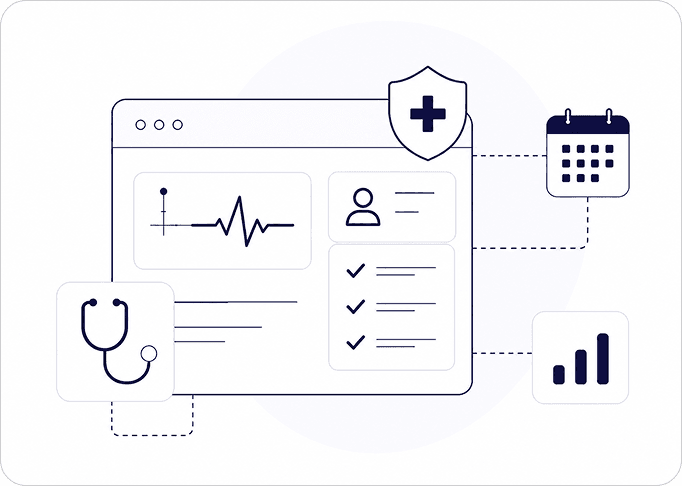
Clinical decision-support AI, DPDP-aware from the architecture stage, built into hospital EHR integrations for Delhi's private hospitals.
Senior engineers own architecture on every Delhi build, DPDP and accessibility mapping happens from sprint one, and nothing gets subcontracted to a team that wasn't in the original scoping call.
Awards & Recognitions
Recognised by leading platforms, startup ecosystems, and global technology communities.
Applied AI Built for an Organisation's Own Data
Not national infrastructure, a model trained specifically on what a Delhi organisation actually has, built to solve a problem it genuinely faces.
No Subcontracting, Your Build Stays In-House
The engineer who architected your Delhi model is the same person your team reaches later, not a contractor absent from the original decision.
AI Built to Earn Trust, Not Just Pass a Demo
A Delhi model is judged on real institutional value once it's live, not on how it performed in a pitch, with monitoring built in to prove it.
A Senior Engineer Owns This, Start to Finish
A single senior engineer designs the architecture, attends every sprint review, and writes production code personally on every Delhi build.
Talk Directly with Our Founder
Discuss your software vision, AI roadmap, and delivery strategy with the team leading product engineering at Akoode.
Ways of Working That Fit How Delhi Teams Actually Operate
Government projects usually run as fixed-scope contracts with a dedicated team. Businesses with their own IT staff often add a few of our engineers instead. Every arrangement includes full IP ownership and direct access to the engineers. Wholesale trading clients tend to prefer a middle path, a small dedicated team that stays engaged past launch, since a demand model genuinely needs a season or two of tuning before a family business trusts it the way it trusts an experienced buyer's instinct.
Dedicated Team
Most Popular
Best for: Projects requiring continuous development and long-term product evolution
A dedicated team works as an extension of your in-house engineers, designers, QA, and PMs — fully aligned with your roadmap and sprint cadence.
Full control over the development process and sprint priorities
Easy scalability as the product and team requirements evolve
Seamless integration with your existing tools and workflows
Direct access to engineers — no account managers in between
Straight answers on cost, government procurement, and how a build actually runs for Delhi AI projects.
Three real bands cover most Delhi AI projects. A simple API integration typically runs $5,000 to $15,000. A custom model built on institutional or business data usually lands between $15,000 and $80,000. Government or enterprise systems with deep integration start around $80,000.
Data readiness matters more than almost anything else. A tightly scoped API integration is usually live within four to six weeks. A government system with accessibility and security audit requirements usually runs 16 to 24 weeks or longer.
If your model touches personal data of Indian citizens, customers, or employees, yes. Consent-manager provisions apply from November 2026 and full substantive obligations from May 2027, with penalties reaching Rs 250 crore.
Yes. Our team is in Gurugram, so meetings anywhere in Delhi are a drive away. Discovery workshops and sign-off meetings usually happen face to face.
Scope is the real split. A dedicated team is a full unit running your build as an extension of your organisation. Staff augmentation is narrower, one or two specialists slotting into a team you already have.
Send project details through the requirement form on this page, or book a call directly. A senior engineer reviews it within one business day.
Yes. We build AI systems to government requirements, including GIGW guidelines, accessibility standards, and security audit readiness. We can work through GeM or tender processes, depending on how the department buys.
Honestly, not directly for most organisations. It's national policy guidance, not a service most organisations buy into. What actually matters is a model trained on your own data solving your own problem.
Yes. Document extraction, classification, and chat interfaces can handle Hindi and English, and we test them with real Delhi data before launch.
This happens more often than you'd think. First comes a technical audit of whatever already exists, then an honest quality and risk assessment, and only then a remediation plan.
Yes, and skipping it is a genuinely bad idea. Production data drifts away from what a model was trained on, slowly and quietly, until performance has already slipped by the time anyone notices.
Field Notes From Delhi AI Engagements
Practical guidance on AI strategy, government procurement, and technical decisions for Delhi's departments and businesses.
Tell us what you're building and what data you actually have. You'll hear back with a straight read on scope, timeline, and fit within one business day.
Reply Time
< 30 working minutes
NDA-Friendly
Signed before kickoff
IP Ownership
100% yours from day one
Stay Informed with Thoughtful Innovation
Subscribe to the Akoode newsletter for carefully curated insights on AI, digital intelligence, and real-world innovation. Just perspectives that help you think, plan, and build better.