We build custom AI systems, LLM integrations, computer vision, and predictive analytics for Glasgow businesses, in a city that's climbed into the UK's top three for AI readiness. From strategy through monitoring, the same team handles model development and integration without a single handoff.
Built by a Team That Ships AI Products, Not Just Demos
Glasgow's AI ecosystem has grown quickly enough to break into the UK's top-tier cities, which means local expectations for a build partner have risen with it. Every Glasgow AI build runs entirely in-house, from discovery through deployment and monitoring.
A Roadmap You Can Set a Watch By
We build production-grade AI systems for Glasgow businesses. Every engagement follows a milestone-driven plan, and data readiness gets checked honestly before that plan is even finalised.
GMT and BST Hours, Genuinely Covered
Our teams keep dedicated India-UK overlap hours structured around GMT and BST, so Glasgow clients stay connected through Slack, Jira, and GitHub for the length of the engagement.
Built for Explainability, Not Just Accuracy
We design AI systems that can be audited and explained, not just ones that score well on a benchmark, because a model nobody can explain is a liability for a Glasgow business, not an asset.
Ratings That Hold Up Past Glasgow
Clutch and Google scores are earned across AI, mobile, and commerce work, delivered by engineers who build in RAG pipelines, computer vision, and production LLM integrations daily.
Platform Ratings
What our clients say across leading platforms.
Google, 4.9 out of five stars
4.9★★★★★★★★★★
Clutch, 5.0 out of five stars
5.0★★★★★★★★★★
GoodFirms, 4.8 out of five stars
4.8★★★★★★★★★★
What clients love about working with us
Milestones That Land When Promised
Every AI engagement stays on schedule through milestone tracking and sprint accountability, with progress visible the whole way through.
Nothing Gets Buried in an Inbox
Dedicated overlap hours keep planning, model reviews, and deployment real-time, with nothing important left waiting in a channel.
Trusted With Real Production Data
Every system gets a documented architecture with data-handling standards set out before a line of code is written, not worked out reactively once something has gone wrong.
A Long-Term AI Partner, Not a Vendor
We design for drift from the outset, which is why most clients keep working with us long after launch instead of discovering the problem later.
Why Glasgow Businesses Choose Akoode
Glasgow ranked third in the UK's 2026 AI Cities Index, ahead of long-established tech centres like Birmingham and Edinburgh. We build every Glasgow AI project to match that momentum, not treat the city as a secondary market.
GMT and BST overlap. Our India-UK delivery model is structured to provide dedicated overlap during Glasgow business hours for sprint planning, model reviews, and deployment.
Pricing in GBP. Every figure quoted is in pounds sterling, billed the same way, with no ambiguity either side.
Every part of this build, model and pipeline included, comes from our own engineers directly.
A single senior engineer stays attached to this build from the opening discovery call through to deployment.
Privacy is part of the architecture, not an afterthought. UK GDPR and the Data Protection Act 2018 shape the build from day one, with your legal team brought in for formal sign-off where needed.
Working Hours Built Around GMT and BST
Structured India-UK overlap windows keep planning, model reviews, and deployment calls landing inside Glasgow's own working day.
Built With AI Technology Chosen to Last
Stability under real traffic drives our framework and vector-database choices, not whatever's trending on a benchmark this month. That keeps a Glasgow AI system maintainable years after launch, not just at release.
Sector Depth Beyond a Single Vertical
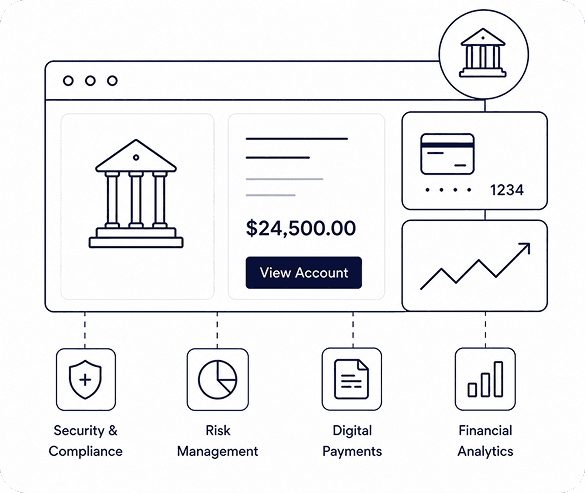
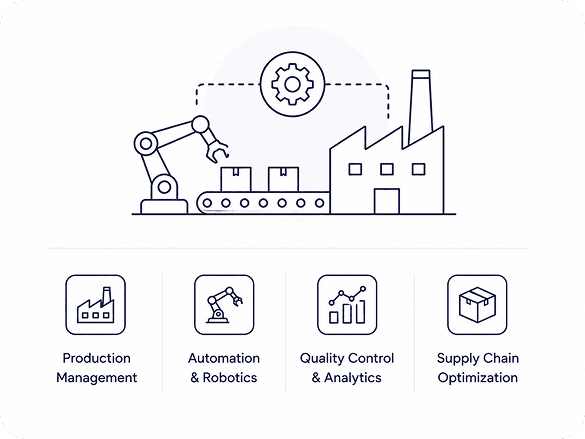
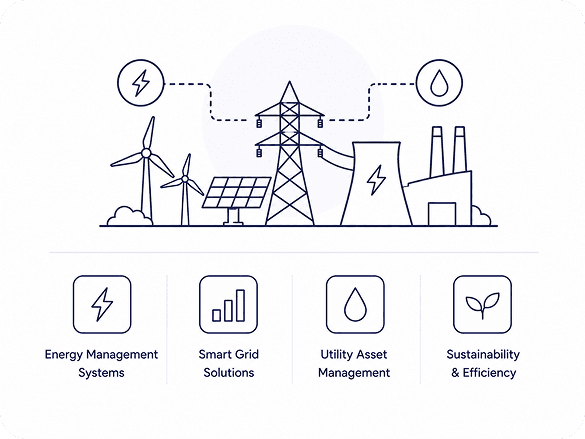
Deep delivery experience across Glasgow's dominant industries: Finance & Banking, Energy & Utilities, Manufacturing.
Support That Doesn't End at Deployment
Model monitoring, drift detection, and retraining continue after launch, so a Glasgow AI system stays accurate as real-world data shifts, not just on demo day.
The Six Things a Glasgow AI Engagement Actually Covers
Whether the client is a two-person Glasgow startup testing a first AI feature or an enterprise retooling a core workflow, every engagement covers the same ground: strategy, data readiness, model development, integration, and support that continues past launch day. Real 2026 UK rates run from roughly £8,000 for a straightforward API integration up to £75,000 or more for enterprise-scale or fine-tuned model work.
01
AI Strategy and Discovery for Glasgow Businesses
Most AI projects that go wrong go wrong before a single model gets trained, in the gap between what a Glasgow business wants and what its actual data can support. We begin with a candid check on whether the data actually supports the ambition, not a roadmap that's quietly just a sales pitch.
Data readiness and quality assessment before any commitment is made
Use-case prioritisation based on real business impact, not novelty
Build-versus-buy analysis for off-the-shelf APIs versus custom models
A scoped technical roadmap with realistic milestones
Custom AI and Machine Learning Development in Glasgow
When an off-the-shelf API can't do what a Glasgow business actually needs, we build custom models: classification, prediction, and recommendation systems trained on real data, not a generic public dataset.
Custom classification, prediction, and recommendation models
Model training, validation, and performance benchmarking
MLOps pipelines for retraining as new data arrives
Explainability built in from the architecture stage, not bolted on
Generative AI and LLM Integration for Glasgow Teams
We integrate LLMs into real business workflows for Glasgow teams, RAG pipelines grounded in a client's own documents, AI assistants that actually know the business, and content generation tools that don't hallucinate their way into a compliance problem.
RAG pipelines grounded in your own documents and data
In-app AI assistants using OpenAI, Anthropic, and open-source models
Prompt engineering and evaluation frameworks, not guesswork
Guardrails and output validation built in from day one
Computer Vision Development for Glasgow Businesses
From defect detection on a production line to document processing in a back office, we build computer vision systems for Glasgow businesses trained on real operational images, not stock photo datasets that fall apart in production.
Object detection, classification, and image segmentation
Document processing and optical character recognition
Quality inspection and defect detection for manufacturing
Real-time video analysis for production environments
AI-Powered Automation and Predictive Analytics in Glasgow
We build predictive models and automation that actually change how a Glasgow business operates, demand forecasting, anomaly detection, and workflow automation grounded in real historical data, not a dashboard nobody acts on.
Demand forecasting and anomaly detection models
Workflow automation triggered by predictive signals
Recommendation engines tuned to real customer behaviour
Dashboards built for decisions, not just reporting
A model that isn't monitored drifts, quietly, until it's making bad decisions nobody notices until the damage is done. We provide ongoing monitoring, retraining, and performance tracking so a Glasgow AI system stays accurate as real-world data changes.
Model performance monitoring and drift detection
Scheduled retraining as new data becomes available
Cost and latency optimisation for production inference
Flexible staff augmentation when an in-house team needs extra AI capacity
How an AI Project Gets Built in Glasgow, Step by Step
Six stages that keep every Glasgow AI engagement transparent and accountable, from the first data conversation through deployment and beyond.
Stage 01
Discovery and Data Assessment
Every Glasgow engagement starts with a genuine assessment of what data actually exists and what state it's actually in, not an assumption that the data is ready simply because someone said it was.
Timeline
1 to 3 weeks
Most engagements find this stage runs longer than expected, because an honest data assessment genuinely takes time to do properly.
You receive
Data readiness and quality report
Use-case feasibility assessment
Technical scope document with realistic milestones
Risk register covering data, compliance, and integration risks
What'sActually Running Underneath a Glasgow AI Build
This stack is chosen entirely for production behaviour, never for novelty. OpenAI and Anthropic cover most generative use cases without needing anything custom; PyTorch or TensorFlow only enter the picture where the task truly requires it.
PyTorch
TensorFlow
scikit-learn
HuggingFace
Results We're Happy to Show You
Real AI work with measurable outcomes: model performance, adoption, and business impact worth reporting upward.
AI-Powered Medical Diagnostic System
Key Outcomes
99.1%
Spine Detection Accuracy
98.4%
Chest Pathology Accuracy
Challenge
Radiology departments in emergency and trauma settings are caught between two pressures that pull in opposite directions. Imaging volumes keep rising. The tolerance for missed diagnoses stays at zero. A hairline cervical fracture overlooked during a busy overnight shift, or a pneumonia finding buried halfway down a full worklist, carries consequences that extend well beyond clinical error. Existing AI tools have added a third problem on top of both: they produce outputs without explanation, and clinicians who cannot see why a model flagged something are right to be cautious about acting on it.
What We Built
The brief was specific: a dual-stream diagnostic system that could detect cervical spine fractures at individual vertebra level and classify chest pathologies from X-rays, process each study in under two seconds, and present findings with visual explainability that clinicians could act on without second-guessing the model. Accuracy targets were set at specialist-comparable benchmarks. The clinical interface needed to triage automatically, not just classify.
Hair transplant consultations have not kept pace with patient expectations. Most clinics still rely on manual scalp inspection, verbal outcome descriptions, and approximate graft estimates that vary between practitioners. For a patient making a significant financial and personal decision about a visible aesthetic procedure, that process generates more hesitation than confidence. The clinics with the strongest clinical capability are often losing patients not because of their outcomes but because of how those outcomes are communicated before treatment begins.
What We Built
The brief required a complete AI-powered consultation platform that could run on flagship smartphones, deliver scalp analysis results within seconds, simulate post-transplant outcomes in real time, calculate graft counts and pricing through a standardised engine, and support at-home patient assessment as well as in-clinic use. Every objective connected directly to a specific point in the patient decision journey where the existing process was creating friction or losing conversions.
Pelvic floor rehabilitation requires a level of movement precision that standard fitness apps are not built to verify. Users performing exercises at home have no mechanism for knowing whether their form meets the biomechanical criteria that make the exercise therapeutic rather than harmful. Building a platform that bridges that gap requires solving problems in real-time pose validation, data privacy, cross-platform delivery, and subscription-based programme access that most fitness app frameworks do not address out of the box.
What We Built
The brief required productising a validated AI proof of concept into a fully deployable, subscription-based mobile fitness platform. The finished system needed to deliver real-time pose correction on standard smartphones, support structured 12-week pelvic health programmes with group and subscription access controls, and give M2 Method's team complete independence to manage content, users, and programmes without developer involvement.
Clinical decision-support and patient-triage AI for healthcare providers in Glasgow, built with UK GDPR and NHS data-governance expectations in mind from the architecture stage.
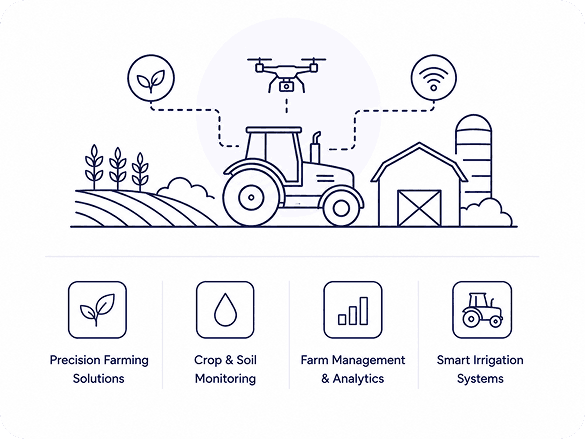
Crop-yield prediction and computer-vision livestock monitoring for agriculture businesses around Glasgow, engineered to keep working with patchy rural connectivity.
Senior-led delivery and a no-subcontracting model that gives Glasgow clients direct access to the people actually building their AI system.
Awards & Recognitions
Recognised by leading platforms, startup ecosystems, and global technology communities.
Every Model Stays In-House, Start to Finish
Every build stays fully self-contained within our own team. Whoever's building your AI system is who you're actually talking to, no account-manager relay in between.
AI Built to Earn Enterprise Trust
From the first sprint, AI is part of the actual product, not bolted on later, with every feature judged on real post-launch value, not demo polish.
One Senior Engineer Owns the Whole Build
A senior engineer leads every Glasgow project, directly involved in architecture decisions, model reviews, and deployment, writing code alongside the team rather than managing tickets from a distance.
Trust-Grade Compliance From the First Sprint
UK GDPR, the Data Protection Act 2018, and any relevant sector regulator's expectations all get built into a Glasgow AI system from the first design sprint, rather than left as a last-minute scramble before launch.
Talk Directly with Our Founder
Discuss your software vision, AI roadmap, and delivery strategy with the team leading product engineering at Akoode.
Ways of Working That Fit How Glasgow Teams Actually Operate
Regardless of which model you choose, dedicated engineers, complete IP ownership, and direct access to the team building your AI system come as standard.
Dedicated Team
Most Popular
Best for: Projects requiring continuous development and long-term product evolution
A dedicated team works as an extension of your in-house engineers, designers, QA, and PMs — fully aligned with your roadmap and sprint cadence.
Full control over the development process and sprint priorities
Easy scalability as the product and team requirements evolve
Seamless integration with your existing tools and workflows
Direct access to engineers — no account managers in between
Straight answers on process, pricing, timelines, compliance, and what working with Akoode actually looks like for Glasgow AI projects.
Three real bands cover most UK AI projects in 2026. A simple API integration, wiring an LLM like GPT or Claude into something you already run, typically costs £8,000 to £15,000. A custom model built specifically on your own data usually lands between £15,000 and £75,000. Enterprise-scale work or a genuinely custom fine-tuned model starts around £75,000 and climbs from there depending on how messy or extensive the underlying data is. We'll narrow that down to an actual figure once we've looked at your data properly.
We match the tool to the actual problem. Off-the-shelf APIs cover most generative needs efficiently. Custom models make sense once your data or use case is specific enough that a general-purpose model falls short. Discovery decides, not assumption.
Yes to both. Whether it's a first AI feature for a startup or a full transformation for an enterprise, the process scales to match the actual scope rather than forcing one size to fit all.
Our teams operate dedicated India-UK overlap hours structured around GMT and BST, so Glasgow clients get real-time collaboration during planning, model reviews, and deployment through Slack, Jira, GitHub, and weekly sprint reporting.
A dedicated team means a complete unit assigned to your work, ML engineers, data scientists, technical lead, all of it. Staff augmentation is smaller in scale: one or two specialists dropped into a team structure you already run, there to close a gap rather than build something new.
Send your details through the contact form on this page and a senior team member picks it up personally, not a general inbox, replying inside a business day. Where the data picture is genuinely messy, we'll usually suggest a paid discovery phase first, so scope is grounded in reality rather than guesswork.
We fold this into the architecture stage from the outset, rather than treating it as a late-stage patch. Anywhere personal data is involved, UK GDPR and the Data Protection Act 2018 get mapped directly into the model design, including a clear answer for how a given decision could be explained if a client is ever asked to justify one.
As a baseline, that's monitoring, drift detection, and infrastructure maintenance as underlying models change. Scheduled retraining and cost or latency tuning tend to get added once the system is genuinely handling production volume.
It comes down to how ready your data actually is. Four to six weeks covers most API integrations. Eight to fourteen weeks is typical for a custom model, with real cleanup work adding time beyond that where it's needed.
Both, and integration is usually the more frequent one. The AI feature gets designed to fit your existing product architecture properly, not treated as a bolt-on that ignores everything already there.
It's genuinely the norm, not the exception. Discovery exists to catch this early. If your data needs meaningful cleanup before training, that gets scoped as its own piece of work rather than glossed over.
This happens more often than you'd think. First comes a technical audit of whatever already exists, the model, the pipeline, the codebase, then an honest quality and risk assessment, and only then a remediation plan before development actually resumes.
Every single time, before real detail ever gets shared. Whatever an engagement produces belongs to you fully once it wraps, models and code included; nothing stays with us.
Not a dedicated one, by deliberate government choice. The UK set out a pro-innovation, principles-based approach in its March 2023 White Paper, deciding against a single horizontal AI law like the EU's. Instead, existing regulators, the ICO for data protection, the FCA for financial services, the MHRA for medical AI, the CMA for foundation models, apply five cross-cutting principles within their own sectors. The Data (Use and Access) Act 2025 also came into force in large part from February 2026, updating the rules around automated decision-making while keeping the underlying safeguards. We build to that real framework, not a horizontal AI Act that doesn't exist here.
We keep this running for most clients, and recommend it strongly. Production data pulls away from training data gradually, and by the time that's visible in performance, it's already cost something. Monitoring, drift detection, and scheduled retraining come as a retainer or an as-needed service.
Our strongest sector experience in the Glasgow AI market covers Finance & Banking, Energy & Utilities, Manufacturing, with data-handling and explainability standards built to what those industries actually require.
Reading for Glasgow AI Product Teams
Practical guidance on AI strategy, model deployment, and technical decisions for founders and product leaders building with AI.
Share what you're building and you'll get back a scoped estimate along with a recommended approach.
Reply Time
< 30 working minutes
NDA-Friendly
Signed before kickoff
IP Ownership
100% yours from day one
Stay Informed with Thoughtful Innovation
Subscribe to the Akoode newsletter for carefully curated insights on AI, digital intelligence, and real-world innovation. Just perspectives that help you think, plan, and build better.