We build custom AI systems, LLM integrations, computer vision, and predictive analytics for UK businesses, across England, Scotland, Wales, and Northern Ireland. One team handles strategy, model development, integration, and post-launch monitoring from start to finish, without passing the work between vendors.
Built by a Team That Ships AI Products, Not Just Demos
Most AI projects that stall don't stall at the model. They stall in the data preparation, the integration work, and the part after launch nobody budgeted for properly. Every AI build here runs through one in-house team from discovery to deployment and monitoring, so nothing gets lost in the gap between a working demo and a system that actually runs in production.
A Roadmap You Can Set a Watch By
Every UK AI engagement runs against a milestone-based roadmap, with data readiness assessed honestly before the plan is set, not discovered as a surprise halfway through the build.
GMT and BST Hours, Genuinely Covered
Our delivery model keeps dedicated India-UK overlap hours structured around GMT and BST, so clients stay connected through Slack, Jira, and GitHub for the length of the engagement.
Built for Explainability, Not Just Accuracy
Models get designed to be audited and explained, not just to score well on a benchmark, because a model nobody can explain is a genuine liability in production, not a technical footnote.
Ratings That Hold Up Across the UK
Clutch and Google scores here are earned across AI, mobile, and commerce work, by engineers who build RAG pipelines, computer vision, and production LLM integrations as their day job, not an occasional side project.
Platform Ratings
What our clients say across leading platforms.
Google, 4.9 out of five stars
4.9★★★★★★★★★★
Clutch, 5.0 out of five stars
5.0★★★★★★★★★★
GoodFirms, 4.8 out of five stars
4.8★★★★★★★★★★
What clients love about working with us
Milestones That Land When Promised
Sprints stay accountable and milestones get tracked properly, which keeps AI engagements on schedule with progress visible the whole way through, not saved up for a big reveal at the end.
Nothing Gets Buried in an Inbox
Planning, model reviews, and deployment happen live during dedicated overlap hours, not left sitting unread in a Slack channel somewhere.
Trusted With Real Production Data
Every system gets a documented architecture with data-handling standards set out before a line of code is written, not worked out reactively once something has already gone wrong.
A Long-Term AI Partner, Not a Vendor
Clients tend to stay on well past launch here, because an unmonitored model drifts quietly, and the whole approach is built around that reality from day one rather than treating it as an afterthought.
Why UK Businesses Choose Akoode
The Alan Turing Institute, the UK's national institute for data science and artificial intelligence, is headquartered in London and coordinates AI research across universities the length of the country. That's the bar for genuine AI capability here, not a marketing line borrowed from somewhere else.
GMT and BST overlap. Our India-UK delivery model provides dedicated hours structured around UK working hours, so planning and model reviews land inside your working day.
Pricing in GBP. Every quote is scoped and billed in pounds sterling, with nothing left ambiguous on currency.
In-house development. Every model, pipeline, and integration is built by our own team here, nothing farmed out elsewhere.
One senior engineer owns the build. The same lead stays accountable for the project across discovery, deployment, and everything that follows.
Privacy-aware by design. UK GDPR and the Data Protection Act 2018 inform the build from the earliest stage, with your legal team brought in wherever formal sign-off is required.
Working Hours Built Around GMT and BST
Structured India-UK overlap keeps planning, model reviews, and deployment calls landing inside the UK working day, whether the client is in London or Belfast.
Built With AI Technology Chosen to Last
Frameworks, vector databases, and orchestration tools all get picked for durability under real load, not for whichever result happens to be trending on a benchmark chart this week.
Sector Depth Across the UK's Regional Economies
Deep delivery experience across Finance & Banking, Retail & E-Commerce, and Healthcare, reflecting how differently AI actually gets applied from London's financial sector to the Midlands' manufacturing base.
Support That Doesn't End at Deployment
Model monitoring, drift detection, and retraining carry on after launch, so a system stays accurate as real-world data shifts, not just accurate on the day of the demo.
Whether the client is a two-person startup testing a first AI feature or an enterprise retooling a core workflow, every engagement covers the same ground: strategy, data readiness, model development, integration, and support that continues past launch day. Real 2026 UK market rates run from around £8,000 for a straightforward API integration up to £75,000 or more once you're into custom fine-tuned models or enterprise-scale deployments.
01
AI Strategy and Discovery for UK Businesses
Most AI projects that go wrong go wrong long before a model ever gets trained, in the space between what a business wants to happen and what its actual data is capable of supporting. This engagement type begins with a blunt, unromantic look at whether the data is genuinely ready, rather than a roadmap that's secretly just a sales pitch in disguise.
Data readiness and quality assessment before any commitment is made
Use-case prioritisation based on real business impact, not novelty
Build-versus-buy analysis for off-the-shelf APIs versus custom models
A scoped technical roadmap with realistic milestones
Custom AI and Machine Learning Development in the UK
When an off-the-shelf API can't do what a business actually needs, we build custom models instead: classification, prediction, and recommendation systems trained on a client's real data, not a generic public dataset.
Custom classification, prediction, and recommendation models
Model training, validation, and performance benchmarking
MLOps pipelines for retraining as new data arrives
Explainability built in from the architecture stage, not bolted on
LLMs get integrated into real business workflows here, RAG pipelines grounded in a client's own documents, AI assistants that actually know the business, and content-generation tools that don't hallucinate their way into a compliance problem.
RAG pipelines grounded in your own documents and data
In-app AI assistants using OpenAI, Anthropic, and open-source models
Prompt engineering and evaluation frameworks, not guesswork
Guardrails and output validation built in from day one
From defect detection on a production line to document processing in a back office, computer vision systems get built here on real operational images, not stock photo datasets that fall apart the moment they meet production conditions.
Object detection, classification, and image segmentation
Document processing and optical character recognition
Quality inspection and defect detection for manufacturing
Real-time video analysis for production environments
AI-Powered Automation and Predictive Analytics in the UK
Predictive models and automation get built here to actually change how a business operates: demand forecasting, anomaly detection, and workflow automation grounded in real historical data, not a dashboard nobody ever acts on.
Demand forecasting and anomaly detection models
Workflow automation triggered by predictive signals
Recommendation engines tuned to real customer behaviour
Dashboards built for decisions, not just reporting
A model that isn't monitored drifts, quietly, until it's making bad decisions nobody notices until the damage is already done. Ongoing monitoring, retraining, and performance tracking keep a system accurate as real-world data changes.
Model performance monitoring and drift detection
Scheduled retraining as new data becomes available
Cost and latency optimisation for production inference
Flexible staff augmentation when an in-house team needs extra AI capacity
Six stages that keep every UK AI engagement transparent and accountable, from the first data conversation through deployment and beyond.
Stage 01
Discovery and Strategy
Every engagement starts with a genuine assessment of what data actually exists and what state it's actually in, not an assumption that the data is ready simply because someone said it was.
Timeline
1 to 3 weeks
Most engagements find this stage runs longer than expected, because an honest data assessment genuinely takes time to do properly.
You receive
Data readiness and quality report
Use-case feasibility assessment
Technical scope document with realistic milestones
Risk register covering data, compliance, and integration risks
What'sActually Running Underneath a UK AI Build
These technology choices earn their place through production reliability, not a leaderboard score this quarter. OpenAI and Anthropic APIs handle most generative AI needs well on their own; custom PyTorch or TensorFlow models step in only where an off-the-shelf option genuinely falls short. Nothing untested gets swapped in partway through a build.
PyTorch
TensorFlow
scikit-learn
HuggingFace
Results We're Happy to Show You
These are commerce and AI builds with results attached, model performance, adoption, and business impact, not a demo reel.
AI-Powered Hair Analysis
Key Outcomes
Seconds
Scalp Analysis Speed
Real-Time
3D Simulation Output
Challenge
Hair transplant consultations have not kept pace with patient expectations. Most clinics still rely on manual scalp inspection, verbal outcome descriptions, and approximate graft estimates that vary between practitioners. For a patient making a significant financial and personal decision about a visible aesthetic procedure, that process generates more hesitation than confidence. The clinics with the strongest clinical capability are often losing patients not because of their outcomes but because of how those outcomes are communicated before treatment begins.
What We Built
The brief required a complete AI-powered consultation platform that could run on flagship smartphones, deliver scalp analysis results within seconds, simulate post-transplant outcomes in real time, calculate graft counts and pricing through a standardised engine, and support at-home patient assessment as well as in-clinic use. Every objective connected directly to a specific point in the patient decision journey where the existing process was creating friction or losing conversions.
Pelvic floor rehabilitation requires a level of movement precision that standard fitness apps are not built to verify. Users performing exercises at home have no mechanism for knowing whether their form meets the biomechanical criteria that make the exercise therapeutic rather than harmful. Building a platform that bridges that gap requires solving problems in real-time pose validation, data privacy, cross-platform delivery, and subscription-based programme access that most fitness app frameworks do not address out of the box.
What We Built
The brief required productising a validated AI proof of concept into a fully deployable, subscription-based mobile fitness platform. The finished system needed to deliver real-time pose correction on standard smartphones, support structured 12-week pelvic health programmes with group and subscription access controls, and give M2 Method's team complete independence to manage content, users, and programmes without developer involvement.
The creative production bottleneck in ecommerce and B2B marketing is not a talent problem. It is a process problem. Every product needs multiple ad formats. Every format needs channel-appropriate copy. Every piece of copy needs to stay on-brand across a growing catalogue. When that work is done manually, it does not scale, it does not stay consistent, and it cannot be reviewed efficiently when the output looks different every time a different person touched it.
What We Built
The brief required a modular AI pipeline that could take a product image, understand what it was selling and to whom, generate structured marketing copy across multiple formats, and render downloadable catalogue assets that looked the same every time. Deterministic output was non-negotiable. The system needed to produce layouts a marketing team could review, approve, and send without visual surprises or format inconsistencies between runs.
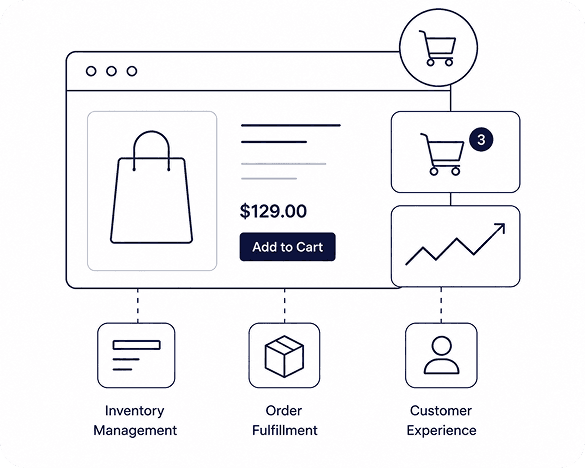
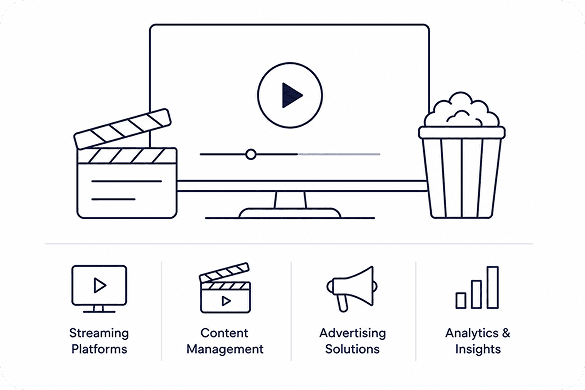
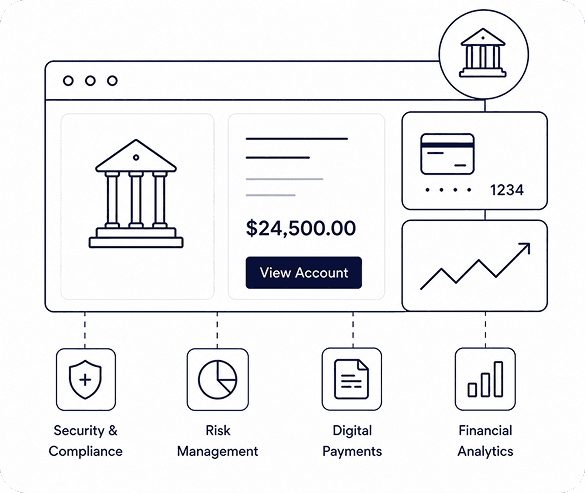
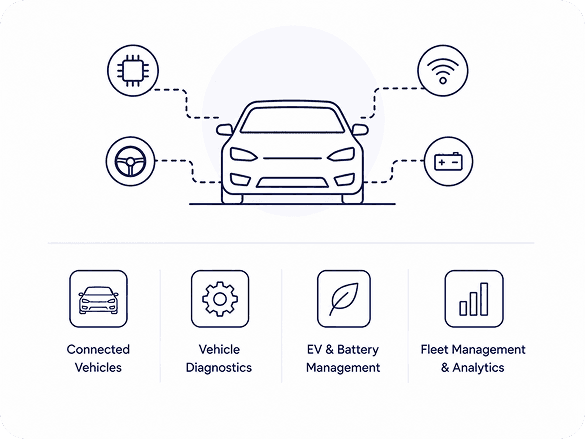
Akoode has delivered AI systems across the industries that make up the UK economy, from UK GDPR-aware healthcare models to FCA-conscious fraud detection for financial institutions, tuned to real UK data rather than a generic default.
1
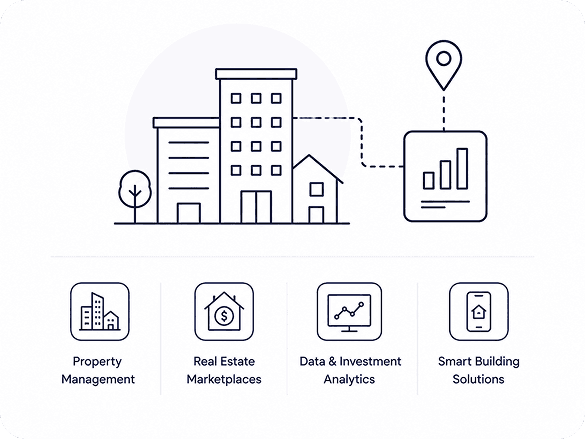
Real Estate
AI-powered valuation and lead-scoring tools for UK property platforms, trained on regional pricing data across England, Scotland, Wales, and Northern Ireland rather than a single national average.
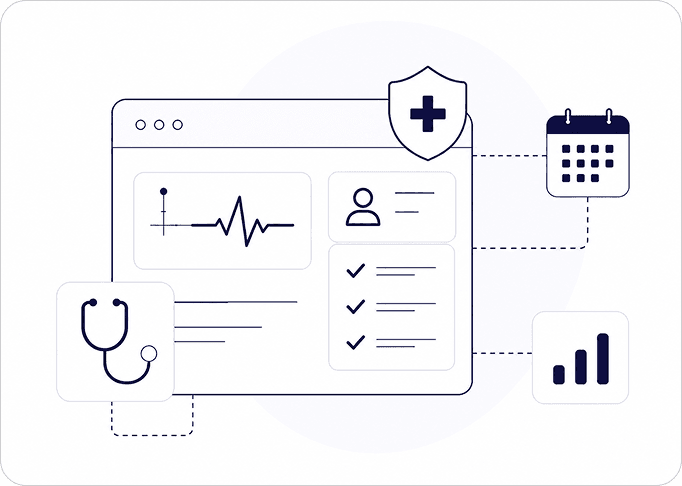
Clinical decision-support and patient-triage AI built with UK GDPR and NHS data-governance expectations in mind from the architecture stage, not retrofitted before launch.
Recommendation engines, demand forecasting, and AI-powered visual search for UK retailers, tuned to real regional buying patterns across the UK market.
Fraud detection, credit-risk models, and document-processing AI for UK financial institutions, built with the FCA's expectations for AI in regulated financial services in mind.
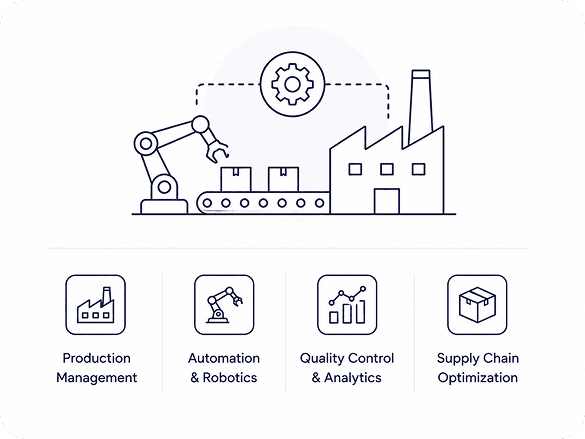
Predictive maintenance and computer-vision defect detection for UK manufacturers, integrated with existing plant-floor systems rather than replacing them.
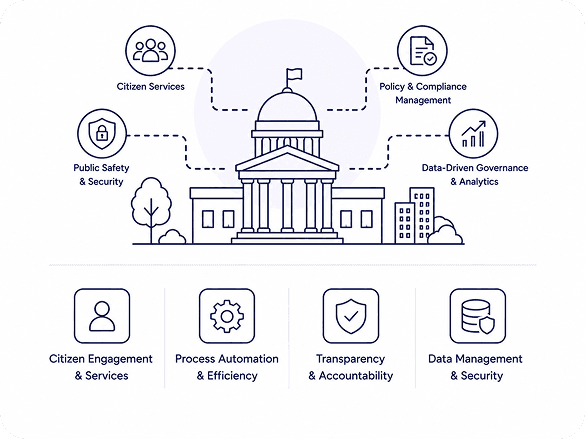
AI systems built to the accessibility and explainability standards UK public-sector procurement expects, with human oversight built into every automated decision.
Senior-led delivery and a no-subcontracting model that gives UK clients direct access to the people actually building their AI system.
Awards & Recognitions
Recognised by leading platforms, startup ecosystems, and global technology communities.
Every Model Stays In-House, Start to Finish
There's no subcontracting on an AI engagement and no white-labelling anyone else's work. You're dealing directly with the ML engineers and data scientists on our own team who are actually responsible for building it.
AI Built to Earn Enterprise Trust
AI is part of the actual product from the first sprint here, not layered on afterward, with every feature judged on real production value rather than how it looks in a pitch.
One Senior Engineer Owns the Whole Build
A senior engineer leads every UK AI project, directly involved in architecture decisions, model reviews, and deployment, writing code alongside the team rather than managing from a distance.
Trust-Grade Compliance From the First Sprint
UK GDPR, the Data Protection Act 2018, and any relevant sector regulator's expectations all get built into a UK AI system from the first design sprint, rather than left as a last-minute scramble before launch.
Talk Directly with Our Founder
Discuss your software vision, AI roadmap, and delivery strategy with the team leading product engineering at Akoode.
Ways of Working That Fit How UK Teams Actually Operate
Every engagement model includes dedicated engineers, full IP ownership, clear communication, and direct access to the build team, no matter which one you choose.
Dedicated Team
Most Popular
Best for: Projects requiring continuous development and long-term product evolution
A dedicated team works as an extension of your in-house engineers, designers, QA, and PMs — fully aligned with your roadmap and sprint cadence.
Full control over the development process and sprint priorities
Easy scalability as the product and team requirements evolve
Seamless integration with your existing tools and workflows
Direct access to engineers — no account managers in between
Straight answers on process, pricing, timelines, compliance, and what working with Akoode actually looks like for UK AI projects.
Think of it as three real bands, based on current 2026 UK rates. A straightforward API integration, connecting an LLM like GPT or Claude into an existing product, typically runs £8,000 to £15,000. A custom AI build for a small-to-mid-size business, trained specifically on your own data, usually sits between £15,000 and £75,000. Enterprise-scale deployments or custom fine-tuned models start from £75,000 and climb from there depending on data complexity. The precise figure comes after a short discovery call, once we've genuinely looked at your data.
Whichever fits the actual job, not whichever sounds more impressive in a pitch deck. OpenAI or Anthropic APIs handle most generative use cases perfectly well and get something live quickly. A custom model becomes worth the spend once your data is specific enough, or the task strange enough, that a general-purpose model simply can't do it. Discovery decides, not a house preference.
Both, and there's no size cutoff either way. The client list runs from founders testing a first AI feature through to growth-stage teams scaling something that already works, up to enterprise programmes doing a much bigger transformation. Whatever the scope turns out to be, the engagement model gets shaped around it.
Our teams operate dedicated India-UK overlap hours structured around GMT and BST, so UK clients get real-time collaboration during planning, model reviews, and deployment through Slack, Jira, GitHub, and weekly sprint reporting.
Mostly it's a question of shape. A dedicated team arrives as a self-contained unit, ML engineers, data scientists, a technical lead, effectively becoming part of your organisation for the project. Staff augmentation is narrower: one or two specialist engineers slot into a team structure that already exists, filling a specific hole rather than building a new one.
Submit through the contact form on this page and it lands with a senior team member directly, not a general inbox, with a reply within one business day. Where the data situation is genuinely complicated, we'll usually propose a paid discovery phase first, so whatever we scope is grounded in your real data rather than a guess.
This is designed in at the architecture stage, not stitched on once something has already caused a problem. Wherever a system touches personal data, UK GDPR and the Data Protection Act 2018 get worked directly into how the model is designed, including having a ready answer for how any specific decision could be explained if a client ever needed to justify one.
As a floor, that's monitoring, drift detection, and keeping infrastructure current as the underlying models and APIs evolve. Beyond that baseline, most clients layer on scheduled retraining once enough fresh data has built up, plus cost or latency tuning once the system is properly handling live production volume.
Data readiness is the single biggest factor here, more than the scope on paper. A tightly scoped API integration is usually live in four to six weeks. Training a custom model on your own data generally runs eight to fourteen weeks end to end, and that stretches further if there's real cleanup work standing between the raw data and anything trainable.
Both, though the more typical request by far is weaving AI into something already running, a mobile app, a storefront, an internal tool, rather than starting a standalone build from nothing. Whichever it is, the work gets designed to sit properly inside your existing architecture, not stuck on the side as an afterthought.
Honestly, that's the norm rather than the exception, which is exactly why discovery exists. Data quality gets assessed truthfully upfront, and if real cleanup is needed before a model can train on it properly, that becomes its own scoped, quoted piece of work rather than something quietly rushed and buried inside the build.
This happens more than you might expect. First comes a technical audit of what's already there, the model, the pipeline, the codebase, followed by an honest quality and risk read, and only then a remediation plan before we actually pick development back up.
Always, and before any genuine detail changes hands. Once a project wraps, everything it produced, every model, every line of code, every document, belongs to you outright; we keep no rights to any of it.
Not a dedicated one, by deliberate government choice. The UK set out a pro-innovation, principles-based approach in its March 2023 White Paper, deciding against a single horizontal AI law like the EU's. Instead, existing regulators, the ICO for data protection, the FCA for financial services, the MHRA for medical AI, the CMA for foundation models, apply five cross-cutting principles within their own sectors. The Data (Use and Access) Act 2025 also came into force in most part from February 2026, updating the rules around automated decision-making while keeping the underlying safeguards. We build to that real framework, not a horizontal AI Act that doesn't exist here.
Yes, and it's not a service worth skipping. Real production data pulls away from what a model was originally trained on, gradually enough that nobody clocks the drop until it's already noticeable. Standard support after launch includes monitoring, drift detection, and a scheduled retraining plan, sold either as a retainer or handled as needed.
Finance & Banking, Retail & E-Commerce, and Healthcare are where we've done the most work, with data handling and explainability built to what each of those sectors genuinely demands, rather than a one-size-fits-all compliance box to tick.
Reading for UK AI Product Teams
Practical guidance on AI strategy, model deployment, and technical decisions for founders and product leaders building with AI.
Share what you're building and you'll get back a scoped estimate along with a recommended approach.
Reply Time
< 30 working minutes
NDA-Friendly
Signed before kickoff
IP Ownership
100% yours from day one
Stay Informed with Thoughtful Innovation
Subscribe to the Akoode newsletter for carefully curated insights on AI, digital intelligence, and real-world innovation. Just perspectives that help you think, plan, and build better.