


Software Development Company in Cambridge

Cambridge runs on spin-outs, where the intellectual property usually arrives before the company does. Akoode turns research code into production software, and builds the data platforms around it.

UK Client Projects

Delivering software for Cambridge's deep tech, life sciences and research-driven organisations, sprint after sprint.

+58%
Software engineer developing a custom data platform for a Cambridge life sciences and deep tech client

AI-Powered Solutions

Intelligent, scalable, and future-ready software built for modern businesses.

P
J
S
A
110+ Happy Clients trust Akoode globally
⭐ 5/5 on Clutch

180+

Projects Delivered

Across global markets

97%

Client Retention

Long-term technology partnerships

30+

AI-Powered Solutions Built

Scalable AI systems for modern businesses

15+

Industries Served

From FinTech to HealthTech and SaaS

Four Commitments, and How to Check We Kept Them

Cambridge buyers tend to have a research background, which means they treat vendor claims the way they would treat an unreplicated result. So rather than assert four qualities, here are four commitments alongside the specific thing you can inspect to confirm each one is real.

Named Engineers, Verifiable Before You Commit

You get the names and backgrounds of the people assigned during scoping. Verification: ask to speak to the lead engineer before signing. If a supplier cannot arrange that, the staffing is usually not settled. 

A Written Scope That Predates the First Invoice

Discovery produces a requirements document and a fixed figure, both signed, before build begins. Verification: compare the signed scope against the final invoice at project close. 

Infrastructure Under Your Control From Day One

Repositories, cloud accounts and CI pipelines are created in your organisation, not ours. Verification: check account ownership in week one. If your name is not on it then, it is harder to move in month nine.

Reported Progress That Matches Deployed Reality

Each sprint closes with a running build in an environment you can reach. Verification: open the staging URL yourself rather than reading the summary.

Platform Ratings

What our clients say across leading platforms.

Google, 4.9 out of five stars
Google
4.9
Clutch, 5.0 out of five stars
Clutch
5.0
GoodFirms, 4.8 out of five stars
GoodFirms
4.8

What clients love about working with us

Research Code Treated With Judgement

We assess which parts of a prototype encode real insight and must be preserved, and which are scaffolding. Neither rewriting everything nor keeping everything is the right answer.

Handover Built for the Next Engineer

Documentation explains why the architecture is shaped as it is, including the options rejected, so somebody revisiting the design later does not quietly remove a sensible constraint.

Overnight Progress, Not Overnight Silence

Our day starts around six and a half hours ahead of Cambridge, so work raised at the end of your day is usually progressed before the start of your next one.

Direct Line to the Engineer

No account manager relaying technical questions between you and whoever wrote the code. Decisions get settled in one exchange rather than three.

What Building Software in Cambridge Actually Involves

The first thing that shapes the work here is that the intellectual property usually arrives before the company does. Cambridge runs on spin-outs, and a spin-out typically reaches us holding a genuinely novel method, a research codebase written to prove that method, and a small technical founding team already stretched. The engineering question is rarely whether the science works. It is which parts of the prototype encode real insight and must be preserved exactly, and which parts are scaffolding that should be rebuilt before anyone depends on them.

The second is data volume, particularly around life sciences. With the Wellcome Sanger Institute and EMBL's European Bioinformatics Institute at Hinxton, and the Biomedical Campus housing Addenbrooke's, Royal Papworth and AstraZeneca's global research operation, a substantial share of Cambridge briefs involve genomic or clinical datasets. That changes the engineering: pipelines get designed around storage cost and reproducibility rather than request latency, and provenance tracking is a requirement rather than a feature.

The third is a scarcity problem the city talks about constantly. Laboratory and office space is tight, senior engineering talent is heavily competed for by Arm, AstraZeneca and the larger cluster employers, and a Cambridge scale-up frequently cannot hire the team it needs at the speed its funding assumes. That is often the actual reason we get called, and it is worth being clear that this is a capacity solution as much as a technical one.

Where the UK Cluster Model Started

Trinity College founded the Cambridge Science Park in 1970, and Silicon Fen grew from it into thousands of technology and life science companies. 

Europe's Largest Medical Research Concentration

The Cambridge Biomedical Campus brings Addenbrooke's, Royal Papworth and AstraZeneca's research operation onto one site. 

A Global Centre for Genomics and Biodata

The Wellcome Genome Campus at Hinxton hosts the Sanger Institute and EMBL-EBI, and is midway through a major expansion. 

Processor Architecture Designed Here

Arm's presence anchors a deep semiconductor and IP-licensing culture, shaping how local companies think about ownership and reuse.

Cambridge city centre and science park representing the local deep tech and life sciences cluster

The Akoode Services Cambridge Clients Draw On Most

Six of our twelve service areas cover most Cambridge engagements, shaped by a city that commercialises research: turning prototype code into production systems, handling genomic and clinical data at scale, and the infrastructure underneath both. Each links through to the full service page.

01 / 06Software Development
Service 01

Custom Software Development in Cambridge

The most common Cambridge engagement is translating research code into production software. A research codebase optimises for demonstrating something is possible; production software optimises for behaving predictably when the person who wrote it is unavailable. The first deliverable is usually an honest assessment of what survives that translation. 

  • Assessment separating novel method from disposable scaffolding, before a build quote
  • Reproducibility and provenance built in, so results remain traceable to their inputs
  • Test coverage written against the scientific behaviour, not only the code paths
  • Performance work where research-scale assumptions break at production volumes
  • Documentation aimed at whoever maintains this after the founding researcher moves on
PythonTypeScriptPostgreSQLDocker
Explore More Services
02 / 06Big Data Analytics Services
Service 02

Big Data and Bioinformatics Platforms in Cambridge

Cambridge generates an unusual density of briefs involving genomic, clinical and biodata workloads, and these behave differently from ordinary application development. Pipelines get judged on storage economics, reproducibility, and whether a result can be regenerated identically in eighteen months. 

  • Genomic and biodata pipelines designed around storage cost and compute scheduling
  • Reproducible workflow tooling so analyses can be rerun and audited later

  • Clinical and research data platforms built under appropriate governance
  • Integration with established bioinformatics toolchains rather than replacing them
  • Visualisation and query layers for researchers who should not need to write SQL
PythonPostgreSQLAWSClickHouse
Explore More Services
03 / 06Artificial Intelligence
Service 03

Artificial Intelligence and Machine Learning Engineering

In a city with this much genuine research capability, we are rarely the people inventing the model. More often a Cambridge team has a method that works in a notebook and needs it to work as a service, with monitoring, versioning, sensible failure behaviour and costs that do not scale alarmingly with usage. 

  • Model serving infrastructure with versioning and rollback
  • Retrieval and LLM integration scoped against your own documents and data
  • Evaluation harnesses measuring accuracy on hard cases rather than convenient ones
  • Monitoring for drift, degradation and cost as usage grows
  • Defined fallback behaviour wherever an automated decision should not run unattended
PythonPyTorchOpenAI APIKubernetes
Explore More Services
04 / 06Cloud & DevOps Solutions
Service 04

Cloud and DevOps Solutions for Cambridge Teams

Research-led organisations tend to accumulate infrastructure organically: a cluster configured for one project, storage nobody has audited in years, pipelines held together by institutional memory. We produce an accurate picture of what is actually running first, because here the undocumented system is frequently the important one. 

  • Infrastructure audit documenting what exists before any migration begins
  • Infrastructure-as-code to remove dependence on individual memory
  • Compute and storage cost review, which in data-heavy environments usually finds waste
  • CI/CD pipelines appropriate to research and production workloads alike
  • Backup and recovery for datasets that would be expensive or impossible to regenerate
AWSTerraformDockerGitHub Actions
Explore More Services
05 / 06Digital Transformation
Service 05

Digital Transformation for Established Cambridge Firms

Established Cambridge companies often reach a point where the systems that carried them from ten people to two hundred have become the bottleneck: spreadsheets doing load-bearing work, scripts only one person understands, three tools disagreeing about the same figure. The remedy is usually narrower than a full rebuild. 

  • Discovery that identifies the specific constraint rather than assuming a rebuild
  • Integration work to stop separate systems reporting contradictory numbers
  • Replacement of single-person-dependency scripts with maintainable services
  • Role-based access and audit logging suitable for IP-sensitive environments
  • Incremental delivery, so value arrives before the whole programme completes
Node.jsTypeScriptPostgreSQLAzure
Explore More Services
06 / 06IT Staff Augmentation Services
Service 06

IT Staff Augmentation for Cambridge Teams

Senior engineering hires here compete against Arm, AstraZeneca and the wider cluster, and routinely take months. Where a funding milestone will not wait that long, engineers embed into your existing team under your processes rather than working separately.

  • Engineers plug into your existing team, tools and sprint cadence
  • You keep the roadmap and set the priorities
  • Fast ramp-up, typically within 5 to 7 days
  • Specific skills added without a permanent hire
  • Capacity scales up or down as priorities shift
PythonReactNode.jsAWS
Explore More Services

Six Stages, and the Failure Mode Each One Prevents

Every stage exists because a specific thing goes wrong without it. Those failure modes are named rather than left implied.

Structurally Comparable Work

Selected for resemblance to Cambridge briefs rather than for recency, weighted toward data platforms, research commercialisation, and internal engineering systems.

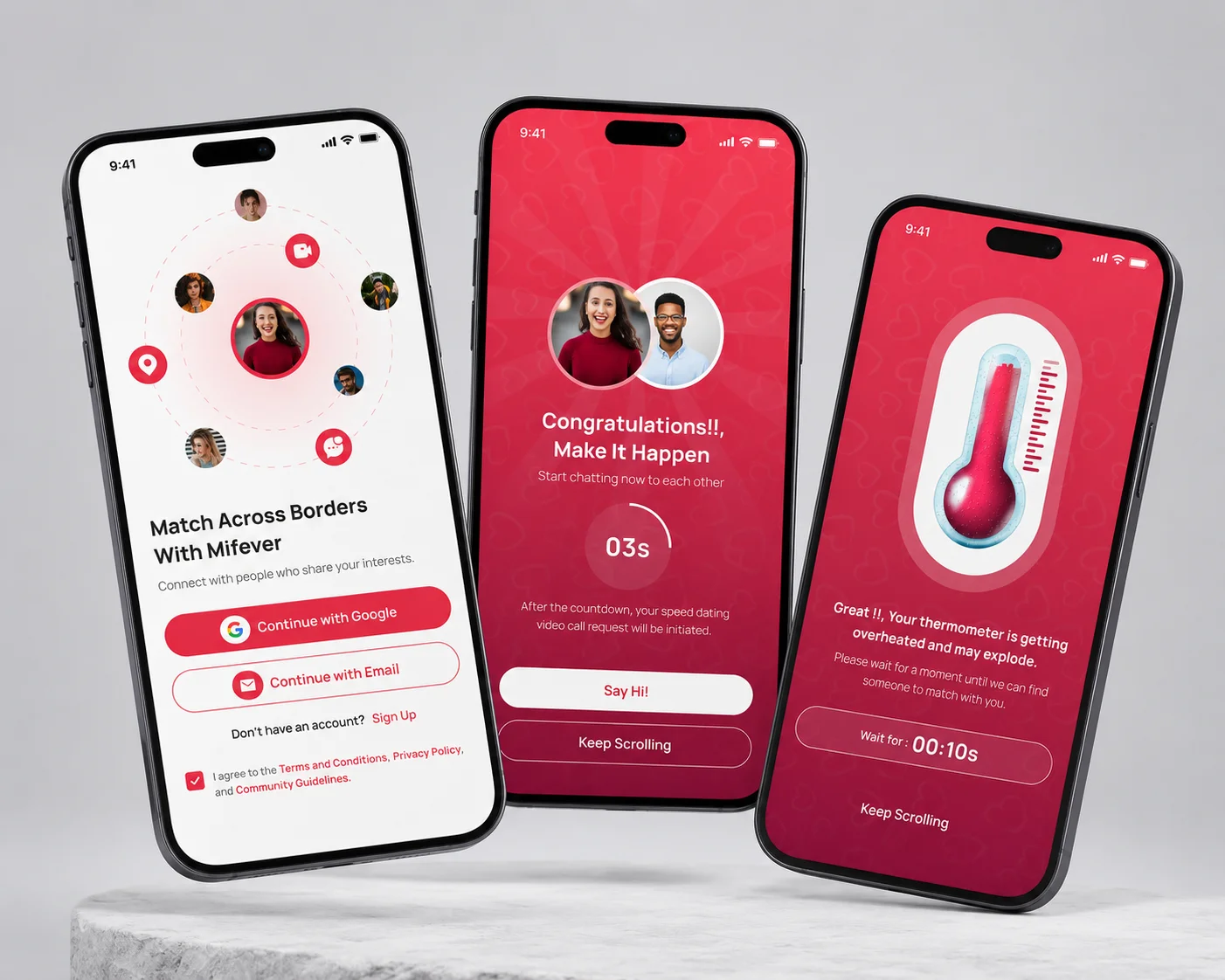
100% Delivered SRS ScopeTravel and Hospitality - Switzerland

Travel-Based Dating Mobile App

Built for a Switzerland-based dating platform that matches users by where they are going, not just where they are.

100% Delivered
SRS Scope
iOS + Android
Platforms

Industries We Build Software For in Cambridge

Fifteen sectors. The first four are where Cambridge briefs actually concentrate; the remainder are the ordinary business of any city economy.

Healthcare

Healthcare

Healthcare

Clinical data platforms built under appropriate governance from the first sprint.
Research collaboration tooling spanning hospital and university teams.
Patient-facing applications where accessibility is a requirement, not a refinement.
Integration with existing NHS and third-party health systems.
Explore Now
Retail and E-Commerce

Retail and E-Commerce

Retail and E-Commerce

Order and inventory systems that hold under genuine demand spikes.
Custom storefronts where a platform's constraints have started to bite.
Personalisation driven by your own customer data.
Point-of-sale and warehouse integration keeping stock figures honest.
Explore Now
Media and Entertainment

Media and Entertainment

Media and Entertainment

Content and rights management for academic and educational publishing.
Digital asset management for large libraries with inconsistent metadata.
Streaming and delivery infrastructure sized to real audience numbers.
Audience analytics going past pageviews into genuine engagement.
Explore Now
Finance and Banking

Finance and Banking

Finance and Banking

Client reporting platforms with audit trails that withstand scrutiny.
Payment and reconciliation systems built for real transaction volume.
Integrations preventing finance and operational systems from disagreeing.
AI fraud detection tuned to your own transaction patterns.
Explore Now
Automotive

Automotive

Automotive

Fleet and telematics platforms for regional operators.
Connected vehicle data pipelines built for real-time volume.
AI diagnostics trained on your own service and fault history.
Dealer and aftersales systems integrating with manufacturer platforms.
Explore Now
Agriculture

Agriculture

Agriculture

Agritech platforms for field data, remote sensing and geospatial analysis.
IoT crop monitoring built for patchy rural connectivity.
Traceability across food and agricultural supply chains.
AI yield forecasting and land-use modelling on your own data.
Explore Now
Telecommunication

Telecommunication

Telecommunication

Network and service management tooling for operators.
BSS and OSS platforms handling provisioning and billing.
Telemetry platforms sized for genuine infrastructure volumes.
AI churn and fraud detection on real subscriber behaviour.
Explore Now
Manufacturing

Manufacturing

Manufacturing

Test, measurement and characterisation tooling around existing hardware.
Design-flow and internal engineering automation for chip and photonics teams.
Predictive maintenance built on real sensor history.
Licensing and IP-tracking systems suited to a licensing-led business model.
Explore Now
Public Sector and Government

Public Sector and Government

Public Sector and Government

Citizen-facing portals meeting public sector accessibility standards.
Case management and document workflow for council and agency teams.
Data platforms built to public sector governance requirements.
Integration with established government digital service patterns.
Explore Now
Real Estate

Real Estate

Real Estate

Property management platforms handling tenancy, maintenance and compliance together.
Portfolio and valuation analysis for commercial holdings around the cluster.
Document automation for transaction-heavy processes.
Listing and search tools built for how buyers actually filter.
Explore Now
Energy and Utilities

Energy and Utilities

Energy and Utilities

Emissions and environmental monitoring platforms.
Distributed asset management for renewable generation.
Sustainability reporting that tracks changing requirements.
Customer portals covering consumption, billing and transparency.
Explore Now
Travel and Hospitality

Travel and Hospitality

Travel and Hospitality

Booking platforms built to handle peak-season load.
Guest-experience apps tying check-in, requests and loyalty together.
Revenue management responding to genuine demand signals.
Integration with third-party channels without manual reconciliation.
Explore Now
Education

Education

Education

Assessment, marking and certification platforms built for scale and integrity.
Learning platforms shaped around how teaching actually runs.
Student and candidate data handled with proper protection discipline.
Research data management for university and institute teams.
Explore Now
Insurance

Insurance

Insurance

Claims platforms that reduce manual handling without loosening accuracy.
Underwriting tools calibrated against your own loss history.
Policy administration covering renewals and adjustments cleanly.
AI fraud detection tuned to your claims patterns specifically.
Explore Now
Logistics and Supply Chain

Logistics and Supply Chain

Logistics and Supply Chain

Route and fleet optimisation for regional distribution.
Warehouse systems built around your actual physical layout.
Shipment visibility customers treat as a baseline expectation.
Carrier and customs integration for cross-border movement.
Explore Now

The Trade-Offs Worth Understanding Before You Choose

Every supplier arrangement trades something. These are the four trades ours involves, stated in both directions.

Awards & Recognitions

Recognised by leading platforms, startup ecosystems, and global technology communities.

Top US-Based IT Services Firm 2026
Clutch
Outlook
Ai Automation
Business Standard
YourStory
Good Firms
Top Machine Learning Companies - Goodfirms
Top eCommerce Development Company
Entrepreneur
ZBusiness
Times of India
Hindustan Times
Top US-Based IT Services Firm 2026
Clutch
Outlook
Ai Automation
Business Standard
YourStory
Good Firms
Top Machine Learning Companies - Goodfirms
Top eCommerce Development Company
Entrepreneur
ZBusiness
Times of India
Hindustan Times

Senior engineering capacity, at the cost of a local presence

You get experienced engineers at a rate that works for a spin-out budget. What you give up is somebody physically in your building, which matters more for hardware-adjacent work than for data and platform work. 

Overlap hours, not full working-day alignment

Roughly six and a half hours of head start means overnight progress and early-afternoon calls. What you give up is spontaneous late-afternoon conversation, which suits asynchronous teams and frustrates teams that work by interruption.

Software engineering depth, not domain science

We build production systems around your method. What we do not bring is the domain expertise itself, so on scientific correctness we defer to your researchers rather than pretending to adjudicate it. 

Designed for handover, which means we plan to become unnecessary

Documentation and infrastructure ownership assume you will eventually maintain this in-house. What you give up is the convenience of a supplier who handles everything indefinitely, if that is what you actually wanted.

Akhilesh K Verma, Founder of Akoode Technologies

Talk Directly with Our Founder

Discuss your software vision, AI roadmap, and delivery strategy with the team leading product engineering at Akoode.

How Cambridge Engagements Are Usually Structured

Spin-outs commonly begin with a fixed-scope assessment before committing to a build; larger cluster employers more often want augmentation around an existing engineering function.

Questions Cambridge Clients Put to Us

Drawn from first conversations, including the ones about IP and academic collaboration that rarely appear on vendor websites.

Contractually, an NDA before technical discussion and full assignment of anything created during the engagement. Practically, the more useful protections are structural: your repositories and infrastructure, access scoped to the people who need it, and no reuse of your code or methods elsewhere. We should also be candid that no supplier arrangement is risk-free, so if your method is genuinely the entire company value, it is reasonable to keep the core algorithm in-house and have us build everything around it. Several Cambridge clients work exactly that way.
Not if we can avoid it, and the assessment that opens most of these projects exists to find out. Typically a minority of a research codebase encodes real insight and must be preserved carefully, while the surrounding scaffolding is faster to rebuild than to untangle. Rewriting everything discards knowledge; preserving everything imports assumptions that were never meant to survive contact with users. The judgement call is the work.
By scoping to the hypothesis rather than the vision. In practice that means naming the single question the next six months must answer and building only what tests it. We will push back on scope that looks like it is serving a future funding round rather than the current one, though ultimately the decision is yours and we will build what you decide.
Often, yes, and it is worth saying plainly rather than dressing it as something more strategic. Senior engineering hires in Cambridge compete against large cluster employers and can take months. Where a funding milestone will not wait that long, an external team bridges the gap. If your hiring pipeline is healthy and the timeline is comfortable, building in-house is usually the better long-term answer and we will say so.
Fairly regularly. The recurring cases are an existing tool that would meet the requirement at a fraction of the cost, an AI brief where achievable accuracy sits below the threshold that would make it useful, and a platform scoped well beyond what the current stage needs. Raising it during discovery costs us the project; raising it at sprint eight costs you considerably more.
Fixed scope for defined builds, so the discovery figure is the figure. Retainer for continuing product work where requirements genuinely evolve. Assessment work on existing research code is usually a small fixed piece in its own right, priced separately so you are not committing to a build before you know what the build involves.
Yes, and it is worth planning early rather than discovering the conflict later. The usual points are what can appear in a paper, how code released alongside a publication is licensed, and whether a reproducibility requirement from a journal or funder affects the architecture. We would rather build to those constraints from the start than retrofit a release-ready version under deadline.
It is a normal starting point for Cambridge projects, especially in genomics and biodata. It changes decisions: storage tiering, compute scheduling, whether intermediate results are cached or regenerated. We would want realistic volume figures during architecture rather than at launch, because a pipeline designed against optimistic numbers tends to become expensive in a way that is awkward to unwind.
You own it as written, and leaving is a supported outcome. Because repositories and infrastructure are in your accounts from the first commit, ending an engagement means revoking access rather than extracting assets from us. Documentation is written throughout on the assumption that someone else will maintain the system.
We start roughly six and a half hours before you. Requests raised late in your day are typically progressed overnight, and live calls sit in your early afternoon. Teams that work asynchronously find it advantageous; teams that want someone reachable at five in the afternoon find it less so, and that is a fair thing to weigh before committing.
Frequently, beginning with a proper audit rather than a skim. On some inherited codebases the honest recommendation is a staged rebuild, and it is better to know that before committing to remediation than four sprints into it. You get the assessment before you decide.
Sometimes you should, particularly where physical proximity to laboratory hardware matters, or where a grant or procurement condition constrains supplier location. Our advantage is senior engineering capacity at a cost that suits a spin-out budget, with enough working-hour overlap that responsiveness does not suffer. Where a local firm is the better fit, we would rather say so early than compete for work we are not right for.

Start With the Assessment, Not the Build

For most Cambridge projects the sensible first step is small: a scoped look at the existing code, data, or system, ending in a written view of what is worth keeping and what a realistic build would involve. It is priced separately for exactly that reason, so you can decide about the larger commitment with actual information rather than a proposal. An engineer takes the first call.

Reply Time
< 30 working minutes
NDA-Friendly
Signed before kickoff
IP Ownership
100% yours from day one
Security check *
= ?

Stay Informed with Thoughtful Innovation

Subscribe to the Akoode newsletter for carefully curated insights on AI, digital intelligence, and real-world innovation. Just perspectives that help you think, plan, and build better.