


 November 25, 2026
What is predictive maintenance?
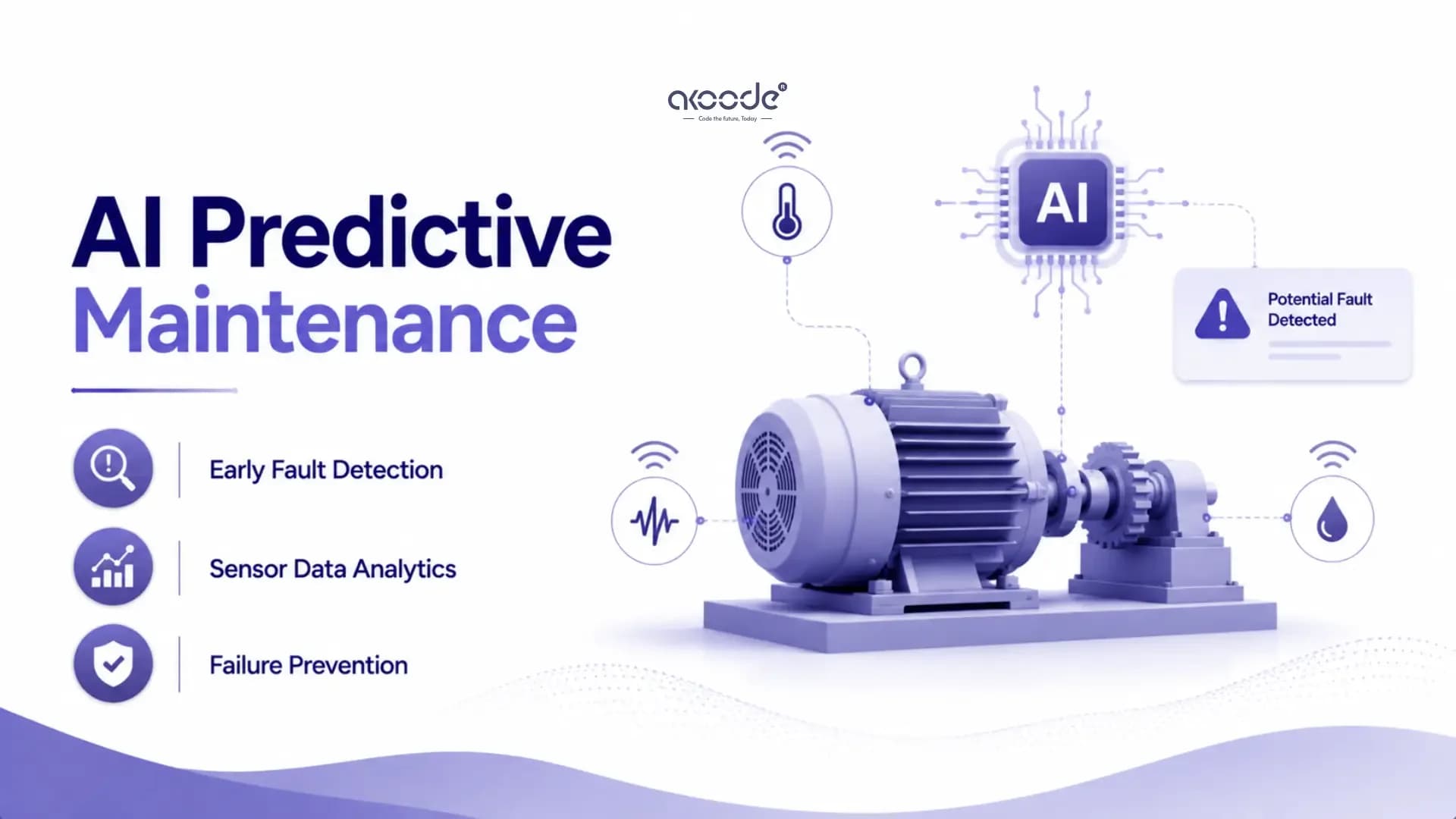
Predictive maintenance uses sensors and software to estimate when a machine is likely to fail, so you can repair it just before it does, instead of after it breaks (reactive) or on a fixed calendar (preventive). Industrial IoT, or IIoT, is the sensor, network and data layer that makes it possible.
Short answer
In our planning estimates, a predictive maintenance pilot on three to five critical machines costs $30,000 to $90,000 and takes 8 to 14 weeks. A plant-level program covering 50 to 150 assets costs $150,000 to $400,000 and takes 6 to 12 months, and a multi-plant platform costs $400,000 to $1 million or more. The business case rests on one number, the cost of an hour of unplanned downtime on your own line, and in our model a program usually pays for itself if it avoids somewhere between 1 and 34 hours of downtime a year, depending on that cost. Most failures come from alerts that never become work orders, not from the sensors.
Predictive maintenance vendors quote impressive numbers: 50% less downtime, 40% lower maintenance costs, payback in months. Some of that is real. Much of it is measured by the people selling the system, and some of it fails basic arithmetic, as we show below.
This guide is for the operations, maintenance or engineering leader at a US manufacturer deciding whether to run a pilot, buy a platform or build something custom. We cover what the numbers really say, the architecture, what each path costs, a payback model you can rerun, US-specific security issues and why pilots stall.
We build industrial and IoT software, but we are not a sensor manufacturer or an automation integrator. Where a packaged tool is the better answer, we say so.
What the downtime numbers really say
The widely quoted figures
The most repeated statistics come from Siemens and Senseye's True Cost of Downtime 2024report. It puts an hour of unplanned downtime at about $2.3 million in a large automotive plant, about $36,000 in fast-moving consumer goods, and up to $150,000 for small and mid-size manufacturers at the top end. It estimates that unplanned downtime costs the world's 500 largest companies about $1.4 trillion a year, which it states as 11% of their revenue. The report rests on a survey of 181 professionals at large industrial organizations.
A basic arithmetic check
One industry analysis, published by IoT Underground, points out a problem. Fortune's Global 500 companies had combined revenue of about $41.7 trillion on its 2025 list, and $1.4 trillion is only about 3.4% of that, not 11%. The 11% presumably refers to a narrower set of industrial companies, but the report does not make that clear. The lesson is not that downtime is cheap. It is that a benchmark is a poor basis for a business case.
Use your own downtime cost
Work out the cost per hour of unplanned stoppage from your own records: lost margin on output, labor, scrap, expediting and penalties. Many manufacturers cannot state it, and that is the first thing a pilot should fix. Everything below depends on it.
What predictive maintenance delivers
Reported results
Deloitte reports that predictive maintenance can lift equipment uptime by 10% to 20% and cut maintenance costs by 5% to 10%. Siemens says customers of its Senseye product reached 50% less unplanned downtime and 40% lower maintenance costs, with payback within three months. The Siemens numbers describe the vendor's own customers, so treat them as a best case. Guides aimed at buyers typically put payback for focused vibration-monitoring programs at 12 to 18 months, and for large enterprise platforms at 24 to 36 months.
What the results depend on
Choosing the right assets. Rotating equipment with expensive failures and clear warning signs is where it works best.
Acting on alerts. A prediction nobody acts on saves nothing.
Data quality. Sensors in the wrong place or with poor connectivity produce noise, and false alarms kill trust fast.
Baseline measurement. Without a record of downtime before the project, you cannot prove improvement afterward.
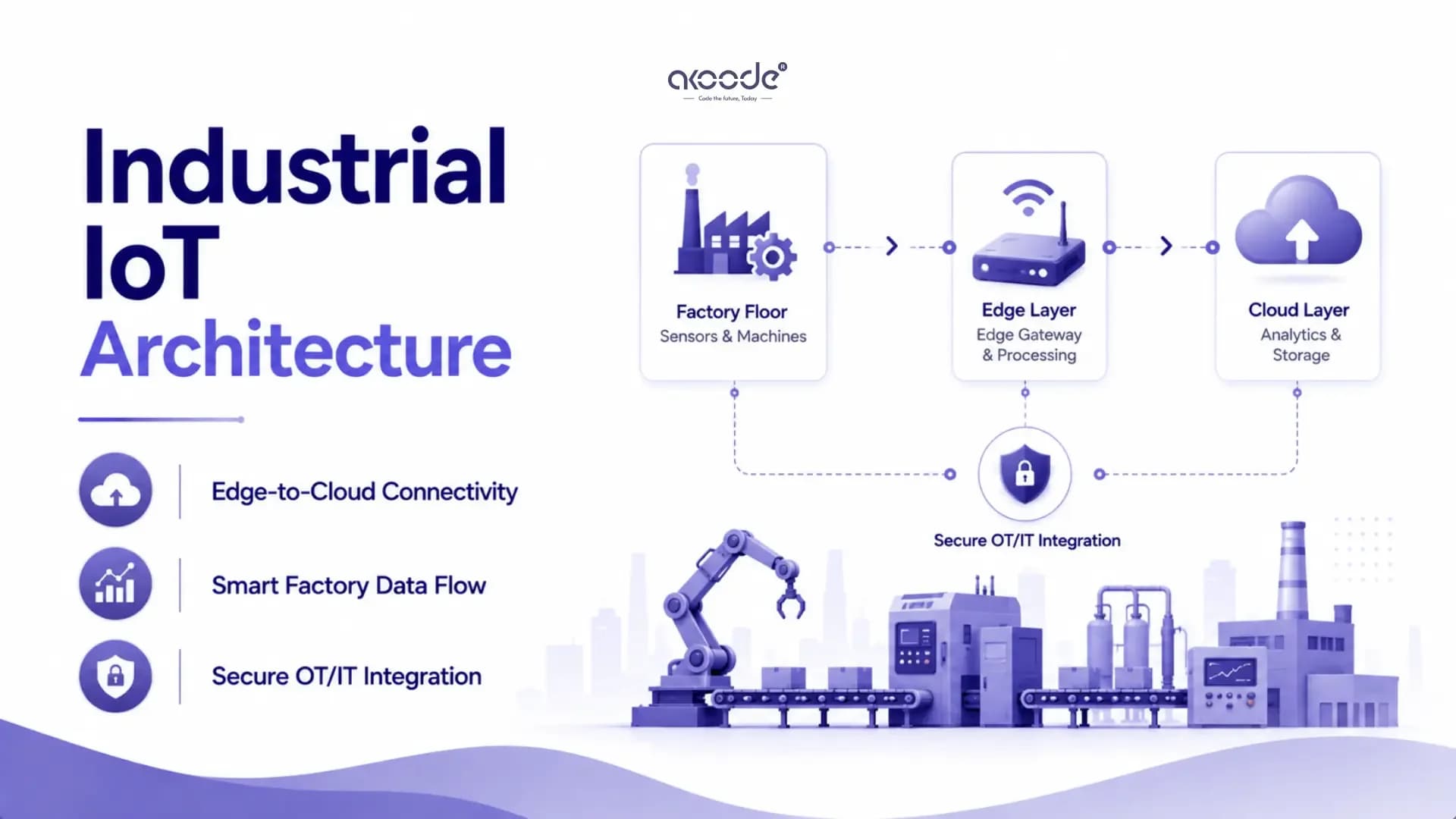
The architecture, in plain English
Layer | What it does | Typical choices |
|---|---|---|
Sensors | Measure vibration, temperature, current, pressure, sound | Wireless retrofit sensors or existing controller data |
Edge and connectivity | Collect, filter and forward data reliably | Gateways, industrial networks, OPC UA or MQTT |
Storage and streaming | Hold time-series data and events | Historian, time-series database, cloud IoT service |
Analytics | Detect anomalies and estimate remaining life | Rules, statistical baselines, machine learning |
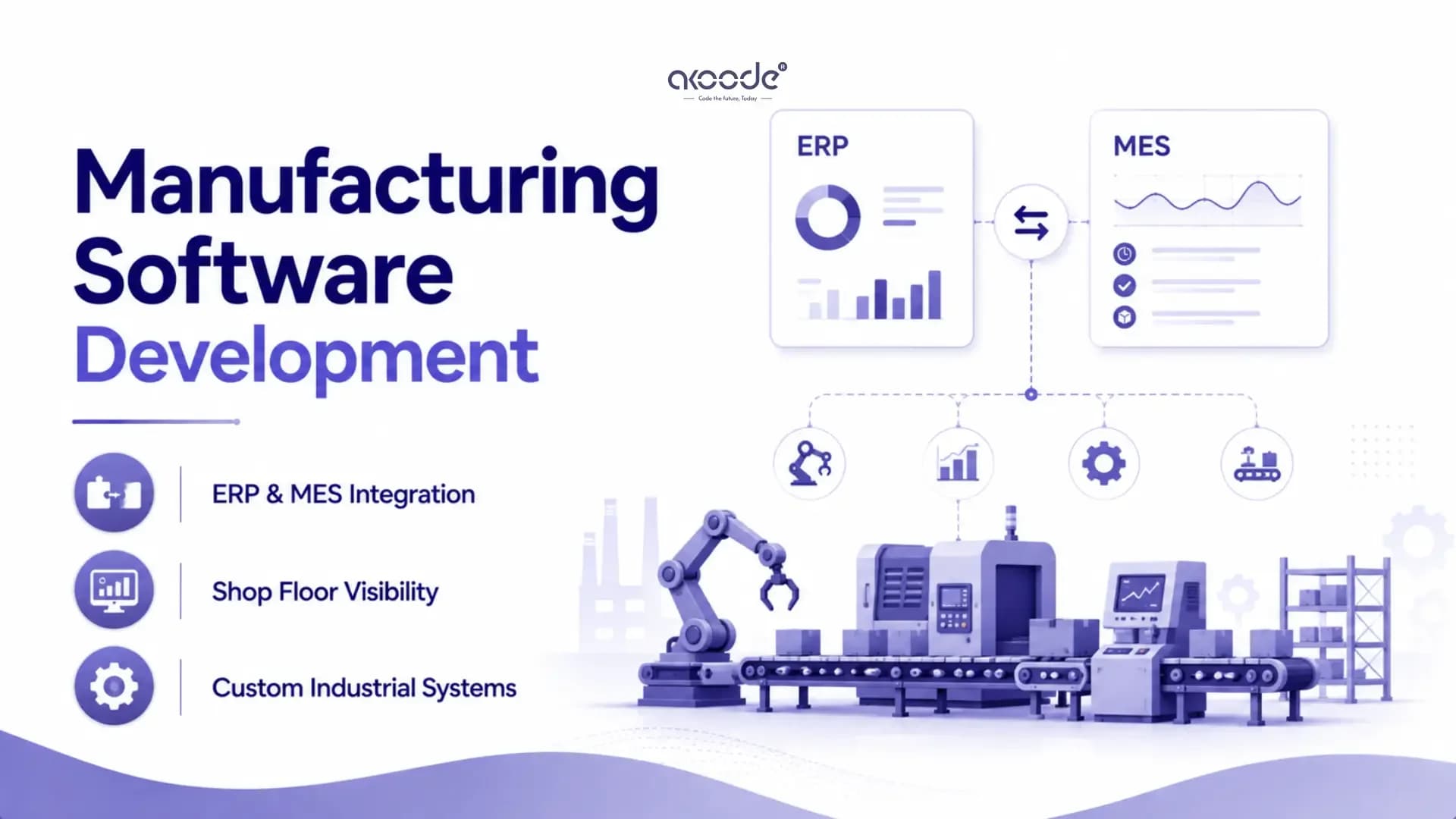
Work management | Turn alerts into assigned, tracked work orders | CMMS or ERP integration |
Dashboards and reporting | Show health and prove results | Web dashboards, mobile alerts |
The layer most pilots skip is the fifth. If an alert does not create a work order that a technician sees and closes, the project stalls. Build that link first.
What it costs
Our planning bands
Published figures are all over the map, so these are our own planning estimates, built from the ranges below and sized for a US agency. They cover software, integration and installation labor. Sensor hardware is extra. They are not a quote.
Scope | Planning range | Typical timeline | What it covers |
|---|---|---|---|
Pilot, 3 to 5 critical assets | $30,000 to $90,000 | 8 to 14 weeks | Sensors and gateway, a platform or cloud service, baseline data, dashboards, a first CMMS link. |
Plant program, 50 to 150 assets | $150,000 to $400,000 | 6 to 12 months | Wider instrumentation, historian and CMMS integration, models, dashboards, alert handling. |
Multi-plant platform | $400,000 to $1 million+ | 9 to 18 months | Standard data model across plants, central analytics, security controls, change management. |
Why published prices disagree
Source (2025 and 2026 guides) | What it says |
|---|---|
Beehive Strategy | For a mid-size plant, $1,500 to $4,000 per instrumented asset for sensors and retrofit, $50,000 to $120,000 a year for a platform, $60,000 to $100,000 one-off for integration, plus 0.3 to 0.5 of an engineer. |
Pertama Partners | Predictive maintenance for 50 to 200 assets $150,000 to $400,000. Large manufacturers $400,000 to $1 million. Small plants with 10 to 30 assets $80,000 to $200,000. |
OXmaint (vendor) | A 50-asset wireless deployment $35,000 to $75,000 installed, with $8,000 to $18,000 a year to run. Sensor nodes $400 to $1,200 installed. |
AgileSoftLabs | A case where a $200,000 budget saw sensors at $85,000 and connectivity infrastructure at $140,000. Per critical asset $500 to $1,500 for hardware alone. |
iFactory (vendor) | A five-asset pilot at about $5,350 in year one using inexpensive wireless sensors and a subscription. |
The spread is a spread of definitions. One quotes sensors only, another a full integration, and another a vendor's subscription with your own staff doing the work. Ask for the all-in number, including connectivity, integration, internal time and alert handling.
The cost most budgets miss
The AgileSoftLabs example is the classic: sensors came in as expected, then connectivity infrastructure cost more than the sensors. Metal enclosures, hot areas and long cable runs raise the price. Add the six to twelve months of baseline data that a model needs, the engineer who triages alerts, and the integration into your CMMS, and the total is rarely what the sensor quote suggested.
Our custom software development cost guide explains how to read any quote against hours and roles.
The payback model
The setup
Every input is an assumption you should replace. We take a plant that instruments 40 critical assets at $2,400 each all-in, which is $96,000. We add $75,000 for integration and model development and $54,000 a year for the platform, then $60,000 a year for internal time, including the engineer who handles alerts. We spread the up-front cost over three years. That gives a yearly cost of about $171,000.
The break-even
Cost of an hour of unplanned downtime | Downtime hours you must avoid each year to break even |
|---|---|
$5,000 | 34 |
$20,000 | 9 |
$50,000 | 3.4 |
$150,000 | 1.1 |
How to read it
If an hour costs you $5,000, you need to avoid about 34 hours a year, which is a lot for 40 machines. If an hour costs $50,000, you need only three or four hours. So the question to answer first is not "should we buy predictive maintenance?" It is "how many hours of unplanned downtime do these 40 machines cause today, and what does each cost us?" This model counts only avoided downtime. Savings on parts, labor and planning would shorten the payback, and false alarms, ramp-up and unused alerts would lengthen it.
Build, buy or blend
Path | Best for | Watch-outs |
|---|---|---|
Packaged predictive maintenance product | Standard rotating equipment, small teams, fast start | Subscription cost, limited customization, data stays in the vendor's system |
Cloud IoT service plus your own analytics | Teams with data skills and unusual assets | You build and maintain the models and the integrations |
Custom platform | Multi-plant standardization, proprietary processes, deep CMMS or ERP integration | Highest cost, longest timeline |
Blend | Most mid-size manufacturers | Needs a clear owner for the glue code |
For a pilot, a packaged tool is usually the right start. Custom work pays when your assets, processes or integrations do not fit a product. Our guide to custom software vs SaaS has the general five-year math.
US-specific issues
Security for operational technology
Connecting machines to networks creates risk. Segment industrial networks from office networks, restrict remote access, and follow a recognized framework such as NIST's Cybersecurity Framework and the IEC 62443 series for industrial control systems. Customers in regulated supply chains increasingly ask suppliers about OT security, and our SOC 2 guide explains what software auditors look for.
Equipment age and hardware costs
Much US industrial equipment is old, which is a strength here: retrofit sensors work on legacy machines without replacing them. Hardware prices can move with supply chains and tariffs, so get current quotes and price in contingency.
Where the work happens affects your taxes
Since 2025, US tax law lets companies deduct domestic software development costs right away, while research performed outside the United States is still spread over 15 years. That can shrink the real savings of an offshore build. We explain the details in our software cost guide, and your tax advisor should confirm how it applies to you. We are an India-based engineering team with a US office in Jenks, Oklahoma, so we would rather you hear it from us.
Why pilots stall, and how to avoid it
Alerts that never become work. Connect alerts to your work order system from day one, and measure how many get closed.
Too many false alarms. Start with a few assets, tune thresholds, and earn the technicians' trust.
No baseline. Record current downtime, repair costs and failure modes before you install anything.
Connectivity surprises. Survey the plant floor before you commit to a wireless or wired design.
No owner. Someone in maintenance and someone in IT must share accountability.
Chasing scale before value. Prove savings on three to five machines first, then expand.
How to choose a partner
Which roles and how many hours sit behind your quote, and what is excluded, including connectivity and sensors?
How do alerts become work orders in my CMMS, and who owns that integration?
How do you handle false alarms and model retraining after launch?
How do you secure the connection between my plant network and the cloud?
Who owns the data, the models and the code?
Can I speak to a manufacturer whose system has been live for a year?
Which named people will work on it, and does the contract keep them there?
Is there a paid discovery phase before a fixed price?
Our guides to software outsourcing and the timeline of a software project cover how to compare vendors and plan dates.
How Akoode approaches industrial IoT
When we are the right choice, and when we are not
We are a good fit when you need the software side: data pipelines, integration with your CMMS or ERP, dashboards, analytics and the alert-to-work-order workflow. We are not sensor manufacturers or automation integrators, so we work with your controls and electrical teams on installation. If a packaged product already fits your assets, we will tell you to buy it. For the analytics and agent side, see our AI development for US businesses and our guide to AI agent development.
How we scope and price
We do not publish a rate card. A quote starts with a one-to-two-week discovery that settles the assets, the data, the integrations and the risks. It produces a roadmap and a scoped estimate tied to roles and hours. We work on a fixed-cost, dedicated-team or staff augmentation basis, depending on how settled your scope is. Our engineers are in-house, and you own the IP.
Start with our custom software development company in the USA page, our enterprise application development work and our artificial intelligence services.
Proof from delivered projects
None of these is a predictive maintenance system, and we will not dress them up as one. They are operational and machine-learning systems where data, workflows and reliability mattered.
We built one connected system that runs three retail repair locations and a nationwide mail-in repair operation. Read the case study.
We built an AI-powered medical diagnostic system for real-time clinical decision support. Read the case study.
For Qualis Construction Ltd., we built an AI quantity takeoff application that replaced manual blueprint counting. Read the case study.
Our Google rating is 4.9 from 126 reviews, and we have delivered 180+ projects across 15+ industries.
Frequently asked questions
What is predictive maintenance in manufacturing?
Predictive maintenance uses sensors and software to estimate when a machine is likely to fail so you can repair it just before it does, rather than after it breaks (reactive) or on a fixed calendar (preventive). Industrial IoT supplies the sensors, networks and data layer. Its value comes from catching costly failures early and turning each alert into scheduled work.
How much does a predictive maintenance system cost?
In our planning estimates, a pilot on 3 to 5 critical assets costs $30,000 to $90,000, a plant program covering 50 to 150 assets $150,000 to $400,000, and a multi-plant platform $400,000 to $1 million or more, with sensor hardware extra. Published figures vary widely because they define scope differently. Ask for the all-in number, including connectivity, integration and internal time.
How long does it take to implement predictive maintenance?
A pilot on a few critical machines usually takes 8 to 14 weeks to deploy, plus several months of baseline data before models become reliable. A plant program takes 6 to 12 months and a multi-plant platform 9 to 18 months. Connectivity surveys, CMMS integration and building trust in alerts set the pace more than software development does.
What ROI can I expect from predictive maintenance?
Deloitte reports 10% to 20% higher uptime and 5% to 10% lower maintenance costs, and Siemens reports larger gains for its own customers. Buyer guides put payback for focused vibration programs at 12 to 18 months. In our model, a 40-asset program breaks even if it avoids about 9 hours of downtime a year at $20,000 an hour. Use your own downtime cost.
Do I need to replace old equipment to use predictive maintenance?
No. Wireless retrofit sensors can be added to legacy machines, and many programs start with vibration, temperature and current measurements on existing rotating equipment. Budget for the connectivity around old machines, since metal enclosures, hot areas and long cable runs can cost more than the sensors themselves.
Why do predictive maintenance projects fail?
Common causes are alerts that never become work orders, too many false alarms, no baseline measurement of downtime, connectivity surprises on the plant floor, no clear owner, and expanding before proving value. The fix is to connect alerts to your maintenance work order system from day one, start with three to five high-value assets and measure results against a recorded baseline.
Should I build or buy a predictive maintenance platform?
For a pilot, buying a packaged tool is usually right. Build or blend when your assets, processes or integrations do not fit a product, or when you want one data model across several plants. A custom platform costs the most and takes the longest, so prove value on a few assets first and let measured results justify the investment.
Plan your first pilot
If you are weighing a predictive maintenance pilot, book a technical consultation. Bring your list of critical assets, your downtime records and the systems you use for maintenance. We will tell you what we would ask in discovery, which assets we would start with, and where we think the risk sits, whether or not you end up working with us.
Get In Touch Now
View More Our Blog