


 June 26, 2026
A bearing on a factory floor starts running slightly warmer than usual. Nobody notices. Three weeks later, it fails mid-shift and shuts down the whole line.
That gap, between the first warning sign and the actual failure, is where AI predictive maintenance lives. Not in some abstract future of self-healing factories. In the very specific, very buildable problem of catching a signal early enough to act on it.
A 2026 study published in Nature Scientific Reports tested adaptive machine learning models against traditional ones in industrial IoT settings. The adaptive models outperformed consistently across accuracy, precision, recall, and AUC-ROC. They also handled changing equipment conditions far better than static models trained once and left alone.
That last point matters more than it sounds. Most predictive maintenance projects fail not because the algorithm was wrong, but because the system never adapted to how a real machine actually behaves over time.
This guide covers what it takes to build an AI predictive maintenance system properly. The data pipeline. The model choices. The integration work nobody budgets for. And the human step that breaks more projects than any technical decision.
What Is AI Predictive Maintenance, Actually?
Predictive maintenance is not preventive maintenance with better marketing.
Preventive maintenance runs on a calendar. Service the machine every 90 days, regardless of how it is actually performing. Reactive maintenance waits for failure, then fixes it. Predictive maintenance sits between the two. It uses sensor data, historical patterns, and machine learning to forecast when a specific piece of equipment is approaching failure, then triggers intervention at the right moment. Not too early. Not too late.
The mechanism is condition-based, not time-based. A machine running harder than usual gets attention sooner. A machine running well past its "scheduled" service date gets left alone, because the data shows it does not need it yet.
This distinction is the entire economic case for the technology. According to IBM's analysis of AI in predictive maintenance, unplanned downtime carries a dramatically higher cost per incident than planned maintenance. The gap between catching a failure three weeks out versus discovering it on the factory floor is not a small efficiency gain. It is the difference between a scheduled part swap and an emergency shutdown.
For manufacturing businesses evaluating this for the first time, Akoode's AI-powered quantity takeoff platform case study shows a related pattern: AI doing the unglamorous, repetitive analysis work that previously consumed senior engineering time, freeing that time for decisions that actually need human judgment.
How Does the Data Pipeline Actually Work?
This is where most predictive maintenance projects either succeed quietly or fail expensively. Not in the model. In the data pipeline feeding it.
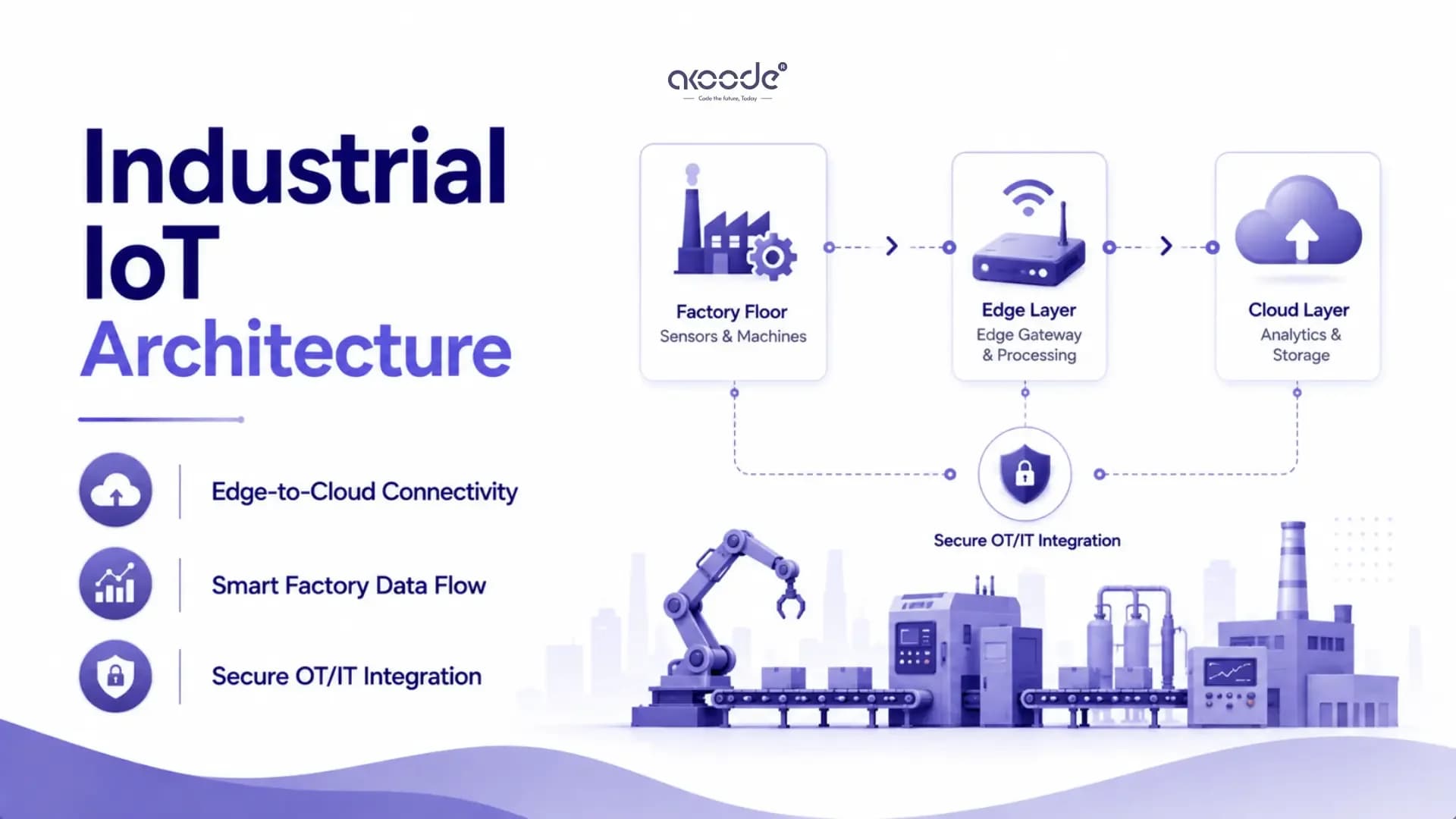
Raw sensor data is enormous and mostly noise. A single vibration sensor sampling at 25kHz generates roughly 2.5GB of data per hour. Sending that volume to a cloud platform for processing is neither affordable nor necessary. The fix is edge processing. Calculate frequency spectrum features locally, every few minutes, and you cut data volume by something close to 95 percent before it ever leaves the machine.
Feature engineering is the unglamorous part that determines whether the model actually works. Raw temperature readings tell you less than temperature relative to load. A documented example from a manufacturing deployment: a plant went from eight raw sensor inputs to 47 engineered features, and model accuracy jumped from 67 percent to 91 percent. Same sensors. Same machine. The difference was entirely in how the data was prepared before it reached the model.
Time alignment matters too, and it is easy to overlook. Different sensors sample at different rates. A vibration sensor firing every few milliseconds and a temperature sensor updating every minute need to be synchronised into a consistent timeline before any model can meaningfully correlate them.
None of this is exotic engineering. It is patient, detailed data work. Teams that skip it and jump straight to model selection consistently get worse results than teams that spend the first month getting the pipeline right.
Which Machine Learning Models Should You Actually Use?
There is no single correct model for predictive maintenance. The right choice depends on what kind of failure you are trying to predict and what kind of data you have.
Anomaly detection models work well as an early warning layer. They learn what "normal" looks like for a specific machine over two to four weeks, accounting for different operating states like a conveyor running loaded versus empty, and flag deviations from that baseline. This is the simplest entry point and often the first thing to deploy.
Time-series forecasting models estimate remaining useful life. Rather than a binary "fault or no fault" answer, they project how a specific component is likely to degrade over the coming days or weeks, giving maintenance teams an actual window to plan around rather than a sudden alert.
Survival analysis models, including Cox proportional hazards and Weibull models, predict failure probability over time using sparser data, operating hours and failure events rather than continuous sensor streams. UK rail infrastructure uses survival models specifically to prioritise track maintenance across more than 10,000 miles of network, where continuous sensor coverage at every point is not practical.
Reinforcement learning and deep reinforcement learning models represent the more advanced end of this spectrum. The Nature Scientific Reports study built its framework around four sub-modules: data acquisition, communication, processing, and feedback. The feedback loop is what makes the model adaptive rather than static. It keeps learning as the equipment and environment change, rather than degrading silently as conditions drift from what it was originally trained on.
In practice, the strongest systems combine approaches. Anomaly detection for the early warning. Time-series forecasting for remaining useful life. Survival models where data is sparse. Few real deployments rely on a single model type for everything.
How Do You Get from Sensor Reading to a Confident Fault Diagnosis?
A vibration spike on its own tells you almost nothing useful. "Vibration high" is not actionable. A maintenance technician needs to know what is actually wrong.
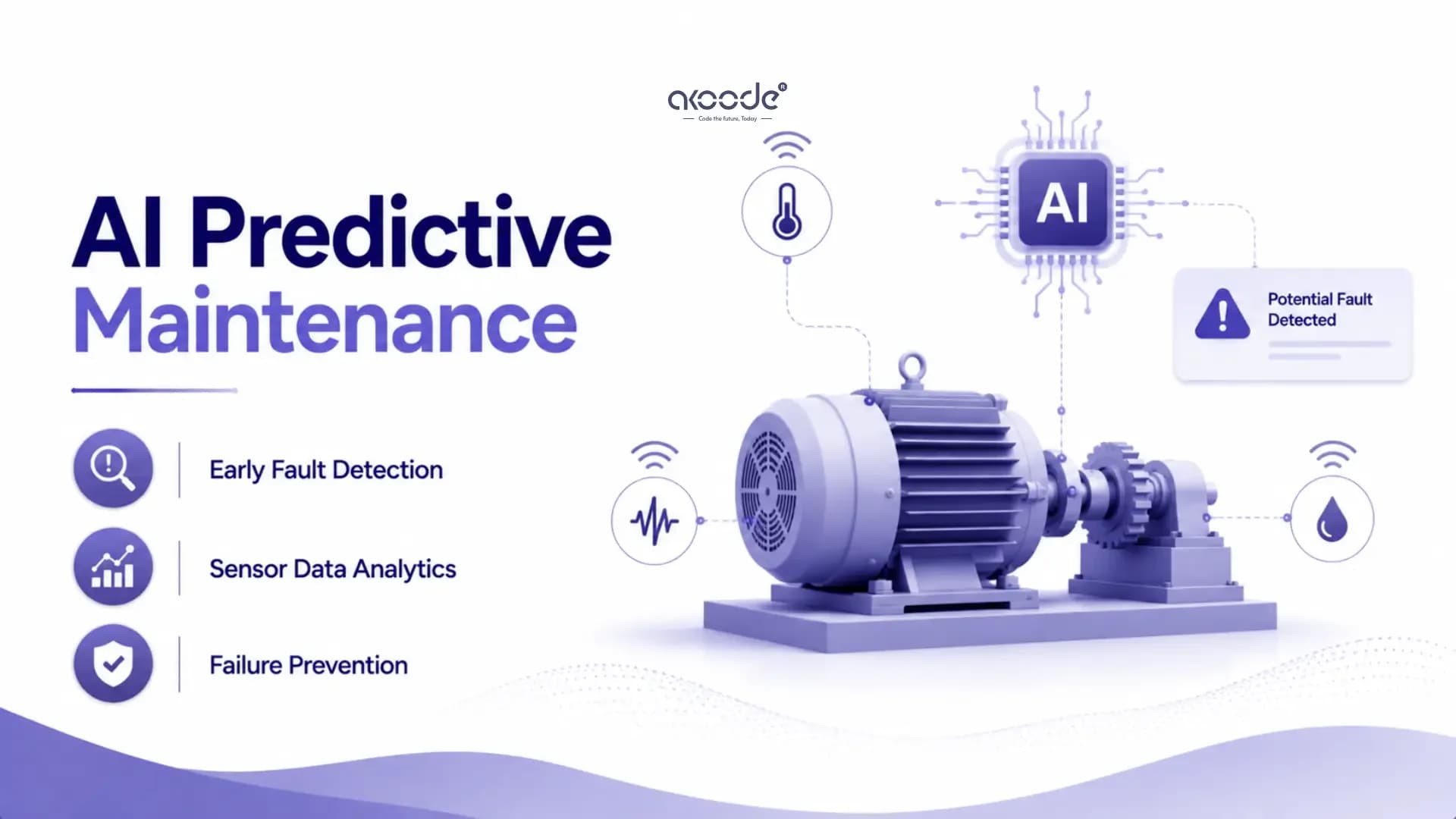
This is where fault classification earns its place in the architecture. The model establishes a baseline for normal behaviour over an initial observation period, typically two to four weeks. It then flags deviations from that baseline as anomalies. The more advanced step, and the one that turns a vague alert into something a technician can act on, is classifying the spectral pattern of that deviation. A well-trained model can say something closer to "this is 85 percent likely to be an outer race bearing fault" rather than simply reporting elevated vibration.
That specificity changes what happens next. A generic alert gets triaged slowly, often after the fact. A specific diagnosis tells the maintenance team exactly which part to inspect and what to bring with them, which is the difference between a five-minute fix and a half-day investigation.
For businesses building this kind of diagnostic capability into a broader platform, the underlying pattern, training a model to classify a specific condition from sensor or signal data, shows up across very different domains.
What Is the Human-in-the-Loop Step That Most Projects Skip?
Here is a failure mode that has nothing to do with the model's accuracy. The AI is not magic, and it requires context it cannot generate on its own.
If a maintenance team replaces a motor or changes gearbox oil and does not log that action anywhere the AI system can see, the model has no way of knowing the vibration signature changed for an entirely benign reason. It will flag the change as a defect. Confidently. Incorrectly.
This single gap is reported as the failure point for roughly half of predictive maintenance projects that stall after a promising pilot. Not bad data. Not a weak model. A communication gap between the people doing physical maintenance work and the system trying to interpret the consequences of that work.
The fix is structural, not technical. Maintenance actions need to be logged in a system the AI pipeline can actually read. And critically, an alert needs to land somewhere a human will see it and act on it. A fault detected by a sensor that triggers an email nobody checks has accomplished nothing. The machine still fails. The investment delivers zero return, not because the prediction was wrong, but because the loop back to a human decision was broken.
This is the unglamorous 80 percent of the project that rarely makes it into a sales pitch. The sensors and the model are roughly a fifth of what determines whether this actually works in production.
How Should You Actually Roll This Out?
Resist the instinct to deploy across an entire facility on day one. The pragmatic path, and the one most likely to survive contact with budget scrutiny six months in, starts narrow.
Begin with five to ten "bad actor" assets. Machines that fail often enough to be genuinely painful and visible to the business. Prove the model can catch one real failure before it happens, document the avoided cost specifically, and use that evidence to justify expanding further.
Organisations deploying a minimum viable model within eight to twelve weeks consistently learn faster and adjust faster than those planning an eighteen-month, all-at-once transformation. The eighteen-month plan looks more thorough on a slide deck. It also delays the moment you discover your data pipeline has a problem until you have already spent most of the budget.
Once the pilot has proven value on the highest-impact assets, expanding to tier-two and tier-three equipment becomes a much easier internal conversation, particularly as sensor hardware costs continue to decline.
Should You Build This Custom or Buy an Existing Platform?
Genuinely depends on what you already have and how specific your equipment and failure modes are.
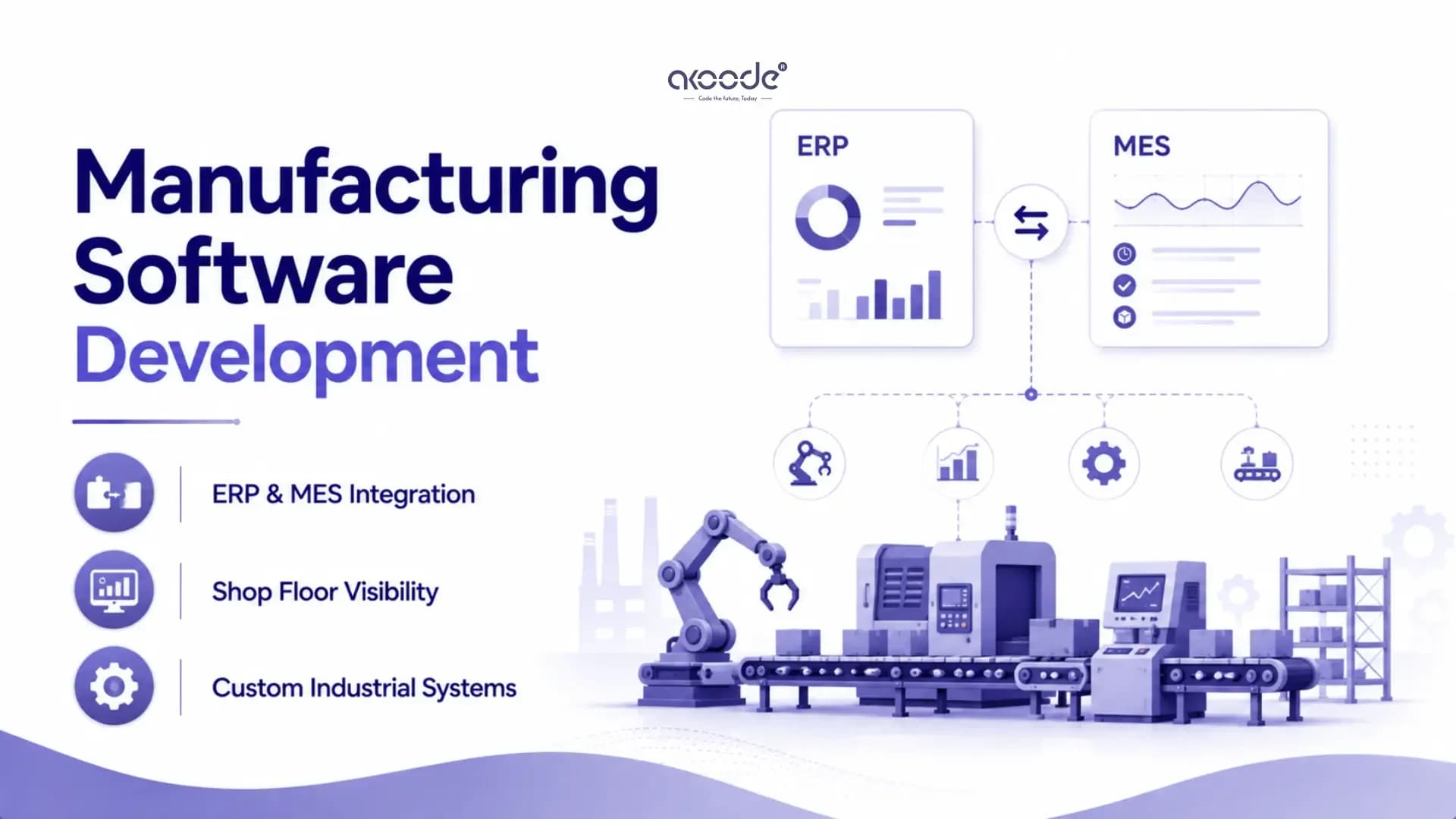
If your facility already runs on a building automation system or an existing CMMS, the most common deployment pattern in 2026 is adding an AI prediction layer on top rather than replacing the existing infrastructure. Integration typically happens through BACnet/IP or REST APIs into platforms like Siemens Desigo, Honeywell EBI, or Johnson Controls Metasys, layering AI-driven prediction and structured work order generation without touching the underlying hardware or building controls.
For manufacturing environments specifically, the platform landscape has matured into a few distinct categories. Specialised predictive AI tools handle root-cause analysis and vibration-based monitoring. Data operations platforms handle the high-frequency sensor ingestion at the edge. Analytics backbone platforms handle time-series storage and querying at scale. Few serious deployments rely on one tool to do all three jobs.
The case for custom development grows stronger when your equipment, failure modes, or data environment do not map cleanly onto what an off-the-shelf platform was trained to handle. A facility with highly specific machinery, an unusual mix of sensor types, or deep integration requirements with proprietary internal systems often gets meaningfully better results from a purpose-built model than from forcing a generic platform to fit. Akoode's AI player performance tracking system case study is a useful parallel here, since it involved building custom sensor-data interpretation specifically because no off-the-shelf platform was built for that particular signal type.
What Does This Actually Deliver, in Real Numbers?
The evidence base for predictive maintenance ROI is now broad enough to be genuinely reassuring rather than speculative.
Documented downtime reduction sits between 30 and 50 percent across deployed systems. Maintenance cost savings run 25 to 40 percent. A meaningful share of equipment failures classified as "sudden" are, in fact, preceded by detectable condition signals two to six weeks before the failure actually occurs, which is precisely the window predictive maintenance exists to catch.
One number worth sitting with: a survey cited in recent facility management research found that 65% of maintenance teams plan to use AI by the end of 2026, but only 32 percent have actually implemented it. That gap between intention and execution is not really about technology readiness. It reflects exactly the project failure patterns covered above: weak data pipelines, skipped human-in-the-loop design, and overly ambitious rollout plans that never get past the planning stage.
The technology genuinely works. The organisations getting real value from it are the ones treating execution speed and pipeline quality as more important than algorithm sophistication.
Conclusion
Building an AI predictive maintenance system from scratch is not primarily a machine learning problem. It is a data engineering problem, an integration problem, and a workflow design problem, with a model sitting at the centre of all three.
The teams that succeed start narrow, on a small set of high-impact assets. They invest real effort in the unglamorous feature engineering work before reaching for a more sophisticated algorithm. And they build the human-in-the-loop feedback path deliberately, rather than assuming an alert will automatically translate into action.
Akoode Technologies is a leading AI and software development company headquartered in Gurugram, India, with a US office in Oklahoma. From AI-powered software development and IoT solutions to computer vision systems and big data engineering, Akoode builds predictive maintenance and industrial AI systems for manufacturing, automotive, and enterprise clients across 15+ industries globally. If you are planning a predictive maintenance system and want a team that takes the data pipeline as seriously as the model, that conversation starts here.
Frequently Asked Questions
1. What is AI predictive maintenance in simple terms?
AI predictive maintenance uses sensor data, historical patterns, and machine learning to forecast when specific equipment is likely to fail, triggering intervention at the right moment. It differs from preventive maintenance, which runs on a fixed calendar, and reactive maintenance, which waits for failure to happen.
2. What machine learning models are used for predictive maintenance?
Anomaly detection models flag deviations from a learned normal baseline as an early warning. Time-series forecasting models estimate remaining useful life. Survival analysis models like Cox proportional hazards predict failure probability from sparser data. Adaptive models using reinforcement learning, as tested in a 2026 Nature Scientific Reports study, outperform static models because they keep learning as conditions change.
3. Why do predictive maintenance projects fail even when the model is accurate?
The most common failure point is a broken human-in-the-loop step. If maintenance actions like part replacements are not logged where the AI system can see them, the model misreads benign changes as faults. Equally common is an alert that reaches an inbox nobody checks, meaning the machine still fails despite an accurate prediction.
4. How much data does an AI predictive maintenance system actually need to process?
A single high-frequency vibration sensor can generate around 2.5GB of data per hour. Most systems use edge processing to calculate frequency spectrum features locally every few minutes, reducing that volume by close to 95 percent before sending data to a central platform for model training and inference.
5. How long does it take to build and deploy a predictive maintenance system?
Organisations deploying a minimum viable model in 8 to 12 weeks on a small set of 5 to 10 high-impact assets typically learn faster and adjust faster than those planning an 18-month full-scale rollout. Proving ROI on a narrow pilot before scaling is the pattern most associated with successful long-term adoption.
6. Should a business build a custom predictive maintenance system or buy an existing platform?
If equipment and failure modes are fairly standard, integrating an AI layer on top of an existing CMMS or building automation system through APIs is usually faster and cheaper. Custom development becomes the stronger option when equipment, sensor types, or integration requirements are specific enough that off-the-shelf platforms cannot handle them well.