


 June 26, 2026
A manufacturer buys an ERP system built for a Fortune 500 chemicals plant. Their shop floor has thirty people and a fairly unusual mix of job-shop and batch production.
Two years later, they are locked into a slow system that does not match how they actually manufacture. Every workaround creates two new problems instead of solving one. Nobody on the floor trusts the numbers the system spits out anymore.
This is not a rare story. Panorama Consulting Group, which has tracked ERP implementations for two decades, has flagged "additional technology needed" as the single biggest cause of budget overruns every year from 2021 through 2026. Not the software license. Not the core implementation. The integration work nobody scoped properly at the start.
This guide covers what ERP and MES actually do in a manufacturing environment, where the real costs hide, and how to decide between buying a packaged platform and building something custom.
What Do ERP and MES Actually Do, and Why Does the Distinction Matter?
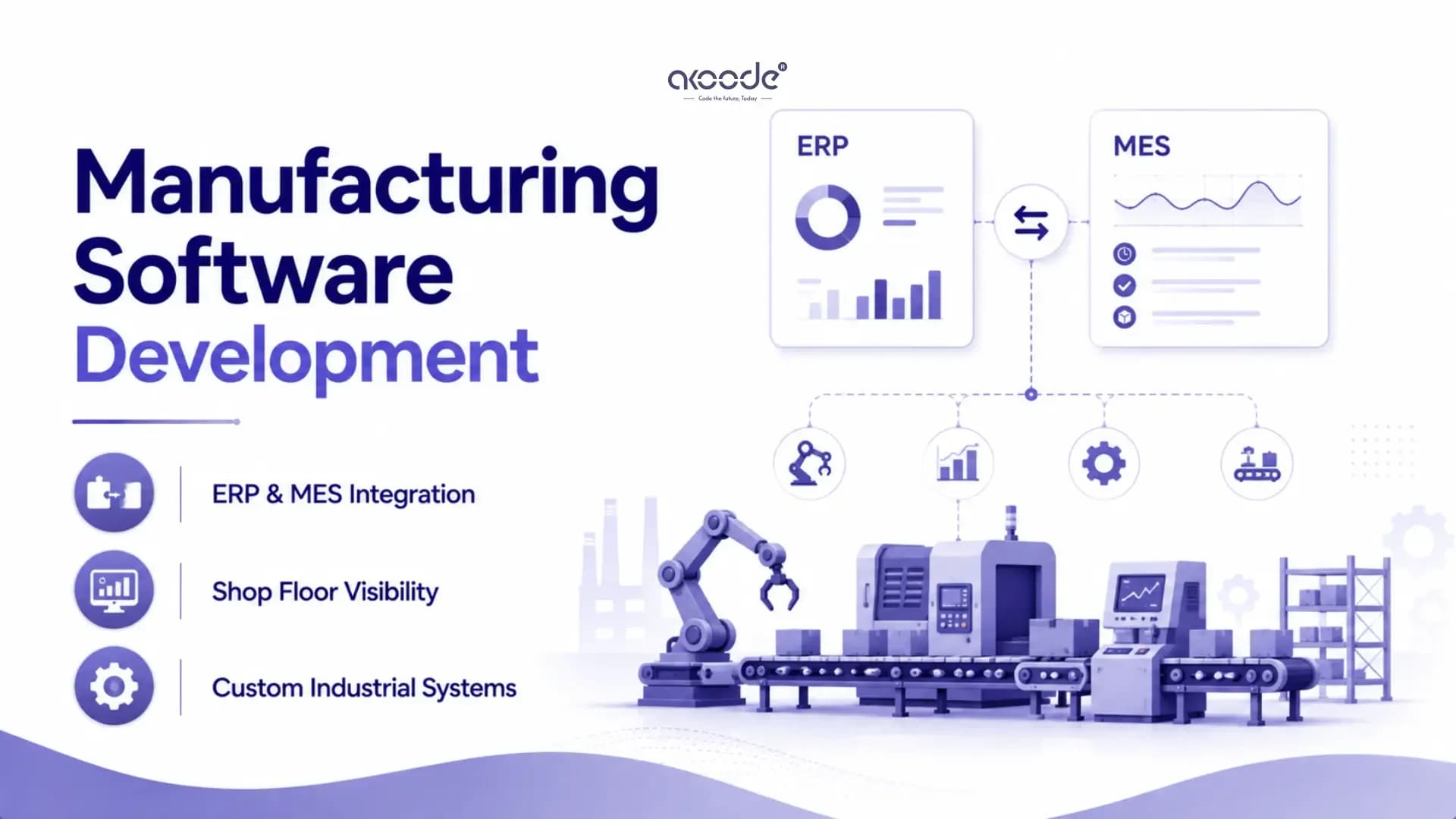
ERP handles the business side. Finance, procurement, inventory, sales orders, high-level production planning. MES handles the shop floor. Real-time tracking of what a machine is actually doing, right now, this minute.
Treating these as the same system is one of the most common conceptual mistakes in manufacturing software projects. An ERP system can tell you a work order exists and roughly when it should finish. It cannot tell you that machine four has been running ten percent slower than spec for the last hour, or that a specific batch just failed a quality check on the line.
When ERP and MES are properly integrated, data flows in both directions automatically. Production data updates inventory and costing in real time, instead of someone manually entering yesterday's numbers into a spreadsheet the next morning. For make-to-order manufacturers, where every job is genuinely different, this stops being a nice-to-have fairly quickly. It becomes the only way anyone has accurate visibility into what is actually happening on the floor right now versus what was planned three weeks ago.
This is also exactly where AI features inside manufacturing software live or die. Predictive maintenance, demand forecasting, quality anomaly detection. All of these depend entirely on accurate, real-time shop floor data arriving through proper MES architecture. AI bolted onto a system where production data shows up late and gets typed in by hand will produce confident, useless predictions. The data foundation has to be solid before the AI layer means anything.
What Does ERP and MES Software Actually Cost in 2026?
The honest numbers vary by an order of magnitude depending on what you are actually building, so it is worth breaking this down by scenario rather than quoting a single figure.
Scenario | Typical Cost Range | What Drives It |
|---|---|---|
Lightweight cloud ERP, small shop | $6,000 to $25,000/year | Per-user or flat-rate subscription, minimal customisation |
Custom ERP build, mid-market manufacturer | $80,000 to $400,000 | Production modules, BOM management, basic machine connectivity |
Custom manufacturing software, broader scope | $50,000 to $300,000+ | Beyond core ERP, includes MES-adjacent or supply chain modules |
Packaged enterprise ERP (SAP, Oracle, NetSuite) | $200,000 to $5,000,000+ | License plus implementation, 12 to 24 month timelines |
MES-to-ERP integration alone | $25,000 to $150,000 | Often the single largest line item for discrete manufacturers |
There is a detail in that table worth sitting with. The sticker price on most ERP quotes represents roughly 20 to 30 percent of the actual first-year cost. Implementation, data migration, training, and integration make up the rest. A vendor quoting $80,000 for software licensing is not quoting you $80,000 for the project.
Only 7 percent of organisations actually run their ERP system as-is, straight out of the box, according to 2026 implementation data from Datasoft. The other 93 percent customise. And heavy customisation can add 50 to 200 percent on top of the base ERP price. This is not a sign of poor planning, necessarily. It reflects a genuine reality: most manufacturing processes are specific enough that a generic template never fits cleanly.
Why Does Integration Wreck So Many Manufacturing Software Budgets?
Because it is genuinely the hardest part, and most initial quotes underscope it badly.
MES-to-ERP integration specifically runs $25,000 to $150,000 and is frequently the single largest line item for discrete manufacturers, larger than the core software licensing in many cases. CRM integration adds $5,000 to $25,000. EDI integration with trading partners adds $5,000 to $30,000, plus separate onboarding cost for each individual partner. PLM and CAD integration adds another $20,000 to $100,000. Shop floor equipment connections run $2,000 to $10,000 per machine, which adds up fast across a factory with dozens of machines on the line.
None of this is exotic. It is simply real, and it gets routinely left out of early budget conversations because it is less exciting to discuss than the ERP platform's feature list.
A practical rule that has held up across hundreds of documented ERP projects: add a 25 to 35 percent contingency reserve on top of any vendor quote you receive. Roughly 27 percent of 2026 manufacturing ERP projects still came in over budget even with this kind of planning discipline, according to Panorama Consulting's tracking, which is actually the best result the firm has measured in its twenty years of doing this. Measured against what buyers originally expected rather than the final signed contract, closer to half run over.
Should You Buy a Packaged ERP or Build Custom?
This is the decision that determines almost everything else about cost, timeline, and how well the system actually fits the business two years in.
Lean toward buying a packaged platform like SAP, Oracle, NetSuite, Epicor, or Infor when you operate at multi-plant scale, your production processes are reasonably standard across the industry, you work in a regulated sector that needs certified and pre-validated workflows, pharmaceutical, aerospace, food production, or you genuinely have the budget for a major implementation and the internal team to manage it.
Lean toward building custom when you are mid-market and have outgrown basic accounting software but cannot justify enterprise ERP pricing. Custom also makes sense when your production process is genuinely unusual, job-shop work, custom fabrication, a mixed batch-and-continuous setup that no off-the-shelf template fits cleanly. The same applies when you need deep IoT, PLC, or MES integration that a generic platform handles poorly, or when you want to extend an existing system rather than rip it out and replace it entirely.
The mismatch problem is the expensive one to get wrong in either direction. Buying enterprise ERP built for a much larger operation means paying heavily to configure away features you do not need, while still ending up locked into workflows that do not match your actual shop floor. Underscoping a custom build's integration requirements creates the exact budget overrun pattern Panorama has documented every single year since 2021.
Akoode's enterprise HRMS platform case study is a useful parallel here, even though the domain is different. The core engineering challenge, building a system that genuinely matches how an organisation already works rather than forcing the organisation to adapt to generic software, is the same problem manufacturing ERP and MES projects face constantly.
How Is AI Actually Changing What Manufacturing Software Costs to Build?
This is genuinely new for 2026, not a recycled talking point.
According to BCG's 2025 analysis, generative AI is reducing data preparation effort in ERP implementations by 20 to 30 percent, cutting customisation code volume by 30 to 40 percent, and accelerating test script generation by 60 to 70 percent. On a $200,000 to $800,000 engagement, that translates to roughly $40,000 to $200,000 off consulting fees, and two to four months off the project timeline.
This matters for the build-versus-buy decision too. A custom build that looked prohibitively expensive eighteen months ago may now sit comfortably within budget once AI-assisted development is factored into the services side of the project, separate from whatever AI features end up inside the finished product itself.
On the product side, AI features inside manufacturing ERP and MES platforms now commonly include predictive maintenance, demand forecasting, and quality anomaly detection pulled from live shop floor data. None of these work reliably without the underlying real-time data architecture covered earlier. The AI is the visible layer. The data pipeline underneath it is what actually determines whether the predictions are trustworthy.
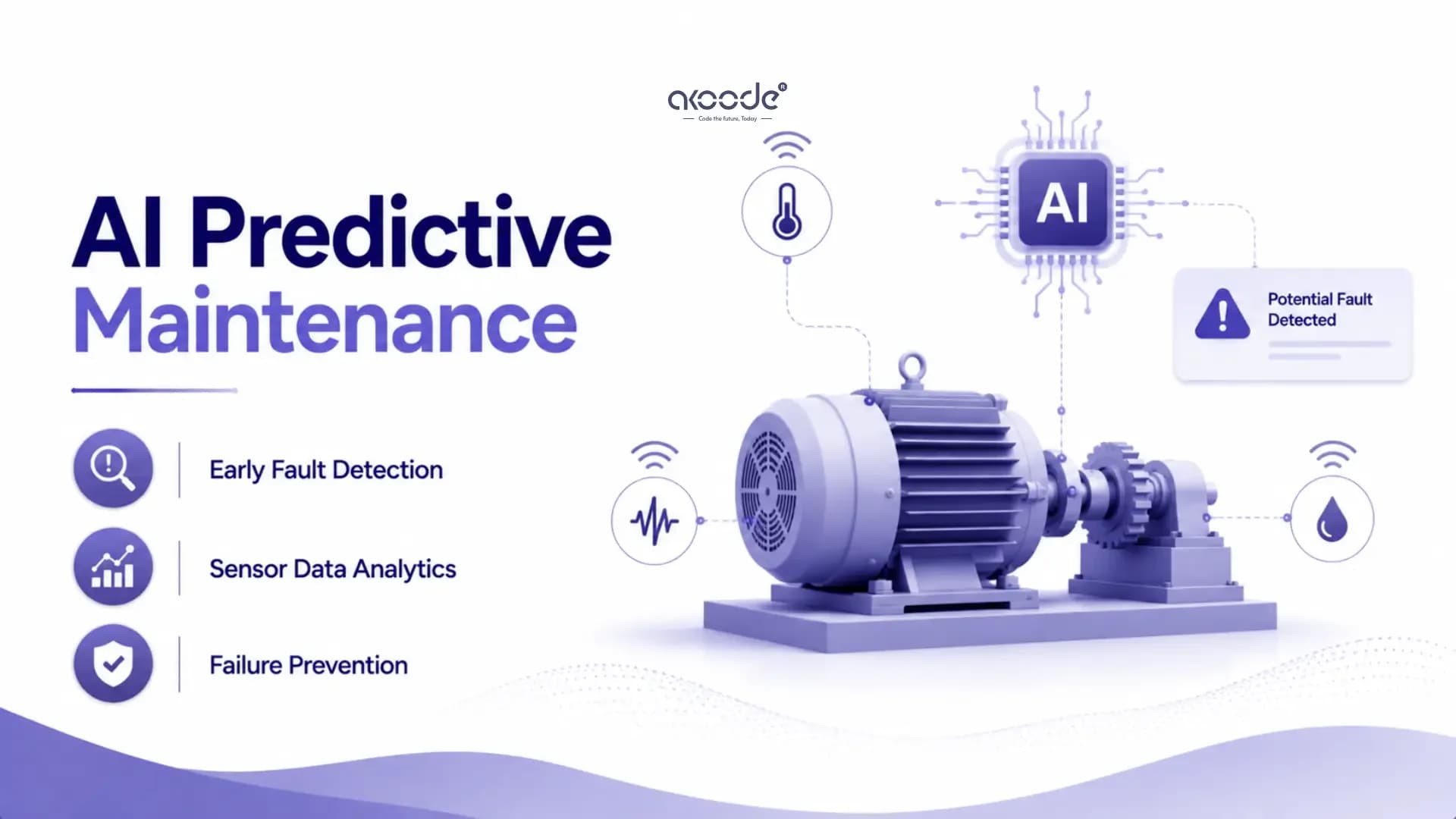
For manufacturers thinking specifically about the predictive maintenance piece, the architecture for building that system properly is worth understanding on its own, since it is usually layered on top of, not built inside, the core ERP or MES platform.
What Should You Actually Do Before Signing Any Contract?
Get unclear about your real production process before you get a quote, not after.
Budgets go out of control most reliably when requirements are unclear at the start. A vendor cannot scope integration work accurately if nobody has mapped out which machines need to connect, which legacy systems need data migrated, and which workflows are genuinely non-negotiable versus which ones exist purely out of habit.
Start with a roadmap. Define priorities clearly. Roll out in phases rather than attempting a single big-bang go-live across the entire operation. A three-month implementation that gets you live nine months faster than an alternative twelve-month rollout is not a minor convenience. Nine extra months of improved visibility and operational control is a genuinely large number when you calculate it against lost productivity during the old, broken process.
Ask any vendor directly about implementation timelines and total cost, not just licensing. Vendors who cannot give you a clear answer, or who visibly downplay integration complexity when you ask, are telling you something important about how the project will actually go.
Conclusion
ERP and MES software for manufacturing is not really a software purchasing decision. It is closer to a production process design decision, where the software either fits how the business actually manufactures things or it does not, and the cost of getting that wrong shows up two years later in workarounds nobody trusts.
The manufacturers who get this right share a pattern. They scope integration honestly from the start, they choose between buying and building based on how standard or unusual their actual process is, and they treat the data foundation as the most important investment, not the AI features sitting on top of it.
Akoode Technologies is a leading AI and software development company headquartered in Gurugram, India, with a US office in Oklahoma. From custom software development and enterprise application development to IoT solutions and AI-powered platforms, Akoode builds ERP, MES, and custom manufacturing software for manufacturers, industrial businesses, and enterprise clients across 15+ industries globally. If you are evaluating a manufacturing software project and want a team that scopes integration honestly before quoting, that conversation starts here.
Frequently Asked Questions
1. What is the difference between ERP and MES in manufacturing?
ERP manages business-level processes including finance, procurement, and high-level production planning. MES tracks real-time shop floor execution, machine performance, downtime, and quality data as it happens. The two systems need to be integrated so business planning reflects what is actually happening on the production floor right now, not what was planned weeks earlier.
2. How much does custom ERP software for manufacturing cost in 2026?
Custom ERP development for a mid-market manufacturer typically costs $80,000 to $400,000, with manufacturers tending toward the higher end because they need deep production modules and machine connectivity. Packaged enterprise ERP from vendors like SAP or Oracle costs significantly more, often $200,000 to $5,000,000 or beyond once implementation is included.
3. Why does ERP integration cost so much in manufacturing projects?
MES-to-ERP integration alone runs $25,000 to $150,000 and is frequently the largest single line item in a discrete manufacturing project. Panorama Consulting Group has identified "additional technology needed" as the top cause of budget overruns every year from 2021 through 2026, because integration scope is consistently underestimated at the proposal stage.
4. Should a manufacturer buy a packaged ERP system or build custom software?
Buying a packaged platform makes sense for multi-plant operations with standard processes or regulated industries needing certified workflows. Building custom makes more sense for mid-market manufacturers with unusual production processes, job-shop or mixed batch-continuous work, or deep IoT and machine integration needs that generic platforms handle poorly.
5. How is AI changing the cost of building manufacturing ERP and MES software?
According to BCG's 2025 analysis, generative AI is reducing ERP data preparation effort by 20 to 30 percent, cutting customisation code by 30 to 40 percent, and speeding up test script generation by 60 to 70 percent. On a $200,000 to $800,000 project, this can save $40,000 to $200,000 in consulting fees and two to four months of timeline.
6. What causes manufacturing ERP projects to go over budget?
Underscoped integration is the most consistent cause, identified by Panorama Consulting as the top budget overrun factor every year since 2021. Unclear production requirements at the start, heavy customisation beyond the recommended 10 to 15 percent of system scope, and mismatched platform scale, buying enterprise software sized for a much larger operation, are the other recurring patterns.