











Stage 01: iOS App Development
Outcome: Choose iOS when your users are on Apple devices and expect premium performance and security.
Businesses today don't just need a mobile app. They need a product that users open by habit, that handles real transaction volumes without breaking, and that a development team can actually maintain and improve over time. That is what we build at Akoode Technologies.
As a mobile app development company working with clients across India, the US, and Europe, we design and develop iOS, Android, and cross-platform applications that are built for scale from day one, not refactored into it later.

4.9
Google Rating
97%
Client Retention
15+
Industries Served
Global
Delivery
Most companies treat mobile development as a one-time project. Build the app, launch it, move on. That thinking is exactly why so many apps get rebuilt from scratch 18 months later, because the architecture was never designed to grow, the codebase was handed off without documentation, and the original vendor is long gone by the time the performance problems start showing.
The mobile channel is no longer a secondary touchpoint for most industries. It is where customers complete purchases, where operations teams manage field workflows, where B2B platforms push time-sensitive updates, and where user engagement data actually lives. A poorly built app is not just a UX problem, it is a competitive liability that compounds over time.
The difference between a mobile app that becomes a core business asset and one that needs to be replaced is almost never the idea. It is the quality of the engineering decisions made in the first sprint.
18 Months
Rebuild Cycle
Many apps get rebuilt within 18 months due to poor architecture and short-term engineering decisions.
70%+
Apps Need Major Refactoring
Over 70% of apps require major refactoring or rebuilding due to scalability, performance, and maintainability issues.
Recognised by leading platforms, startup ecosystems, and global technology communities.


Akoode Technologies is a mobile app development company in Gurgaon building products for businesses that cannot afford to get this decision wrong. We work with funded startups shipping their first product, mid-market companies replacing consumer-facing apps that have outgrown their original build, and enterprise teams that need specialist mobile engineers embedded directly into their existing squads.
What sets us apart is not a service list, it is how we approach the work. Every project begins with a structured discovery process that maps your users, your business model, and your technical constraints before a single wireframe is drawn. We do not start building until we understand what success actually looks like for your specific situation. From there, we take full ownership across design, development, QA, and post-launch optimisation, with no handoffs to junior teams, no outsourced QA, and no disappearing act after go-live.
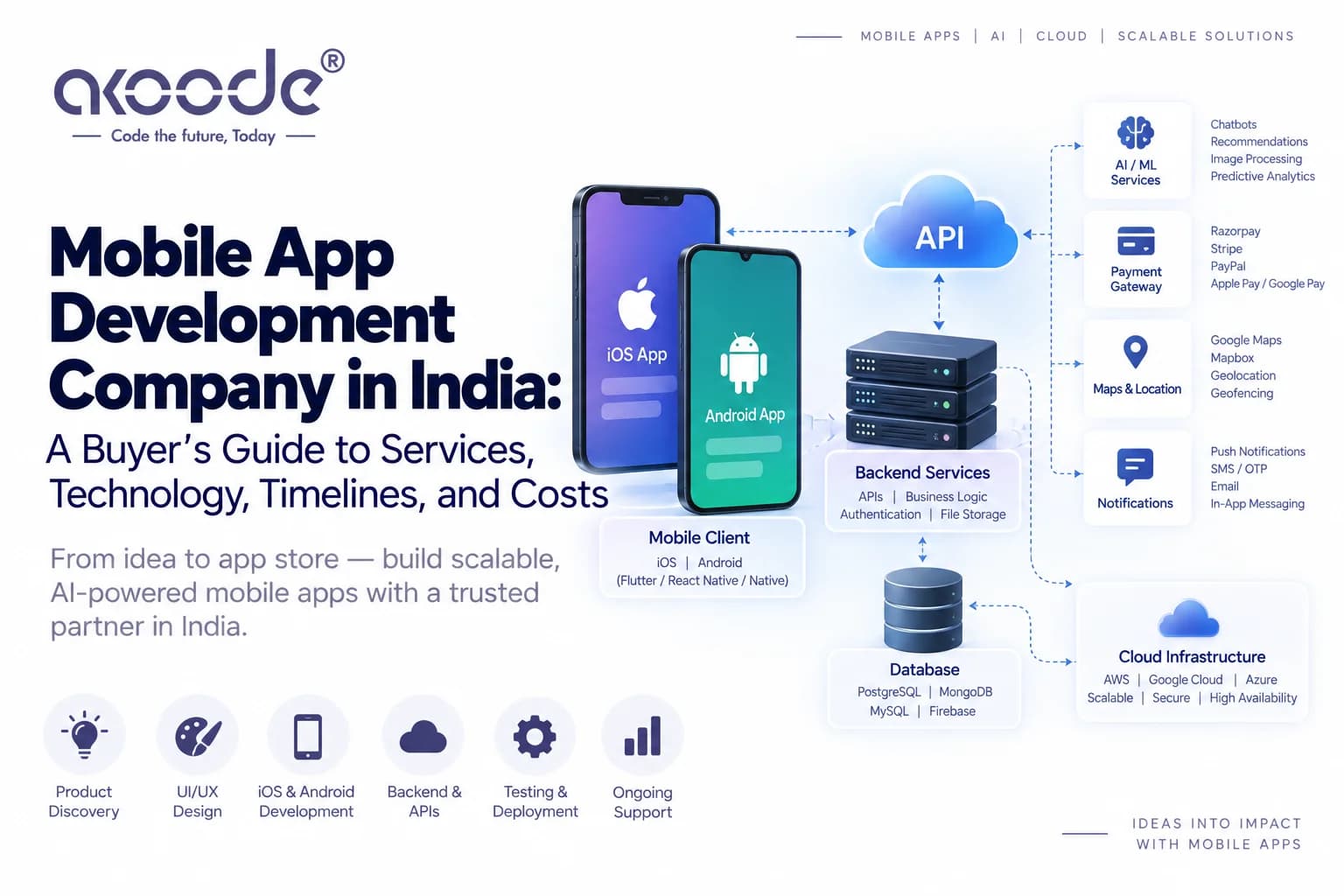
Our capabilities span native iOS and Android development, cross-platform apps using Flutter and React Native, AI-powered mobile applications, and enterprise-grade solutions built for high-volume, high-compliance environments.
Choosing the right mobile app development partner in Gurgaon, India gives your business access to world-class tech talent, cost-effective delivery, and a time zone advantage that keeps projects moving.
Gurgaon has emerged as one of India's leading technology hubs, home to a dense ecosystem of skilled mobile app developers, product designers, and engineering teams serving global clients across the US, Europe, and beyond.
Partnering with a mobile app development company in Gurgaon, India, means faster turnaround, transparent communication, and solutions built to international standards, at a fraction of the cost of equivalent teams in Western markets.
Whether you are a startup looking to launch your first app or an enterprise scaling a complex mobile platform, Gurgaon's development companies bring deep domain expertise across iOS, Android, and cross-platform frameworks to deliver applications that perform in real markets.
Outcome: Choose iOS when your users are on Apple devices and expect premium performance and security.
Outcome: Choose Android when you need to reach the widest possible device and user base.
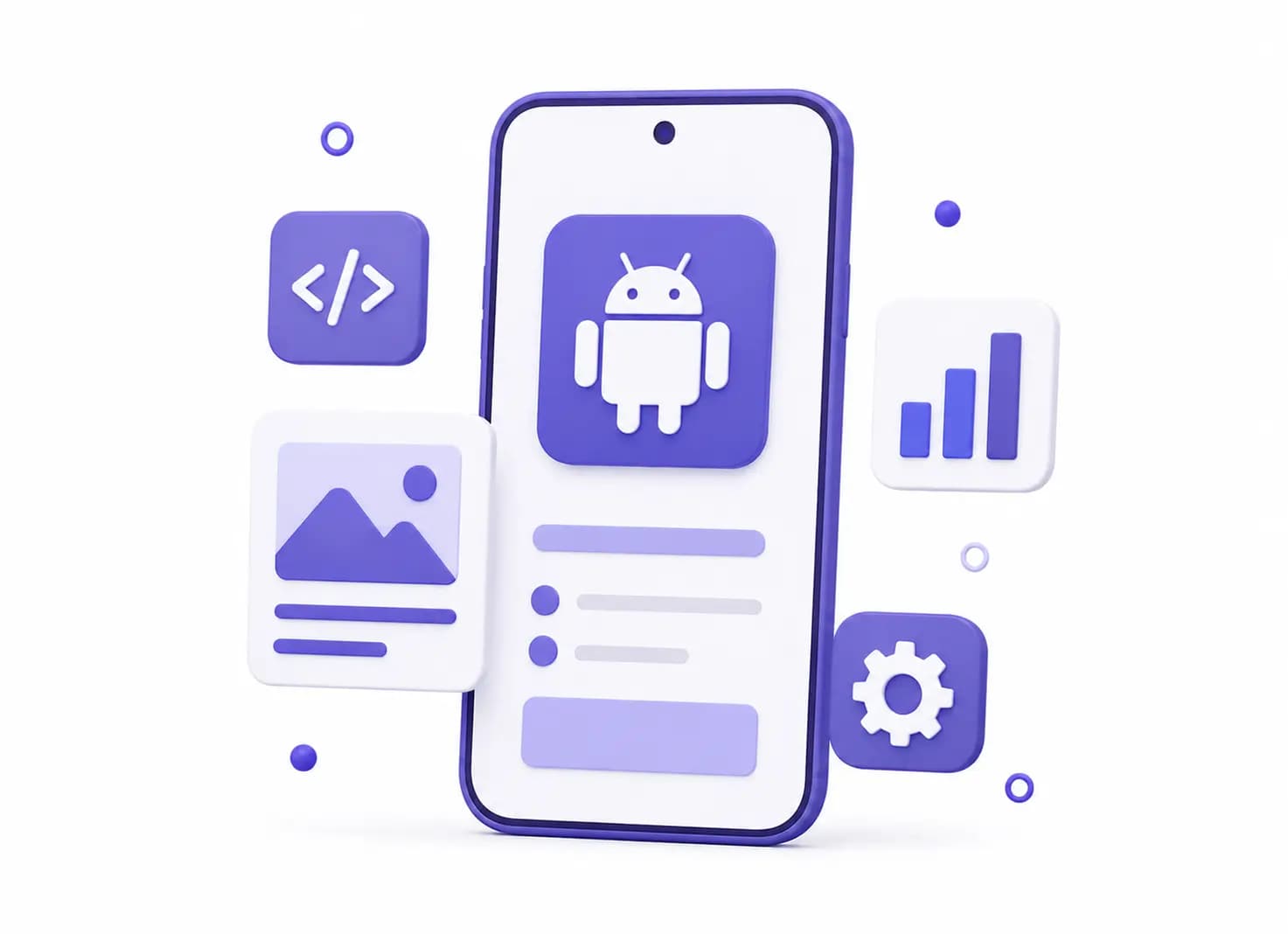
When your application needs to push the limits of what a device can do, deep hardware integration, maximum rendering performance, real-time data processing, or access to platform-specific APIs, native development is the only approach that delivers without compromise. We build native iOS apps in Swift and native Android apps in Kotlin, giving your product full access to platform capabilities that cross-platform frameworks cannot reach. For applications in healthcare, fintech, and industrial IoT where performance and security are non-negotiable, native is the right foundation.
Outcome: Choose Native when speed, hardware access, and performance matter more than budget.
Hybrid development lets businesses launch across iOS and Android faster and at lower cost, without maintaining two separate codebases. We build hybrid applications using web technologies wrapped in a native container, making this a practical choice for content-driven apps, internal tools, and products where time-to-market is the priority and the feature set does not require deep platform integration. We are direct about when hybrid is the right call and when it is not.
Outcome: Choose Hybrid when you need to launch fast on a limited budget without deep platform features.
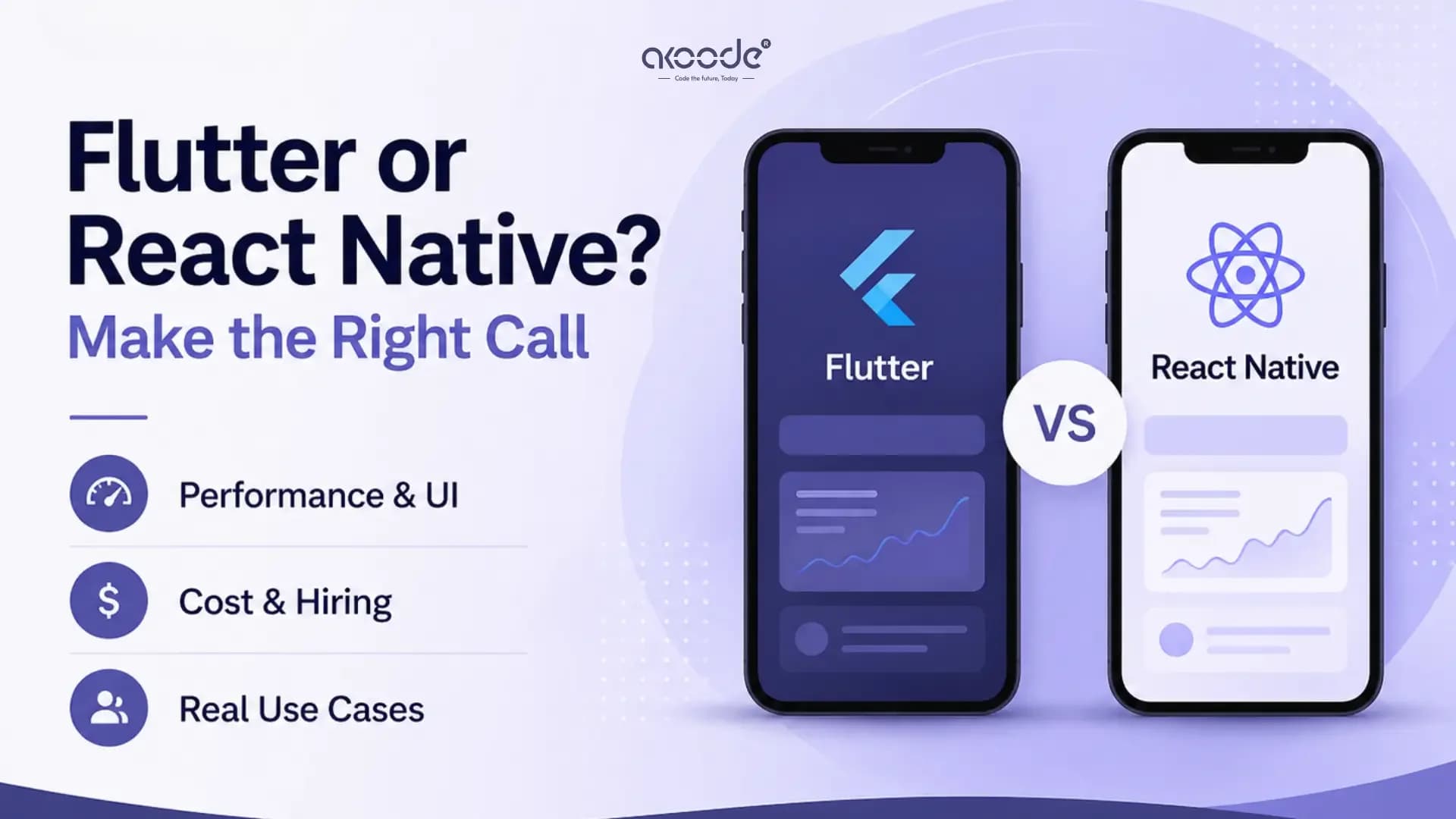
Flutter is our default recommendation for most cross-platform mobile projects. It delivers near-native performance, a consistent UI across iOS and Android, and a single codebase that significantly reduces ongoing maintenance cost. The framework has matured to the point where it handles the majority of business application requirements without the performance compromises that earlier cross-platform tools struggled with. We have built production Flutter applications across fintech, healthcare, logistics, and e-commerce.
Outcome: Choose Flutter when you want one codebase, near-native performance, and lower long-term maintenance cost.
React Native is the right choice for teams that want to share business logic and state management with an existing web application, reducing the total amount of code to maintain across platforms. We build React Native applications that perform well on both iOS and Android, and we are experienced in bridging native modules when the framework's standard capabilities fall short. This model works particularly well for SaaS companies extending their web product into mobile.
Outcome: Choose React Native when you already have a web app and want to share logic across platforms.
We cover the full spectrum of mobile app development, from platform-specific native builds to cross-platform applications designed for enterprise scale. Each service below links to its dedicated sub-page.

Choose iOS when your users are on Apple devices and expect premium performance and security.
Technology choices in mobile development have long-term consequences. A framework chosen for short-term development speed can become a liability when the platform releases a major update, when the team scales, or when the product needs capabilities the framework was not designed for. We select the stack based on your product requirements, your timeline, and where this application needs to be in three years, not just at launch.
There is no shortage of mobile development agencies. What is rare is a team that takes genuine ownership of outcomes, not just code delivery. Here is what that looks like in practice.
A structured process is not a formality. It is what separates predictable delivery from projects that drift. We follow a six-stage process designed to give you clarity at every step, consistent visibility into progress, and a product that reflects your business goals rather than assumptions made in week one.
Choose how you want to work with us. Every model includes dedicated engineers, full IP ownership, transparent communication, and direct access to the people building your product.
Best For: Well-Defined Projects With Clear Scope And Deliverables
Best For: Long-Term Products Requiring Continuous Development And Evolving Roadmaps
Best For: Teams Needing To Fill Specialist Skill Gaps Or Accelerate Delivery Velocity
Every project we take on starts with a business problem, not a feature list. Here is a snapshot of how that approach translates into outcomes.
Key Outcomes
100%
SRS Scope Delivered
3
Subscription Tiers
Challenge
The commoditisation of swipe-based dating interfaces has left users with a product category that looks and behaves almost identically across every major platform. The gap is not in features. It is in the match model itself. No platform had built a meaningful system around travel intent, future location overlap, or visual compatibility indicators that updated based on real interaction. Building one required solving technical problems in real-time scoring, multi-location matching, and video call reliability that most mobile dating products had never needed to address.
What We Built
The brief covered a full consumer dating product with a novel compatibility mechanic at its core. Every objective connected directly to something that did not exist in the current market: travel-based matching, a visual chemistry indicator, real-time speed dating, and a subscription model that monetised engagement depth rather than just volume. The finished product needed to feel genuinely distinct from every app already on the App Store.
Key Outcomes
300ms
Max Feedback Latency
2
Platforms Live
Challenge
Pelvic floor rehabilitation requires a level of movement precision that standard fitness apps are not built to verify. Users performing exercises at home have no mechanism for knowing whether their form meets the biomechanical criteria that make the exercise therapeutic rather than harmful. Building a platform that bridges that gap requires solving problems in real-time pose validation, data privacy, cross-platform delivery, and subscription-based programme access that most fitness app frameworks do not address out of the box.
What We Built
The brief required productising a validated AI proof of concept into a fully deployable, subscription-based mobile fitness platform. The finished system needed to deliver real-time pose correction on standard smartphones, support structured 12-week pelvic health programmes with group and subscription access controls, and give M2 Method's team complete independence to manage content, users, and programmes without developer involvement.
Key Outcomes
80%
Time Reduction
Zero
Cloud Dependency
Challenge
Quantity takeoff is one of the most time-intensive stages of construction estimation, and it is one of the most resistant to standard automation. Engineering drawings are large, dense, and proprietary. The elements that need counting are small, numerous, and visually similar across categories. Cloud-based AI tools introduce data security risks that firms working on sensitive or high-value projects cannot accept. The result is an industry where experienced estimators spend a disproportionate share of their time on a counting task that technology should have solved years ago.
What We Built
The brief required a production-ready desktop application that could automate quantity takeoff from architectural and engineering drawings, run entirely offline, and produce professional cost estimate outputs without requiring any cloud connectivity. Every objective connected directly to the operational reality of a construction estimator working with sensitive, large-format blueprint files under time pressure.
Akoode Technologies is a company made up of professionals, who accept all the challenges that are proposed to them. In my case, they did a code review of my application, updating the payment features and other functions. My application is really complex because it aims to share part of the revenue from the advertising market. But they were patient and professional in understanding all the functions that needed to be added and how they needed to work.
Filippo Quattrocchi, RoundApp Italy , Founder
Akoode Technologies is a company made up of professionals, who accept all the challenges that are proposed to them. In my case, they did a code review of my application, updating the payment features and other functions. My application is really complex because it aims to share part of the revenue from the advertising market. But they were patient and professional in understanding all the functions that needed to be added and how they needed to work.
Mobile requirements differ significantly across industries, not just in features, but in compliance obligations, user behaviour patterns, and the technical constraints that determine what is actually feasible. We have built mobile applications across all of the following sectors.
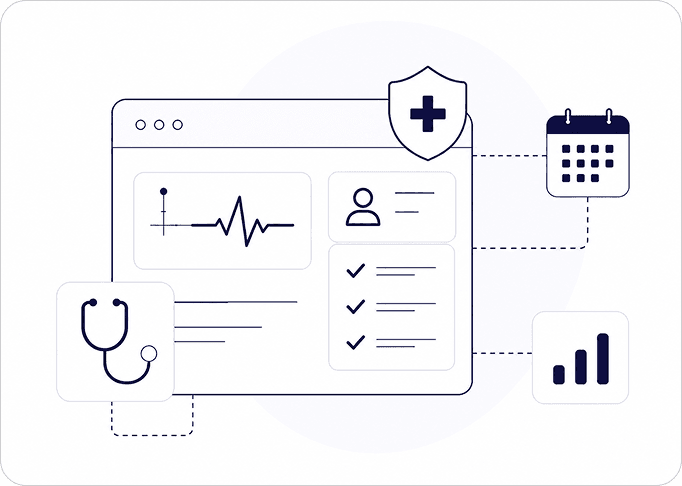
Healthcare applications carry a different weight than most software, because the cost of a bug or a data leak is measured in patient outcomes, not just business metrics. We build telemedicine platforms, patient management apps, clinical workflow tools, and health monitoring applications with data security and compliance built into the architecture from day one, not bolted on after the fact. Our healthcare projects are designed around real clinical workflows, not assumptions about how care is delivered. This means appointment systems that actually reduce no-shows, and patient portals that clinicians and patients both want to use.

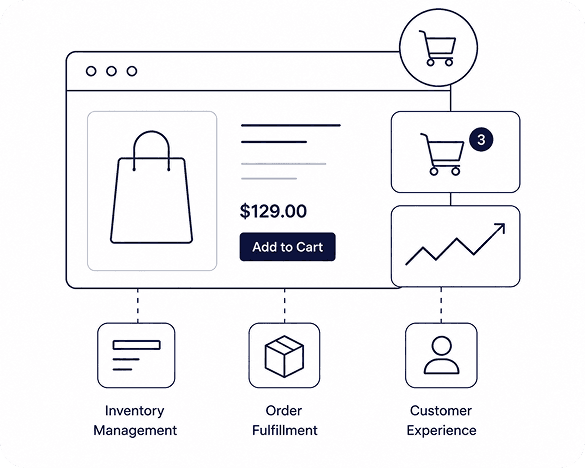
Retail apps live or die on two things: how fast they load and how easily a customer can complete a purchase. We build mobile commerce applications, customer loyalty platforms, and retail operations tools designed for conversion at every step. Behind the storefront, we handle the operational complexity that most off-the-shelf platforms cannot, including real-time inventory management, multi-warehouse fulfilment logic, and order tracking that scales with peak sale traffic. The result is a shopping experience customers trust and an operations layer your team can actually run without manual workarounds.

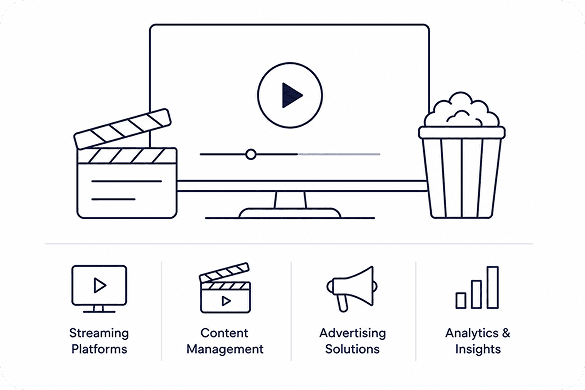
Content platforms succeed or fail on a single metric: whether the experience stays smooth when traffic spikes. We build content streaming platforms, audience engagement tools, and digital publishing applications engineered for high-traffic resilience from the first architecture decision. Our media solutions support content personalisation, subscription management, and multi-format delivery, giving publishers and streaming businesses the infrastructure to grow a subscriber base without rebuilding the platform every time usage doubles. We also build the analytics layer that helps content teams understand what is actually driving engagement.

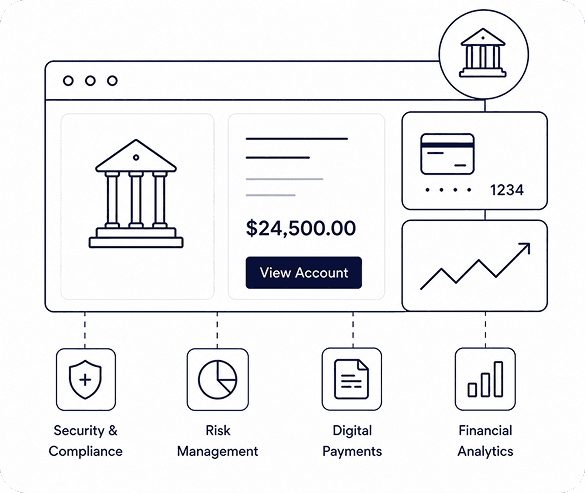
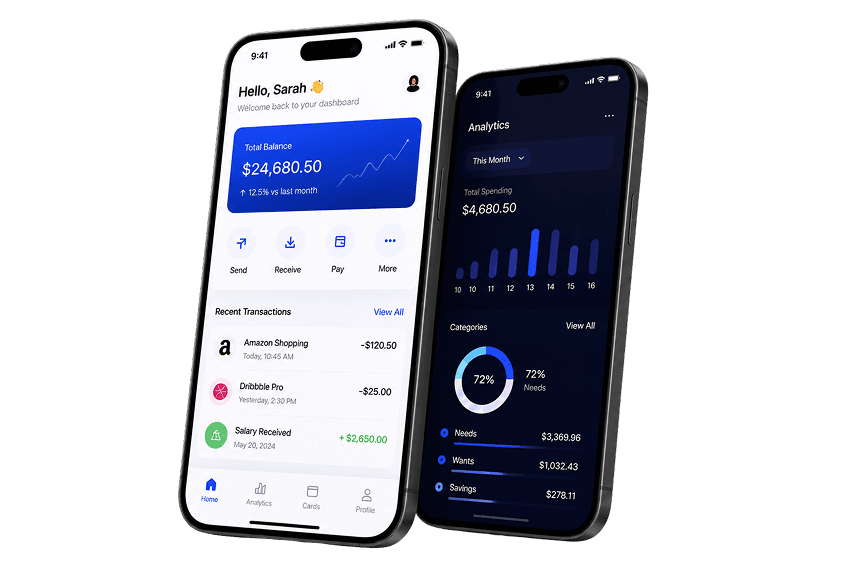
Financial applications operate under a level of scrutiny that most software never faces, and that scrutiny shapes every engineering decision we make. We build digital wallets, payment applications, personal finance tools, and banking interfaces with the security controls, audit logging, and regulatory alignment that financial services require. Our fintech work covers integration with banking APIs, payment gateways, and KYC systems, all without compromising the simple, fast user experience that drives adoption in a crowded market. We treat compliance as a design constraint from day one, not a checklist item added before launch.

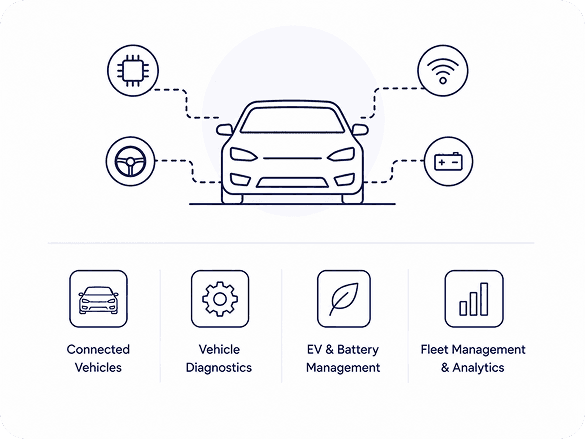
The automotive industry is moving from hardware-defined products to software-defined ones, and mobile is where that shift becomes visible to the end customer. We develop fleet tracking platforms, dealer management applications, and connected vehicle software for OEMs, dealerships, and fleet operators who need real-time operational visibility. Our automotive solutions integrate cleanly with telematics systems and backend dealer management software, giving operations teams the data they need to reduce downtime and improve fleet utilisation. We understand the difference between a consumer-facing automotive app and an operational one, and we build for the right audience.

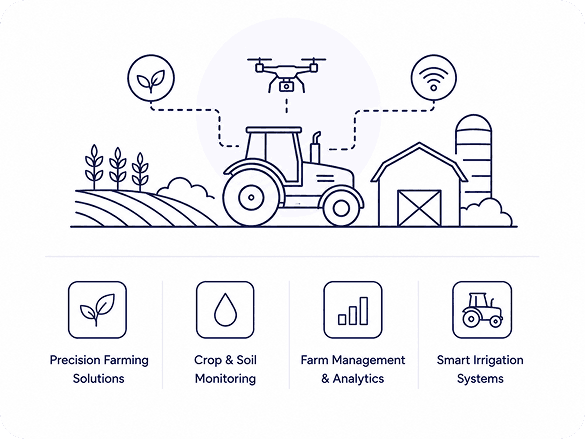
Agriculture technology has to work where connectivity cannot be guaranteed, which changes almost every assumption a typical mobile app makes. We build precision agriculture tools, crop monitoring applications, and farm management platforms designed for offline-first data capture in the field, syncing cleanly once connectivity returns. Our AgriTech solutions integrate with IoT sensors and satellite data sources to give agricultural businesses the operational insight they need to improve yield and reduce waste. We design for the realities of field conditions, not the comfort of a stable office network.

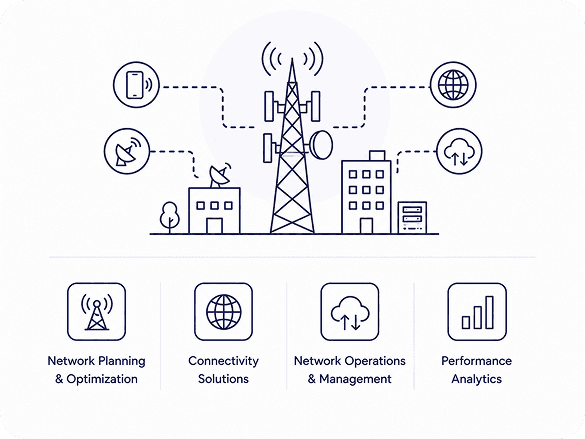
Telecom providers operate at a transaction volume and service complexity that few other industries match, and their mobile platforms need to reflect that scale. We build customer self-service portals, network management tools, and field technician apps designed for high-volume transaction handling and complex service catalogue management. Our telecom solutions integrate with network infrastructure APIs and billing systems, giving operators the tools to reduce support load while improving the self-service experience customers increasingly expect. We build for the operational reality of telecom, where uptime and reliability are not optional.

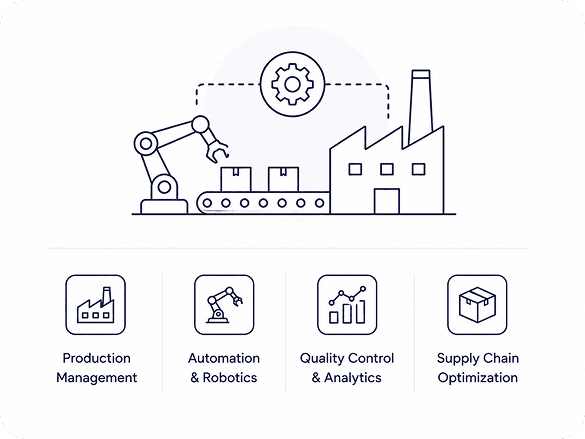
Production monitoring apps, shop floor management tools, and supply chain visibility platforms. We build mobile solutions that give manufacturing teams real-time insight across shifts, Manufacturing operations generate enormous amounts of operational data, but most of it stays trapped on the shop floor unless someone builds the bridge to make it usable. We build production monitoring apps, shop floor management tools, and supply chain visibility platforms that give manufacturing teams real-time insight across shifts and facilities. Our manufacturing solutions connect directly with existing machinery data and supplier systems, turning raw operational data into the kind of visibility that actually changes how decisions get made on the floor. The goal is fewer surprises and faster response when something needs attention. facilities, and supplier networks.

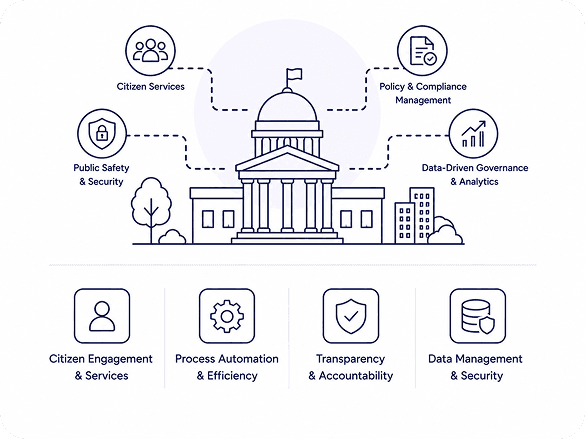
Public sector software has to satisfy a different set of priorities than commercial software, where accessibility, security, and audit trails are not nice-to-haves but procurement requirements. We build citizen-facing portals, field officer applications, and inter-departmental workflow tools designed around the data security and accessibility compliance that public sector projects demand. Our government work also accounts for the realities of public procurement, including the documentation, testing rigor, and audit trail requirements that differentiate government software from a typical commercial build. We have the process discipline this sector requires.

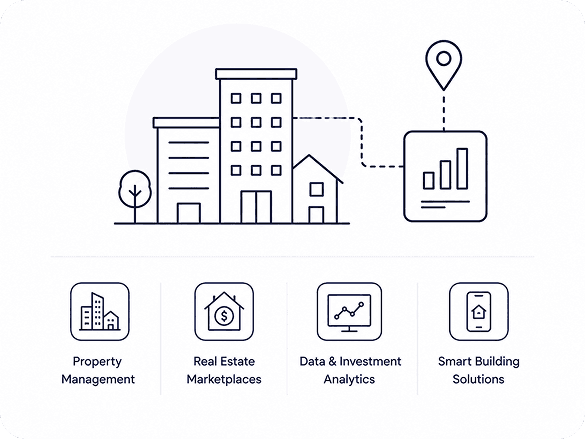
Property businesses run on trust, and trust is built through transparency at every stage of a transaction. We build property search applications, virtual tour platforms, and lead management tools that give buyers, agents, and developers a single, reliable source of truth. Our PropTech solutions handle the complex data relationships between listings, agents, and clients without the data fragmentation that plagues most agency software. For developers and property managers, we also build tenant portals and investment analytics that simplify operations and improve communication across every stakeholder in the deal.

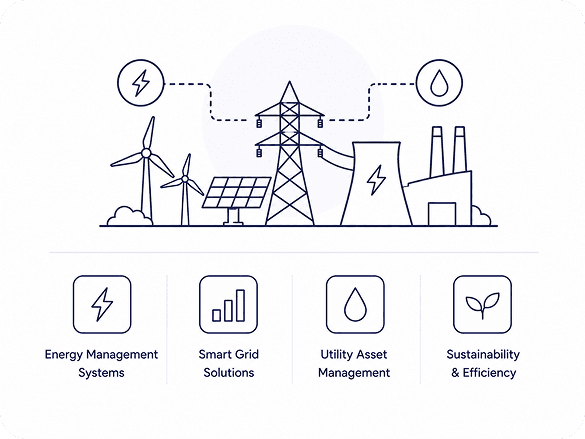
Energy infrastructure is becoming more distributed and more digitally monitored every year, and the mobile applications that manage it need to keep pace. We build asset monitoring applications, grid management tools, and field inspection apps that integrate with IoT sensor networks to give operations teams real-time visibility into infrastructure health. Our energy and utilities solutions support maintenance scheduling and resource allocation decisions that used to depend on manual inspection rounds, replacing guesswork with actual operational data. This matters most when a maintenance issue caught early prevents an outage caught late.

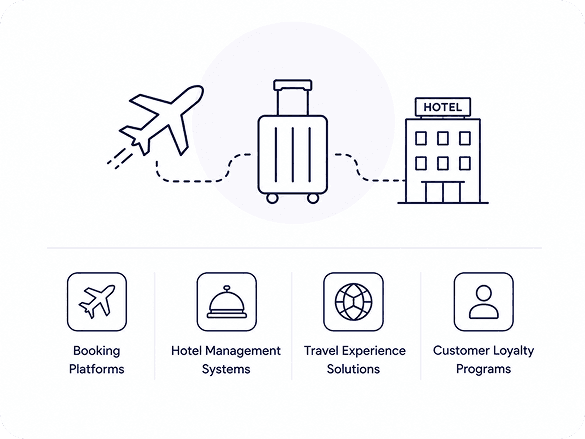
Travel platforms have to perform under conditions that most software never sees, including massive seasonal traffic spikes, multi-currency transactions, and a long chain of third-party integrations that all need to work together. We build booking engines, travel companion apps, hotel management tools, and loyalty applications engineered for peak load conditions without the booking failures that cost businesses revenue and reputation. Our travel and hospitality solutions integrate with OTA platforms, payment gateways, and property management systems, giving travel businesses a unified booking experience instead of a patchwork of disconnected tools.

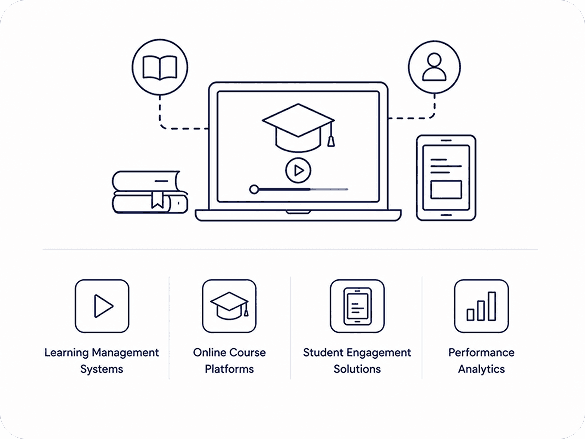
Learning platforms succeed when students keep coming back, and that almost never happens by accident. We build learning management systems, interactive course applications, and student engagement platforms designed around accessibility and offline content delivery, since reliable connectivity cannot be assumed for every learner. Our EdTech solutions focus on the engagement mechanics, including progress tracking, multimedia delivery, and assessment tools, that determine whether a platform becomes part of a learner's routine or gets abandoned after the first session. We design for retention, not just feature completeness.

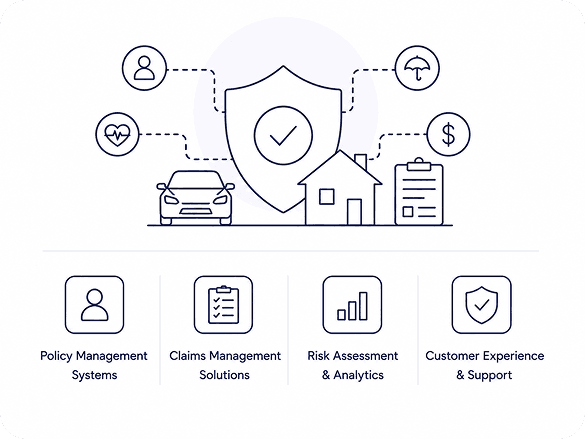
Insurance is an industry built on documentation, and the mobile experience either makes that documentation easier to manage or adds another layer of friction to an already complex process. We build policy management applications, claims processing tools, and customer self-service portals designed to reduce claims processing time while improving compliance tracking across every product line. Our insurance solutions support digital-first customer experiences without sacrificing the audit trails and regulatory alignment insurers are required to maintain. The result is faster claims resolution and fewer manual touchpoints for both customers and claims teams.

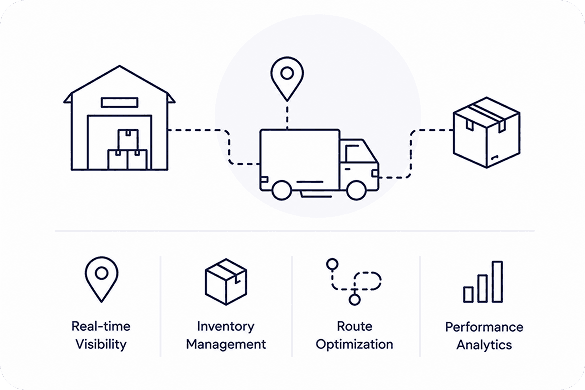
Logistics operations run on real-time visibility, and the moment that visibility breaks down, costs start compounding across the entire supply chain. We build field operations apps, shipment tracking platforms, driver management tools, and warehouse mobile systems designed for offline-first, real-time sync, since logistics environments rarely offer reliable connectivity end to end. Our supply chain solutions are built around the operational reality that data accuracy matters more than data speed when a shipment, a driver, or a warehouse update needs to be trusted by every team relying on it.

Healthcare applications carry a different weight than most software, because the cost of a bug or a data leak is measured in patient outcomes, not just business metrics. We build telemedicine platforms, patient management apps, clinical workflow tools, and health monitoring applications with data security and compliance built into the architecture from day one, not bolted on after the fact. Our healthcare projects are designed around real clinical workflows, not assumptions about how care is delivered. This means appointment systems that actually reduce no-shows, and patient portals that clinicians and patients both want to use.

Practical thinking from the Akoode team on building mobile products, choosing the right technology, and scaling apps that actually work.

How much does mobile app development cost in India in 2026? Full breakdown by app type, platform, features, and developer...

A complete android app development guide for businesses. Covers the full process, development stages, cost breakdown, and realistic timelines.

A practical look at mobile app development strategy, written for business leaders who want to make the right decisions before...
Straight answers on timelines, team shape, security, and how we plug into your existing delivery process.
A mobile app development company handles the complete process of designing, building, testing, and launching mobile applications. This covers everything from initial product strategy and UI/UX design through to development, App Store submission, and post-launch maintenance. At Akoode, we also cover the architecture and technical scoping work that happens before any design begins, which is often what determines whether the end product holds up at scale.
Cost depends on the platform (iOS, Android, or both), the complexity of the feature set, and whether you need custom backend infrastructure built alongside the app. A focused MVP on a single platform costs significantly less than a full-featured product with AI integration and enterprise backend systems. We provide milestone-based estimates rather than generic ranges, so you know what each stage costs before it begins.
A well-defined MVP on a single platform typically takes 8 to 12 weeks from the start of design to a testable build. A full-featured product with custom backend systems and multi-platform delivery usually takes 4 to 6 months. Enterprise applications with complex integrations and compliance requirements can take longer. We define clear milestones at the start of every project so there is no ambiguity about what gets delivered and when.
For most business applications, a well-built cross-platform app using Flutter is the right choice. It delivers near-native performance and covers both platforms from a single codebase, reducing maintenance cost. Native development makes sense when you need deep hardware integration, maximum rendering performance, or platform-specific features that cross-platform frameworks cannot reach. We will recommend the right approach based on your use case and be direct if the more cost-effective option will serve your users equally well.
That depends on what you are optimising for. If you need large team capacity and an established enterprise track record, there are several well-known names. If you need a senior, hands-on team that takes genuine ownership of product outcomes and can integrate directly into your existing team as well as run standalone projects, Akoode is worth a conversation. The best way to evaluate any company is to review actual work, speak to past clients, and confirm that the people you meet during scoping are the same people who will build your product.
Yes. iOS development is a core practice at Akoode. We build in Swift and SwiftUI, and our team has deep experience with the App Store review process, Apple Human Interface Guidelines, and platform-specific frameworks including HealthKit, CoreML, ARKit, and StoreKit. We handle everything from first submission through to ongoing maintenance across iOS version updates.
Our cross-platform practice covers both Flutter and React Native. Flutter is our default recommendation for most business applications, covering iOS and Android from a single codebase with near-native performance. React Native is the right choice for teams that want to share logic with an existing web application. We are clear about which framework suits your specific requirements and why.
Yes. AI integration can take several forms: on-device ML using Core ML or TensorFlow Lite, LLM-based conversational interfaces via API, recommendation logic based on user behaviour data, or computer vision for image-based workflows. The right approach depends on your current app architecture. We typically start with a technical assessment of the existing codebase before recommending an integration path.
Yes, and this is one of the primary ways we work with clients. Our mobile engineering team includes Flutter, React Native, Swift, and Kotlin specialists who embed directly into your existing team. This works well for companies that need to add mobile expertise quickly without a long hiring cycle, or for enterprise teams entering mobile development for the first time. Our engineers integrate into your tooling and workflow within days, working under your direction throughout.
Gurgaon is one of India's most concentrated technology hubs, home to experienced mobile engineers, product designers, and technical architects who have built and scaled real products. Working with a Gurgaon-based company like Akoode gives you access to that talent pool at India-based pricing, with the communication quality and delivery standards that international clients expect. Our processes, including documentation, sprint reporting, and stakeholder communication, are structured for professional remote collaboration from day one.
A mobile app development company handles the complete process of designing, building, testing, and launching mobile applications. This covers everything from initial product strategy and UI/UX design through to development, App Store submission, and post-launch maintenance. At Akoode, we also cover the architecture and technical scoping work that happens before any design begins, which is often what determines whether the end product holds up at scale.
A well-defined MVP on a single platform typically takes 8 to 12 weeks from the start of design to a testable build. A full-featured product with custom backend systems and multi-platform delivery usually takes 4 to 6 months. Enterprise applications with complex integrations and compliance requirements can take longer. We define clear milestones at the start of every project so there is no ambiguity about what gets delivered and when.
That depends on what you are optimising for. If you need large team capacity and an established enterprise track record, there are several well-known names. If you need a senior, hands-on team that takes genuine ownership of product outcomes and can integrate directly into your existing team as well as run standalone projects, Akoode is worth a conversation. The best way to evaluate any company is to review actual work, speak to past clients, and confirm that the people you meet during scoping are the same people who will build your product.
Our cross-platform practice covers both Flutter and React Native. Flutter is our default recommendation for most business applications, covering iOS and Android from a single codebase with near-native performance. React Native is the right choice for teams that want to share logic with an existing web application. We are clear about which framework suits your specific requirements and why.
Yes, and this is one of the primary ways we work with clients. Our mobile engineering team includes Flutter, React Native, Swift, and Kotlin specialists who embed directly into your existing team. This works well for companies that need to add mobile expertise quickly without a long hiring cycle, or for enterprise teams entering mobile development for the first time. Our engineers integrate into your tooling and workflow within days, working under your direction throughout.
Cost depends on the platform (iOS, Android, or both), the complexity of the feature set, and whether you need custom backend infrastructure built alongside the app. A focused MVP on a single platform costs significantly less than a full-featured product with AI integration and enterprise backend systems. We provide milestone-based estimates rather than generic ranges, so you know what each stage costs before it begins.
For most business applications, a well-built cross-platform app using Flutter is the right choice. It delivers near-native performance and covers both platforms from a single codebase, reducing maintenance cost. Native development makes sense when you need deep hardware integration, maximum rendering performance, or platform-specific features that cross-platform frameworks cannot reach. We will recommend the right approach based on your use case and be direct if the more cost-effective option will serve your users equally well.
Yes. iOS development is a core practice at Akoode. We build in Swift and SwiftUI, and our team has deep experience with the App Store review process, Apple Human Interface Guidelines, and platform-specific frameworks including HealthKit, CoreML, ARKit, and StoreKit. We handle everything from first submission through to ongoing maintenance across iOS version updates.
Yes. AI integration can take several forms: on-device ML using Core ML or TensorFlow Lite, LLM-based conversational interfaces via API, recommendation logic based on user behaviour data, or computer vision for image-based workflows. The right approach depends on your current app architecture. We typically start with a technical assessment of the existing codebase before recommending an integration path.
Gurgaon is one of India's most concentrated technology hubs, home to experienced mobile engineers, product designers, and technical architects who have built and scaled real products. Working with a Gurgaon-based company like Akoode gives you access to that talent pool at India-based pricing, with the communication quality and delivery standards that international clients expect. Our processes, including documentation, sprint reporting, and stakeholder communication, are structured for professional remote collaboration from day one.
Whether you are starting from scratch, rebuilding a product that has outgrown its original architecture, or adding specialist mobile engineers to an existing team, we have the experience, the process, and the technical depth to deliver it. The first conversation is free, focused, and without obligation. Tell us what you are trying to build. We will tell you what it takes.
Subscribe to the Akoode newsletter for carefully curated insights on AI, digital intelligence, and real-world innovation. Just perspectives that help you think, plan, and build better.