





Mobile App Development Company USA

Custom iOS, Android, and cross-platform app development for US startups and enterprises, built by a team that backs every claim with a real number, not a marketing line.
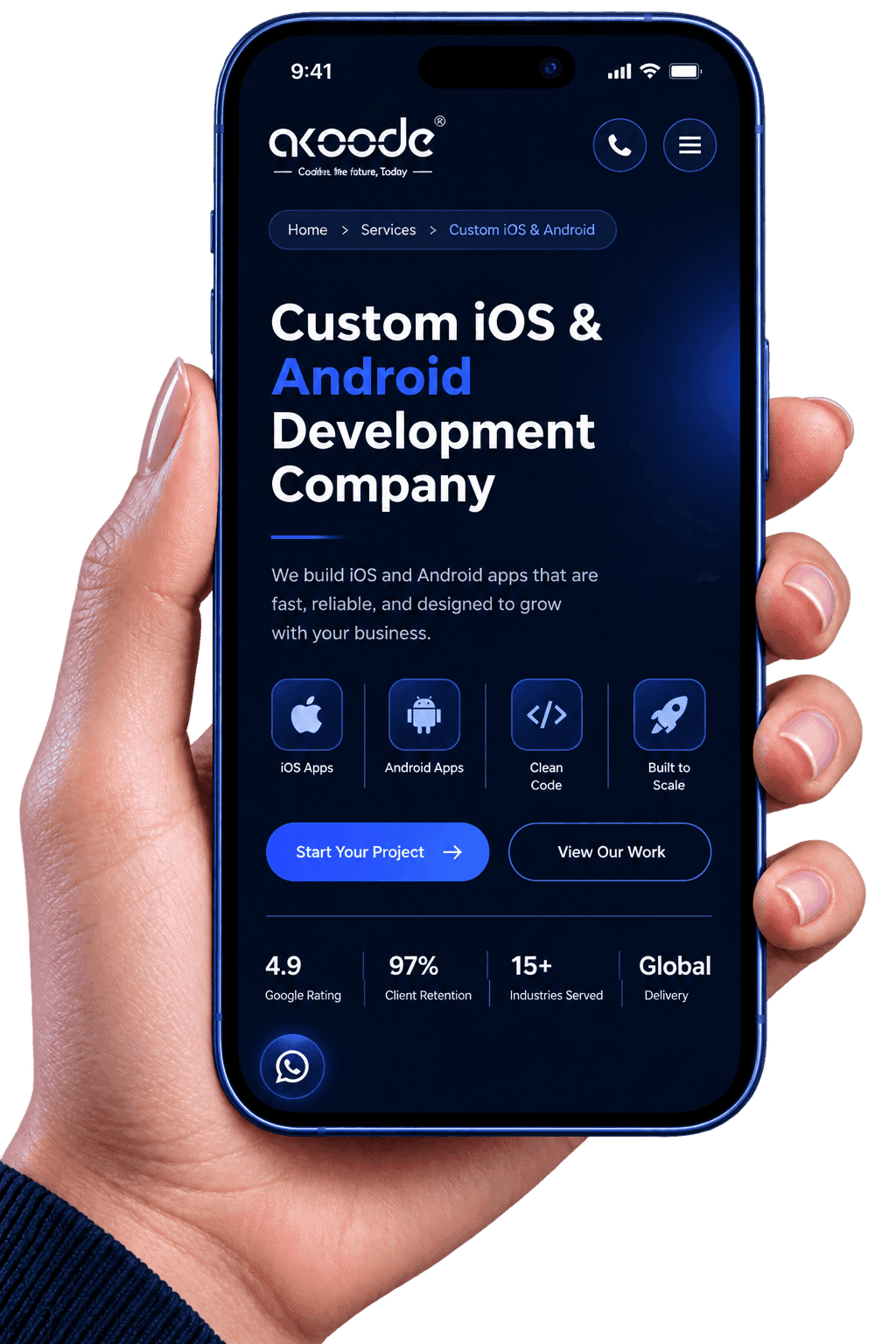
Mobile App Development Company USA — Akoode mobile app development shown on a phone

4.9

Google Rating

97%

Client Retention

15+

Industries Served

Global

Delivery

What We Learned From a Market That Grades on Evidence, Not Promises

The US mobile app development market is crowded with agencies making the same four claims: scalable, secure, experienced, results-driven. None of those words separate one vendor from another, and buyers in this market have gotten good at ignoring them. What actually moves a decision is a specific number, a named compliance framework, or a real case study with an outcome you can check. We built our own process around that standard rather than around better adjectives. Here's what that looks like in practice.

Every Estimate Comes With the Reasoning Behind It

When we quote a cost or a timeline, you get the scope breakdown that produced that number, not just the number itself. If a competitor's quote is lower, you should be able to see exactly what got cut to get there, and we'll walk you through ours the same way.

Compliance Gets Named, Not Implied

If your app touches health data, payment data, or California resident data, we say specifically which framework applies, HIPAA, PCI-DSS, or CCPA, and what that actually changes about the architecture. A vendor who says 'we take security seriously' without naming a framework hasn't actually thought about yours.

We Test on Real Devices, Not Just an Emulator

An app that works perfectly in a simulator can behave differently on a three-year-old Android phone with a throttled processor and a spotty connection. We test on the actual device mix your users are likely running, because that's where real bugs actually surface.

We'll Say When You Don't Need a Native App

A lot of agencies default to whichever stack they'd rather build in. If your product genuinely works better and cheaper as a cross-platform build, we'll say so, even though a native iOS-and-Android quote is a bigger number for us.

Platform Ratings

What our clients say across leading platforms.

Google, 4.9 out of five stars
Google
4.9
Clutch, 5.0 out of five stars
Clutch
5.0
GoodFirms, 4.8 out of five stars
GoodFirms
4.8

What clients love about working with us

Passed App Store Review First Try

Submissions built with the metadata and documentation Apple and Google actually check for, not a guess.

HIPAA and PCI-DSS Handled Correctly

Compliance work that started in architecture, not a scramble the week before launch.

Retention That Held Past Launch Week

Apps built around real usage data, not a demo that looked good on stage.

The Relationship Outlasted the First Build

Several US engagements that started as a single app are still active well past launch.

Building for the Largest, Most Scrutinized App Market in the World

The United States remains the single largest market for mobile app spending in the world, and that scale comes with a level of scrutiny most other markets don't apply. American consumers uninstall an app within days if it's slow or confusing, and American enterprise buyers run a security and compliance review before a contract gets signed, not after. Building a mobile app development company presence here means building for both of those realities at once: consumer-grade polish and enterprise-grade documentation.

The regulatory landscape shapes a lot of what 'good' looks like in this market. HIPAA governs any app touching protected health information, with real consequences for getting encryption, access logging, and business associate agreements wrong. The California Consumer Privacy Act, and its expansion under the CPRA, sets disclosure and deletion requirements that apply to any app handling data from California residents, which in practice means most apps operating nationally. PCI-DSS governs anything touching payment card data, and it isn't optional guidance, it's a standard payment processors actually enforce before they'll let your app move money.

Accessibility compliance matters more here than in a lot of markets too. Section 508 sets accessibility requirements for anything touching federal government use, and the Americans with Disabilities Act has been applied to mobile apps in real litigation, not just as a theoretical standard. WCAG compliance isn't a nice-to-have add-on for a US-facing app, it's a real legal exposure question for any consumer-facing product with enough scale to attract attention.

We build for this market with those realities factored in from discovery, not discovered during a client's own procurement review. That means an app that's genuinely fast and pleasant to use for a consumer audience that has zero patience for friction, backed by the documentation an enterprise buyer's legal and security team will actually ask for.

The Largest Mobile App Market in the World

US consumer mobile app spending leads every other country, and enterprise mobile adoption continues to grow across every major industry vertical.

A Genuinely Regulated Market

HIPAA, PCI-DSS, and CCPA aren't optional guidance here, they carry real enforcement consequences that shape how a serious app gets architected.

Zero Patience for a Slow App

US mobile users uninstall fast. Performance and UX aren't polish added at the end, they're the actual product decision that determines whether an app survives its first week.

Accessibility Is a Legal Question, Not Just a UX One

ADA litigation has been applied to mobile apps directly, and WCAG compliance is a real risk consideration for any consumer-facing US app at scale.

USA-Mobile-App-Development-Skyline

Mobile App Development Services for US Businesses

Most of the projects that reach us here come with a specific platform question already half-answered, or a compliance requirement nobody's fully scoped yet. Here's where we actually spend our time.

01

Custom iOS, Android, and Cross-Platform App Development

Most mobile app development conversations in the US start with a platform argument that misses the actual question. The real decision isn't React Native versus Swift, it's what your users are doing on their phones and what happens if the app is slow, confusing, or breaks the moment a new OS version ships. We build custom mobile apps for iOS, Android, and cross-platform delivery with that priority order: the user experience first, the platform choice second, decided during discovery rather than assumed before anyone's looked at your actual requirements. A native iOS app makes sense when you need deep integration with Apple's ecosystem, camera-heavy AR features, or background processing that fights a cross-platform framework. A Flutter or React Native build makes sense when your budget and timeline favor one codebase serving both platforms without a meaningful compromise on performance. We'll tell you plainly which one your project actually needs instead of defaulting to whichever stack we'd rather build in.

  • Native iOS development in Swift and SwiftUI for performance-critical, platform-deep apps
  • Native Android development in Kotlin and Jetpack Compose for the same reasons on the other side
  • Cross-platform builds in Flutter or React Native when one codebase genuinely fits the requirements
  • App Store and Google Play submission handled end to end, including the review process nobody enjoys
  • Post-launch iteration built into the timeline, not treated as a separate negotiation six months later
Tech Stack:Swift, SwiftUI, Kotlin, Jetpack Compose, Flutter, React Native
02

AI-Powered Mobile App Development

AI in a mobile app either does real work or it's a feature added to justify a higher quote. We build the first kind: on-device and cloud-hybrid AI that improves search relevance, automates document or image processing, personalizes recommendations against real user behavior, and powers conversational interfaces that actually resolve a question instead of looping a user through a scripted menu. The technical discipline that matters here is less about which model you use and more about what happens when the model is wrong, slow, or the API it depends on has an outage. We build AI mobile features with a defined fallback behavior for exactly that scenario, evaluated against your own data before launch, not a benchmark dataset that never resembles how your actual users behave.

  • On-device and cloud AI features chosen by latency, cost, and privacy requirements, not by trend
  • Retrieval-augmented search and document intelligence built on your own content, not a generic model's memory
  • Personalization and recommendation engines evaluated against your real user data before launch
  • Conversational AI and chatbot features with a defined handoff to a human when confidence drops
  • AI feature architecture built with CCPA and HIPAA data handling requirements considered from the schema up
Tech Stack:OpenAI, Core ML, TensorFlow Lite, LangChain, Vector Databases, FastAPI
03

Enterprise Mobile App Development and Legacy Modernization

Enterprise mobile app development in the US usually means connecting a new mobile experience to a decade of existing infrastructure that was never designed to talk to a phone. We build mobile apps that integrate cleanly with the ERP, CRM, and legacy systems already running your business, using API-first architecture instead of forcing your backend to bend around a mobile team's preferences. That work tends to surface real constraints early: identity systems that need single sign-on support, data models that don't map cleanly to a mobile-first UI, security policies written for a desktop era. We plan for those constraints during architecture rather than discovering them in week ten of a build, since enterprise mobile projects rarely fail because of the app itself. They fail because of the integration nobody scoped properly.

  • API-first integration with existing ERP, CRM, and legacy enterprise systems
  • Single sign-on and enterprise identity provider integration, including Okta and Azure AD
  • Legacy application modernization for mobile apps built on outdated frameworks or weak architecture
  • Multi-region and multi-tenant architecture for enterprise deployments across large organizations
  • Change management documentation built for procurement, security, and compliance review
Tech Stack:REST APIs, GraphQL, OAuth 2.0, Okta, Azure AD, Microservices
04

Cloud Infrastructure and DevOps for Mobile Apps

A mobile app is only as reliable as the backend serving it, and a launch-day traffic spike doesn't wait for infrastructure that was sized for a demo. We build CI/CD pipelines, containerized backend services, and monitoring specifically tuned for mobile traffic patterns, which behave differently than a typical web application: bursty around a marketing push, sensitive to mobile network latency, and unforgiving of a backend that can't autoscale fast enough. We set up infrastructure that treats a launch spike as an expected event, not an incident, with the observability to catch a problem before app store reviews do it for you.

  • CI/CD pipelines with automated testing before any release reaches TestFlight or a Play Store beta track
  • Auto-scaling infrastructure sized for mobile traffic patterns, not just steady web load
  • Push notification infrastructure built for scale, segmentation, and delivery reliability
  • Monitoring and crash reporting configured before launch, with alerts routed to someone who actually responds
  • Cloud architecture across AWS, Azure, or Google Cloud, matched to what your team already runs
Tech Stack:AWS, Azure, Google Cloud, Docker, Kubernetes,, Firebase
05

Mobile App Analytics and Data Intelligence

Most mobile apps generate far more usage data than anyone on the team actually looks at, because the pipeline to make it useful was never built. We build analytics systems that turn app events, session data, and user behavior into something a product team can act on: which screens cause drop-off, what a churning user actually did differently, whether a feature genuinely moved retention or just looked good in a vanity metric. That's a different discipline than wiring up an off-the-shelf analytics SDK and calling it done. It means building event tracking around the questions your team actually needs answered, then a reporting layer that surfaces those answers without someone manually pulling a spreadsheet every week.

  • Event tracking architecture designed around the product questions that actually matter
  • Retention, churn, and cohort analysis built on your own user behavior data
  • Dashboards built for product and growth teams, not just for an engineering audience
  • A/B testing infrastructure for feature rollouts and UX decisions backed by real data
  • Data pipelines that handle mobile-specific quirks: offline events, delayed syncs, and duplicate reporting
Tech Stack:Mixpanel, Amplitude, BigQuery, Python, Segment, Looker
06

Hire Mobile App Developers on a Flexible Engagement Model

Hiring a senior mobile engineer in the US market takes months and costs a lot before they've written a line of code, and that timeline rarely matches a product roadmap that needed capacity yesterday. Our staff augmentation model puts senior iOS, Android, and cross-platform developers directly into your existing sprint, integrated with your tools and your standards, without the recruiting cycle. This suits teams that need to hire mobile app developers for a defined push, whether that's a launch crunch, a platform migration, or ongoing capacity a full-time headcount budget doesn't currently support.

  • Senior iOS, Android, and cross-platform engineers embedded directly into your sprint cadence
  • Full integration with your existing repos, code review standards, and project tools
  • Scale the team up for a launch push, scale down once the work stabilizes
  • No recruitment fees, benefits overhead, or notice period when the engagement wraps
  • Direct access to the engineers doing the work, not an account manager relaying updates
Tech Stack:Git, Jira, Slack, GitHub Actions, Figma, Linear

Six Stages, Each One Ending With Something You Can Actually Check

A vague status update doesn't count as progress. Each stage below is built to leave behind a real, checkable deliverable, not a verbal summary of what we think we agreed to.

The Technology Behind Akoode's US Mobile App Development

We pick technology based on what the actual product needs, not what's trending this quarter.

Swift logoSwift
Kotlin logoKotlin
Flutter logoFlutter
Tailwind CSS logoTailwind CSS

Apps That Held Up Past Launch Week

A spotlight build plus more, chosen for real retention and real compliance outcomes, not just a polished launch demo.

Vallo Parking - A Three-Surface Parking Platform

Key Outcomes

3

Connected surfaces

4

Sign-in paths

Challenge

No single failure here was fatal on its own. Stacked together, they were. A driver who can't check availability arrives at a full lot. A driver who can't pay in advance queues at the barrier. A lot with no arrival record can't settle a dispute. An owner who can't list a space themselves waits on staff. And a business with no console can't see any of it happening. Every gap made the next one more expensive.

What We Built

The client wasn't asking for a listings app with a payment button bolted on. They needed the whole operation to run on software: the driver's journey from search to departure, the owner's ability to put inventory on the platform without help, and their own ability to see and control all of it. Three audiences, one system, no manual bridge between them.

Building a Closed-Loop Ambassador Referral Platform for a Tourist Attraction

Key Outcomes

4

Commission Tiers

5-Minute

Sync Cadence

Challenge

None of this broke all at once. As the partner base grew past what a spreadsheet or a verbal agreement could realistically track, four problems started compounding on top of each other.

What We Built

Digitizing the spreadsheet was never really the goal. The brief was to replace a process that was blind to attribution with a closed-loop system where every sale, commission, and payout could be traced end to end.

Travel-Based Dating Mobile App

Key Outcomes

100%

SRS Scope Delivered

3

Subscription Tiers

Challenge

The commoditisation of swipe-based dating interfaces has left users with a product category that looks and behaves almost identically across every major platform. The gap is not in features. It is in the match model itself. No platform had built a meaningful system around travel intent, future location overlap, or visual compatibility indicators that updated based on real interaction. Building one required solving technical problems in real-time scoring, multi-location matching, and video call reliability that most mobile dating products had never needed to address.

What We Built

The brief covered a full consumer dating product with a novel compatibility mechanic at its core. Every objective connected directly to something that did not exist in the current market: travel-based matching, a visual chemistry indicator, real-time speed dating, and a subscription model that monetised engagement depth rather than just volume. The finished product needed to feel genuinely distinct from every app already on the App Store.

What Our Clients Says

They are very good in understanding the problem, find good in solutioning of my problem, whole site re-design, solve payment gateway and delivery cost calculation. Overall was good experience working with team Akoode. My project delivered within the given deadline by their consultant.

Aida Caulfield
CEO
WellNess Surge

Mobile App Development Across

Fifteen sectors, several of them carrying real compliance stakes that a generic mobile app template was never built to handle.

Healthcare

HIPAA-compliant telehealth, remote monitoring, and EHR-integrated apps built around real clinical intake workflows, not a generic wellness template repurposed for medical use. Protected health information gets handled with encryption and access logging designed in from the schema, not retrofitted the week before a compliance review.

Healthcare
Explore Healthcare

Retail and E-Commerce

Native shopping apps built to handle real holiday traffic spikes, not just a quiet Tuesday demo, with inventory systems synced to actual warehouse data and loyalty programs designed to drive repeat purchases rather than a one-time download that never gets opened again.

Retail and E-Commerce
Explore Retail and E-Commerce

Media and Entertainment

Streaming and content apps engineered for genuine concurrent usage during a live event or a breaking story, when a slow load costs more attention than any marketing campaign could win back, with subscription logic built to survive a pricing change without a full rebuild.

Media and Entertainment
Explore Media and Entertainment

Finance and Banking

PCI-DSS-aligned banking and payment apps with fraud detection tuned against real transaction data instead of a generic threshold that blocks legitimate customers. Digital wallet and peer-to-peer features get built with the same rigor a federal payment processor actually audits for before certifying anything.

Finance and Banking
Explore Finance and Banking

Automotive

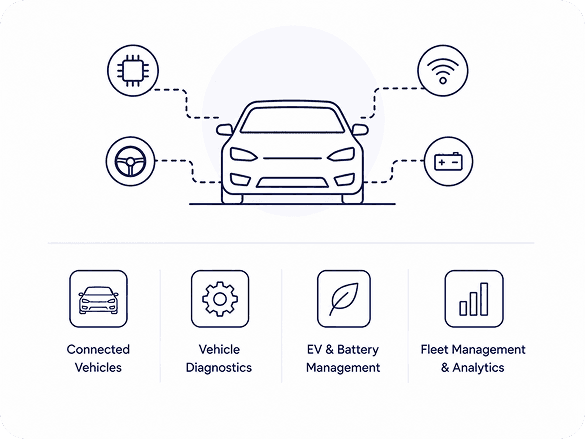
Connected vehicle apps handling diagnostics, EV charging location, and fleet management with GPS tracking built on data that reflects how a fleet actually operates day to day, not an assumption borrowed from a completely different industry's sensor patterns and failure curves.

Automotive
Explore Automotive

Agriculture

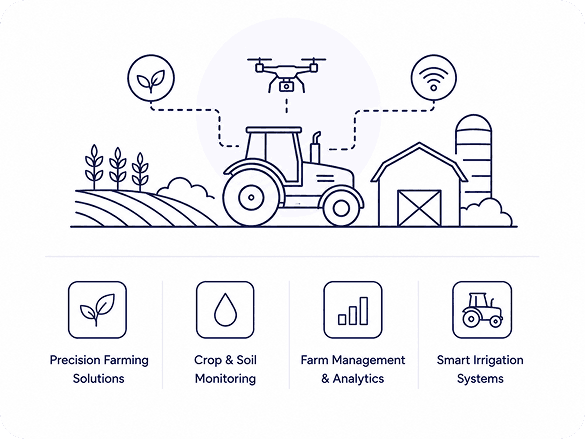
Precision farming apps built to function without constant connectivity, syncing equipment and yield data the moment a rural signal returns instead of assuming a reliable connection that most working farmland in this country simply doesn't have most of the year.

Agriculture
Explore Agriculture

Telecommunication

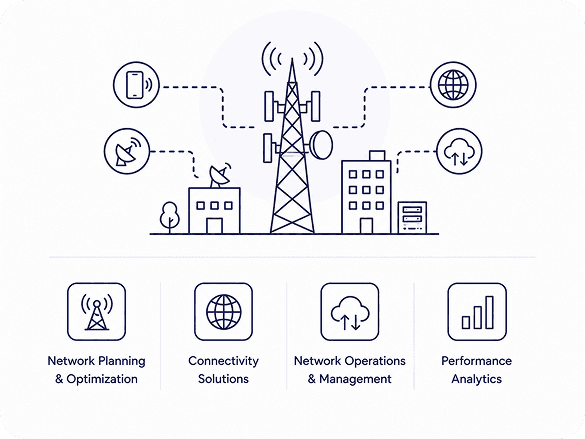
Customer self-service and field technician apps built offline-first, since a technician troubleshooting equipment in a basement or a rural cell site needs the app to work regardless of whether a signal happens to be available at that exact moment in time.

Telecommunication
Explore Telecommunication

Manufacturing

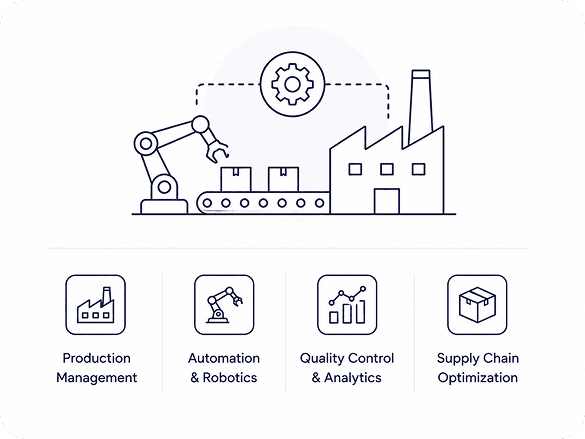
Production floor apps for quality control and predictive maintenance, built on real equipment sensor data rather than an industry-average model that was never trained on your actual machines, your actual failure history, or the specific way your production line runs.

Manufacturing
Explore Manufacturing

Public Sector and Government

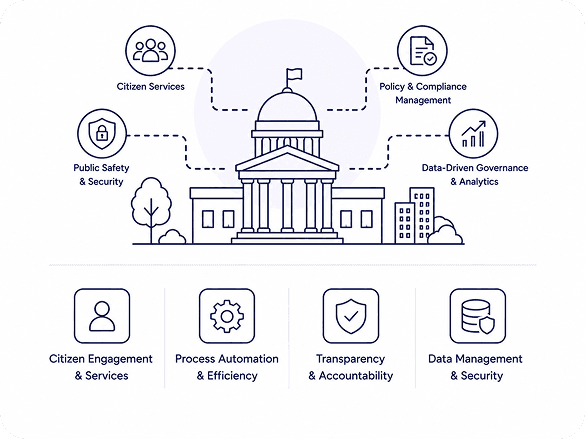
Citizen-facing service apps built to Section 508 accessibility standards from the first design review, with the data residency and procurement documentation a government buyer actually requires before a contract gets anywhere near a signature, not assembled after the fact.

Public Sector and Government
Explore Public Sector and Government

Real Estate

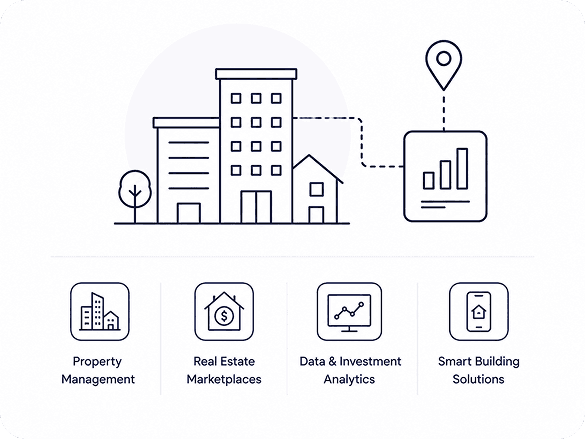
Property platforms built for a national market where every state handles disclosure and licensing differently, covering AR-based virtual tours, tenant management, and agent-facing CRM tools, engineered to sync listing data accurately across dozens of regional MLS systems rather than assuming one national standard exists.

Real Estate
Explore Real Estate

Energy and Utilities

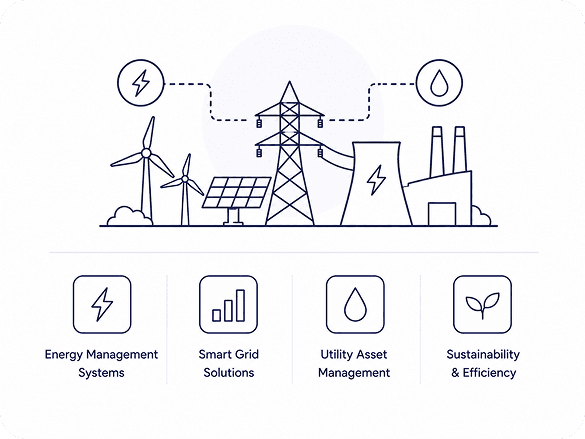
Smart meter and outage apps built for field crews working through the exact conditions, storms, remote terrain, equipment failure, that cause an outage in the first place, not a generic monitoring dashboard designed for a calm, permanently connected office environment.

Energy and Utilities
Explore Energy and Utilities

Travel and Hospitality

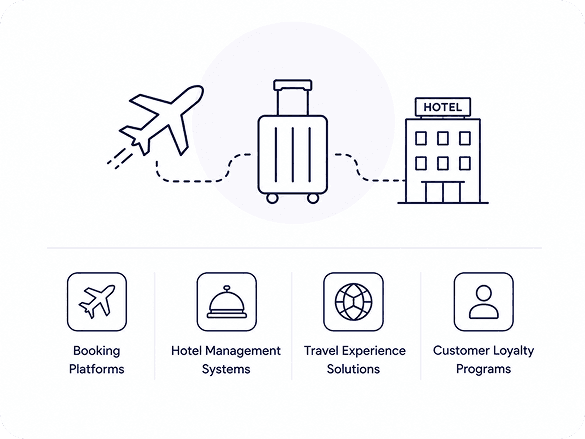
Booking and guest experience apps handling real-time availability, mobile check-in, and loyalty programs built to survive an airline or hotel chain's next devaluation event, since a loyalty app that only works while the points math stays static was never actually finished.

Travel and Hospitality
Explore Travel and Hospitality

Education

Insurance

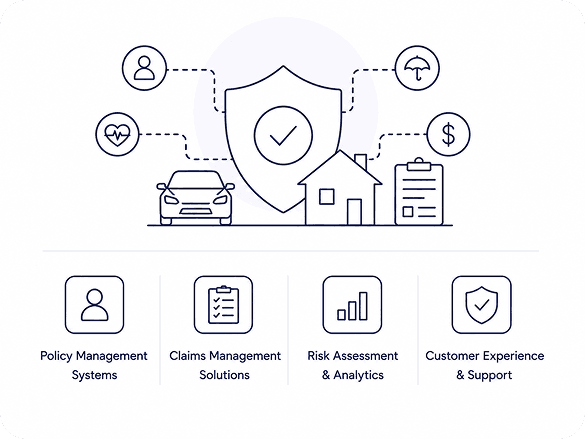
Claims apps with photo and document capture built directly into intake, plus usage-based insurance features pulling real driving or activity data, engineered so a claim moves faster because the right information was captured correctly the first time, not resubmitted twice.

Insurance
Explore Insurance

Logistics and Supply Chain

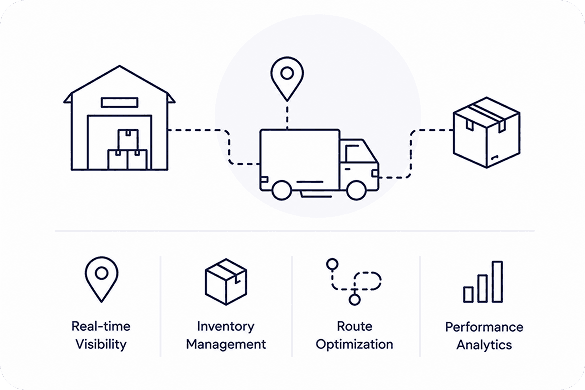
Fleet and warehouse apps built for real barcode and RFID scanning volume, with route optimization that accounts for actual delivery density instead of a straight-line distance calculation, and shipment visibility customers can check themselves without ever needing to call support.

Logistics and Supply Chain
Explore Logistics and Supply Chain

We'd Rather Show You a Number Than Tell You We're the Best

How we approach custom iOS app development, Android app development, and enterprise mobile app development for the US market, with the evidence behind every claim instead of a generic pitch

Awards & Recognitions

Recognised by leading platforms, startup ecosystems, and global technology communities.

Top US-Based IT Services Firm 2026
Clutch
Outlook
Ai Automation
Business Standard
YourStory
Good Firms
Top Machine Learning Companies - Goodfirms
Top eCommerce Development Company
Entrepreneur
ZBusiness
Times of India
Hindustan Times
Top US-Based IT Services Firm 2026
Clutch
Outlook
Ai Automation
Business Standard
YourStory
Good Firms
Top Machine Learning Companies - Goodfirms
Top eCommerce Development Company
Entrepreneur
ZBusiness
Times of India
Hindustan Times

We Won't Recommend a Platform Because It's Easier for Us

The native-versus-cross-platform decision gets made based on your product's actual requirements during discovery, not our team's stack preference. If a cheaper cross-platform build genuinely serves you better, that's what we'll recommend, even though it's a smaller invoice.

A Senior Engineer Owns the Estimate, Not Just the Sales Call

The person quoting your timeline stays hands-on through architecture, sprint reviews, and deployment. We keep the management layer thin, since a dollar spent relaying messages is a dollar not spent on the engineering that determines whether the app actually works.

We Test Where Your Users Actually Are

Real device testing across the fragmented mix of phones and OS versions your actual audience runs, not just the newest flagship devices sitting in an office drawer.

The Estimate You Get Is the Number on the Final Invoice

Fixed scope agreed before development starts. If something changes mid-project, you hear about the cost implication before it happens, not after.

Akhilesh K Verma, Founder of Akoode Technologies

Talk Directly with Our Founder

Discuss your software vision, AI roadmap, and delivery strategy with the team leading product engineering at Akoode.

Ways to Work With Akoode on a US Mobile App Project

Every model comes with the same baseline: dedicated engineers, full IP ownership, and documentation built for a real review, not just a demo.

Frequently Asked Questions, Mobile App Development Company USA

Including real cost ranges, timelines, and what HIPAA or PCI-DSS actually changes about a build.

It designs, builds, and maintains mobile applications for iOS, Android, or both, covering the full lifecycle from discovery through post-launch support. Akoode handles platform strategy, UI/UX design, development, QA, app store submission, and ongoing maintenance. We work with startups building a first app and enterprises modernizing a mobile presence that's fallen behind their competitors.
It depends heavily on scope, but here's a realistic breakdown. A tightly scoped MVP with core functionality, one platform, and basic backend integration typically runs $25,000 to $60,000. A more complete app with real-time features, payment processing, and a genuine backend usually falls between $60,000 and $150,000. Enterprise mobile apps with deep system integration, advanced security requirements, and multi-platform support can run $150,000 to $400,000 or more. We give a firm number after discovery, once we understand the actual scope, not a range that quietly grows once development starts.
A focused MVP typically takes 8 to 12 weeks, discovery and final QA included. A more complete app with backend integration, payment processing, or real-time features usually runs 16 to 24 weeks. Enterprise apps with deep system integration and multi-platform requirements can take 6 months or longer. We set the number during discovery and don't quietly move it once the sprint clock is running.
For native development, Swift and SwiftUI on iOS, Kotlin and Jetpack Compose on Android. For cross-platform, Flutter or React Native, chosen based on your specific requirements rather than a default preference. Backend work typically runs on Node.js, Python, or Java depending on what your team already maintains, deployed on AWS, Azure, or Google Cloud. We pick the stack that fits your product and your team's ability to maintain it long after we're gone.
You do, fully, from the point final payment clears. No carve-outs, no quiet reuse rights, no licensing dependency on us afterward. Your codebase, design assets, and data models are entirely yours, written into the agreement before any work begins.
Six stages: Discovery and Requirement Analysis, System Architecture, UI/UX Design, Agile Development, QA and Security Review, and Deployment with Post-Launch Support. Each stage has a defined output and a sign-off point before we move to the next one. Platform decisions and compliance requirements get resolved in discovery, not discovered halfway through a sprint.
Cost is the most obvious difference. Our rates reflect the Indian engineering market, meaningfully below a comparable US agency, while our senior engineers carry the same level of experience you'd expect locally. The time difference is real, and we don't dress it up: there's no full day of live overlap. What we build around that instead is documentation and async communication solid enough that a missed call never actually costs you anything, plus live calls scheduled for anything that genuinely needs real-time discussion.
Ask to see their actual delivery process, not just a portfolio of screenshots. Ask how they'd approach the platform decision for your specific product, since a vendor who defaults to the same stack for every client hasn't actually thought about your requirements. Check whether they subcontract to a shop you'd never meet, and ask directly how they handle HIPAA, PCI-DSS, or CCPA if your app touches health, payment, or California resident data.
It depends on what your app actually needs to do, not on which framework is trending. Native development in Swift or Kotlin makes sense when you need deep platform integration, camera-heavy AR features, or performance that a cross-platform layer can't reliably deliver. A cross-platform build in Flutter or React Native makes sense when a single codebase serving both platforms doesn't meaningfully compromise the experience your users need, which covers a genuinely large share of business apps. We make this call during discovery based on your actual requirements, not a default preference.
Yes, and this comes up constantly in the US market. HIPAA applies if your app handles protected health information, and it shapes decisions around data encryption, access logging, and business associate agreements. PCI-DSS applies to apps handling payment card data and drives how payment flows get architected and where card data is allowed to touch your own infrastructure at all. CCPA applies to apps handling California resident data and requires specific consent, disclosure, and deletion capabilities. We factor in whichever of these actually applies during discovery, not as a retrofit before launch.
Always, before any real technical or commercial detail gets discussed. We use a standard mutual NDA reviewed by counsel, or we'll work from yours if you'd rather. Usually signed within a day of the first call.
Yes. Our staff augmentation and dedicated team models give you senior iOS, Android, or cross-platform engineers who plug into your existing sprint and tools without a lengthy US hiring process. This suits companies that already have a product team and need specific capacity, not a full outsourced build.
Yes, every engagement includes a minimum 90-day post-launch support period covering bug fixes, OS compatibility updates, and performance monitoring. After that, clients typically move to an ongoing maintenance retainer or a dedicated team arrangement, since a mobile app needs continued attention every time Apple or Google ships a new OS version.

Tell Us What Your App Actually Needs to Do

Whether it's a first mobile product or an enterprise app replacing something that's fallen behind, tell us the real problem, not a feature wishlist. A senior engineer, not a salesperson, will give you a straight answer on scope, platform, and cost.

Reply Time
< 30 working minutes
NDA-Friendly
Signed before kickoff
IP Ownership
100% yours from day one
Security check *
= ?

Stay Informed with Thoughtful Innovation

Subscribe to the Akoode newsletter for carefully curated insights on AI, digital intelligence, and real-world innovation. Just perspectives that help you think, plan, and build better.