Britain did not simply participate in the invention of modern computing, it originated most of the ideas the rest of the world later built on. During the Second World War, Alan Turing and the codebreakers at Bletchley Park built Colossus, arguably the world's first programmable electronic digital computer, to break German ciphers, laying theoretical groundwork that still underpins every computer built since. Barely three years after the war ended, the Small-Scale Experimental Machine, nicknamed the Manchester Baby, ran the first program ever stored in electronic memory at the University of Manchester on 21 June 1948, proving the stored-program concept that every mobile app still relies on today. And the chip architecture inside more than 99 percent of the world's smartphones was designed in Cambridge, where Arm was founded in 1990 and has since shipped over 300 billion chips built to its designs. No other country can point to that same unbroken chain, from theoretical computing, to the first stored-program machine, to the literal silicon inside almost every phone on the planet.
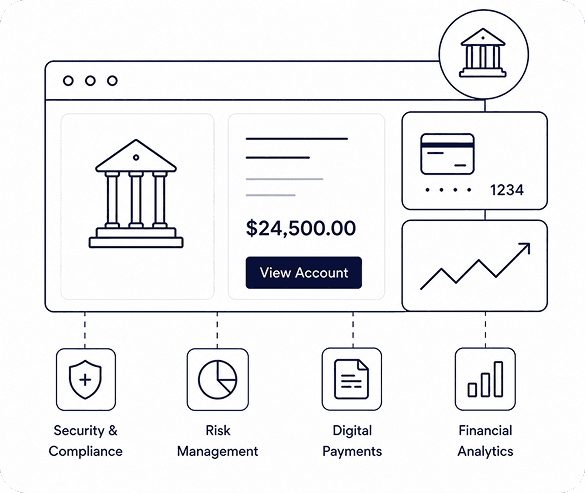
That legacy is not just historical. The UK remains Europe's clear leader in financial technology, capturing over a third of all fintech investment across the entire EMEA region even in a subdued 2025 funding year, more than France, Germany, the Nordics, and several other major economies combined. Open Banking, a UK-pioneered regulatory framework that lets customers securely share financial data between providers, reached 16.5 million user connections by December 2025, a 36 percent increase year on year, with 31 million Open Banking payments processed in March 2025 alone, work that increasingly happens through a mobile app rather than a browser or a branch counter.
Put those two things together and the expectation for any mobile product built in the UK becomes clear. British engineering culture has never been comfortable with an approximate answer, whether that meant breaking an unbreakable cipher, building the first computer that could store its own instructions, or designing a chip architecture other companies would license rather than compete with. British financial regulation, meanwhile, has spent the last decade building some of the most sophisticated open, secure data-sharing infrastructure anywhere in the world. A mobile app built for a UK business sits at the intersection of both traditions: it is expected to work with the same unforgiving precision this country's computing pioneers demanded of themselves, and to handle data with the same rigor its financial regulators now expect as standard.