


 May 29, 2026
Healthcare software is expensive to build for specific reasons. It handles sensitive patient data. It operates in regulated environments. It integrates with complex legacy systems. And it must keep working even when those legacy systems change.
Understanding where the cost comes from, and where it typically surprises teams mid-project, is the most useful thing a founder or CTO can do before briefing a development partner.
This guide covers healthcare app development cost in 2026 by app type, by feature, by compliance requirement, and by team location. Both INR and USD figures are included throughout.
What Makes Healthcare App Development More Expensive Than Standard Software?
Three things drive healthcare development cost above standard software categories.
Compliance is not optional. Every healthcare app handling patient data must meet regulatory standards. HIPAA in the US. ABDM and the Digital Personal Data Protection Act in India. GDPR for European patient data. MDR for medical devices in the EU. These requirements are not checkboxes. They shape the data architecture, the audit trail design, the encryption standards, and the access control model from the first line of code. Teams that treat compliance as a final-stage review regularly face $15,000 to $80,000 in rework costs when those requirements are applied retroactively.
EHR and system integration is genuinely hard. Connecting to hospital information systems, pharmacy databases, insurance platforms, and wearable devices requires navigating proprietary APIs, vendor certification programs, and version compatibility. Each EHR connection adds $20,000 to $60,000 to the project scope depending on the system and how well it is documented.
Data architecture for healthcare is different. Patient health data must be structured, encrypted, and auditable in very specific ways. Getting this right at the start is affordable. Retrofitting it after the app is built regularly costs more than the original development.
What Does Healthcare App Development Cost by App Type?
App Type | Cost Range (USD) | Cost Range (INR) | Timeline |
|---|---|---|---|
Basic patient portal or appointment booking | $40,000 to $80,000 | ₹33L to ₹66L | 3 to 5 months |
Telemedicine platform | $150,000 to $300,000 | ₹1.25Cr to ₹2.5Cr | 6 to 10 months |
EHR / EMR system | $200,000 to $500,000 | ₹1.65Cr to ₹4.15Cr | 9 to 18 months |
Mental health and wellness app | $60,000 to $150,000 | ₹50L to ₹1.25Cr | 4 to 7 months |
Remote patient monitoring | $100,000 to $250,000 | ₹83L to ₹2.1Cr | 5 to 10 months |
AI diagnostic platform | $200,000 to $500,000+ | ₹1.65Cr to ₹4.15Cr+ | 9 to 18 months |
Hospital management system | $150,000 to $400,000 | ₹1.25Cr to ₹3.3Cr | 8 to 15 months |
Healthcare MVP (lean, single workflow) | $25,000 to $60,000 | ₹20L to ₹50L | 8 to 14 weeks |
India-specific pricing from domestic healthtech builds: a full custom HMS in India costs ₹3L to ₹15L. A custom EHR costs ₹5L to ₹25L. A telemedicine platform costs ₹4L to ₹18L. These figures reflect local market rates without the global compliance overhead that international products require.
What Are the Healthcare App Development Costs by Feature?
Individual features carry their own cost weight. Here is what the most common healthcare app features cost to build in 2026.
Feature | Cost Range (USD) |
|---|---|
User registration and patient profiles | $8,000 to $15,000 |
Appointment scheduling and calendar | $12,000 to $25,000 |
Telemedicine / video consultation | $15,000 to $40,000 |
EHR integration (read-only) | $5,000 to $15,000 |
EHR integration (bi-directional sync) | $30,000 to $80,000 |
HL7 FHIR API implementation | $15,000 to $40,000 |
Prescription management | $10,000 to $25,000 |
Wearable and IoT device integration | $15,000 to $35,000 |
AI symptom checker (basic chatbot) | $25,000 to $75,000 |
AI diagnostic engine | $60,000 to $150,000 |
Push notifications and reminders | $5,000 to $12,000 |
Payment gateway and insurance integration | $10,000 to $25,000 |
Admin dashboard and analytics | $20,000 to $50,000 |
HIPAA compliance setup | $15,000 to $35,000 |
Security audit and penetration testing | $8,000 to $25,000 |
EHR bi-directional sync is the single most common cost surprise in healthcare projects. Read-only access retrieves data for display. Bi-directional sync writes data back to the EHR in real time. Vendor certification programs, sandbox testing, and ongoing version compatibility monitoring all sit on top of the initial integration build. Teams that budget for read-only and later discover bi-directional is required typically face $25,000 to $50,000 in unplanned scope.
How Does Compliance Add to Healthcare Software Development Cost?
Compliance is a development workstream, not a review step. The earlier it is designed in, the cheaper it is.
HIPAA compliance covers six main areas for development teams. Access controls and audit logs. Encryption in transit and at rest. Breach notification procedures. Business Associate Agreements with all data processors. Data minimisation by design. Session management and automatic logouts. Setting up HIPAA-compliant infrastructure properly adds $15,000 to $35,000 to a project. Annual compliance maintenance runs $5,000 to $15,000. The alternative, a single HIPAA violation, can cost up to $1.9 million per violation category.
ABDM compliance in India covers ABHA ID integration, FHIR-compliant health record exchange, and consent management under the Health Data Management Policy. Indian healthtech products targeting the public health market must register with NHA and implement the ABDM APIs. This adds ₹3L to ₹8L to the build cost depending on the depth of integration required.
GDPR applies to any healthcare app handling data from EU residents. Consent management, data portability, the right to erasure, and data protection impact assessments each carry development cost. Budget $10,000 to $30,000 for GDPR implementation in a new healthcare product.
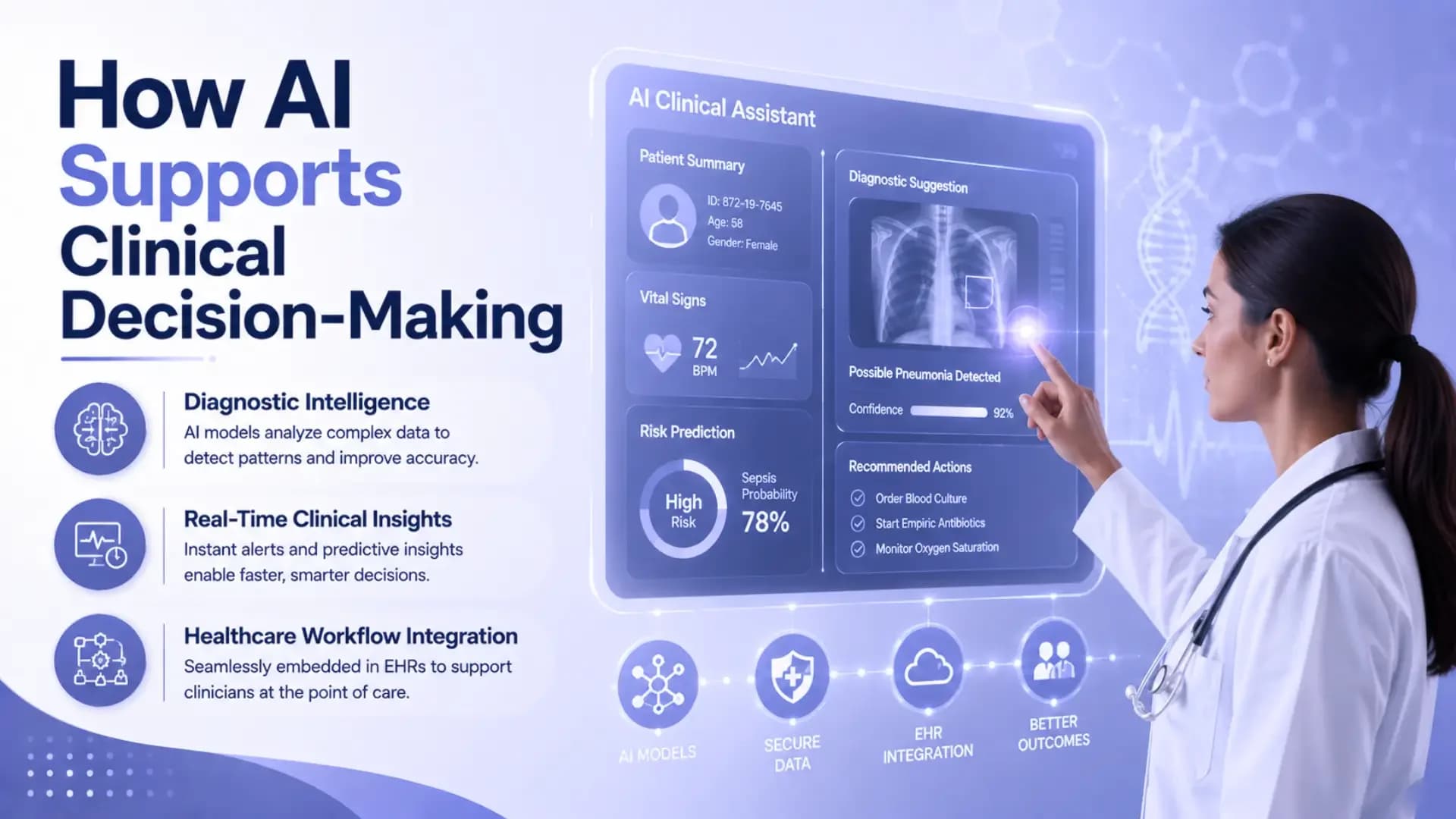
FDA SaMD classification applies to healthcare apps that influence clinical decisions. The FDA's January 2026 guidance update clarified when clinical decision support tools require premarket review. Apps that provide information a clinician reviews and interprets stay in a more permissive zone. Apps that autonomously direct treatment decisions face stricter classification. Understanding how AI diagnostic and CDSS systems are built and regulated before starting development prevents costly architecture rework triggered by late regulatory discovery.
How Does Team Location Affect Healthcare App Development Cost?
Location is the single largest cost variable in any healthcare software project.
Region | Hourly Rate Range | Notes |
|---|---|---|
United States | $150 to $300/hour | Highest compliance familiarity, highest cost |
United Kingdom | $80 to $150/hour | Strong regulatory knowledge, mid-to-high cost |
Germany / Western Europe | $85 to $150/hour | Strong GDPR expertise |
India | $25 to $75/hour | Deep talent pool, strong HIPAA and ABDM knowledge |
Eastern Europe | $45 to $90/hour | Good quality, growing healthcare specialisation |
A telemedicine platform that costs $250,000 with a US-based team costs $65,000 to $95,000 with a quality India-based team. The same architecture. The same compliance standards. The difference is labour cost, not output quality.
India has produced some of the strongest healthtech engineering teams in the world. The domestic market, Practo, 1mg, Mfine, Niramai, and dozens of others, has created genuine experience in healthcare software development at scale. Teams that have shipped ABDM-compliant products, built FHIR integrations against Indian HIS systems, and navigated CDSCO registration processes carry knowledge that no amount of general software experience substitutes for.
For broader context on mobile app development costs in India across different categories, the healthcare sector sits at the higher end of the range due to compliance and integration requirements.
What Does a Healthcare App Development Timeline Look Like?
Timeline in healthcare software is almost always longer than non-healthcare projects of equivalent feature scope. Three factors extend it consistently.
Compliance setup takes real time. HIPAA infrastructure, ABDM integration, and security architecture are not parallel to development. They constrain it. Access controls, encryption, and audit logging must be in place before patient data touches the system.
EHR vendor processes are slow. Getting sandbox API access from Epic or Cerner takes weeks. Completing vendor certification programs takes months. These timelines are controlled by the EHR vendor, not the development team.
User testing in healthcare involves clinical stakeholders. Clinicians are busy. Getting meaningful feedback from doctors and nurses during UAT takes longer than standard user testing. Building adequate testing cycles into the timeline is essential.
A realistic timeline for each healthcare app tier:
Simple patient-facing app with HIPAA compliance: 3 to 5 months. Mid-tier telemedicine or EHR-integrated platform: 6 to 10 months. Complex AI-powered or multi-system enterprise platform: 10 to 18 months or more.
Teams that compress these timelines by skipping compliance setup or EHR testing phases do not deliver faster. They deliver an app that needs remediation before it can go live.
What Are the Hidden Costs of Healthcare Software Development?
Most initial quotes cover the build. These costs sit outside it and are responsible for most budget surprises.
Annual compliance maintenance. Budget 12 to 15 percent of initial development cost per year. For a $100,000 app, that is $12,000 to $15,000 annually. This covers OS and dependency updates, security patches, compliance re-audits, and EHR API version monitoring when upstream systems change.
Cloud infrastructure. Healthcare apps require HIPAA-eligible cloud services. AWS HealthLake, Google Cloud Healthcare API, and Azure Health Data Services are the leading options. Monthly costs run $500 to $3,000 for mid-scale applications. Enterprise platforms run significantly higher.
Security audits. An independent penetration test and security audit costs $8,000 to $25,000. Regulated markets require these before deployment and at regular intervals afterward.
EHR API access fees. Major EHR vendors charge for API access and onboarding. Epic and Cerner vendor fees typically run $10,000 to $20,000 for initial access.
Post-launch iteration. Real clinical users behave differently from testing participants. Budget an additional 15 to 20 percent of the build cost for the first six months post-launch for refinements based on actual clinical use.
Should You Build Custom Healthcare Software or Buy Off-the-Shelf?
The off-the-shelf option looks cheaper at first. The total cost of ownership calculation is often different.
Pre-built HMS or EMR products in India cost ₹2L to ₹5L as a one-time purchase or ₹4,000 to ₹20,000 per month on subscription. They cover standard workflows for standard clinical environments.
The problems appear at the edges. Your patient intake workflow is different. Your billing process requires a specific integration. Your clinical staff uses a mobile workflow the packaged system was not designed for. Every gap gets patched with a workaround. Workarounds accumulate. Eventually the team is spending more time managing the software than using it.
Custom healthcare software development costs more upfront. It delivers a system built around how your clinical environment actually works. The five-year total cost of ownership, when you include per-user fees, annual price increases, integration workarounds, and productivity loss from a poor workflow fit, regularly favours custom for any healthcare organisation with specific operational requirements.
For healthcare businesses evaluating the build versus buy decision, the inflection point is usually around thirty to fifty clinical users. Below that, off-the-shelf is typically faster and cheaper. Above it, custom delivers better long-term value.
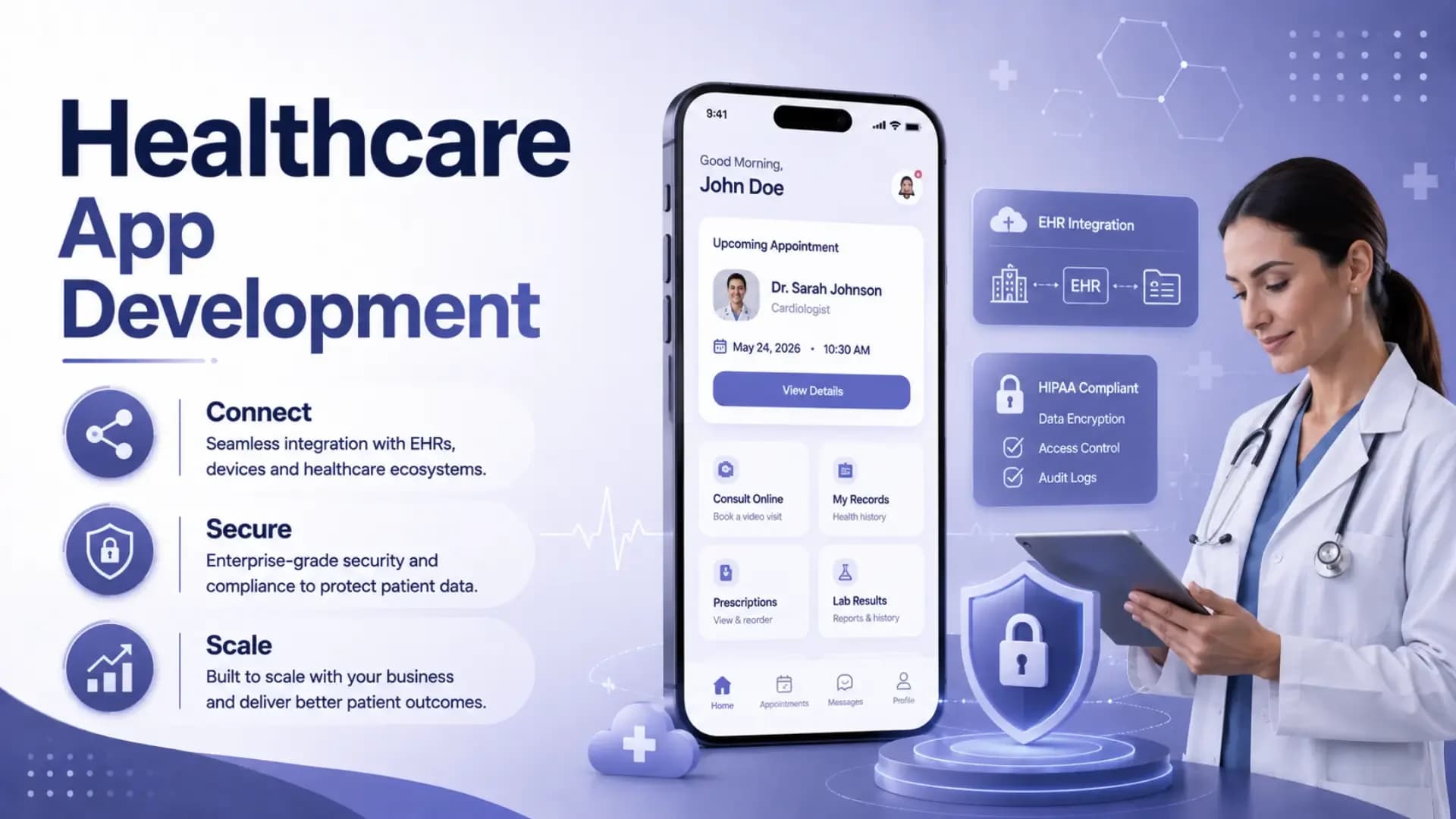
What Does a Healthcare App Look Like on Mobile?
Most healthcare interactions now happen on mobile. Appointment booking. Medication reminders. Teleconsultation. Remote monitoring dashboards. Lab results.
Mobile healthcare apps carry specific design and compliance requirements that standard mobile applications do not. WCAG 2.1 accessibility standards apply to any healthcare app serving diverse patient populations. Older patients require larger text, high contrast, and simpler navigation patterns than younger users. Clinicians need information-dense dashboards optimised for speed of use, not consumer-friendly simplicity.
Building for both patient and clinician interfaces in the same application requires deliberate UX separation. They are different users with fundamentally different needs. Treating them with the same design system creates a poor experience for both.
Mobile app development for healthcare also requires platform-specific considerations. The Android development landscape covers architecture patterns relevant to healthcare mobile builds, particularly around offline data handling for environments with unreliable connectivity.
Conclusion
Healthcare software development costs more than standard software for defensible reasons. The compliance requirements are real. The integration complexity is genuine. The data architecture requirements are non-negotiable.
What separates projects that land near the bottom of the cost range from those that significantly exceed estimates is preparation. Teams that map their compliance obligations before development starts, plan EHR integration timelines accurately, and budget for the hidden costs of security audits and annual maintenance consistently deliver on budget.
India is one of the strongest locations globally for healthcare software development in 2026. The combination of ABDM and FHIR experience, competitive hourly rates, and a growing domestic healthtech market has produced development teams with genuine healthcare domain depth. For international healthtech companies and Indian health systems alike, partnering with the right India-based team can deliver production-grade healthcare software at 40 to 60 percent of the cost of Western alternatives.
Akoode Technologies is a leading AI and software development company headquartered in Gurugram, India, with a US office in Oklahoma. From custom healthcare software and mobile health applications to AI-powered diagnostic platforms and EHR-integrated systems, Akoode builds healthcare technology for startups, hospitals, and enterprise health systems across 15+ industries globally. If you are planning a healthcare software project and want accurate cost estimates before briefing a development partner, that conversation starts here.
Frequently Asked Questions
1. What is the healthcare app development cost in India in 2026?
Healthcare app development in India costs ₹20L to ₹50L for a lean MVP. A standard telemedicine or patient portal platform costs ₹1.25Cr to ₹2.5Cr. A full custom EHR or hospital management system costs ₹1.65Cr to ₹4.15Cr. India-only builds targeting domestic workflows cost less. International builds with HIPAA or GDPR compliance requirements cost more.
2. What does HIPAA compliance add to healthcare software development cost?
HIPAA compliance setup adds $15,000 to $35,000 to a project. Annual compliance maintenance costs $5,000 to $15,000. Skipping HIPAA and facing a violation can cost up to $1.9 million per violation category. Compliance is significantly cheaper when designed in from the start than retrofitted after the product is built.
3. How much does EHR integration cost?
Read-only EHR integration costs $5,000 to $15,000. Bi-directional sync costs $30,000 to $80,000 per EHR system. Each new EHR connection adds $20,000 to $60,000 depending on the system documentation and vendor certification requirements. FHIR R4 is the current US standard for EHR interoperability.
4. How long does healthcare app development take?
A simple HIPAA-compliant app takes 3 to 5 months. A mid-tier telemedicine or EHR-integrated platform takes 6 to 10 months. Complex AI-driven or multi-system enterprise platforms take 10 to 18 months or more. EHR vendor processes and compliance setup extend timelines regardless of development team capacity.
5. Is it cheaper to build custom healthcare software or buy off-the-shelf?
Off-the-shelf is usually cheaper for organisations with standard workflows and under thirty to fifty clinical users. Custom development delivers better five-year total cost of ownership for organisations with specific operational requirements, unique workflows, or integration needs that packaged systems cannot meet without significant workaround cost.
6. What hidden costs should I budget for in healthcare software development?
Annual compliance maintenance at 12 to 15 percent of build cost, cloud infrastructure at $500 to $3,000 per month, security audits at $8,000 to $25,000, EHR API access fees at $10,000 to $20,000 per vendor, and post-launch iteration budget at 15 to 20 percent of the build cost for the first six months. These costs are real but rarely appear in initial development quotes.