


 October 16, 2026
Short answer
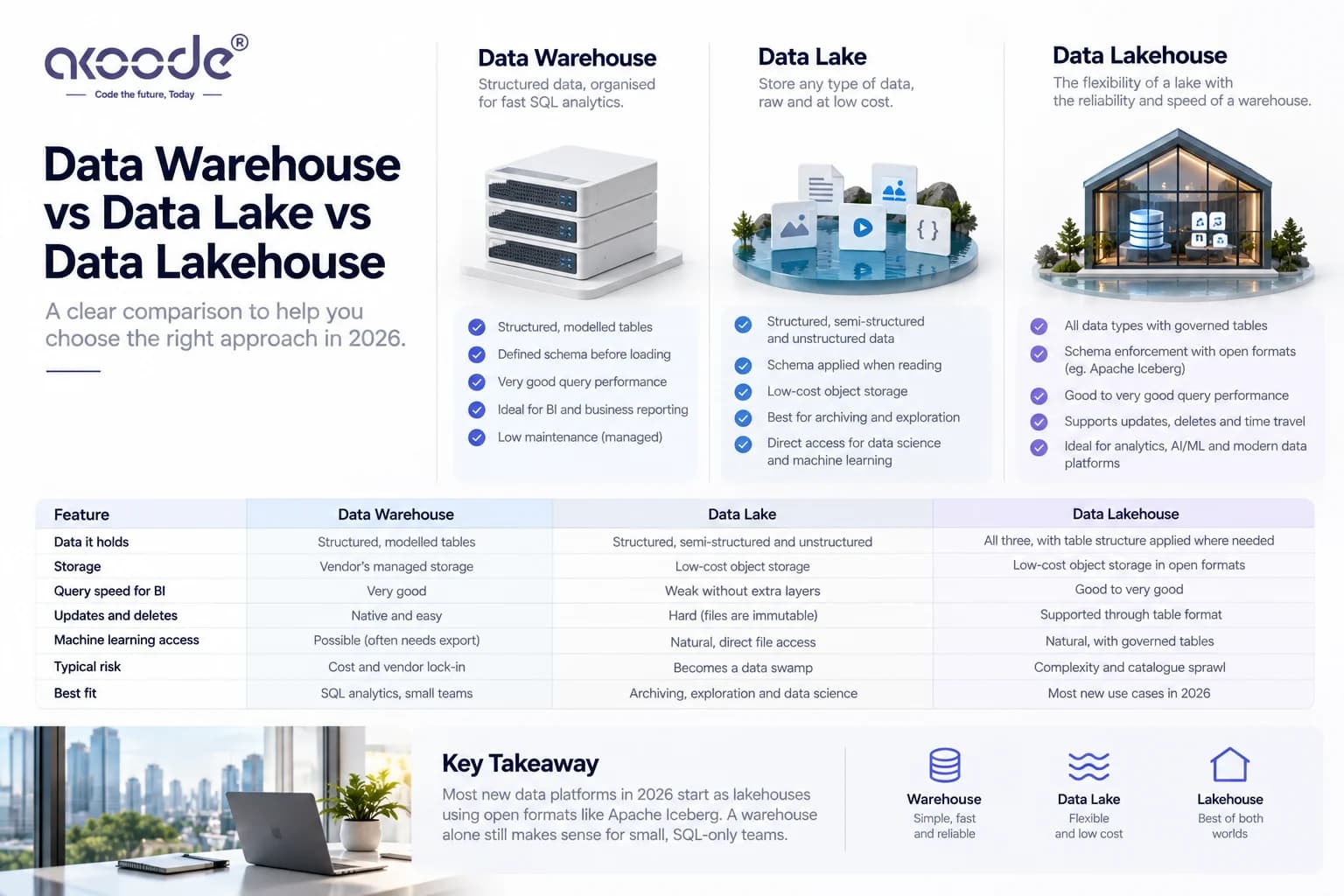
A data warehouse stores structured data in a format built for fast SQL. A data lake stores any kind of data, raw and cheap, in object storage. A data lakehouse keeps the files in open formats such as Apache Iceberg on that same cheap storage and adds the transactions, schemas and speed of a warehouse on top. In 2026 most new platforms start as lakehouses. A warehouse alone still makes sense for small, SQL-only teams.
Last updated 16 October 2026. Platform status and dates are taken from vendor release notes and industry coverage, linked where used.
The Three Options in Plain Terms
Think of a warehouse as a well-organised stockroom. Everything has a labelled shelf before it comes in, so finding it is fast, but you have to decide the labels first. A lake is a big storage yard. You can drop anything in, logs, images, JSON, spreadsheets, and sort it out later, but without discipline it fills with things nobody can find. A lakehouse is the yard with a proper inventory system laid over it, so you keep the yard's cheap space and flexibility and still get a reliable shelf-by-shelf catalogue.
Data warehouse | Data lake | Data lakehouse | |
|---|---|---|---|
Data it holds | Structured, modelled tables | Structured, semi-structured and unstructured | All three, with table structure applied where needed |
Schema approach | Defined before loading | Applied when reading | Enforced and evolvable through the table format |
Storage | Usually the vendor's managed storage | Cheap object storage | Cheap object storage in open formats |
Query speed for BI | Very good | Weak without extra layers | Good to very good |
Updates and deletes | Native and easy | Hard, files are immutable | Supported through the table format |
Machine learning access | Possible, often needs export | Natural, direct file access | Natural, with governed tables |
Typical risk | Cost and lock-in as data grows | Turns into a data swamp | Complexity, catalogue sprawl |
When a Data Warehouse Is Still the Right Answer
A warehouse wins when your data is mostly structured, your questions are mostly SQL, and your team is small. Sales, finance, marketing and operations reporting from a handful of business systems rarely needs more than this. You get strong performance, easy governance and very little to maintain.
It is also the right start if you have no data engineers. A managed warehouse with a few reliable pipelines and one BI tool will serve a business for years. Do not build a lakehouse to feel modern. If the whole stack can be described in one paragraph, keep it that way.
When a Data Lake Alone Makes Sense
A plain lake suits archiving and data science exploration. If you keep years of raw logs, sensor streams, call recordings or images for compliance or model training, and only a few specialists query them, cheap object storage is the right place. It stops making sense the moment ordinary business users need reliable numbers from it, because raw files have no transactions, no consistent schema and no guarantee that two people reading the same folder see the same thing.
Why the Lakehouse Became the Default
The old trade-off was cost and flexibility on the lake side against reliability and speed on the warehouse side. Teams ended up running both, copying data between them, and paying twice for storage and for the engineers who kept the copies in step. The lakehouse removes the copy.
The enabling piece is an open table format, a layer of metadata that tells engines which files make up a table and records every change as a transaction. That gives you inserts, updates, deletes, schema changes and the ability to query a table as it looked last Tuesday, all on files sitting in storage you own.
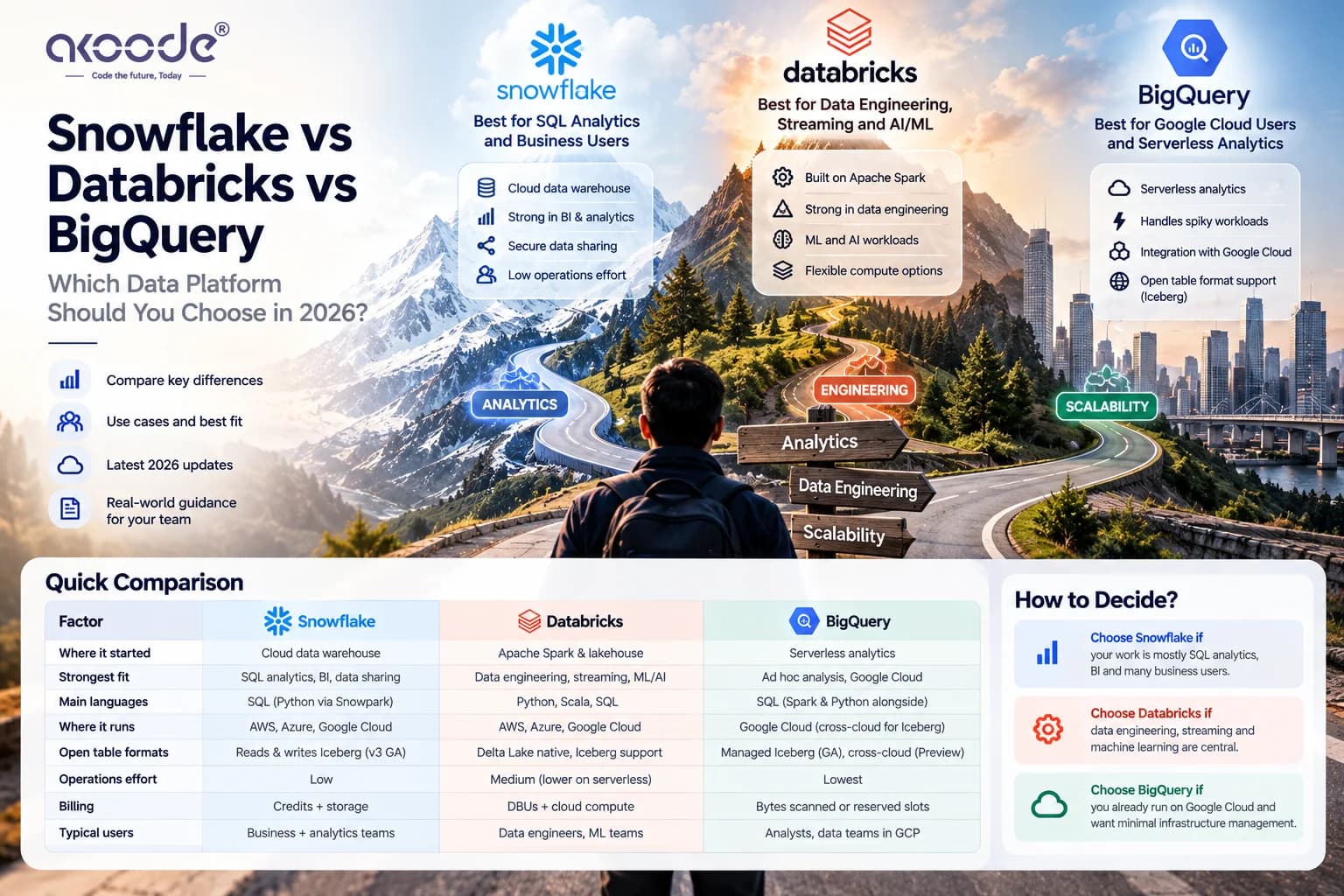
The same pattern has become the practical answer to a question our clients ask often: do we need a lake or a warehouse? Increasingly the answer is both in one, with the warehouse behaviour provided by the table format and the query engine you pick. We cover how the major platforms compare in Snowflake vs Databricks vs BigQuery.
Apache Iceberg in October 2026: What Is Actually Settled
Three table formats competed for years: Apache Iceberg, Delta Lake and Apache Hudi. In 2026 the contest has largely resolved. Coverage from July describes Iceberg as the default for new open lakehouses, with version 3 of the specification adding deletion vectors, row lineage and a VARIANT type for semi-structured data. That coverage reported Iceberg v3 generally available on Snowflake from May, in public preview on Databricks, and supported by Amazon S3 Tables. Other trackers list different status dates for Databricks, so check each vendor's current release notes before you plan around a specific feature.
Google's position shifted in the same direction. Its release notes say that on 20 April 2026 BigLake was renamed Lakehouse for Apache Iceberg, and a cross-cloud capability for querying Iceberg data held in other clouds entered Preview two days later. Delta Lake users are not stranded either, since Delta tables can be exposed as Iceberg through a compatibility layer.
What this means in practice: if you are starting a lakehouse today and have no strong reason to pick another format, choose Iceberg. You keep the option to read the same tables from several engines, which is the main protection against being stuck with one vendor.
The Catalogue Is the New Lock-In
Once the format question is settled, the fight moves to the catalogue, the service that records which tables exist, who may read them and how they connect. Iceberg defines a REST catalogue interface that several products implement, including Apache Polaris (originally from Snowflake, now an Apache project), Databricks Unity Catalog and Snowflake's managed Open Catalog.
The sensible takeaway is the one the July coverage made: an open file format does not by itself protect you from lock-in. Your permissions, lineage and business definitions live in the catalogue, and moving those is harder than moving files. When you pick a platform, ask three things. Which REST catalogue does it support? Can the access rules be exported? Can another engine honour them? If the answers are vague, your exit is more expensive than it looks.
The Layered Design We Use Most Often
Whatever the engine, most lakehouses organise data into three layers, often called bronze, silver and gold.
Bronze holds data as it arrived, unchanged, so you can always replay and audit. Silver holds cleaned, deduplicated and standardised tables: one customer record per customer, one standard address, one currency. Gold holds the tables that match business questions, such as revenue by region or fleet utilisation by week. Dashboards and models read gold. Engineers fix problems in silver. Nobody edits bronze.
The value of the layers is that a problem has an obvious home. If a number looks wrong, you can trace it from gold to silver to the raw record. This discipline is also what stops a lake turning into a swamp, which is what happens when files pile up with no owner, no documentation and no tests. Most of the quality work we do in big data projects sits in the silver layer.
Deleting Data Properly: The DPDP Problem Nobody Mentions
This matters for any business with Indian customers. India's DPDP Rules were notified in November 2025, and most obligations apply from 13 May 2027. People gain rights over their personal data, including the right to ask for erasure, and your platform has to be able to honour that.
Object storage files are immutable. Deleting one customer's row in a lakehouse is easy at the table level, since the table format records it as a change. The catch is that old file versions and time-travel snapshots may still contain the row. Until those snapshots expire and the underlying files are rewritten and cleaned up, the data physically exists. A real erasure process therefore needs three things: row-level deletes, a rule that expires old snapshots on a schedule, and a clean-up job that removes unreferenced files. Test it with a real erasure request before launch, not after. Choose a platform that makes this easy to automate, and write the retention windows into the design.
Migrating From a Warehouse Without a Rewrite
If you run a warehouse today and your costs or limits are climbing, you rarely need a big-bang move. A staged route works better.
First, keep the warehouse and land new high-volume or unstructured sources, logs, events, documents, directly in Iceberg tables on object storage. Second, expose those tables to the warehouse as external tables, so analysts still query from one place. Third, move heavy transformation work to the lakehouse engine one pipeline at a time, retiring warehouse copies as each is proven. Fourth, once gold tables are stable, decide whether the warehouse stays as the serving layer or is retired. Many teams keep it, which is fine. The aim is to stop paying to store everything twice.
Each step should have its own acceptance test: row counts, key aggregates and a sample of records reconciled against the source. A migration that cannot prove the numbers match has not finished.
Common Mistakes
Building a lake with no catalogue. Files without a catalogue are a swamp from day one.
Ingesting everything "just in case". Storage is cheap, but unowned data still carries compliance and security duties. Every source should have a named owner and a purpose.
Ignoring small files. Streaming jobs that write thousands of tiny files make queries slow and costly. Compaction should be scheduled from the start.
Skipping data quality tests in the pipeline. The lakehouse stores whatever you give it. Put tests between bronze and silver.
Choosing real-time by default. A daily batch load is simpler and cheaper, and satisfies most reporting. Use streaming where timing changes the result.
Forgetting who will run it. A lakehouse needs more engineering care than a managed warehouse. If you lack data engineers, plan for a partner or a staff augmentation arrangement from the start.
A Quick Decision Guide
Choose a warehouse if your data is structured, your team is small and SQL answers your questions. Choose a lake if you mainly need cheap archival or raw storage for data science and few people query it. Choose a lakehouse if you have mixed data types, you expect machine learning or AI work, your data volumes are growing quickly, or you want your tables readable by more than one engine. If you are somewhere in between, start with a warehouse and land new, unstructured sources in Iceberg. You can grow into the rest.
The data underneath matters more than the architecture on top. Gartner predicts that through 2026 organisations will abandon 60% of AI projects that lack AI-ready data, so whichever structure you choose, put quality and ownership in first.
Frequently Asked Questions
What is the main difference between a data lake and a data warehouse?
A warehouse stores structured data in a defined schema optimised for fast SQL queries. A lake stores raw data of any type in cheap object storage and applies structure only when the data is read. Warehouses are reliable for reporting. Lakes are flexible and cheap for large or unstructured data but give weaker guarantees on their own.
What is a data lakehouse in simple terms?
A lakehouse keeps data as open-format files in low-cost object storage and adds a table layer on top that provides transactions, schema control and fast queries. You get the flexibility of a lake and much of the reliability and speed of a warehouse without copying data between two systems.
Is Apache Iceberg better than Delta Lake?
Neither is universally better, but Iceberg has become the default for new open lakehouses because most major platforms read and write it, which keeps your options open. Delta Lake remains strong inside Databricks, and Delta tables can be exposed as Iceberg through a compatibility layer. For a new project with no platform constraint, Iceberg is the safer default.
Do I still need a data warehouse if I have a lakehouse?
Not always. Many lakehouse engines now serve SQL analytics well, so some teams retire the separate warehouse. Others keep one as the serving layer for dashboards because it is familiar and fast. The decision depends on query concurrency, your team's skills and how much you want to consolidate. You do not have to decide on day one.
How does a lakehouse handle deletion requests under data protection law?
The table format records row-level deletes as transactions, but older snapshots and files may still hold the data. A compliant process also expires old snapshots on a schedule and removes unreferenced files so the data is physically gone. Test the full process before launch. This is engineering guidance, not legal advice, so involve your counsel on retention periods.
How long does it take to build a data lakehouse?
A focused first release with a few sources and one business question can take a few months. A full platform with many sources, governance and integrated BI generally takes longer, and the main variable is the state of your source data. We scope this after an assessment of your real sources and size the first release around one decision your team needs to make.
Next Step
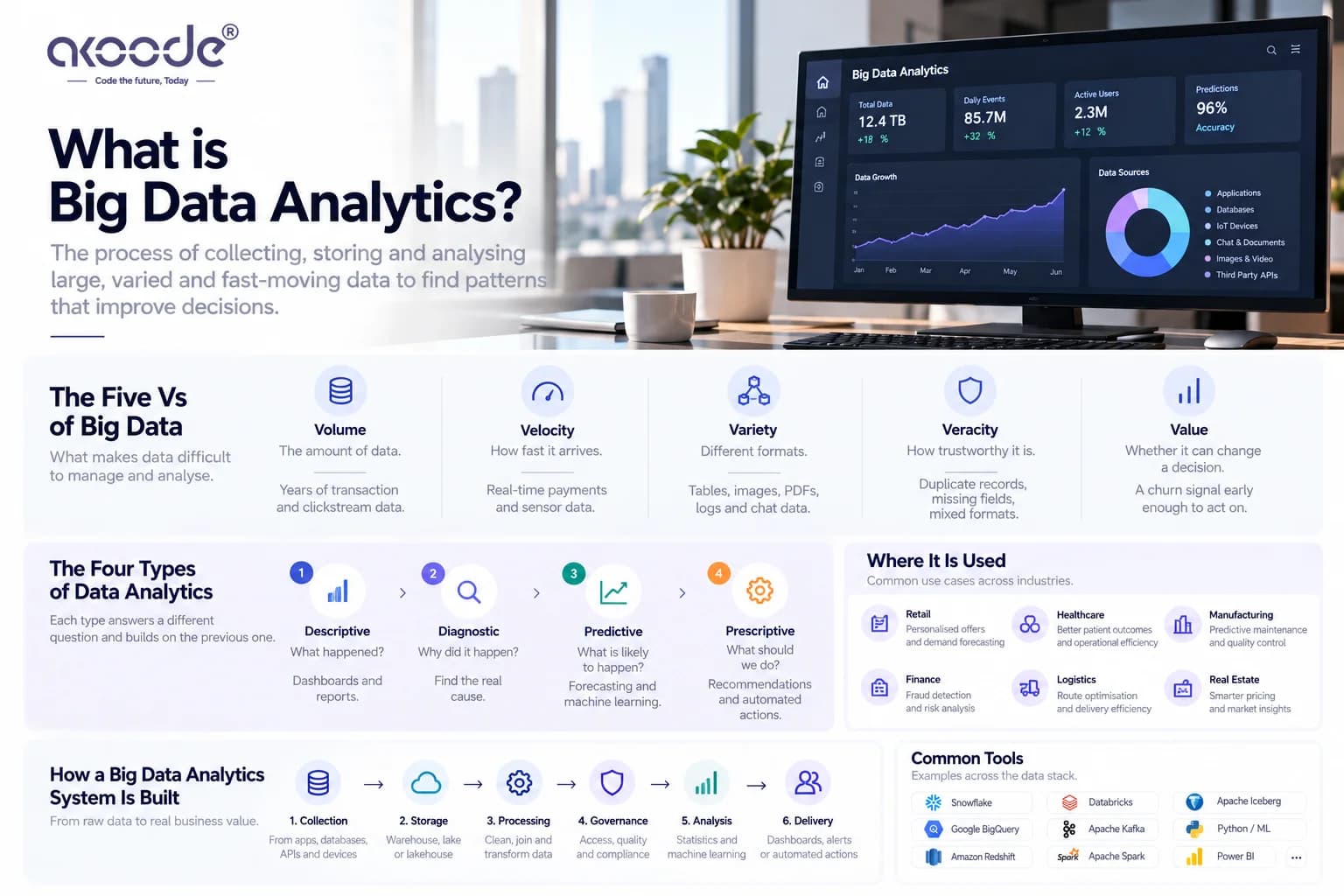
If you are unsure which of the three fits, our team can review your sources and query patterns and recommend a starting design. See our big data and data analytics servicesor book a free assessment call. To see how the leading platforms compare for this decision, read Snowflake vs Databricks vs BigQuery, and for the fundamentals behind all of this, what big data analytics is.
Get In Touch Now
View More Our Blog