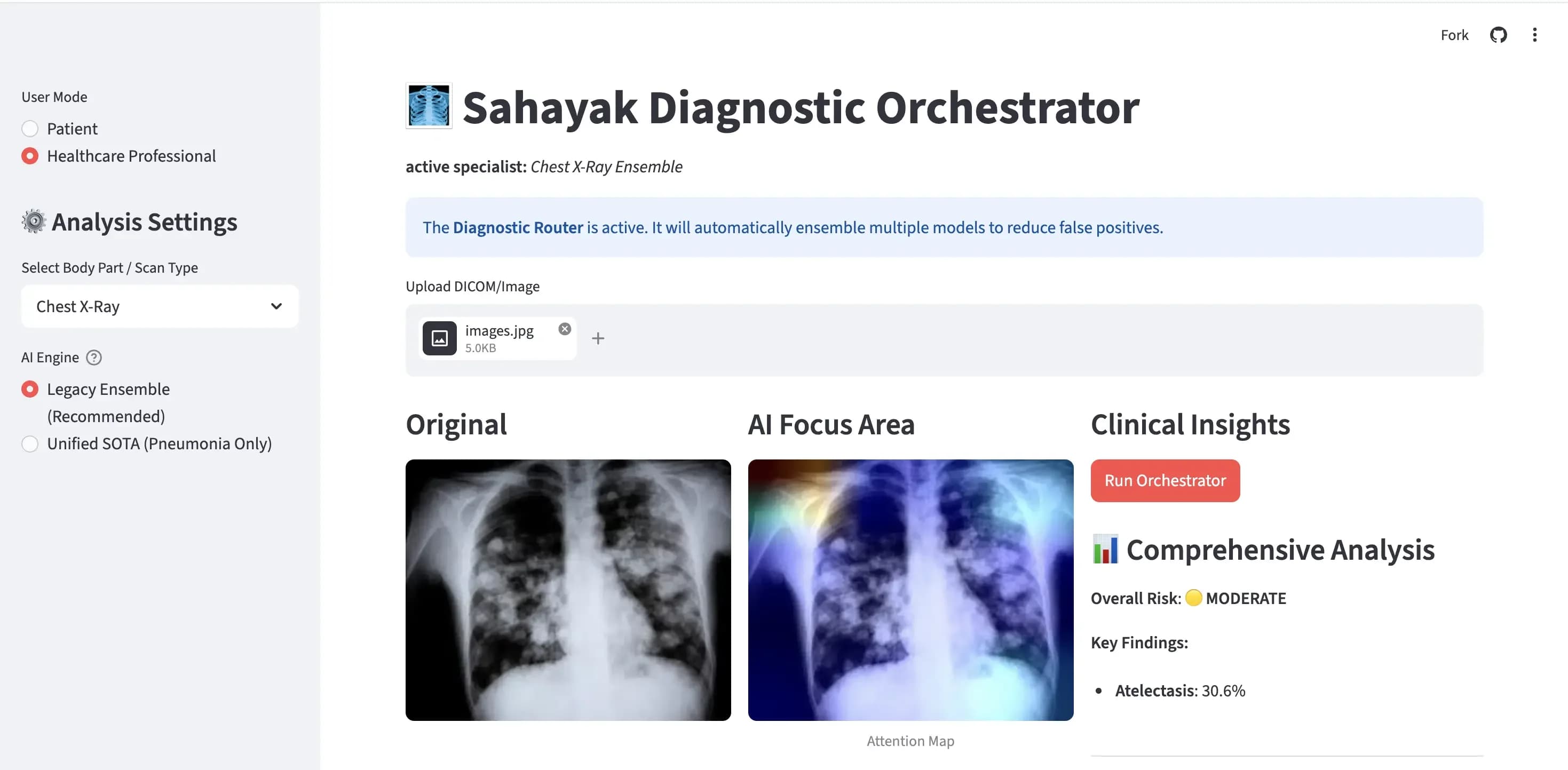
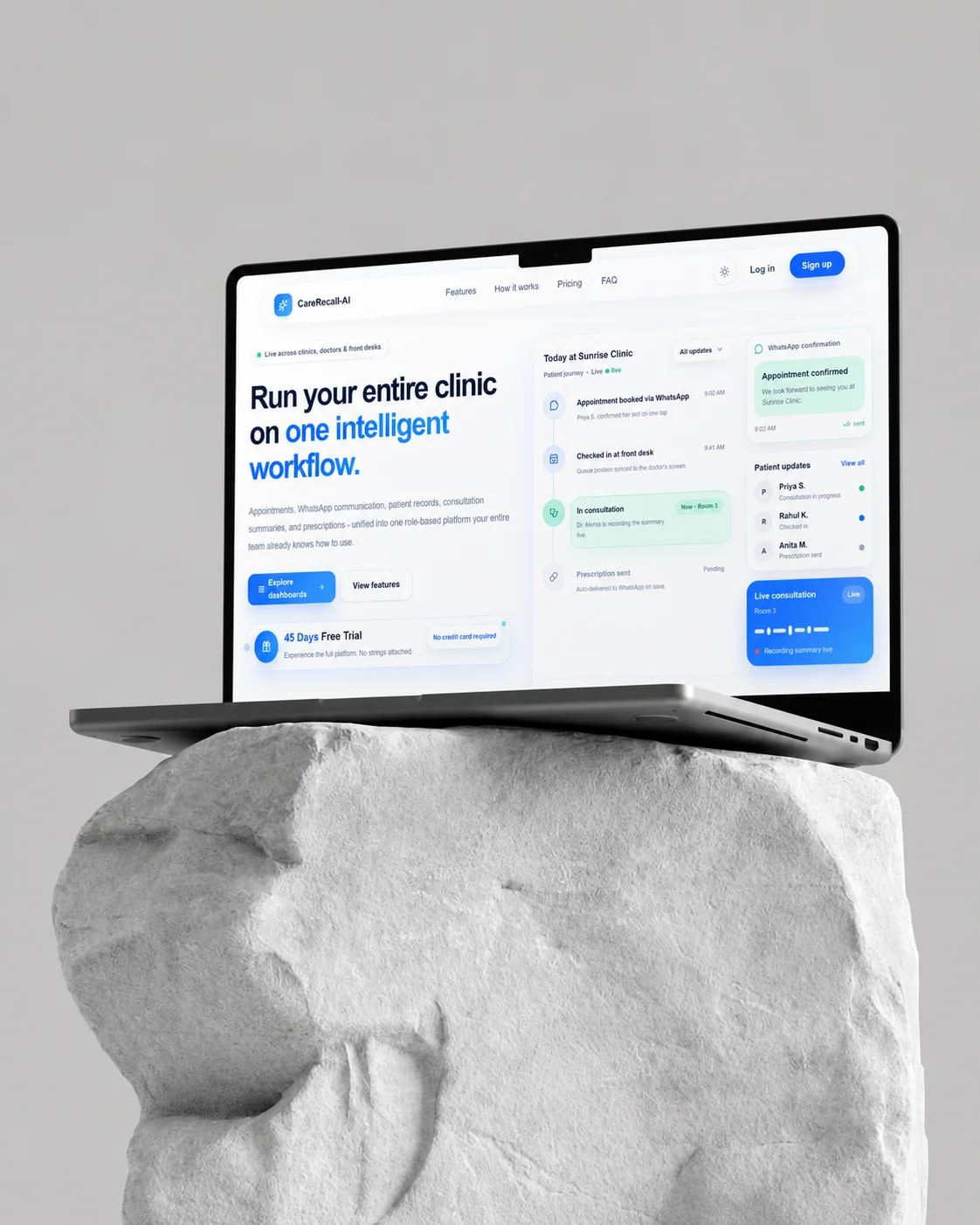
AI connected clinic workflow for health records, appointments, consultations, and patient communication
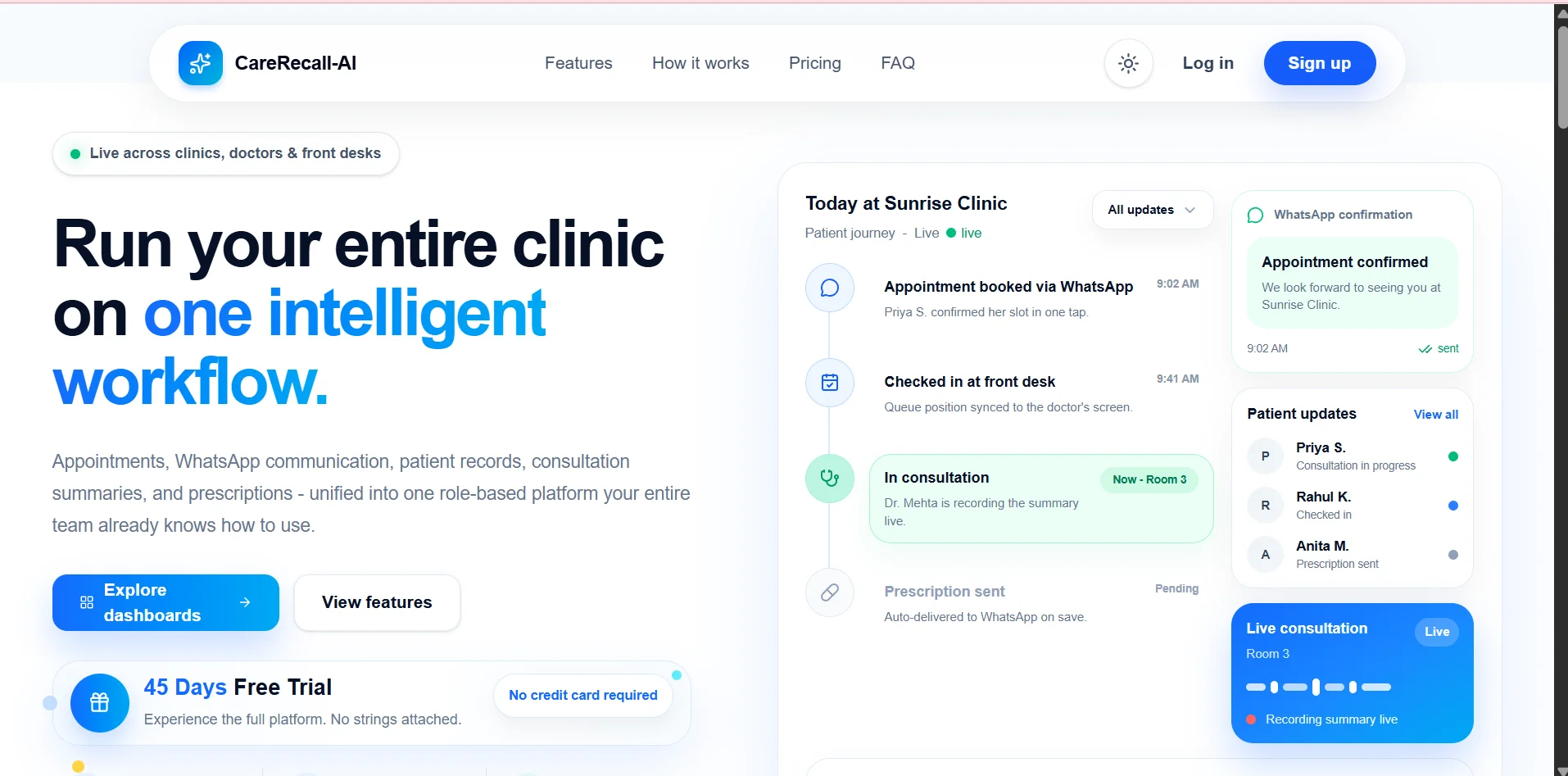
It recalls a patient's history and past prescriptions, lets doctors prescribe straight to WhatsApp, and books the next appointment - one connected AI workflow for the whole clinic.
4 Role Views
Admin, receptionist, doctor, and super admin workspaces
WhatsApp First
Requests, reminders, and patient updates stay inside the workflow
Consultation to Summary
Notes, prescriptions, and follow-ups flow from the same interaction
Building a clinic operating system that feels practical on a busy day
The client needed more than another appointment tool. They were trying to solve a daily operational problem inside clinics where front-desk teams, doctors, and admins were each working from different screens, different records, and too many manual follow-ups. Appointment requests came in from multiple channels, patient communication was scattered, and consultation outcomes were difficult to standardise or revisit later.
They wanted a system that could hold together the entire day-to-day rhythm of a clinic: patient registration, appointment handling, waiting queues, doctor consultations, summaries, prescriptions, follow-ups, and platform oversight. Just as important, the product had to stay simple enough for non-technical clinic staff to use without extra training or process friction.
Akoode designed and built CareRecall AI as a role-based healthcare workflow platform that connects these moving parts in one browser-based product. The result is a system where every role sees what matters to them, while the clinic as a whole works from one shared operational backbone.
4
Role-based workspaces
Separate operational views for clinic admins, receptionists, doctors, and super admins.
1
Unified workflow
Appointments, consultations, records, and communication run inside one connected system.
AI
Summary assistance
Consultation context can be turned into structured notes and prescription-ready outputs.
Web
Zero-install access
The platform runs in the browser, which keeps rollout simpler for clinic teams.
Project Info
Client
Confidential
Industry
Healthcare Operations
Use Case
Clinic workflow unification and patient communication management
Solution
Role-based SaaS platform for clinics
Engagement
MVP Development
Clinic work was happening everywhere except in one reliable system
The operational pain was not caused by a single missing feature. It came from disconnected actions repeating all day across booking, waiting queues, doctor handoffs, patient messaging, and documentation.
Fragmented appointment handling
Booking, rescheduling, and queue management were difficult to coordinate when requests came from different touchpoints and staff did not share a single live workflow.
Patient communication lived outside the system
WhatsApp conversations and patient updates often became side-channel work, making it harder for teams to track status, context, and next steps.
Consultation outputs were inconsistent
Notes, summaries, prescriptions, and follow-up actions depended too heavily on manual effort, which made quality and continuity difficult to maintain.
One interface could not serve every role
Doctors, receptionists, clinic admins, and platform owners each needed different visibility, but still had to work from the same operational truth.
The real issue was not missing data. It was the cost of making people keep stitching the workflow together by hand.
The brief was to create one operating layer for the clinic day
The client was not asking for a narrower admin panel. They needed a product that could replace fragmented coordination with one dependable workflow across roles.
Centralize Clinic Operations
Bring appointments, patient records, consultation outputs, and follow-up actions into one system so teams stop jumping between disconnected tools.
Support Real Role-Based Work
Give receptionists, doctors, clinic admins, and super admins dedicated interfaces shaped around their responsibilities instead of forcing everyone into a generic dashboard.
Keep Patient Communication Inside the Workflow
Make WhatsApp requests, reminders, and updates visible to the care team so conversations lead directly into operational actions.
Improve Consultation Continuity
Capture consultation context in a structured way so notes, summaries, prescriptions, and future care decisions stay easier to revisit.
Build for Growth Across Clinics
Create a product foundation that can support multi-clinic oversight, subscriptions, analytics, and governance without rebuilding the core workflow later.
Akoode built CareRecall AI as one connected clinic workflow, not a stack of isolated modules
We approached the product as an operating system for care coordination. That meant the architecture had to support role separation, shared data visibility, patient communication, and consultation-driven records without creating dead ends between modules.
Workflow and Data Foundation
We defined a unified data model across clinics, users, doctors, patients, appointments, consultations, prescriptions, and messaging so every role could work on the same operational backbone.
Role-Based Application Design
We built dedicated flows for clinic admins, receptionists, doctors, and super admins so each role could act quickly without losing access control or cross-team continuity.
Patient Communication Layer
We integrated WhatsApp-orientated workflows for requests, reminders, and updates so front-desk coordination and patient communication happen inside the same system.
Consultation-to-Documentation Engine
We created flows for recording consultations, generating structured summaries, preparing prescriptions, and turning visit context into reusable patient history.
QA, Iteration, and Launch Readiness
We validated flows across appointments, patient records, consultation artifacts, and role-specific dashboards so the platform behaved like one product instead of separate screens tied together late.
The product was shaped around the tasks clinic teams repeat every day
Highlight 01
Role-Based Clinic Workspaces
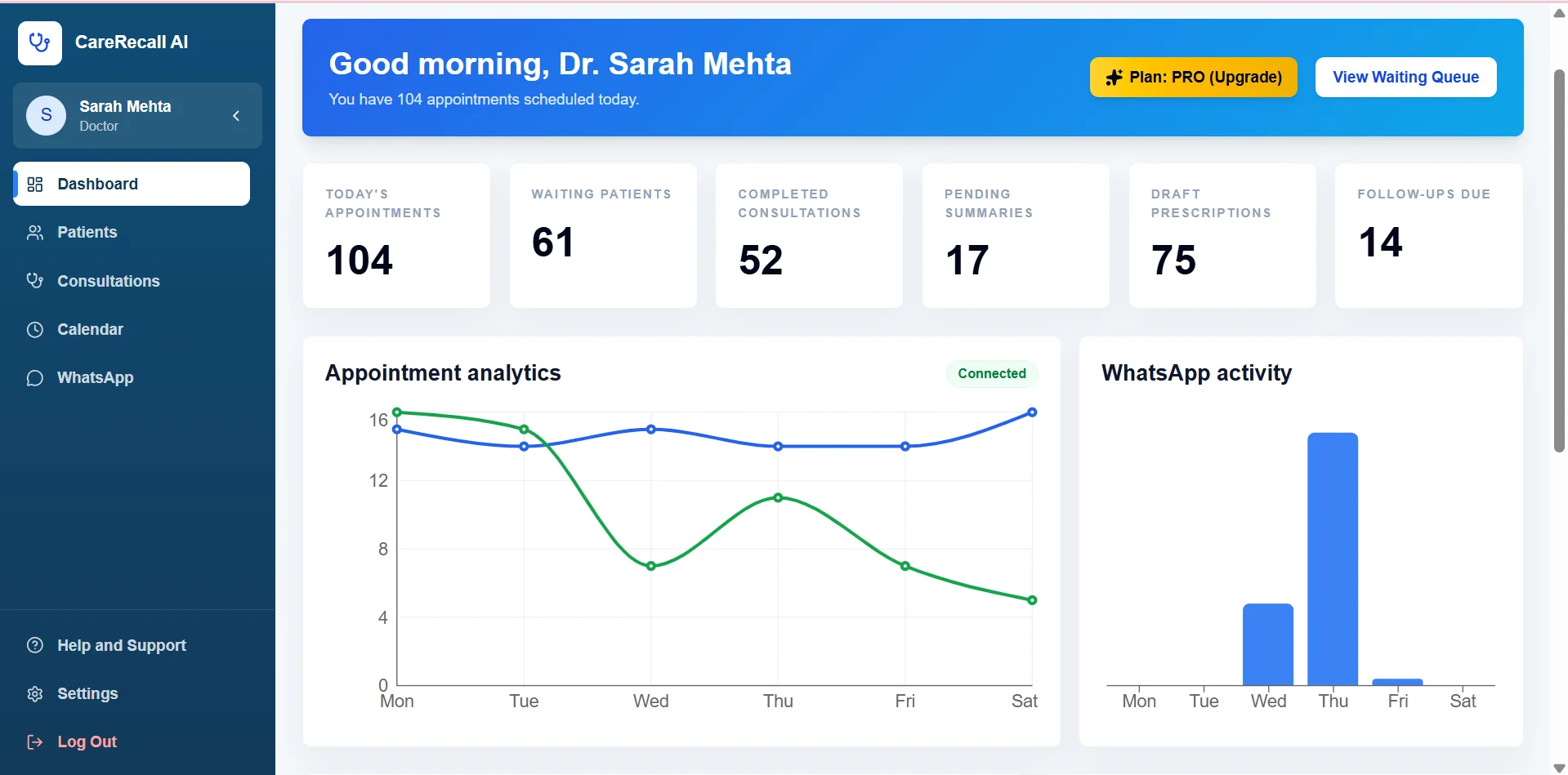
Different teams need different views, but they should never work from different truths. CareRecall AI gives each role its own workspace while keeping the underlying workflow connected.
- Dedicated dashboards by responsibility
- Shared operational data model
- Scoped access without workflow duplication
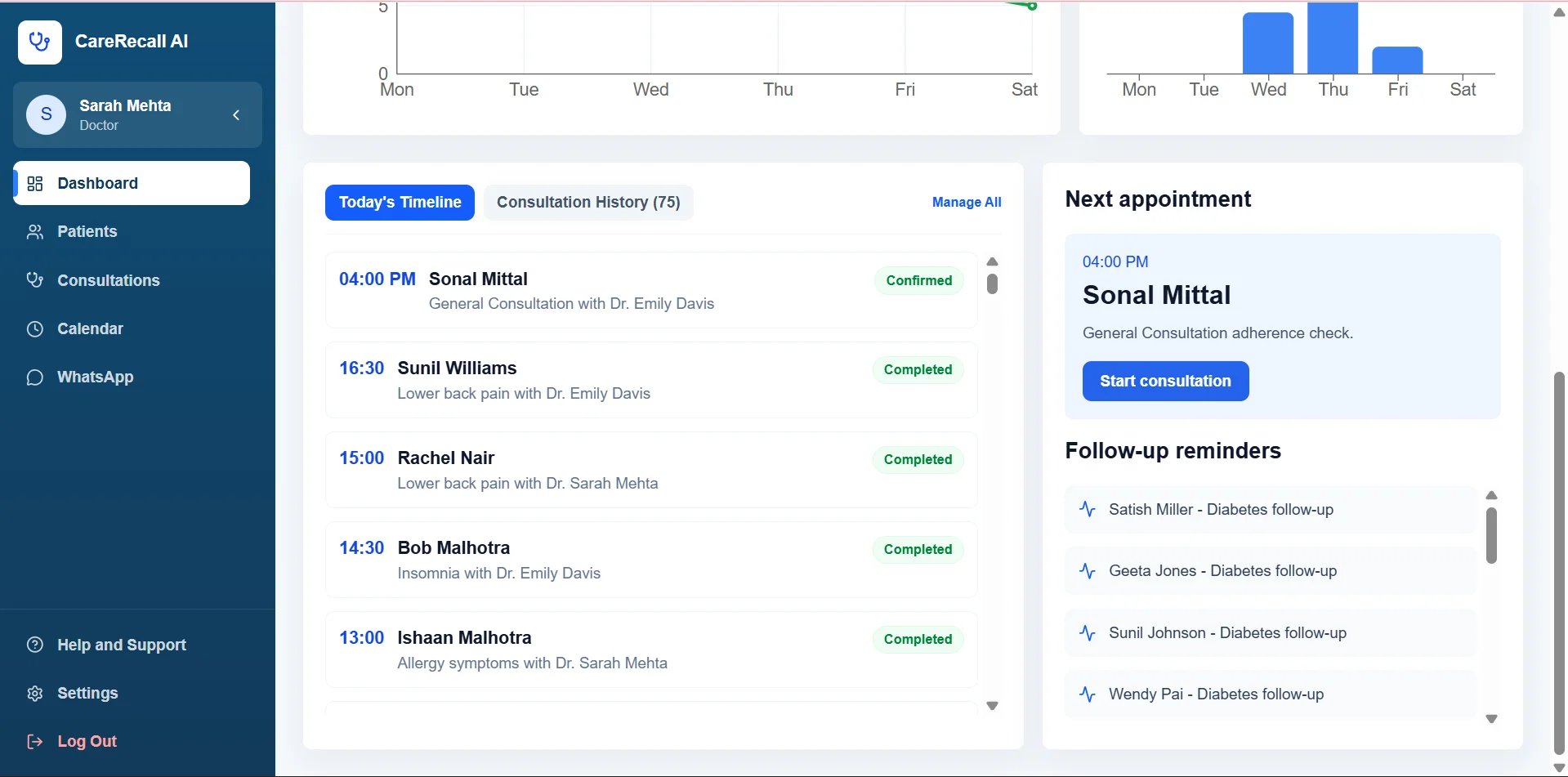
Highlight 02
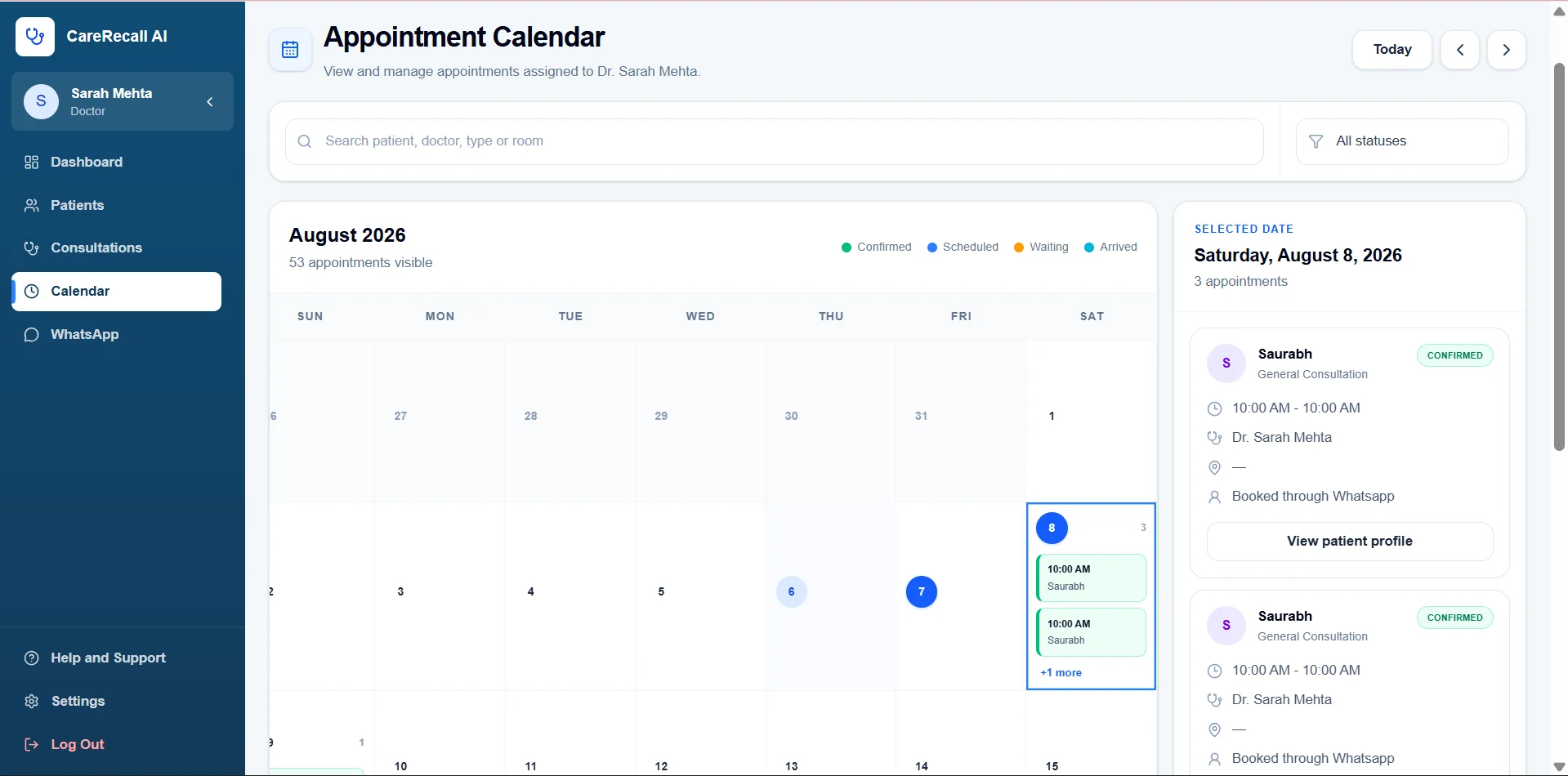
Appointment and Queue Coordination
Front-desk teams can track bookings, confirmations, waiting patients, and doctor availability from one place, which keeps the day moving without manual reconciliation.
- Appointment handling
- Waiting queue visibility
- Doctor availability support
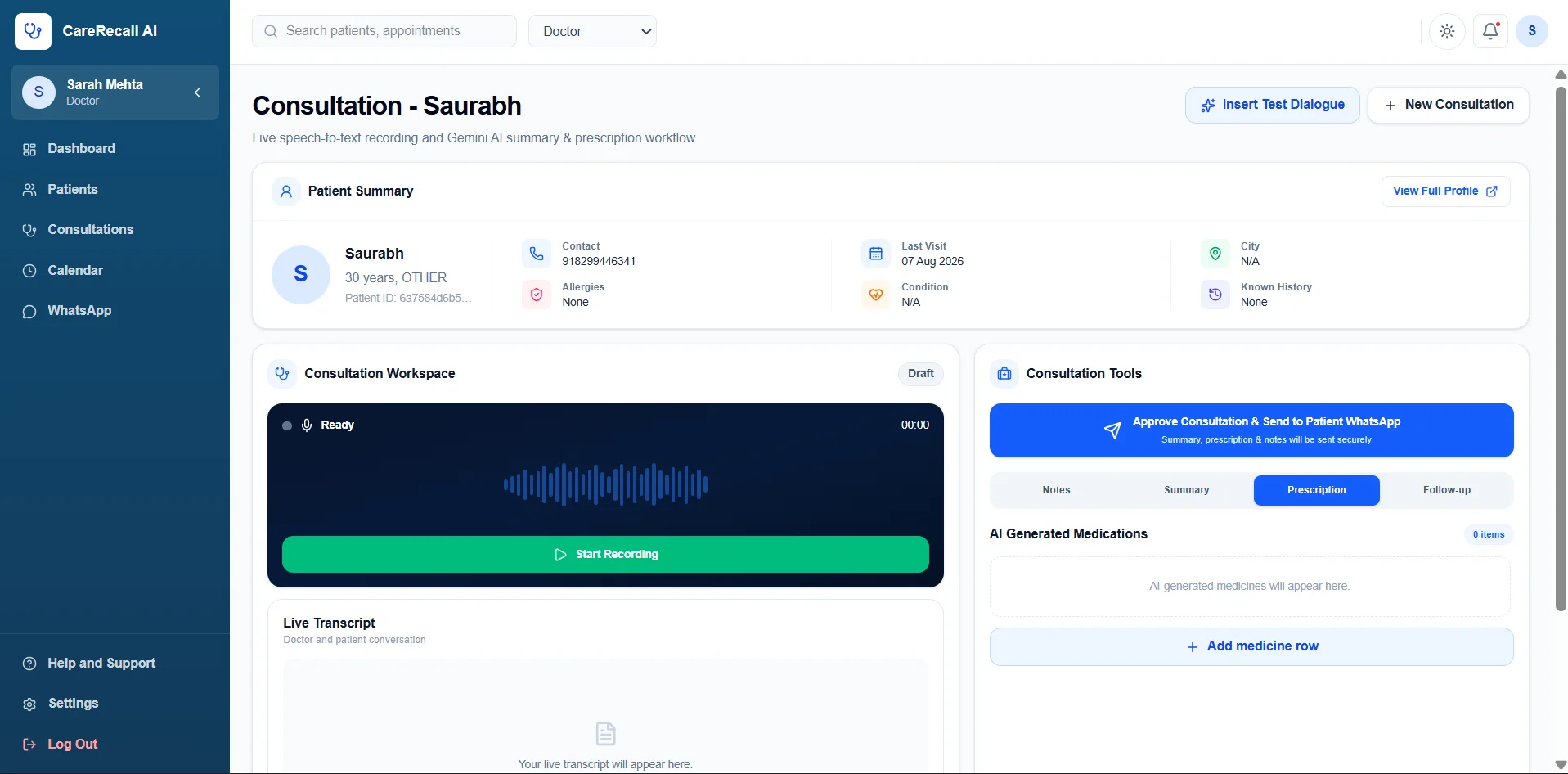
Highlight 03
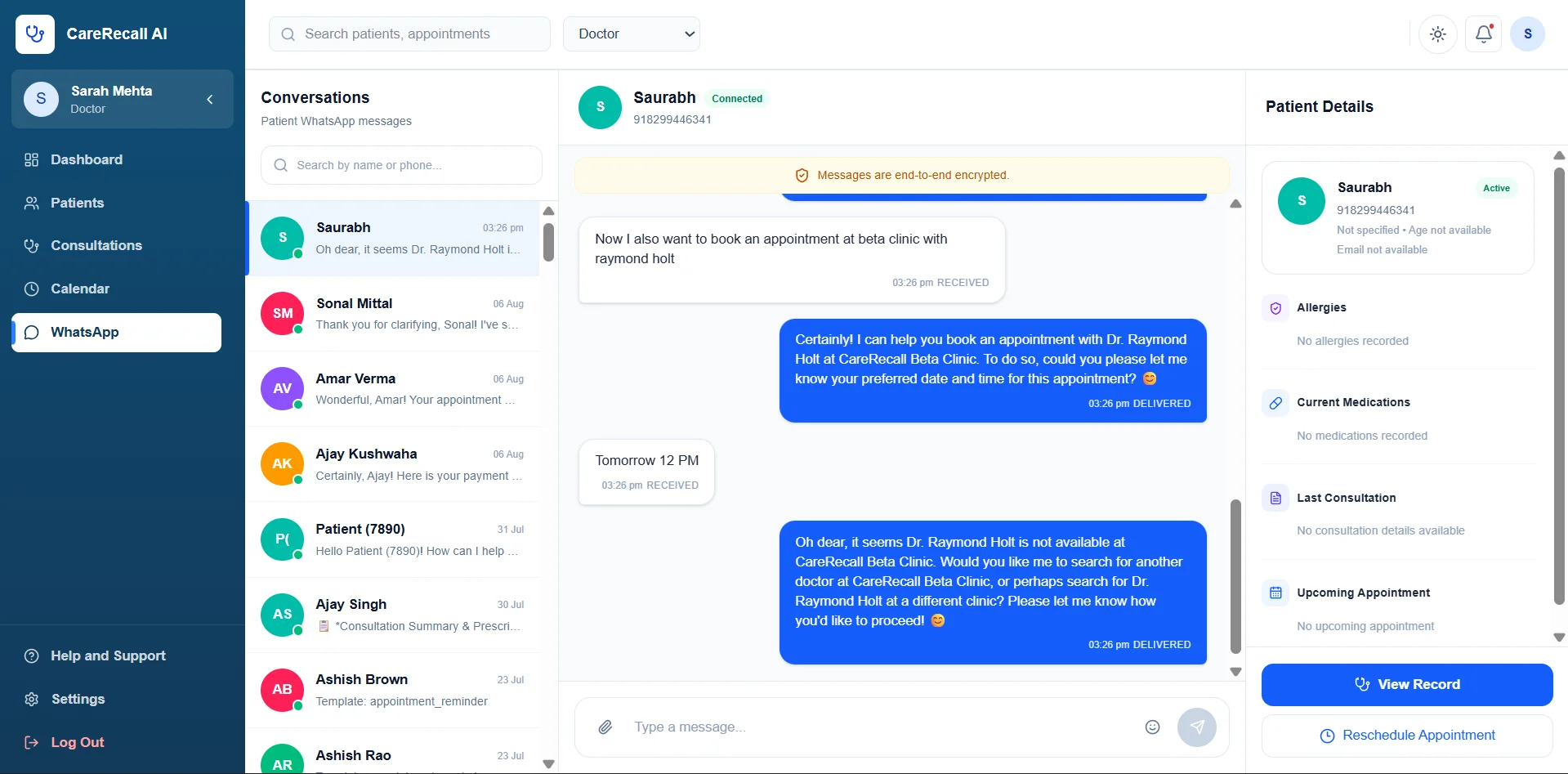
WhatsApp-Driven Patient Communication
Patient messaging becomes part of the clinic workflow instead of a disconnected follow-up task. Requests, reminders, and updates stay visible to the relevant team.
- Request triage
- Reminder handling
- Operational status updates
Highlight 04
Consultation Summaries and Prescriptions
Doctors can move from consultation context to structured notes and prescription preparation with less repetition, while preserving continuity for the clinic.
- Consultation notes
- Patient-facing summaries
- Prescription workflow
Highlight 05
Platform Oversight for Multi-Clinic Operations
Beyond a single clinic, the product supports higher-level oversight across subscriptions, storage, activity, and operational visibility for platform owners.
- Multi-clinic monitoring
- Subscription visibility
- Governance and reporting
A modern web stack built for operational clarity and extensibility
CareRecall AI needed a stack that could support role-based interfaces, real-time workflow coordination, structured healthcare data, and integration-ready backend services. We chose technologies that keep product iteration fast while leaving enough room for AI-assisted consultation workflows and platform growth.
Product Interface
The frontend was built for browser-based access, role-specific navigation, and a clean clinic workflow experience across dashboards.


Backend and Workflow Logic
The backend handles appointments, patients, consultations, prescriptions, authentication, queues, and service orchestration across the clinic workflow.


Data and Integrations
The platform uses document-orientated storage for healthcare workflow entities and supports messaging plus AI-orientated processing flows.

The difficult part was not building screens - it was making the workflow stay coherent across roles
Clinic software gets messy when data, roles, and channels drift apart. The work was keeping one story intact end to end.
One System, Multiple Working Styles
Receptionists, doctors, clinic admins, and super admins all needed different actions, different information density, and different decision points inside the same product.
Our Approach
We designed role-based routing, scoped navigation, and shared domain models so each experience could stay focused without splitting the platform into disconnected products.
Turning Patient Communication into Operational Action
Messaging often becomes a side workflow that never cleanly maps to appointments, records, or follow-ups.
Our Approach
We integrated WhatsApp-orientated request handling directly into patient and clinic workflows so communication could trigger visible next steps inside the platform.
Translating Consultation Context into Reusable Records
Consultation notes, summaries, and prescriptions are easy to fragment when capture, review, and sharing happen in separate tools.
Our Approach
We built a consultation pipeline that links transcripts, notes, patient-facing summaries, prescriptions, and follow-up actions through the same record model.
Designing for Single-Clinic Use and Platform Oversight
Products that begin as clinic tools often struggle once subscriptions, storage, or multi-clinic visibility become product requirements.
Our Approach
We extended the architecture to support super admin views, usage tracking, subscription flows, and cross-clinic reporting without disrupting daily clinic workflows.
CareRecall AI replaced fragmented clinic coordination with a clearer operating flow
The value of the platform came from reducing handoff friction. Instead of treating appointments, messaging, consultations, and oversight as separate layers, the product makes them part of one continuous clinic workflow.
Booking Scattered Across Touchpoints
Staff had to bridge the gap between patient requests, schedules, and queue visibility manually.
Patient Updates Lived Outside Core Operations
Communication was easy to miss because it was not tied directly to clinic actions.
Consultation Outputs Were Hard to Standardize
Notes, summaries, and prescriptions depended on fragmented follow-through.
Visibility Was Either Too Broad or Too Narrow
Teams lacked interfaces tailored to their specific responsibilities.
Unified Clinic Workflow
Appointments, records, communication, and documentation now move through one connected product.
WhatsApp Embedded into Operations
Patient communication can feed directly into reception and care workflows.
Structured Consultation Pipeline
Doctor workflows connect consultations to summaries, prescriptions, and follow-up actions.
Role-Based Experiences on Shared Data
Each team sees the right controls without losing access to the same operational truth.
Fewer Manual Handoffs
Teams can coordinate faster because the operational path is visible inside one system.
Quicker Front-Desk Response
Reception and queue management become easier when bookings and patient messages are connected.
Better Consultation Continuity
Visit context is easier to retrieve, share, and carry forward into future care interactions.
Stronger Oversight as the Platform Grows
Admins and platform owners gain better visibility into usage, clinics, and workflow activity.
70%Faster Processing
What took hours now takes just minutes.
94%Tracking Accuracy
Multi-player detection consistently maintained across all scenarios.
Real-timePerformance Insights
Live insights generated and delivered during match play.
The architecture can support more than one type of clinic workflow
While CareRecall AI was shaped around clinic operations, the same product patterns can extend into other healthcare coordination environments where communication, records, and role-based work need to stay connected.
Multispecialty Clinics
Coordinate appointments, patient records, and doctor workflows across multiple specialities from one platform.
Primary Care Networks
Standardise patient communication, summary creation, and operational follow-ups across recurring visits.
WhatsApp-Led Patient Intake
Turn inbound messaging into triage, bookings, reminders, and care coordination tasks.
Consultation Documentation Workflows
Multi-Clinic Healthcare Groups
Give central operators cross-clinic visibility while preserving local workflows for each facility.
Healthcare SaaS Administration
Monitor subscriptions, usage, storage, and platform activity from a super admin layer.
Akoode built the product around real operational behavior, not just feature lists
This project worked because the team treated product design, architecture, workflow logic, and integration thinking as one effort from the start.
Product Thinking Before Implementation
We shaped the platform around how clinics actually move through a day, which helped the software feel operational instead of abstract.
Full-Stack Execution Across Modules
Akoode delivered frontend, backend, workflow orchestration, and domain modeling as one connected build rather than siloed deliverables.
Readiness for AI-Assisted Healthcare Workflows
The product architecture leaves room for consultation summaries, transcript-based workflows, and structured clinical outputs to live inside the platform naturally.
Role Clarity with Governance in Mind
We designed for daily clinic work and higher-level platform oversight at the same time, which reduces rework as the product grows.