


 June 26, 2026
A solar operator with a handful of sites and an inverter portal can usually get by just fine. A solar operator managing a hundred sites across three states, watching each one through a different inverter manufacturer's separate dashboard, is not monitoring a portfolio. They are doing detective work every month-end.
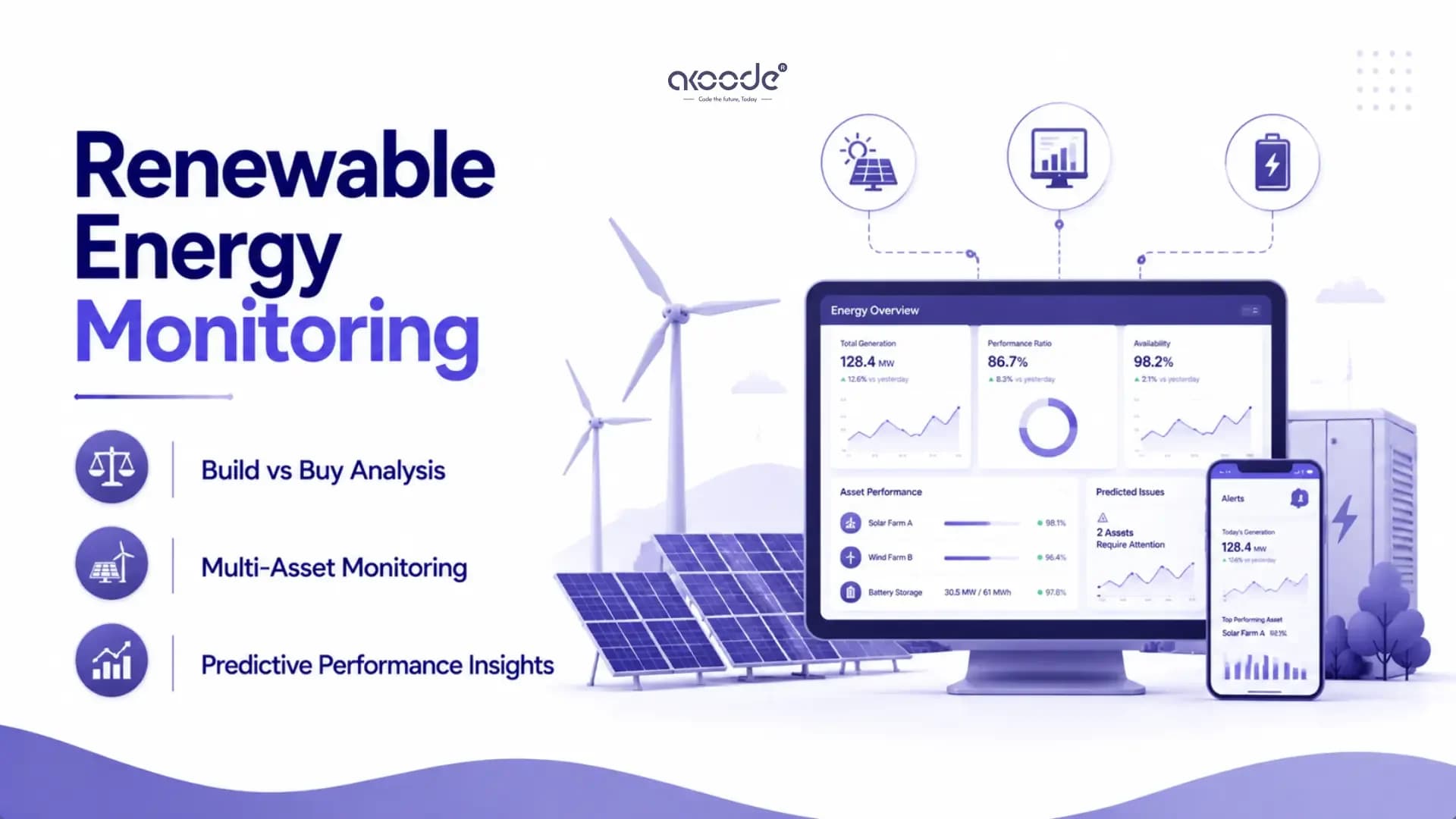
That gap is the real reason renewable energy monitoring software has become its own software category rather than something every operator simply builds in-house or buys off a shelf without thinking about it. The right answer genuinely depends on scale, asset mix, and how much of your operational data already lives inside someone else's proprietary system.
This guide walks through what renewable energy monitoring software actually needs to do, why traditional SCADA alone increasingly falls short for distributed renewable assets specifically, what buying versus building actually costs, and how to make the decision for your own portfolio rather than following a generic recommendation.
Why Doesn't Traditional SCADA Work as Well for Renewables Anymore?
This is the question underneath most build-vs-buy conversations in this space, and it deserves a direct answer before anything else.
SCADA Was Built for a Different Physical Reality
Traditional SCADA systems were designed for centralized manufacturing plants with on-site staff, according to Solarplaza's 2026 analysis of digital control platforms in renewable energy. That assumption simply does not hold for a modern renewable portfolio, which typically means hundreds of unmanned sites scattered across vast territories, with no on-site engineer to walk over and check a panel when something looks wrong.
The Specific Limitations That Show Up at Scale
A peer-reviewed study from the Federal University of Technology in Paraná found that SCADA systems face genuine integration challenges with newer technologies, largely due to legacy hardware and software limitations, as cited in Delfos's 2025 comparison of SCADA versus centralized monitoring. The practical limitation that matters most for renewable operators specifically is predictive capability. SCADA is built around present-tense visibility, what is happening right now, rather than forecasting what is likely to fail next.
Why This Matters More as Portfolios Grow
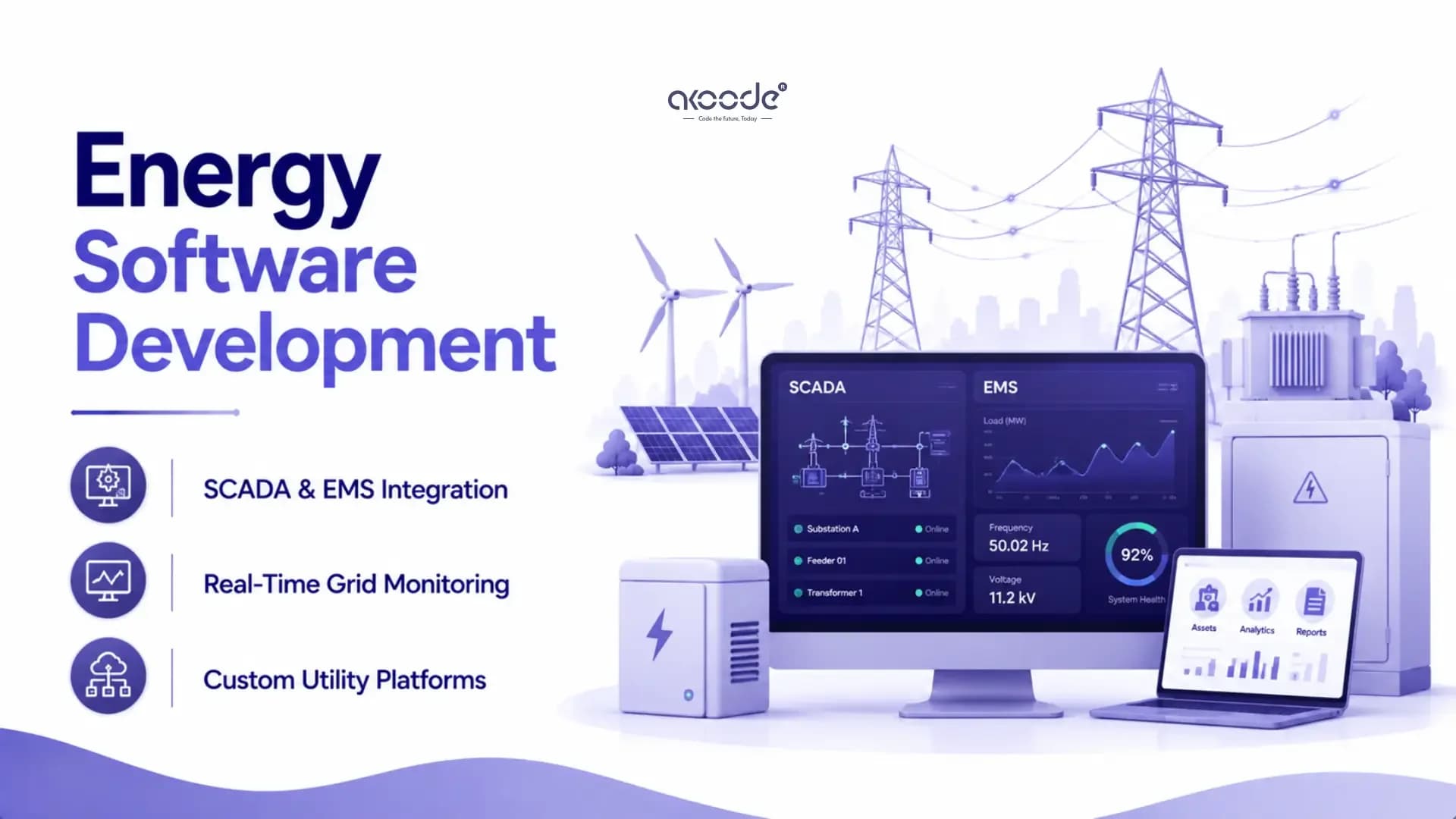
SCADA can be entirely sufficient for monitoring simple, localized operations where scale is limited and direct equipment control is the priority, according to Delfos's analysis. For medium to large-scale plants, or operations spread across multiple locations aiming to grow, a centralized monitoring approach becomes more suitable specifically because it can integrate data from multiple disparate systems and apply predictive analytics that SCADA alone was never designed to provide.
What Should Renewable Energy Monitoring Software Actually Do?
Aggregate Data from Genuinely Different Sources
Modern renewable installations generate data from numerous, frequently incompatible sources: weather stations, inverters, meters, SCADA systems, and enterprise applications, according to a 2025 industry comparison of renewable energy software. A single utility-scale solar farm can have thousands of sensors monitoring everything from panel temperature to inverter performance simultaneously. The monitoring software's job is to make all of that usable in one place rather than requiring an operator to check five separate vendor dashboards.
Support Multiple Asset Types, Not Just One
A serious monitoring platform needs to handle solar, wind, hydro, and increasingly battery storage within the same system, since most growing renewable portfolios end up with a mixed asset base rather than a single technology type. Several leading platforms specifically market multi-asset support across PV, wind, hydro, and storage as a core differentiator, precisely because operators with a mixed portfolio find single-technology tools become a liability as their asset mix diversifies.
Provide Predictive Maintenance, Not Just Historical Reporting
This is the capability that most clearly separates basic monitoring from genuinely useful asset management software. Predictive analytics that identify likely equipment failures before they happen, rather than simply logging what already went wrong, is consistently the feature operators cite as delivering the clearest return. Offshore wind specifically has seen platforms reduce maintenance costs by up to 25 percent through predictive analytics and optimized scheduling, according to a 2025 industry guide on renewable energy software, a meaningful figure given how expensive offshore maintenance visits genuinely are.
Handle the Commercial Side, Not Just the Technical Side
Monitoring software increasingly needs to connect technical performance data to the commercial reality underneath it: power purchase agreements, settlements, and revenue tracking. EnergyCAP's 2026 analysis of renewable energy management software notes that portfolios mixing solar, storage, and PPAs quickly create financial reporting complexity that a purely technical monitoring tool was never designed to solve, since production data and billing data tend to live in entirely separate systems otherwise.
What Does Buying an Existing Platform Actually Get You?
The Market Has Genuine, Mature Options
This is not a thin market with one or two viable choices. Power Factors' Unity platform, ranked the number one Energy Management System and Monitoring and Control provider by Guidehouse Research in January 2026, is deployed across roughly 18,000 sites in more than 75 countries, with an AI engine trained on 310 gigawatts of asset data feeding real-time and predictive analytics across the suite. AlsoEnergy's Aura platform and INGESYS Smart SCADA, refined over roughly 30 years according to Ingeteam's own product documentation, represent similarly mature alternatives at the enterprise end of the market.
The Real Trade-Off With Buying
The honest downside, consistent across multiple independent platform reviews, is pricing opacity and interface complexity. Several enterprise platforms are reviewed as having a steep learning curve for non-expert users, with pricing that lacks transparency and requires a custom sales quote rather than a published rate card. That is a meaningful practical friction if your team needs to onboard quickly or if budget certainty matters more than feature depth at this stage.
Where Buying Clearly Wins
Buying is the stronger choice when your portfolio is genuinely standard, meaning your asset mix and operational needs closely resemble what these mature platforms were built for. It is also the stronger choice when speed to deployment matters more than perfect customisation, and when your internal team does not have the bandwidth to maintain custom software alongside actually operating renewable assets.
When Does Building Custom Monitoring Software Make More Sense?
When Your Portfolio Has Genuinely Specific Needs
A 2026 industry guide on energy software development companies makes a point worth taking seriously: energy projects most commonly fail at the integration layer, not at the feature-development layer. If your existing systems, asset mix, or commercial structure are unusual enough that no off-the-shelf platform's assumptions fit cleanly, the integration cost of forcing a generic tool to work can quickly exceed the cost of building something purpose-fit.
When You Are Building the Monitoring Platform as the Product Itself
If your business is building drone-based wind farm inspection technology, a DERMS platform for utilities, or any monitoring capability intended to be sold to other operators rather than used purely internally, that is custom development by definition. A 2025 case study from vHive demonstrated exactly this kind of purpose-built approach for offshore wind farm inspection, combining AI, digital twin modelling, and drone technology specifically to improve defect detection, reportedly improving detection rates by 50 percent over manual human inspection while eliminating the safety risk of inspecting turbines at height manually.
When Commercial Lock-In Is a Genuine Long-Term Concern
Solarplaza's analysis of why operators are shifting away from legacy SCADA specifically flags vendor lock-in as a structural risk of staying on older, proprietary platforms. Operators making the shift toward cloud-native, more open architecture now are described as gaining sustainable competitive advantages, while those who delay risk getting progressively more locked into increasingly expensive legacy systems over time. This is a real consideration for any operator planning a multi-decade asset lifecycle, since the monitoring platform decision made today may still be in place when the underlying hardware is replaced twice over.
How Should You Actually Decide for Your Own Situation?
Map your actual integration requirements before evaluating any vendor or scoping any custom build. If your operational data already lives across five incompatible systems, that integration cost exists regardless of which path you choose. The question is whether an off-the-shelf platform's existing connectors cover those systems, or whether custom integration work is unavoidable either way.
Be honest about your growth trajectory, not just your current portfolio size. A platform that fits a 20-site solar operation comfortably today may need genuine rework at 200 sites. Several industry analyses point toward market consolidation around comprehensive platforms that combine SCADA, EMS, predictive maintenance, and field operations specifically because point solutions struggle to scale gracefully as portfolios grow.
Weigh vendor lock-in against deployment speed honestly, rather than assuming one always outweighs the other. Buying gets you operational faster. Building, or choosing a more open, cloud-native architecture, protects you from the long-term cost escalation that legacy, proprietary platforms can impose over a multi-decade asset lifecycle.
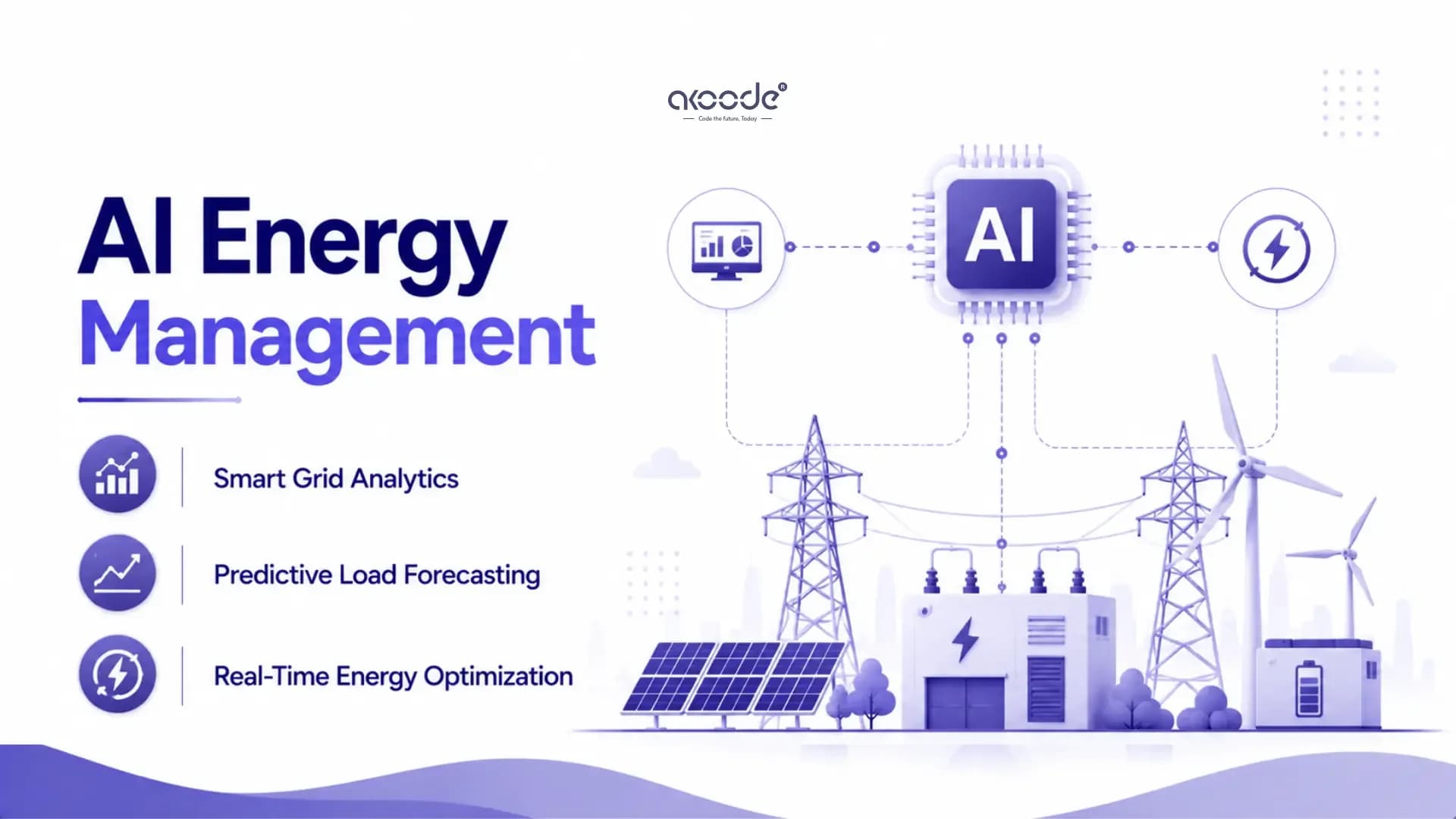
For organizations evaluating where AI forecasting and grid-level analytics fit into a broader monitoring strategy, Akoode's guide to AI energy management and smart grid analytics covers the data architecture and forecasting models that increasingly sit on top of, or alongside, the asset-level monitoring covered in this guide. For organizations weighing SCADA modernization or custom EMS development more broadly, Akoode's guide to energy software development covers the underlying SCADA-versus-EMS distinction and real cost ranges that apply whether you ultimately buy or build.
For teams building custom renewable energy monitoring or asset management platforms, Akoode's IoT solutions and AI-powered software development work covers exactly the integration and predictive analytics challenge described throughout this guide.
Conclusion
The build-versus-buy decision for renewable energy monitoring software is not a question with a universally correct answer. It depends on how standard your portfolio actually is, how much integration work your existing systems already demand, and how much you value deployment speed against long-term flexibility and avoiding vendor lock-in.
What is clear across every credible source on this topic is that traditional SCADA alone, while still genuinely useful for simple, localized monitoring, was not built for the predictive, multi-site, multi-asset reality that most growing renewable portfolios now face. Whether the answer for your specific situation is a mature platform like Power Factors or AlsoEnergy, or a custom-built system designed around your particular asset mix and commercial structure, the decision should follow from an honest assessment of integration complexity and growth trajectory, not from whichever option happened to come up first in a vendor search.
Akoode Technologies is a leading AI and software development company headquartered in Gurugram, India, with a US office in Oklahoma. From IoT solutions and AI-powered software development to cloud and DevOps solutions and enterprise application development, Akoode builds custom renewable energy monitoring and asset management platforms for energy companies and enterprise clients across 15+ industries globally. If you are weighing build versus buy for your renewable energy portfolio and want an honest assessment of where you actually stand, that conversation starts here.
Frequently Asked Questions
1. What is renewable energy monitoring software?
Renewable energy monitoring software tracks the performance, health, and output of solar, wind, hydro, and battery storage assets in real time. Modern platforms go beyond basic monitoring to include predictive maintenance, fault detection, and increasingly the commercial side of operations, including power purchase agreements and revenue tracking.
2. Why isn't traditional SCADA enough for renewable energy operations anymore?
Traditional SCADA was designed for centralized manufacturing plants with on-site staff, not hundreds of unmanned, geographically distributed renewable sites. A peer-reviewed study from the Federal University of Technology, Paraná found SCADA faces genuine integration challenges with newer technologies due to legacy hardware and software limitations, and it generally lacks the predictive maintenance capability that modern centralized monitoring platforms provide.
3. Should I buy an existing renewable energy monitoring platform or build custom software?
Buying makes sense when your asset mix is fairly standard, deployment speed matters, and your team lacks the bandwidth to maintain custom software. Building makes sense when your operational systems or commercial structure are specific enough that off-the-shelf integration costs would exceed custom development costs, or when you are building the monitoring capability itself as a product to sell.
4. What features should I look for in renewable energy monitoring software?
Look for multi-asset support across solar, wind, hydro, and storage, predictive maintenance rather than just historical reporting, the ability to aggregate data from disparate sources like weather stations, inverters, and SCADA systems, and integration with commercial data like PPAs and settlements if your portfolio includes them.
5. How much does custom renewable energy monitoring software cost compared to buying?
Established enterprise platforms typically require custom sales quotes rather than published pricing, often starting at several thousand euros annually scaled by asset count. Custom development costs vary significantly by integration depth, generally falling within the same ranges as broader custom energy software, from tens of thousands of dollars for a focused tool to far more for a comprehensive, multi-asset platform with predictive analytics.
6. What is the biggest risk of choosing the wrong renewable energy monitoring approach?
Vendor lock-in on the buy side and integration failure on the build side are the two most common, well-documented risks. Energy software projects most frequently fail at the integration layer rather than at feature development, and operators who delay moving off increasingly outdated, proprietary legacy platforms risk becoming progressively more locked into expensive systems over time.
Get In Touch Now
View More Our Blog