


 May 28, 2026
Real estate was one of the last major industries to digitise. Now it is moving fast.
The global PropTech market sits at $53 billion in 2026. It is projected to more than double to $120 billion by 2031. That growth is not coming from incremental improvements. It is coming from structural changes in how properties are built, bought, managed, and financed.
For builders, investors, property managers, and the technology teams that serve them, understanding which trends are actually delivering value right now, and which are still maturing, is the foundation of any meaningful technology investment in 2026.
What Is PropTech and Why Does It Matter Now?
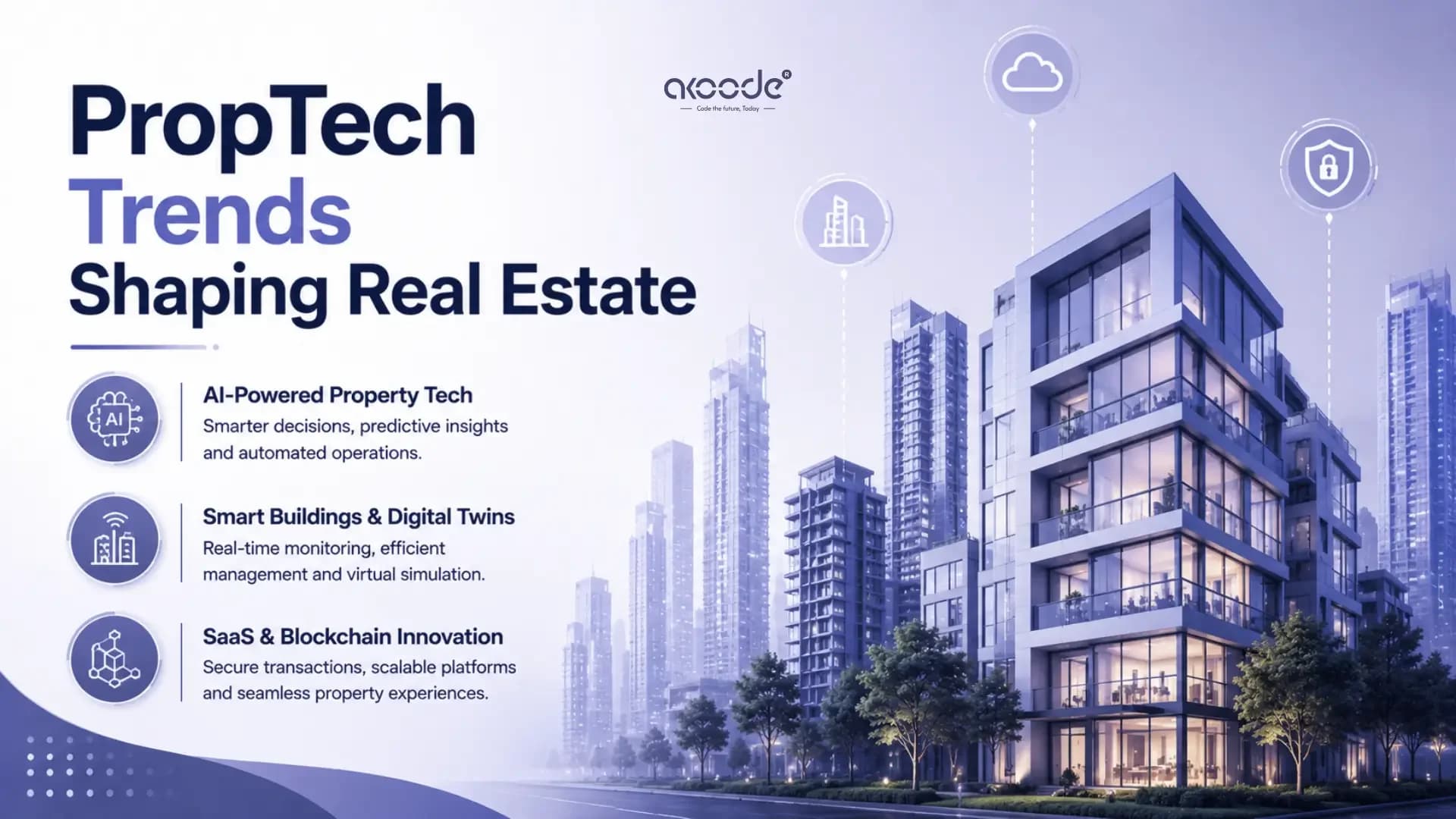
PropTech, short for property technology, covers any digital tool or platform that changes how real estate is transacted, developed, managed, or experienced.
The category spans a wide range. Online listing platforms, smart building sensors, AI-powered valuation models, blockchain-based property records, virtual tour tools, and digital lease management all fall under the PropTech umbrella.
What has changed in 2026 is not the breadth of the category. It is the depth of adoption. Technologies that were pilots two years ago are now production infrastructure in major property firms. Seventy percent of recent PropTech deals now include AI components. The industry has moved from "exploring technology" to "building on it."
Asia Pacific is the fastest-growing PropTech region globally. India and China are leading that growth, driven by massive real estate sector scale and strong government backing for smart city programs. For technology companies serving the real estate sector, this market shift represents a significant and still-underserved opportunity.
How Is AI Changing the PropTech Market in 2026?
Artificial intelligence is not one PropTech trend. It is the layer underneath almost every other trend on this list.
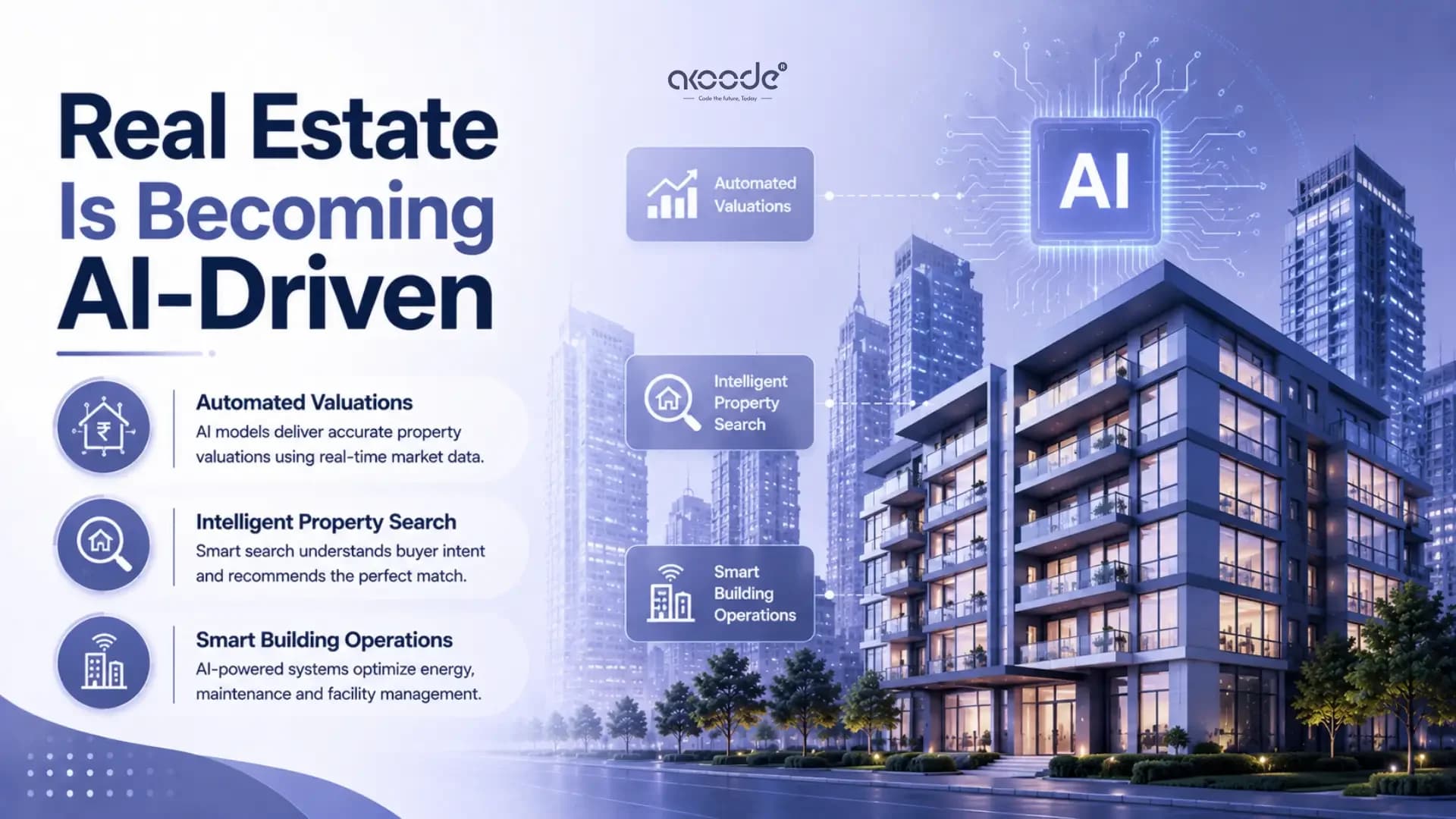
AI in real estate is being applied at every stage of the property lifecycle. Valuation models that process hundreds of data points to produce accurate pricing without a manual appraisal. Predictive maintenance systems that flag equipment failures before they happen. Tenant engagement tools that answer queries, process payments, and manage maintenance requests without human intervention. Investment analytics that model portfolio risk across thousands of properties in seconds.
The shift in 2026 is that AI has moved beyond experimentation into operational dependence. Property managers who adopted AI-powered pricing tools two years ago now rely on them as standard workflow. Firms that have not adopted are visibly losing margin to competitors who have.
Agentic AI is the next step. AI systems in real estate are moving beyond answering questions toward taking actions. An agentic AI system might identify an underperforming asset, model the refurbishment ROI, draft a brief for the project team, and schedule the initial site visit, all without a human initiating each step. The practical applications of AI-powered software development in PropTech are expanding faster than most real estate operators realise.
What Role Is Blockchain Playing in Real Estate Transactions?
Real estate transactions are slow, expensive, and friction-heavy. A standard property sale involves title searches, notary verification, multiple legal intermediaries, and settlement timelines measured in weeks.
Blockchain is addressing this directly. The technology creates tamper-proof property records and enables smart contracts that execute automatically when defined conditions are met. When a buyer transfers payment, the smart contract releases the title transfer simultaneously. No delay. No intermediary verification required.
Tokenisation extends this further. A property can be divided into digital tokens representing fractional ownership. Investors buy and sell those tokens rather than the physical asset. This opens real estate investment to a much broader pool of capital and makes portfolio diversification at smaller investment amounts genuinely practical.
In 2026, blockchain-based platforms for property transactions are moving from niche experiments to serious infrastructure in high-volume markets. Title fraud, which costs the US real estate market billions annually, becomes structurally harder when the ownership record is held on a distributed, immutable ledger. The regulatory environment is still catching up, but the technology case is now well-established.
How Are Smart Buildings Reshaping Property Management?
Commercial assets hold just under 55 percent of the total PropTech market. The reason is smart building technology, which has become the primary driver of value creation in commercial real estate.
A smart building runs on a network of IoT sensors and connected systems. Energy consumption, temperature, air quality, occupancy patterns, equipment health, and security access are all monitored in real time. The data feeds management platforms that automate responses, flag anomalies, and produce operational reports without manual input.
The outcomes are measurable. Buildings using smart energy management systems regularly report 20 to 30 percent reductions in energy costs. Predictive maintenance, where sensor data identifies equipment degradation before failure, reduces unplanned downtime and extends the operational lifespan of building systems. These are not marginal efficiency gains. In large commercial portfolios they represent millions of dollars in annual savings.
For tenants, smart building features have shifted from premium differentiators to standard expectations. Touchless access, app-controlled climate preferences, and real-time occupancy visibility are expected in Grade A office space. Buildings that cannot offer them are losing tenants to those that can.
What Are Digital Twins and How Are They Being Used in PropTech?
A digital twin is a live, continuously updated virtual model of a physical building or property asset.
The concept sounds simple. The operational implications are significant. A digital twin does not just represent what a building looks like. It reflects what it is doing right now, pulling real-time data from sensors across every system. Energy use, occupancy, structural health, equipment status, and environmental conditions are all visible in one model.
Developers use digital twins during construction to simulate building performance before a single wall is raised. Property managers use them to model the impact of a renovation on energy consumption or rental income. Investors use them to run risk scenarios against a portfolio of assets without conducting physical due diligence on each one.
The technology has reached a critical maturity point in 2026. The cost of sensor hardware has dropped significantly. Cloud platforms now handle the data volumes involved without custom infrastructure. And the software layer for visualising and querying digital twin data has become genuinely accessible to non-technical property teams.
How Is the Rental and Residential Market Being Transformed by PropTech?
Residential PropTech has attracted the most consumer attention but the deepest operational change is happening in the rental sector.
Property management platforms now automate the entire tenant lifecycle. Digital applications, automated background and credit checks, online lease signing, rent payment processing, and maintenance request management can all run without manual intervention for standard cases. Property managers handling portfolios of hundreds of units can manage them with the same team that previously handled dozens.
Virtual and augmented reality property tours have shifted from a pandemic-era workaround to a genuine preference for many buyers and renters. A buyer relocating from another city can complete a thorough property assessment virtually, reducing the number of physical visits required and accelerating the decision timeline.
AI-powered pricing tools in the rental market use real-time occupancy data, local market trends, and seasonal demand patterns to dynamically adjust asking rents. Landlords using these tools consistently outperform those setting rents on an annual review cycle. The gap is not small. In competitive urban rental markets, dynamic pricing can improve net operating income by 5 to 10 percent annually.
For real estate businesses building consumer-facing mobile products, the standard for user experience has been set by the best consumer apps. Mobile app development in PropTech now requires the same level of design and performance quality as fintech or e-commerce applications.
What Is the Role of SaaS in PropTech Infrastructure?
The PropTech stack is almost entirely SaaS-based in 2026. On-premise property management software is giving way to cloud-native platforms that update continuously, integrate freely, and scale without IT overhead.
The shift to SaaS has accelerated platform consolidation. Property firms that previously ran separate systems for accounting, lease management, tenant communications, and facilities management are moving to integrated platforms that share a single data layer. The efficiency gain is real. A maintenance request logged in a tenant portal automatically creates a work order, triggers a supplier notification, updates the accounting system, and records the resolution, without a single manual data entry step.
For technology companies building PropTech products, the SaaS model enables faster iteration, broader market reach, and recurring revenue structures that match how property firms prefer to procure software. Building a SaaS product for the real estate sector in 2026 means building into a market where buyers understand SaaS procurement, have budget lines for software subscriptions, and are actively replacing legacy systems.
What Does the Construction Technology Segment Look Like in 2026?
Construction technology, sometimes called ConTech, is the fastest-developing sub-segment of PropTech.
AI is being applied to construction project planning, automating scheduling, resource allocation, and risk modelling in ways that previously required weeks of manual analysis. Drone-based site surveys produce accurate progress measurements in hours rather than days. Robotic systems handle repetitive physical tasks on construction sites, reducing both labour costs and safety incidents.
The biggest near-term value in ConTech comes from data integration. Most construction projects run multiple disconnected systems for design, procurement, scheduling, and quality management. Platforms that connect these systems into a single data layer give project managers visibility that was previously impossible without custom reporting work.
BIM, or building information modelling, has become a baseline requirement for most large commercial development projects. A BIM model captures not just the geometry of a building but its materials, systems, spatial relationships, and performance specifications. That data layer becomes the foundation for the digital twin once construction is complete.
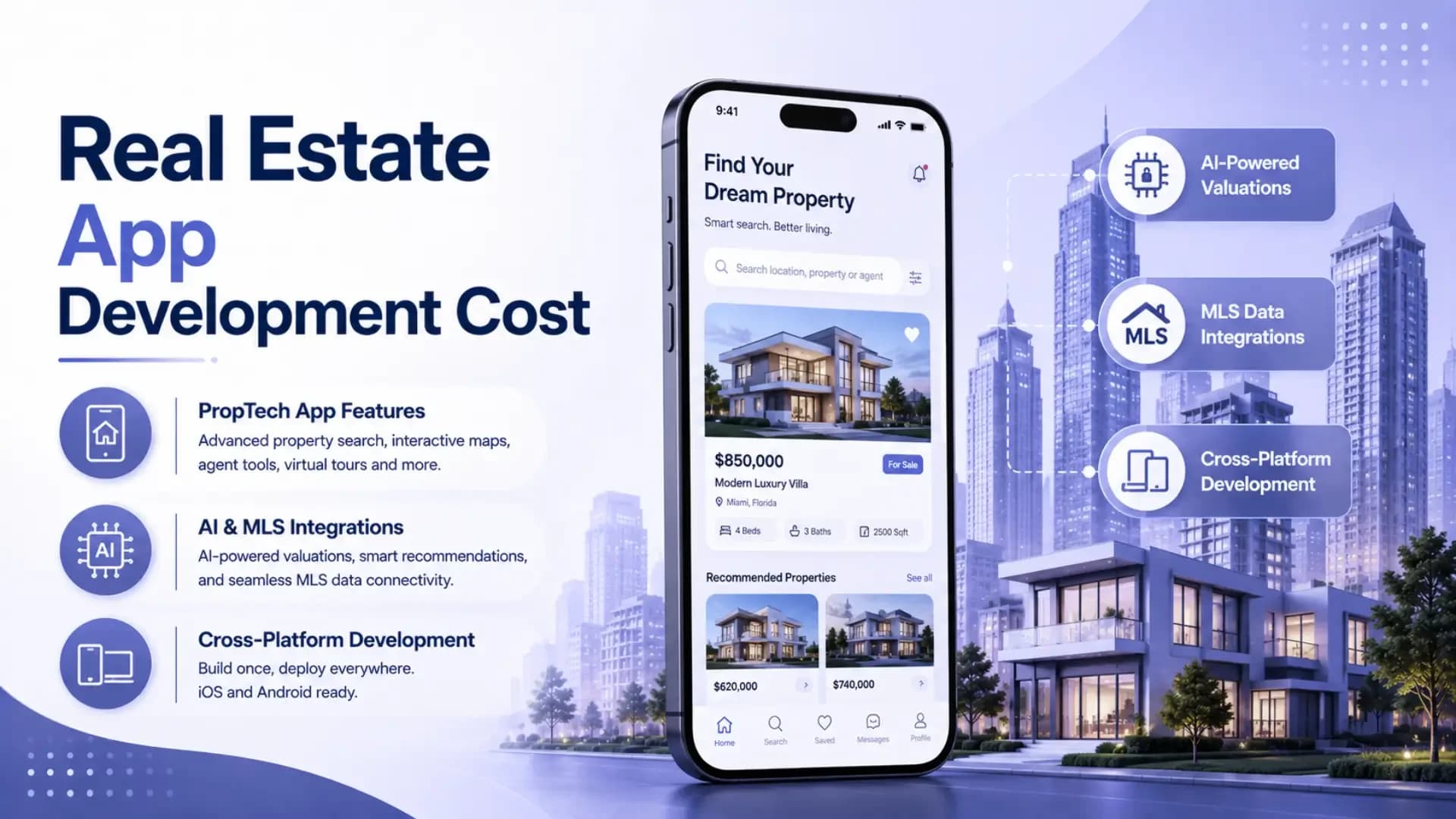
Also Read: Real Estate App Development Cost: 2026 Guide
How Is PropTech Addressing Sustainability in Real Estate?
Sustainability has moved from a marketing position to a regulatory requirement in most major real estate markets.
ESG reporting requirements for commercial real estate are tightening globally. Institutional investors increasingly require carbon performance data before committing capital. Tenants with their own sustainability commitments will not sign leases in buildings that cannot demonstrate energy efficiency and emissions reduction progress.
PropTech is the mechanism through which real estate firms meet these requirements. Smart building platforms monitor and reduce energy consumption. Carbon footprint tracking tools aggregate data across portfolios and produce the reporting formats that regulators and investors require. Green certification platforms automate the evidence collection for LEED, BREEAM, and other standards.
The financial case is now as strong as the regulatory one. Buildings with strong sustainability credentials trade at a premium. Green-certified assets attract better tenants, hold their value better during market downturns, and face lower refinancing risk as lenders increasingly price ESG risk into their lending criteria.
Conclusion
The PropTech market is not slowing. At $53 billion in 2026 and growing at 17 percent annually, it is one of the most active technology investment areas globally.
The trends reshaping the sector, AI-powered operations, blockchain-based transactions, smart building infrastructure, digital twins, SaaS-based management platforms, and sustainability technology, are not five separate conversations. They are interconnected layers of the same digitisation wave. Real estate firms that adopt them cohesively will have a structural advantage over those making point investments in individual tools.
For technology companies and development teams serving this sector, the opportunity is significant. The real estate industry is actively buying technology and replacing legacy systems. The buyers are more sophisticated than they were five years ago. And the requirements, compliance, data integration, AI, mobile experience, go far beyond what standard off-the-shelf software can deliver.
Akoode Technologies is a leading AI and software development company headquartered in Gurugram, India, with a US office in Oklahoma. From custom software development and AI-powered platforms to SaaS products and mobile applications, Akoode builds PropTech and real estate technology for startups, SMEs, and enterprises across 15+ industries globally. If you are building a real estate technology product and need a development partner who understands both the technology and the market, that conversation starts here.
Frequently Asked Questions
1. What is PropTech and what does it include?
PropTech, or property technology, covers any digital platform or tool that changes how real estate is built, bought, sold, managed, or financed. It includes AI valuation tools, smart building systems, blockchain transaction platforms, property management SaaS, virtual tour technology, digital twins, and construction automation.
2. How big is the PropTech market in 2026?
The global PropTech market is estimated at $53 billion in 2026, growing from $45 billion in 2025. It is projected to reach $120 billion by 2031, growing at a compound annual rate of approximately 17.8 percent. Asia Pacific is the fastest-growing region, led by India and China.
3. What are the top PropTech trends shaping real estate in 2026?
The leading trends are agentic AI for property operations, blockchain-enabled transactions and tokenisation, smart building IoT infrastructure, digital twin technology, SaaS-based property management platforms, ConTech for construction automation, and sustainability tracking tools that meet ESG reporting requirements.
4. How is AI being used in real estate technology?
AI in real estate covers automated property valuation, predictive maintenance for building systems, dynamic rental pricing, tenant engagement automation, investment portfolio risk modelling, and agentic AI systems that handle multi-step operational workflows without constant human input.
5. What is tokenisation in PropTech?
Tokenisation converts property ownership into digital tokens on a blockchain. Investors can buy fractional shares of a property rather than purchasing the whole asset. This opens real estate investment to smaller investors, improves market liquidity, and enables faster settlement compared to traditional property transactions.
6. How does PropTech apply to the Indian real estate market?
India is one of the fastest-growing PropTech markets globally, driven by a large real estate sector, government smart city investment, and high smartphone adoption. Key applications include digital property transaction platforms, AI-powered housing search tools, smart building management for commercial real estate, and proptech SaaS serving residential developers and property managers.
Get In Touch Now
View More Our Blog