


 June 5, 2026
A modern vehicle is not just a machine. It is a network.
Sensors monitor engine health in real time. Cameras track the road ahead and the driver's attention simultaneously. Telematics units transmit location and performance data to fleet operators continuously. Software updates arrive over the air while the vehicle sits in a driveway overnight.
This is IoT in automotive. And the scale of adoption is significant.
According to Statista market forecasts, global automotive IoT revenue is projected to grow from around $250 billion through to $371 billion by 2029, growing at roughly 8 percent annually. A separate market analysis from Codewave projects the broader automotive IoT market reaching over $1 trillion by 2034 as connected vehicle infrastructure matures and EV adoption accelerates.
This guide covers what IoT actually does in automotive, the real use cases driving adoption, how V2X communication works, and where this technology is heading.
What Is IoT in the Automotive Industry?
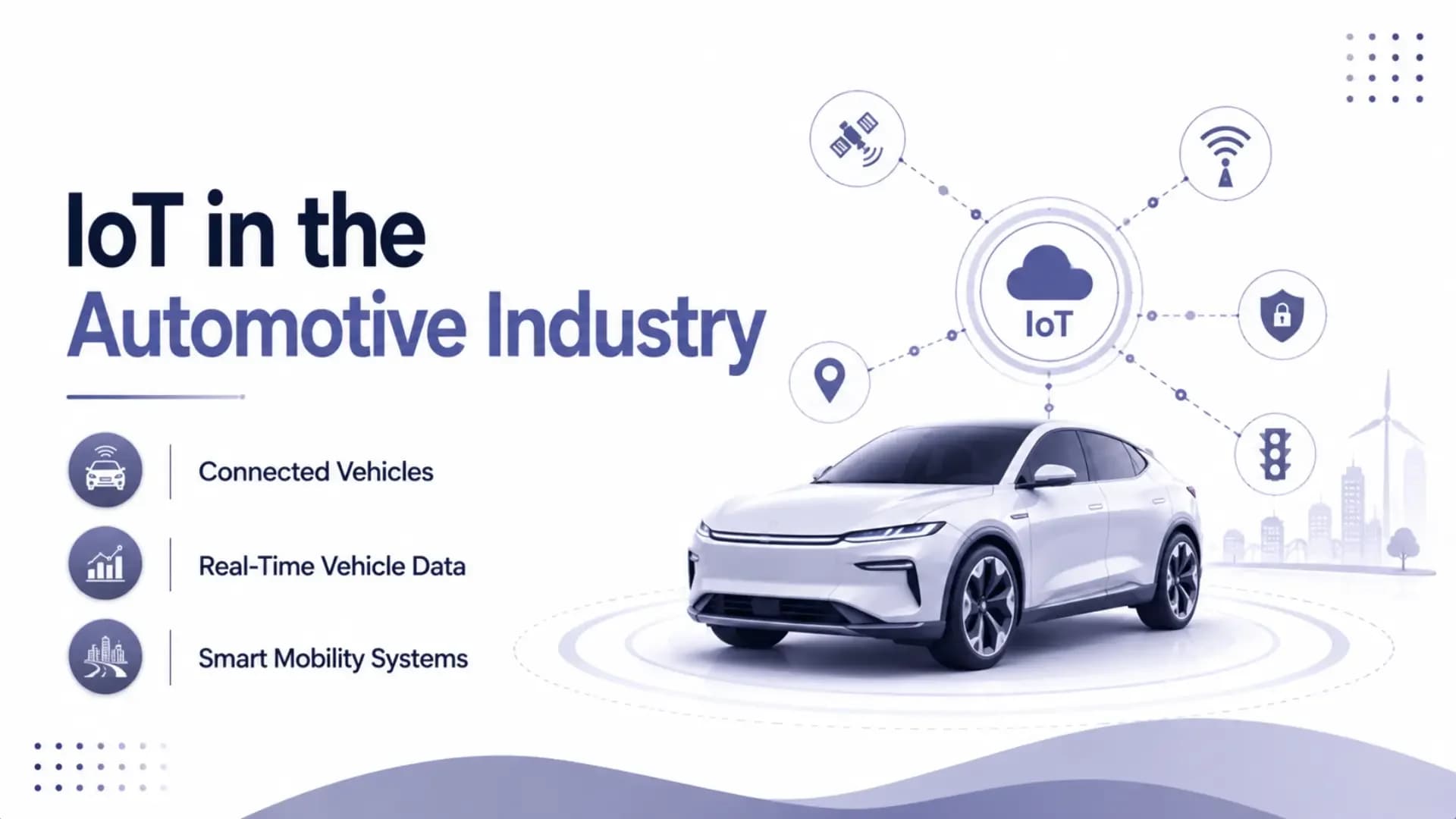
IoT in automotive means embedding internet-connected devices into vehicles, manufacturing facilities, and road infrastructure to collect, transmit, and act on real-time data.
The devices involved are diverse. Accelerometers and gyroscopes track vehicle dynamics. Temperature and pressure sensors monitor engine and tyre health. GPS modules transmit location. Cameras and lidar units read the environment. Telematics control units aggregate all of this and push it to cloud platforms for analysis.
The vehicle is no longer a closed system. It communicates with the manufacturer's servers, with other vehicles on the road, with traffic infrastructure, with the driver's smartphone, and increasingly with smart city platforms.
This connectivity changes what is possible. A problem that would previously surface only when a driver noticed a warning light can now be detected weeks earlier through sensor data patterns. A journey that would have required navigating around a traffic jam can be rerouted automatically before the vehicle reaches it. A fleet that would have required manual inspection can be monitored continuously from a single dashboard.
How Is IoT Used in Automotive Manufacturing?
The factory is where IoT adoption in automotive is most mature. The returns are well-documented across major OEMs.
Predictive maintenance on production equipment
Sensors on assembly line machinery generate continuous data on vibration, temperature, current draw, and acoustic signatures. Machine learning models trained on this data identify degradation patterns that precede failure. Maintenance teams receive alerts before breakdowns occur rather than responding to them after.
The impact on production economics is direct. Unplanned downtime on an automotive assembly line is expensive. A single line halt can cost hundreds of thousands of dollars per hour. Predictive maintenance systems that reduce unplanned stoppages pay for themselves quickly and the ROI is measurable from the first year of deployment.
Quality monitoring through computer vision
IoT-connected cameras inspect every unit coming off the production line. They identify surface defects, misaligned components, and dimensional deviations at speeds no human inspector can match. The inspection data feeds back into the manufacturing process, giving engineers real-time visibility into which production parameters are causing variation.
Supply chain tracking
IoT sensors on components, sub-assemblies, and shipping containers give manufacturers real-time visibility across their supply chain. Location, temperature, and handling data flow continuously. Disruptions are visible before they reach the production schedule. This capability became critical infrastructure for automotive supply chains after the supply chain crises of 2021 and 2022 demonstrated how costly blind spots in the supply chain could be.
Energy management
Automotive factories are energy-intensive. IoT-connected energy monitoring systems track consumption across every production zone. AI models identify inefficiency patterns and recommend adjustments. Facilities using this approach consistently report meaningful reductions in energy costs across annual operating budgets.
What Is a Connected IoT Vehicle and How Does It Work?
A connected vehicle is one that maintains a continuous internet connection and shares data with external systems. The connection is typically provided through an embedded cellular modem in the telematics control unit.
The data flows in both directions. The vehicle sends performance data, location, diagnostic codes, and driver behaviour metrics to the manufacturer's cloud platform and to fleet management systems. The platform sends software updates, navigation data, real-time traffic information, and personalised service recommendations back to the vehicle.
For individual drivers, connected vehicle technology enables features like remote diagnostics, over-the-air software updates, stolen vehicle tracking, and integration with smart home systems. Starting a vehicle remotely to warm it up, checking tyre pressure from a smartphone, and receiving a service alert before a component fails are all functions of the IoT connectivity layer.
For fleet operators, connected vehicles transform operations. Real-time location tracking, route optimisation, driver behaviour monitoring, fuel consumption analysis, and maintenance scheduling all become possible at scale. A fleet manager overseeing hundreds of vehicles can manage the entire operation from a single dashboard rather than relying on driver reports and periodic inspections.
Tesla is the most prominent example of connected vehicle technology at scale. Every Tesla vehicle maintains a persistent connection to Tesla's cloud infrastructure. This connection enables over-the-air updates that add new features and fix bugs without a service visit. It provides real-time diagnostics that alert both the driver and Tesla's service network to developing issues. And it feeds the data collection that trains Tesla's autonomous driving models.
How Does V2X Communication Work in IoT Cars?
Vehicle-to-Everything communication is one of the most significant IoT applications in automotive. It lets vehicles share data not just with manufacturers but with each other, with road infrastructure, and with urban systems.
V2X breaks into four specific connection types.
V2V, Vehicle-to-Vehicle
Nearby vehicles exchange data on location, speed, and direction. A car approaching an intersection can receive a signal from a vehicle crossing it before either reaches the intersection. Collision avoidance systems using V2V data can respond faster than a driver can react. Emergency vehicle routing also benefits from V2V signals that allow fire trucks and ambulances to clear a path through traffic electronically.
V2I, Vehicle-to-Infrastructure
Vehicles communicate with traffic lights, toll systems, lane markings, and road sensors. A vehicle approaching a red light can receive data on when it will change, allowing the powertrain management system to coast efficiently rather than maintain speed and brake. In cities with smart traffic management systems, V2I enables dynamic signal timing that reduces congestion based on real-time traffic flow.
V2N, Vehicle-to-Network
Vehicles connect to cloud networks for real-time traffic data, map updates, weather information, and remote diagnostics. This is the connectivity type most drivers interact with directly through navigation apps and infotainment systems.
V2P, Vehicle-to-Pedestrian
Vehicles exchange signals with smartphones and wearable devices carried by pedestrians. This enables alerts when a vehicle is about to enter a crosswalk with a pedestrian in the path, adding a safety layer in complex urban environments.
According to analysis from Travancore Analytics citing SNS Insider data, infotainment alone accounts for 52 percent of current IoT applications in automotive. V2X capabilities are growing rapidly as 5G infrastructure matures and smart city programmes create the road-side infrastructure needed for V2I to function at urban scale.
How IoT Is Improving Vehicle Safety?
Safety is the most consistently cited benefit of IoT in automotive. The mechanism is straightforward. More data, processed faster, enables earlier intervention.
Tyre pressure monitoring
IoT sensors in tyres transmit pressure data continuously. The driver receives an alert when pressure deviates from safe parameters. Tyres are responsible for a significant proportion of road accidents and breakdowns. Continuous monitoring reduces both.
Driver behaviour monitoring
Telematics units record acceleration, braking, cornering, speed, and time of day. Insurance companies use this data to price usage-based insurance accurately. Fleet operators use it to identify high-risk driving patterns and provide targeted coaching. The combination reduces accident rates measurably in fleets that have deployed behaviour monitoring systems.
Collision avoidance through IoT-enabled ADAS
Cameras, radar, and ultrasonic sensors feeding real-time data into safety systems enable automatic emergency braking, lane departure warning, and blind spot detection. The IoT layer that connects these sensors to the vehicle's central computing system and to the manufacturer's cloud enables continuous improvement of these systems through over-the-air updates as better algorithms are developed.
Stolen vehicle tracking
IoT-enabled GPS tracking allows vehicles to be located and tracked after theft. Manufacturers and fleet operators can trigger remote immobilisation through the connected telematics unit in markets where this capability is legally permitted. Vehicle recovery rates improve significantly where these systems are deployed.
How IoT Is Used for Fleet Management and Productivity?
Fleet management is one of the clearest productivity cases for IoT in automotive. The efficiency gains are direct and measurable.
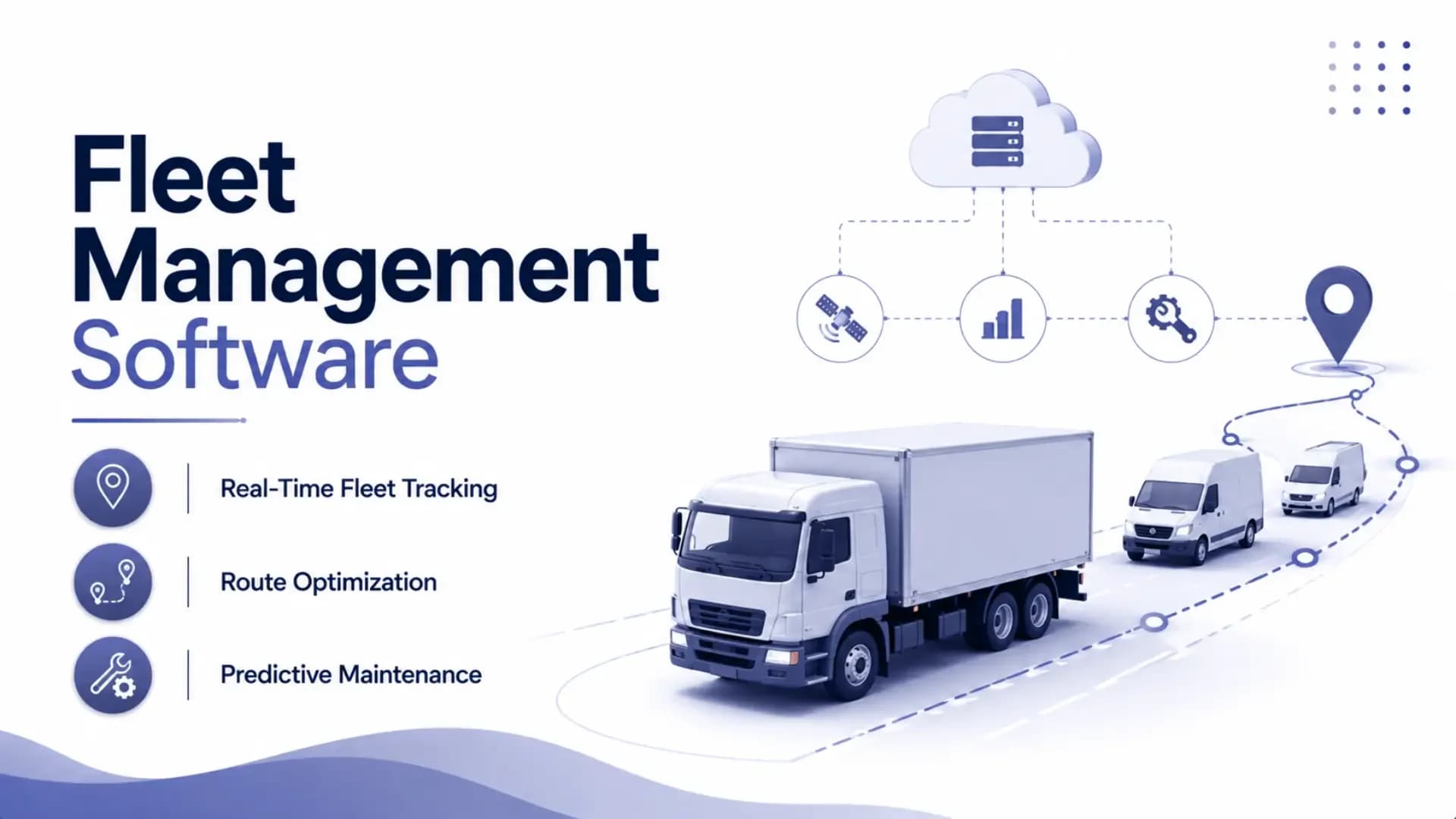
A telematics unit in each vehicle gives the fleet manager real-time data on location, speed, fuel consumption, engine health, and driver behaviour across the entire fleet simultaneously. Route optimisation algorithms use this data alongside traffic information to reduce fuel costs and delivery times. Maintenance scheduling is based on actual vehicle condition rather than fixed mileage intervals. Drivers covering irregular distances or driving in demanding conditions get maintenance when they need it. Vehicles with light usage get extended service intervals. Both outcomes reduce unnecessary maintenance cost.
Usage-based insurance programmes directly benefit fleet operators who can demonstrate safe driving behaviour through telematics data. Lower insurance premiums compound across large fleets into significant annual savings.
For logistics operations specifically, IoT-enabled fleet visibility reduces the operational uncertainty that creates inefficiency. A logistics coordinator who knows exactly where every vehicle is, what condition it is in, and when it will arrive can make better decisions across the entire operation. The IoT solutions layer is what connects the vehicle data to the operational decision-making infrastructure that makes this visibility actionable.
What Are the Challenges of IoT in the Automotive Industry?
Cybersecurity
A connected vehicle is an attack surface. Telematics units, infotainment systems, and OTA update mechanisms all represent potential entry points. A compromised telematics system could expose location data, disable safety systems, or allow unauthorised control of vehicle functions. Automotive cybersecurity standards, including ISO/SAE 21434, are becoming mandatory requirements rather than best practice recommendations.
Data privacy
Connected vehicles generate detailed records of where drivers go, when, and how they drive. Managing this data in compliance with GDPR in Europe, PDPB in India, and equivalent regulations in other markets requires careful data governance architecture.
Interoperability
Different vehicle manufacturers use different IoT platforms, communication protocols, and data formats. When multiple vehicle brands appear in a single fleet or when V2I systems need to communicate with vehicles from multiple manufacturers, interoperability becomes a significant technical challenge.
Connectivity infrastructure
V2I and many connected vehicle features depend on reliable high-bandwidth connectivity. In markets where 4G coverage is inconsistent and 5G rollout is incomplete, the full capabilities of automotive IoT cannot be realised. As 5G infrastructure matures, this constraint reduces.
What Comes Next for IoT in Automotive?
5G is the infrastructure change that unlocks the next generation of automotive IoT. Lower latency and higher bandwidth enable V2X communication at the speeds that safety-critical applications require. Real-time coordination between vehicles and infrastructure becomes practical at urban scale.
Software-defined vehicles extend the IoT model from connected devices to connected computing platforms. The vehicle becomes an application platform. New features are deployed as software updates. The hardware is a stable base. The software layer evolves continuously.
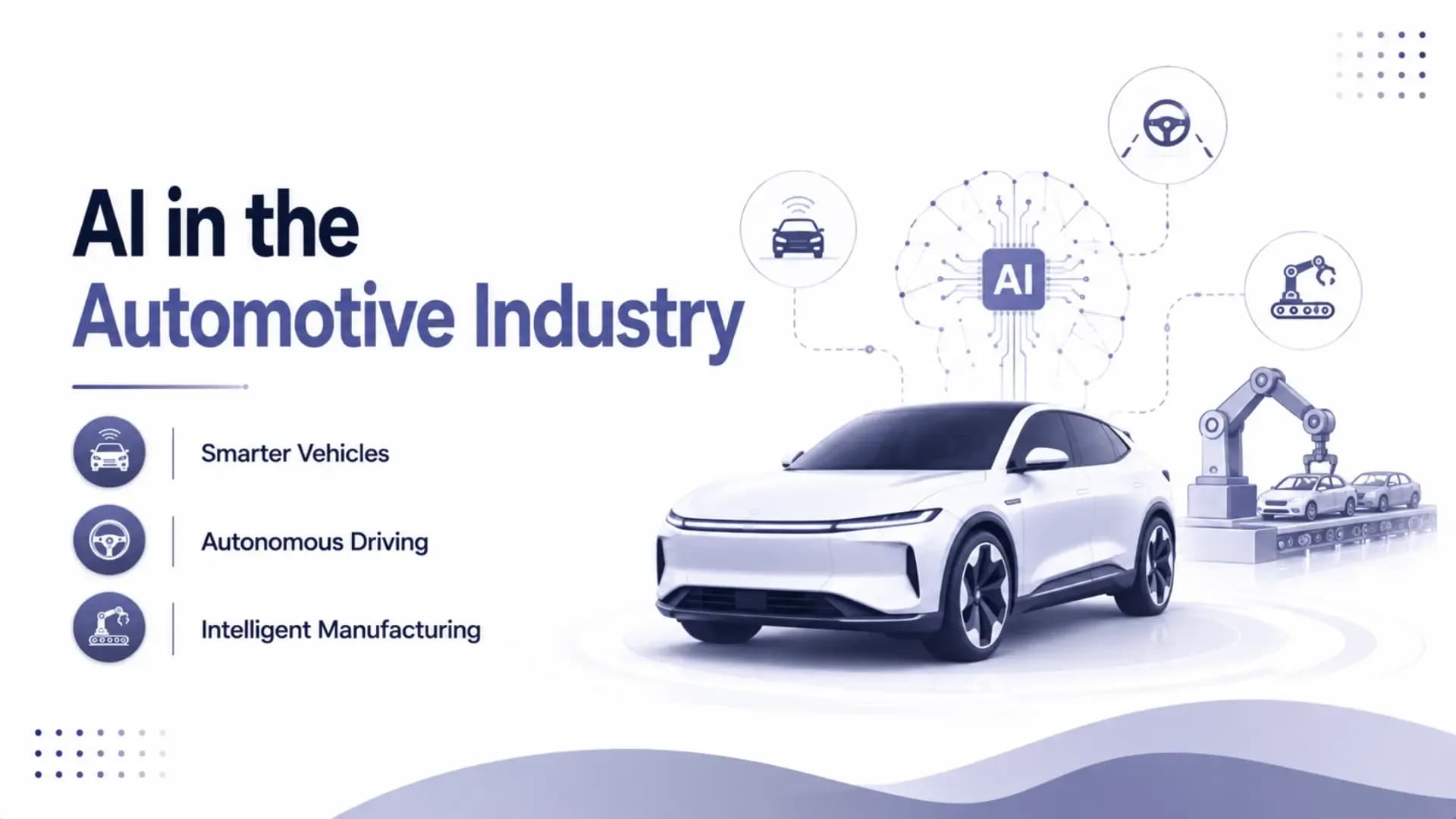
The intersection of IoT and AI is where the most significant near-term capability advances live. IoT generates the data. AI processes it and takes action. Predictive maintenance, autonomous driving, adaptive personalisation, and dynamic traffic management all depend on both. For automotive businesses building connected vehicle strategies, the data infrastructure decisions made now will determine what AI capabilities can be deployed on top in the years ahead.
The broader AI trends reshaping the automotive industry are directly connected to IoT. Every AI application in automotive depends on the sensor data, telematics infrastructure, and connectivity that IoT provides. The two technology layers are not parallel. They are sequential. IoT creates the data. AI acts on it.
Conclusion
IoT has changed what a vehicle is. A car is no longer a machine you drive. It is a connected platform that communicates, learns, and improves continuously.
For manufacturers, IoT reduces production costs and improves quality. For fleet operators, it transforms operational efficiency. For drivers, it improves safety, convenience, and the driving experience. For insurers, it enables risk-accurate pricing. Each group sees measurable value.
The infrastructure investment in connectivity, sensing, and cloud platforms is happening at scale across the industry. The automotive companies that are building data-rich connected vehicle ecosystems now are creating competitive advantages that will be difficult to replicate later.
Akoode Technologies is a leading AI and software development company headquartered in Gurugram, India, with a US office in Oklahoma. From IoT solutions and AI-powered automotive platforms to custom enterprise software and cloud and DevOps solutions, Akoode builds connected technology for automotive businesses, OEMs, and mobility companies across 15+ industries globally. If you are building an IoT solution for an automotive use case and want a team that understands both the infrastructure and the domain, that conversation starts here.
Frequently Asked Questions
1. What is IoT in the automotive industry?
IoT in automotive means embedding internet-connected sensors, telematics units, cameras, and communication modules into vehicles, factories, and road infrastructure to collect and act on real-time data. Connected vehicles use this infrastructure to communicate with manufacturers, other vehicles, road systems, and fleet management platforms.
2. What are the main IoT use cases in the automotive industry?
The main use cases are predictive maintenance, connected vehicle telematics, V2X communication for safety and traffic management, fleet management and route optimisation, over-the-air software updates, driver behaviour monitoring, in-vehicle infotainment, and smart manufacturing quality control.
3. How is IoT used in automotive manufacturing?
IoT sensors on production equipment enable predictive maintenance that reduces unplanned downtime. Computer vision systems connected through IoT infrastructure inspect every production unit in real time. Supply chain sensors provide end-to-end visibility across components and logistics. Energy monitoring systems track and optimise factory power consumption.
4. What is V2X communication in IoT cars?
V2X stands for Vehicle-to-Everything. It covers four connection types: V2V connects vehicles to each other for collision avoidance, V2I connects vehicles to road infrastructure for traffic management, V2N connects vehicles to cloud networks for real-time data, and V2P connects vehicles to pedestrian devices for safety alerts.
5. What is the automotive IoT market size in 2026?
According to Statista market forecasts, global automotive IoT revenue is projected at over $250 billion growing to $371 billion by 2029 at approximately 8 percent annually. Codewave's broader market analysis projects the automotive IoT market exceeding $1 trillion by 2034 as connected vehicle infrastructure and EV adoption both accelerate.
6. What are the main challenges of IoT in automotive?
The primary challenges are cybersecurity risks from connected attack surfaces, data privacy compliance across GDPR and equivalent regulations, interoperability between different manufacturers' IoT platforms, and connectivity infrastructure gaps where 4G coverage is inconsistent and 5G rollout is incomplete.