


 April 20, 2026
You have a software idea. You start asking around for costs. One freelancer quotes ₹2 lakhs. An agency says ₹15 lakhs. A US firm says $180,000. Someone on a forum says they got the same thing built in India for $28,000.
All of these numbers are real. None of them help you budget.
Software development cost in India is not a single number — and anyone who gives you one without understanding your project is guessing. What actually drives the price is scope, complexity, team structure, technology choices, and the kind of company you work with.
This guide breaks all of it down honestly. Whether you are a startup founder building your first product, an SME modernising an existing system, or a US or UK business evaluating India as a development partner — you will leave here knowing what to expect and what questions to ask.
Why Businesses Choose India for Software Development
Before the numbers, a quick look at why India continues to attract software projects from across the world.
India produces over 1.5 million engineering graduates every year. The developer talent pool is massive — and increasingly specialised. Senior engineers with deep experience in AI, cloud architecture, DevOps, and enterprise software are not hard to find here. They are abundant.
The cost advantage is significant. A senior developer in the US costs $100 to $200 per hour, including overheads. In India, the same calibre of work runs $25 to $65 per hour. For a 1,000-hour project, that difference is $75,000 to $135,000 — real money.
But cost alone is not the full story. India's outsourcing ecosystem has 20-plus years of maturity behind it. Time zone overlap with the US and Europe, strong English proficiency, and established project delivery frameworks make India a genuine strategic partner — not just a cheaper option.
How Many Software Developers Are There in India?
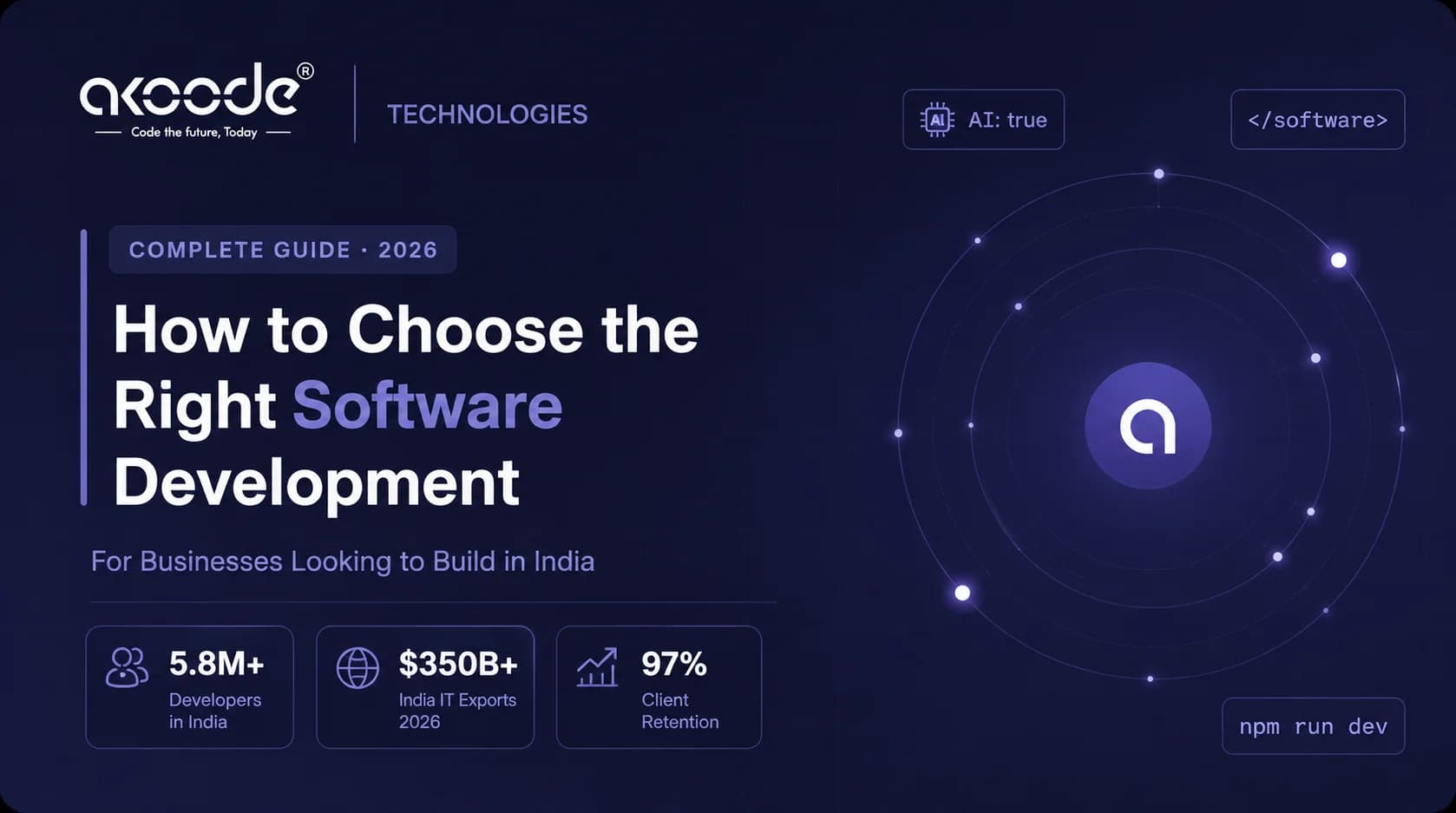
India has over 5 to 6 million software developers as of 2026, making it the second largest developer population in the world after the United States.
This number matters for two reasons. First, the talent pool is deep enough to support hiring across specialisations — from mobile developers to AI/ML engineers to blockchain architects. Second, competition within the talent market keeps quality high. Indian engineers have real incentive to stay sharp.
The concentration of talent in cities like Bengaluru, Hyderabad, Gurugram, Pune, and Mumbai means that established agencies have access to experienced developers across every major stack.
Software Development Cost in India: Overview by Project Type
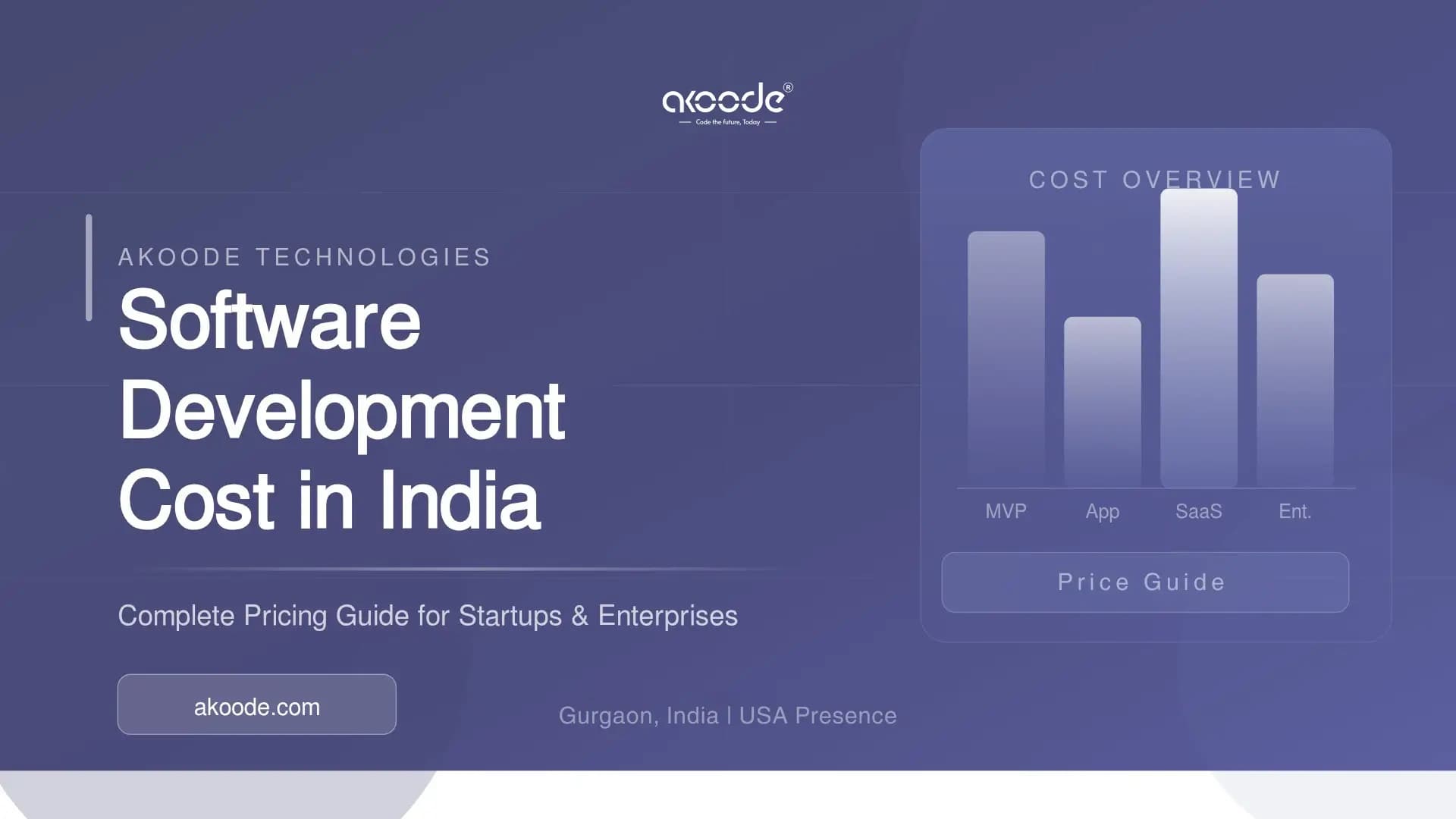
Here is a practical pricing overview. These figures reflect what experienced Indian agencies and development studios charge in 2026, in both INR and USD.
Project Type | Cost (INR) | Cost (USD) | Timeline |
|---|---|---|---|
MVP / Prototype | ₹1,50,000 – ₹5,00,000 | $1,800 – $6,000 | 1 – 3 months |
Small Business Application | ₹3,00,000 – ₹8,00,000 | $3,600 – $9,600 | 2 – 4 months |
Mid-Complexity SaaS / Web App | ₹8,00,000 – ₹20,00,000 | $9,600 – $24,000 | 4 – 8 months |
Enterprise Software Platform | ₹20,00,000 – ₹80,00,000 | $24,000 – $96,000 | 8 – 18 months |
AI / ML-Powered Application | ₹15,00,000 – ₹50,00,000+ | $18,000 – $60,000+ | 6 – 14 months |
These are project-based estimates. Dedicated team models are priced differently — covered below.
How Much Does a Software Developer Cost in India?
If you are hiring developers on an hourly or monthly basis — either directly or through an agency — here are the realistic 2026 rates.
Hourly Rates by Experience Level
Developer Level | Hourly Rate (USD) | Monthly (Full-Time Equivalent) |
|---|---|---|
Junior Developer | $15 – $22 | $2,400 – $3,500 |
Mid-Level Developer | $22 – $38 | $3,500 – $6,000 |
Senior Developer | $38 – $65 | $6,000 – $10,000 |
Tech Lead / Architect | $60 – $100 | $9,600 – $16,000 |
AI / ML Specialist | $65 – $120 | $10,000 – $19,000 |
These rates cover vendor-sourced or agency-employed developers. Freelancers from open platforms can go lower, but come with higher structural risk — no accountability layer, no replacement guarantee, no project oversight.
For US and UK businesses: Indian senior developer rates at $38–$65/hour compare against $100–$200/hour for equivalent talent in the West. The savings on a six-month engagement range from $60,000 to $150,000 depending on team size.
Application Development Cost in India: By Project Category
Custom Business Application — ₹3,00,000 to ₹20,00,000 ($3,600 – $24,000)
Internal tools, workflow automation systems, CRM platforms, inventory management, booking systems — these are custom business applications. The cost depends on the number of user roles, workflow complexity, third-party integrations, and reporting requirements.
A straightforward internal dashboard for a 50-person team sits at the lower end. A multi-module platform with ERP integration, role-based access control, and real-time analytics sits at the upper end.
SaaS Product Development — ₹8,00,000 to ₹40,00,000 ($9,600 – $48,000)
Building a SaaS product involves multi-tenant architecture, subscription billing, user management, analytics, API development, and ongoing feature iteration. It is more complex than a one-time custom build — and cost reflects that.
An early-stage MVP SaaS with core functionality and one user segment starts around ₹8–12 lakhs. A mature SaaS platform with multiple plans, integrations, admin controls, and a dashboard for each customer type climbs significantly.
Mobile Application — ₹2,00,000 to ₹15,00,000 ($2,400 – $18,000)
A cross-platform mobile app (React Native or Flutter) covering both iOS and Android mobile app development is more cost-effective than two separate native builds. Cost depends on the number of screens, backend complexity, third-party APIs, and whether real-time features are needed.
Basic apps with 10–15 screens and standard functionality start around ₹2–4 lakhs. Apps with live data, maps, payments, and custom UI logic sit in the ₹6–15 lakh range.
Enterprise Software Platform — ₹20,00,000 to ₹80,00,000+ ($24,000 – $96,000+)
Large-scale enterprise platforms — multi-module ERPs, supply chain management systems, healthcare platforms, complex financial applications — fall here. These involve longer planning phases, larger teams, rigorous QA, compliance requirements, and detailed architecture design.
The build cost is significant. So is the risk of getting it wrong. At this level, the quality of the development partner matters more than the price per hour.
AI-Powered Software — ₹15,00,000 to ₹50,00,000+ ($18,000 – $60,000+)
AI and ML development is a separate category. Building an intelligent system — recommendation engine, predictive analytics platform, NLP application, computer vision tool, or LLM-powered product — requires specialist engineers and a different development workflow.
The cost reflects both the talent premium and the longer iteration cycles involved in training, testing, and deploying AI models effectively.
Software Development Pricing Models
How a project is priced matters as much as how much it costs. There are three main models.
Fixed Price
You agree on a defined scope. The agency delivers for an agreed total. Works well when requirements are clear and unlikely to change. Predictable budget, lower financial risk.
The risk: scope changes mid-project become expensive change orders. This model rewards thorough upfront planning.
Time and Materials
You pay for actual hours worked. Works well for complex or evolving products where requirements shift. Flexible, transparent, and adaptable.
The risk: final cost can exceed estimates if scope is not disciplined. Requires active involvement from the client side.
Dedicated Team
You hire a team — typically on a monthly retainer — that works exclusively on your product. Best for long-term product development, SaaS platforms, and continuous feature iteration.
Offers the deepest product ownership and fastest iteration speed. Requires a longer-term commitment.
For most real-world projects, a hybrid approach works best — start with a fixed-price MVP, then shift to a dedicated team as the product matures and requirements evolve.
What Drives Software Development Cost Up
Two projects with similar descriptions can carry price tags that are lakhs apart. Here is what explains the gap.
Scope and feature count: Every feature adds development time. A login screen is not the same as a full authentication system with SSO, multi-factor authentication, and role-based permissions. More features mean more time, more QA, more edge cases.
Technology stack: Standard web and mobile stacks (React, Node.js, Flutter) are widely available and relatively affordable. Specialised stacks — AI/ML pipelines, blockchain, embedded systems — carry a talent premium. The stack choice has long-term cost implications too: maintenance, scalability, and future hiring all depend on it.
Team seniority: A team of senior developers costs more per hour but ships faster with fewer bugs. A team weighted toward junior developers costs less but typically requires more oversight and produces more rework. Total cost often ends up similar — the senior team just gets you there faster.
Third-party integrations: Connecting to payment gateways, CRMs, ERPs, logistics APIs, or external data sources is not plug-and-play. Each integration requires scoping, building, and testing. Budget for this separately.
Post-launch maintenance: Software does not stop costing money at launch. Security patches, OS updates, bug fixes, and new features are ongoing. In 2026, maintenance realistically runs 20 to 25 percent of the original build cost annually.
Quality of the development partner: An agency with structured processes, proper QA, experienced engineers, and transparent project management costs more than a volume shop. But the rework, delays, and technical debt from a low-quality build cost significantly more in the long run.
India vs US and UK: The Cost Comparison
For businesses in the United States and United Kingdom, the cost advantage of building software in India is substantial.
Region | Average Developer Rate (USD/hr) | Cost for 1,000-hr Project |
|---|---|---|
India | $25 – $65 | $25,000 – $65,000 |
Eastern Europe | $40 – $80 | $40,000 – $80,000 |
United States | $100 – $200 | $100,000 – $200,000 |
United Kingdom | $80 – $150 | $80,000 – $150,000 |
India's 60 to 80 percent cost advantage over US rates is not a one-time saving — it compounds across every sprint, every feature, and every year of ongoing development.
How to Read a Software Development Quote
Most businesses get a quote and compare the bottom line. That is the wrong approach.
Ask for a breakdown. What is included in the estimate? How many developers? What seniority? Is QA included or billed separately? What happens after launch?
A ₹12 lakh quote that includes a senior developer, QA engineer, project manager, and three months of post-launch support is a different proposition to a ₹7 lakh quote that covers only development.
Ask specifically about:
Scope definition. Is the quote based on a documented scope? Or is it a rough estimate that will change once work starts?
Change management. How are scope changes handled? Are they billed as change orders or absorbed?
IP ownership. Do you own all the code, IP, and data from day one?
Post-launch support. What is the maintenance model? What does it cost?
Also Read: eCcommerce Website Development Cost in India: Full Pricing Guide
Conclusion
Software development cost in India in 2026 ranges from ₹1.5 lakhs for a focused MVP to ₹80 lakhs or more for a full enterprise platform. In dollar terms — $1,800 to $96,000 and beyond.
The right number for your project depends on what you are building, how mature your requirements are, and which development partner you trust to build it.
India offers a rare combination: deep engineering talent, AI and cloud specialisation, and cost structures that make serious software development accessible for startups, SMEs, and global enterprises alike.
Akoode Technologies is a leading AI and software development company headquartered in Gurugram, India, with a US presence in Oklahoma. They serve startups, SMEs, and enterprises across 15+ industries globally. From custom software and enterprise applications to AI-powered platforms and full-cycle product development, Akoode brings the technical depth and business understanding to deliver software that performs — not just on launch day, but over the long run.
Also check: Top Software Development Companies in India: Complete List
Frequently Asked Questions
1. What is the average software development cost in India?
It ranges from ₹1,50,000 ($1,800) for a basic MVP to ₹80,00,000+ ($96,000+) for a full enterprise platform, depending on complexity, team size, and tech stack.
2. How much does a software developer cost in India per hour?
Junior developers charge $15–$22/hour. Mid-level runs $22–$38/hour. Senior developers and specialists charge $38–$65/hour. AI/ML specialists carry a premium at $65–$120/hour.
3. How much does custom software development cost in India?
Custom software in India starts around ₹3,00,000 ($3,600) for a basic business application and ranges to ₹80,00,000+ ($96,000+) for complex enterprise systems with deep integrations.
4. How many software developers are there in India?
India has over 5 to 6 million software developers as of 2026, making it one of the largest developer ecosystems in the world — spanning web, mobile, AI, cloud, and enterprise development.
5. What is the best pricing model for software development in India?
For well-defined projects, fixed price works well. For evolving products, time-and-materials offers flexibility. For long-term builds, a dedicated team model delivers the best continuity and iteration speed.
6. Is Indian software development quality comparable to US or UK standards?
Yes — experienced Indian agencies and product companies consistently deliver at international standards. India's top development firms work with Fortune 500 companies, global startups, and enterprise clients across the US, UK, Europe, and the Middle East.